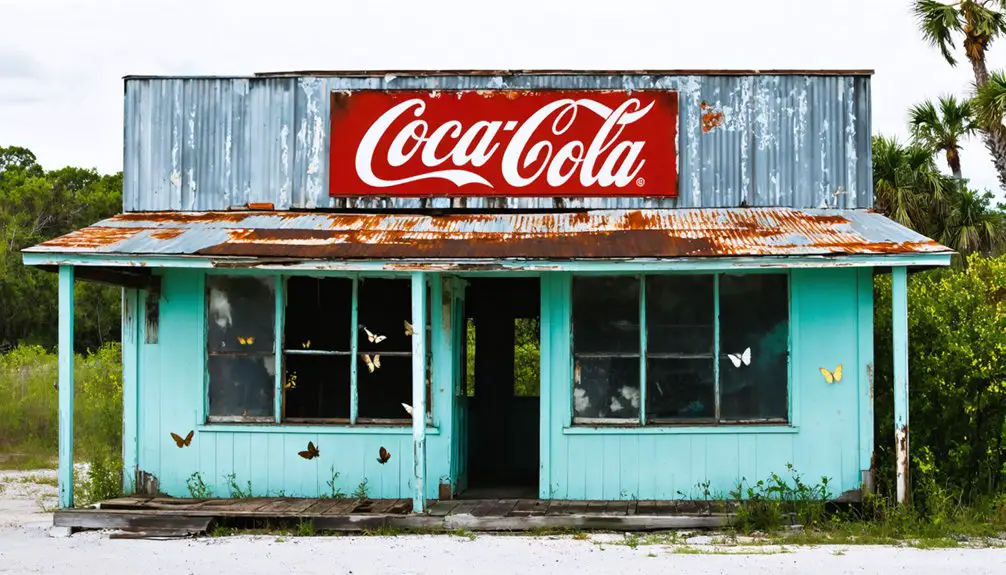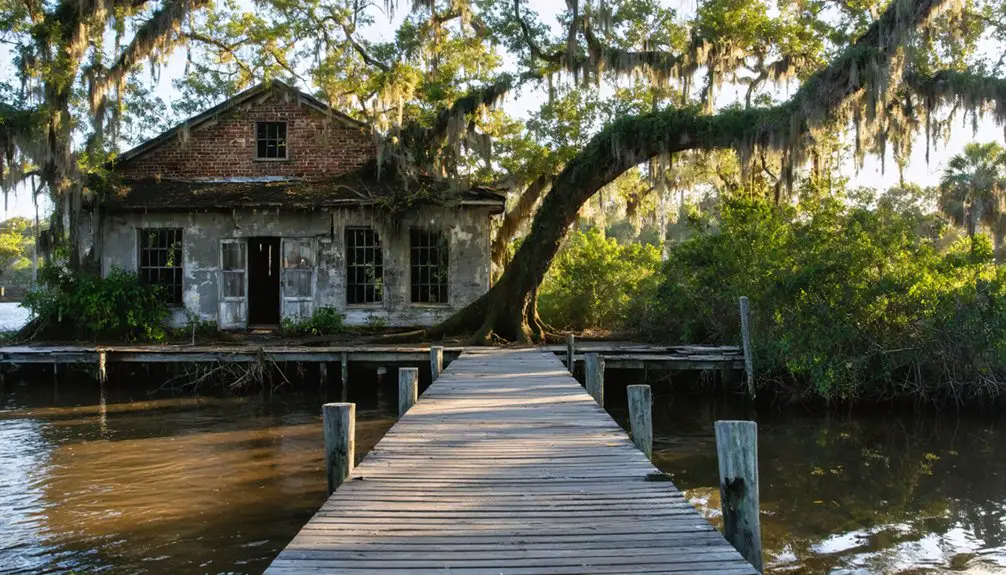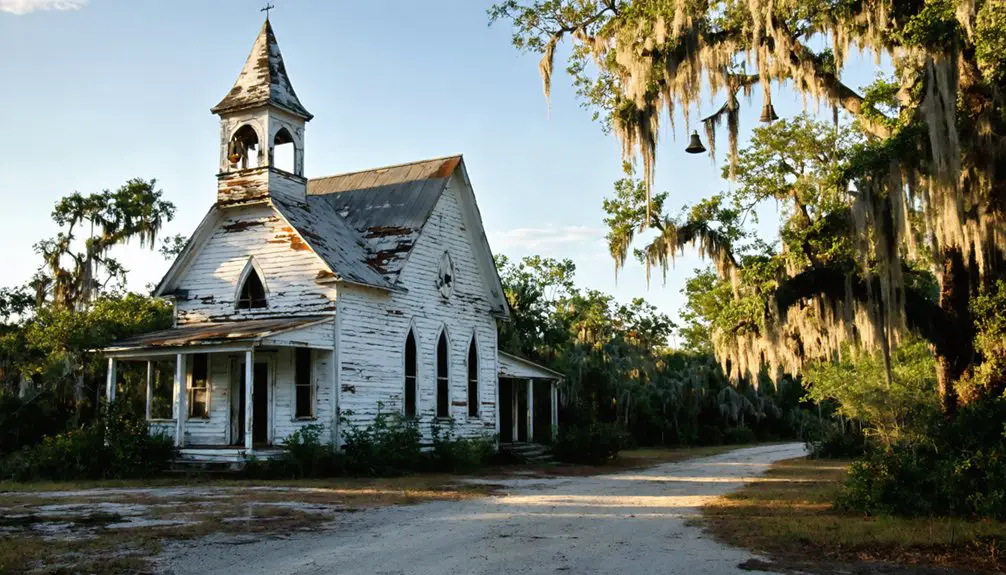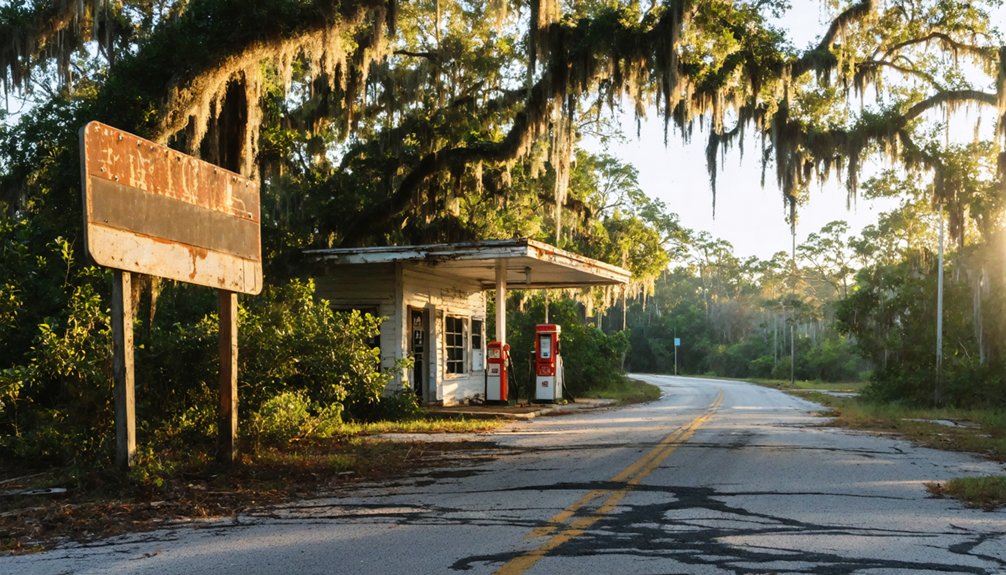
Navigate to coordinates 27°21.1’N, 81°48.1’W in Hardee County, where Gardner’s citrus groves turned to graveyards after the catastrophic 1890s freezes. You’ll drive through cattle pastures and abandoned farmland near the SR70 junction, following rural backroads from Wauchula into authentic Florida wilderness. The settlement that once thrived near Fort Gardiner’s 1837 stockade now exists only as weathered coordinates on topographic maps. Pack patience and sturdy tires for dirt roads that lead to tombstones dating 1835-1893, and discover what secrets this vanished frontier community still holds.
Key Takeaways
- Gardner’s exact location is at coordinates 27°21.1’N, 81°48.1’W (27.3517, -81.8017) in rural Hardee County, Florida.
- Access the ghost town via backroads from Wauchula, the nearest gateway town with connected transportation networks.
- The settlement was abandoned after devastating 1890s freezes destroyed citrus groves and the railroad withdrew service.
- Fort Gardiner, built in 1837 during the Second Seminole War, preceded the civilian settlement on the Kissimmee River.
- Expect unmarked dirt roads requiring sturdy vehicles; use US Topo maps as GPS accuracy varies in remote areas.
Understanding Gardner’s Origins as Calvina Settlement
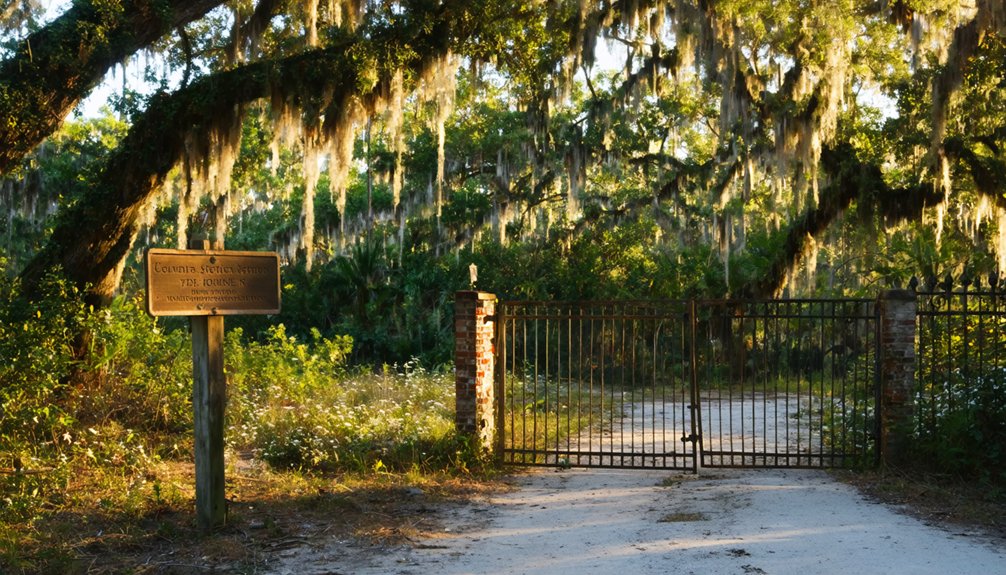
Before Gardner, Florida emerged on maps, the landscape told a different story—one of French colonists, pioneer families, and the gradual transformation of untamed Florida wilderness into settled communities.
You’ll discover that while early spanish colonization shaped much of Florida’s coast, this region developed differently. French settlers arrived at Chaumont Concession in 1721, preceding the pioneers who’d eventually name these lands. The Seminole Indians controlled vast territories here, creating formidable barriers to settlement until the Second Seminole War opened military roads through dense wilderness.
Agricultural development followed these pathways. You’ll find that early homesteaders like John Havens and Pierre Ladner claimed parcels along the Pascagoula River before 1809, raising livestock and establishing the foundations for communities that would later transform into Florida’s forgotten settlements.
Locating the Ghost Town Coordinates in Hardee County
Two numbers—27°21.1’N and 81°48.1’W—mark the precise point where Gardner once existed in Florida’s central highlands. You’ll convert these to decimal format (27.3517, -81.8017) for seamless GPS input, though geocoding accuracy depends on your device’s interpretation of minutes-tenths notation.
The coordinate verification process reveals Gardner’s absence from Kellyco’s PDF ghost town locator, making Wikipedia your primary source. When you’re traversing Hardee County’s rural backroads near the SR70 junction, you’ll find limited markers guiding you to this vanished settlement.
Cross-reference multiple mapping tools—Google Maps and Apple Maps both accept these coordinates—but expect uncertainty. The site sits roughly eight miles from Arcadia, where asphalt yields to memory and overgrown traces of Calvina’s pioneer days.
Fort Gardiner’s Role in the Second Seminole War
When Colonel Zachary Taylor’s troops hammered logs into the muddy banks of the Kissimmee River on December 2, 1837, they created Fort Gardiner—a crude military outpost that would anchor the U.S. military strategy against Seminole resistance in southern Florida. You’re standing where an 18-foot stockade once enclosed two-story blockhouses, powder magazines, and mobile cannons that directed troop movements toward Lake Okeechobee. Taylor named this headquarters after Captain George Washington Gardiner, fallen in the Dade Massacre two years prior.
The fort served as First Brigade headquarters, coordinating operations across the Withlacoochee’s southern territories. Just twenty-three days after construction, wounded soldiers from the Battle of Lake Okeechobee flooded back through these gates. Then, as quickly as it rose, the outpost vanished—abandoned when swampland defeated road-building efforts eastward.
What Caused Gardner to Become Abandoned
Gardner’s transformation from bustling settlement to ghost town began with Mother Nature’s cruelest blow—the catastrophic freezes of the 1890s that turned thriving citrus groves into blackened graveyards of twisted branches. You’ll discover this was no isolated tragedy; resource overexploitation had left farmers vulnerable, their fortunes tied to single-crop dependence. When climate vulnerability struck with consecutive hard freezes, the agricultural foundation crumbled instantly.
The railroad that once promised prosperity eventually abandoned its routes, severing Gardner’s lifeline to commerce. Without transportation networks, general stores shuttered their doors. Residents couldn’t access medicines or essential supplies. By 1895, families packed their belongings and fled toward opportunity elsewhere, leaving behind only weathered tombstones dating from 1835 to 1893—silent witnesses to a community that couldn’t withstand economic collapse and environmental catastrophe.
Mapping Your Route Through Central Florida Backroads
The forgotten settlement awaits in Hardee County’s heartland, but finding Gardner requires traversing a web of rural connectors that snake through Florida’s citrus belt—routes that GPS often overlooks.
Your driving directions from major cities begin in Wauchula, the gateway town where the regional transportation network fragments into unmarked farm roads and 4WD trails. From Winter Haven, you’ll wind through groves and cattle pastures, following local connectors that appear on US Topo quadrangle maps but vanish from modern navigation apps.
Skip the interstates—true explorers trace forgotten county roads from Arcadia north through authentic Florida terrain. The 2015 topographic survey reveals Gardner’s coordinates, though pavement surrenders to dirt long before arrival. These backroads demand patience, good tires, and adventurous spirit.
What to Expect When You Arrive at the Site
When you step onto the Fort Gardiner site, you’ll find nature has completely reclaimed the land where Colonel Zachary Taylor once commanded troops during the Second Seminole War. The 18-foot log stockade, two-story blockhouses, and military structures have vanished entirely, leaving only swampland, riverbanks, and dense Florida vegetation.
A historical marker stands as the sole acknowledgment that this overgrown, unmarked terrain once served as headquarters for the First Brigade’s operations against the Seminoles in 1837.
No Visible Structures Remain
Unlike most historic sites that greet visitors with weathered walls or crumbling foundations, Fort Gardiner’s location offers nothing but empty landscape. You’ll find yourself standing in swampland where two-story blockhouses and an 18-foot stockade once protected soldiers during the Second Seminole War.
The powder magazine, storehouse, and defensive positions have vanished completely, leaving only a historic marker to confirm you’ve reached the right spot.
Without archaeological excavations, the fort’s exact layout remains buried beneath centuries of vegetation. There’s no interpretive signage explaining where buildings stood or how cannons were positioned.
You’re free to explore unmarked terrain between Lakes Hatchineha and Kissimmee, imagining Colonel Zachary Taylor‘s 1837 garrison traversing this unforgiving wilderness that ultimately defeated their road-building ambitions.
Natural Landscape and Markers
Subtropical jungle now commands every inch where Fort Gardiner once stood, creating a landscape that’s equal parts beautiful and impenetrable. Thick saw palmettos crowd what were once farmsteads, while scrub pines and mangroves merge into dense walls of green.
You’ll navigate old dirt roads disappearing under mature forest composition—massive oaks sprawling over abandoned railroad lines, cypress remnants marking dried-out ponds from log processing days. Charlie Apopka Creek still borders the original settlement site, its waters reflecting sunlight through the canopy.
Natural trail maintenance here means accepting nature’s terms: overgrown foundations, log-binding bands buried beneath wiregrass, and humidity that accelerates decay. White-tailed deer dart through dappled light while birds call from the understory. Bug spray’s essential—this rewilded frontier belongs to the land now.
Exploring Nearby Polk County Ghost Towns
The phosphate mining boom that transformed central Florida left behind a constellation of ghost towns scattered across Polk County, each one a dusty monument to the industry’s rise and fall. You’ll find Brewster near State Road 60, where company housing and a skeletal water tower stand guard over flooded mine pits. The Mulberry Phosphate Museum discloses stories of the local phosphate industry before you venture deeper.
As you explore the history of Fort Dade in Florida, you’ll uncover fascinating tales of military significance and community life that once thrived in this coastal area. The remnants of the fort’s structure evoke a sense of nostalgia, reminding visitors of its strategic role during various conflicts. Today, Fort Dade serves as a canvas for understanding the broader narratives of Florida’s past, entwining natural beauty with historical significance.
Sumica sits south of Bartow, accessible via backroads that wind through scrubland where remnant infrastructure barely hints at its bustling past. Pittsburg exists only as coordinates now—27°39.2’N 81°30.1’W—completely reclaimed by wilderness. Saint Annes Shrine near the Peace River offers cryptic traces of forgotten community life, while Fort Meade clings to existence, fighting against becoming another abandoned relic on your ghost-hunting map.
Respecting Historical Sites and Preservation Rules
Before you step onto the cracked foundations of Gardner’s abandoned structures, you’ll need to understand Florida’s strict preservation laws that protect these historic sites from well-meaning explorers and careless vandals alike. Chapter 267 makes unauthorized digging a third-degree felony—your curiosity isn’t worth criminal charges.
Respecting archaeological ethics means observing without disturbing: photograph weathered wood and rusted relics, but leave everything exactly where you found it. Adhering to preservation policies safeguards these physical records of Florida’s past for future adventurers. You’re free to explore, but that freedom comes with responsibility.
Report discoveries to the Division of Historical Resources instead of pocketing them. Gardner’s ghosts whisper through intact structures, not pillaged ruins. Your restraint today guarantees tomorrow’s wanderers can experience the same authentic decay.
Frequently Asked Questions
What Supplies Should I Bring for a Day Trip to Gardner?
When Sarah explored Gardner’s abandoned phosphate ruins last summer, she learned quickly: you’ll need comfortable shoes for crumbling foundations, snacks and water for energy, plus bug spray, sunscreen, a camera, and maps since cell service disappears completely out there.
Are There Restrooms or Facilities Near the Ghost Town Site?
You won’t find traditional facilities at this remote ghost town. Portable toilets available at the nearby AAA gas station convenience store, offering basic amenities nearby. Pack accordingly, as Gardner itself remains wild and undeveloped territory for true explorers.
Is Cell Phone Reception Available in This Remote Area?
Don’t expect reliable cellular coverage here—you’re venturing into Florida’s backcountry where adequate signal strength fades quickly. Download maps beforehand and embrace the disconnection; Gardner’s wilderness offers freedom from the digital world’s constant demands.
What Wildlife Might I Encounter While Exploring the Site?
You’ll spot native bird species like herons and egrets soaring overhead, while reptilian wildlife including alligators and various snake species inhabit the surrounding wetlands. Watch your step and maintain respectful distance from Florida’s wild residents during your exploration.
Can I Camp Overnight Near Gardner or Fort Gardiner Locations?
You’ll find primitive camping options at Gardner Landing Campground with four free sites along the Peace River. Nearby RV campgrounds aren’t available, but you can claim sandy river bluffs upstream for true wilderness freedom beyond civilization’s reach.