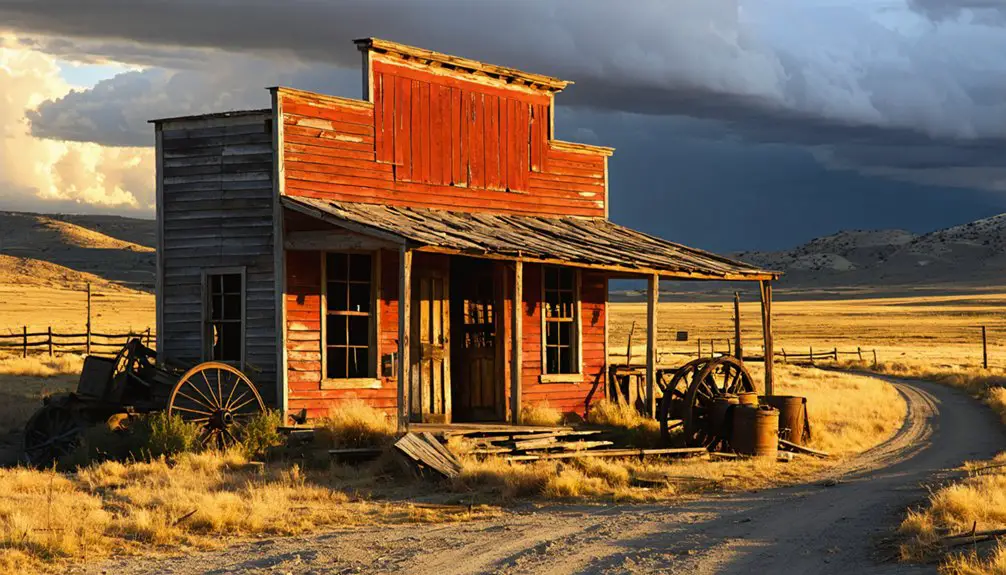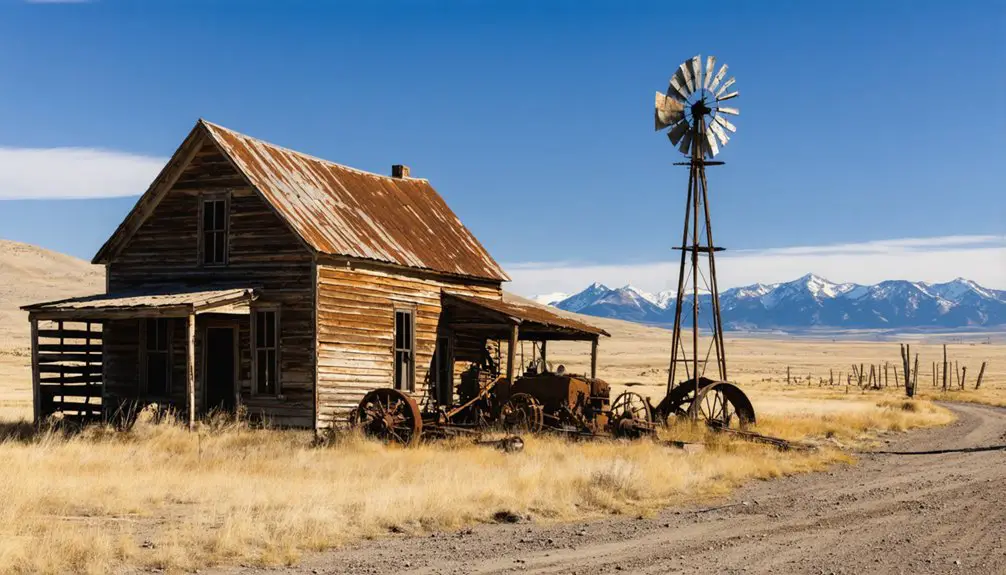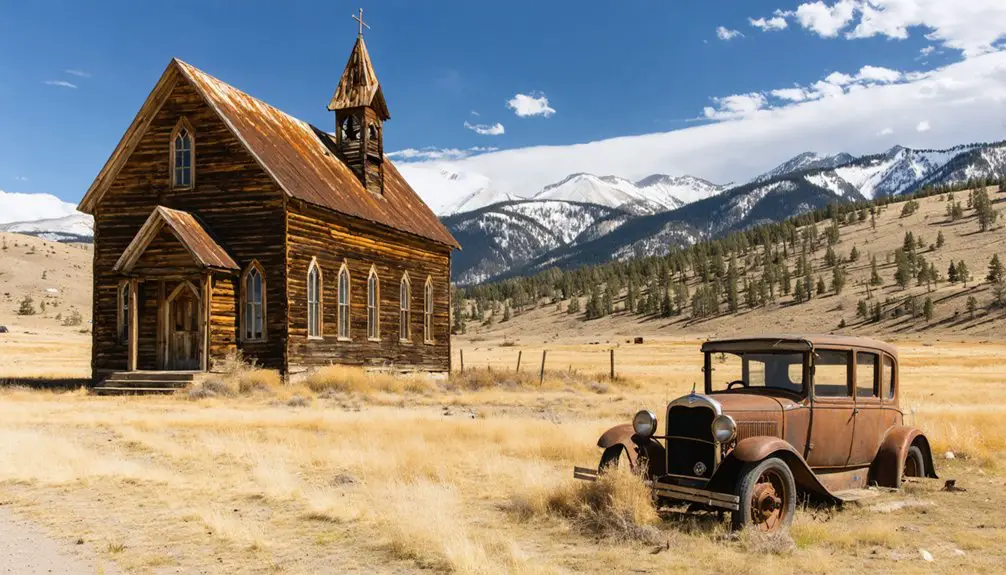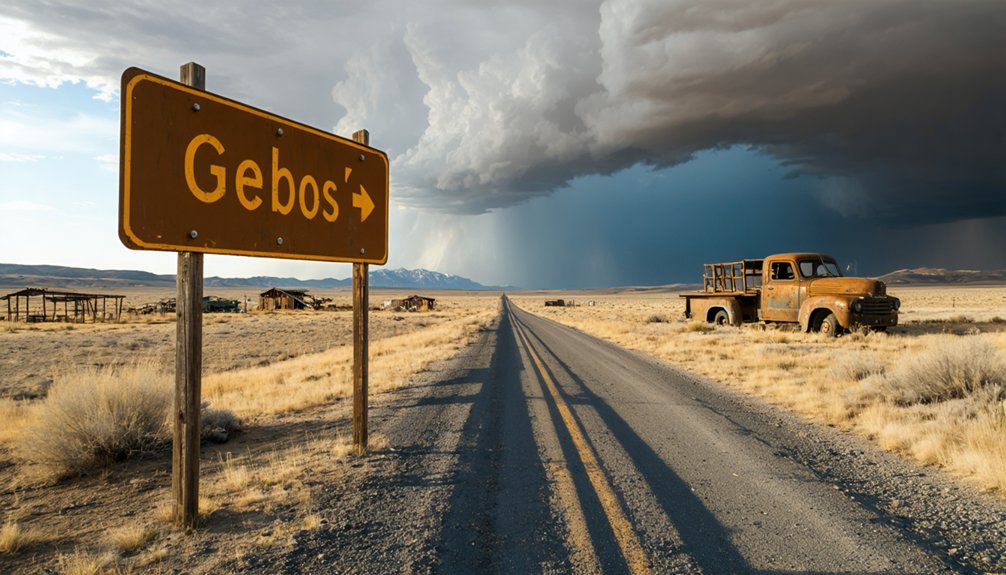
Plan your Gebo ghost town adventure for late spring or early fall when temperatures hover in the comfortable 60s. You’ll drive eleven miles north of Thermopolis, turning onto Sand Draw Road to reach the abandoned coal camp at coordinates 43.79080, -108.23000. Bring a four-wheel-drive vehicle, recovery gear, plenty of water, and sturdy boots—there’s no cell service or facilities out here. You’ll find stone foundations, mine ruins, and weathered remnants scattered across the sagebrush, with the full story waiting in the desert silence.
Key Takeaways
- Located 11 miles north of Thermopolis via US Highway 20 and Sand Draw Road, accessible only by dirt roads when dry.
- Best visiting times are late April through early June or September through October with comfortable 60-degree temperatures.
- Bring four-wheel-drive vehicle, recovery gear, water, sturdy boots, layered clothing, and photography equipment for exploration.
- No facilities available on-site; expect complete solitude while exploring stone foundations, mine ruins, and scattered building remains.
- Founded in early 1900s, town peaked at 2,000 residents before abandonment and bulldozing in 1971 after coal demand collapsed.
The History Behind Wyoming’s Forgotten Mining Town
Deep in Wyoming’s Bighorn Basin, where sagebrush now reclaims abandoned streets and wind whistles through skeletal building frames, Gebo once thrived as a coal mining powerhouse that few remember today.
Gebo’s forgotten legacy lies buried beneath Wyoming sagebrush, its skeletal remains whispering tales of a once-mighty coal mining empire.
Samuel Wilford Gebo founded this company town in the early 1900s, and by 1929, over 2,000 souls called it home—the largest settlement in Hot Springs County. You’ll find stories of a diverse workforce representing 16 nationalities who extracted coal so pure it left only three percent ash.
But freedom came with struggle. Workers earned just $3.50 daily while federal investigations threatened the operation with corruption charges.
Despite hardship, residents clung to their dreams until economic reality forced abandonment, leaving behind Wyoming’s most compelling ghost town. The town’s coal powered trains and supported the nation’s industrial expansion during its prosperous years. By 1971, the town was bulldozed, though some buildings and the cemetery still remain today.
Where to Find Gebo in Hot Springs County
Tucked in the sagebrush-dotted expanse of Hot Springs County‘s southern Big Horn Basin rim, Gebo rests at coordinates 43.79080, -108.23000—a geographic footnote that Google Maps barely acknowledges. You’ll find it eleven miles north of Thermopolis, where county population statistics now contradict this ghost town’s former glory as the area’s largest settlement with 2,000 souls.
Take US Highway 20 north toward Kirby, then veer onto Sand Draw Road—those bullet-holed signs aren’t decoration, they’re badges of Wyoming’s untamed spirit. The dirt roads demand respect: passable when dry, treacherous after rain.
What remains of local business history—crumbling storefronts and the company store’s skeleton—sits at 4,491 feet elevation, accessible to anyone willing to navigate the ruts. The town was founded by Samuel W. Gebo, a Canadian businessman who established the Owl Creek Coal Company here in 1907. The town’s name derives from proto-Germanic origins, sharing its etymology with the ancient rune symbolizing gift-giving. Pack your independence and decent ground clearance.
What Remains of the Once-Thriving Coal Camp
When you finally roll up to Gebo’s weathered remains, the silence hits harder than any ghost story. This scattered skeleton of stone foundations tells the tale of a prosperous heyday when 2,000 souls from 16 nations called this place home. The historical significance becomes tangible as you wander freely through what’s left.
Most structures vanished by the 1970s, but these remnants speak volumes about frontier mining life. The town was bulldozed down in 1971, erasing most physical traces of the community that thrived here for decades.
Key structures you’ll discover:
- Stone foundations from company-built homes that once housed 600+ miners
- Ruins of the tipple, fan house, and power plant from Gebo #1 mine
- Remains of the business district where the company store once stood
- Church sites and scattered boarding house foundations
- The covered mine portal, still marking the operation’s heart
Among the most poignant remnants are the gravesites from deadly epidemics, including the influenza outbreak of 1918 and diphtheria epidemic of 1920, where visitors still leave flowers and coins to honor those who were never forgotten.
Why This Boomtown Vanished Into the Desert
Like countless Western boomtowns before it, Gebo’s fate was sealed the moment a single company controlled every aspect of its existence. You’ll understand why when you consider how Owl Creek Coal Company owned every building, store, and utility—creating a toxic company culture where 2,000 residents lived entirely at corporate mercy.
This overreliance on single industry meant zero economic resilience when coal demand plummeted after World War I. The Ireland family, who held the lease until the 1930s, watched their mining empire crumble as market forces turned against them. The diesel-electric revolution delivered the final blow as locomotives no longer needed Gebo’s coal to fuel their engines.
Walking Among the Ruins and Cemetery Grounds
Arriving at Gebo feels like stepping onto a movie set abandoned mid-production—concrete foundations grid the desert floor in precise blocks where homes once stood, while crumbling stone walls jut from the sagebrush like broken teeth. You’ll navigate glass shards and open pits while photographing abandoned structures, so watch your footing near crumbly edges.
What you’ll encounter:
- Brick chimneys and cellars resisting time since the 1971 bulldozing
- Cemetery half-mile west with graves dating to early 1900s
- Heartbreaking number of infant headstones reflecting mining hardships
- Coins and flowers left by relatives from 16 nations
- Hawks circling overhead, pronghorn observing from ridges
Retracing mining families’ lives becomes visceral here—the profound quiet broken only by wind reminds you that freedom often came at devastating costs in these unforgiving landscapes. The site overlooks Hot Springs County in a setting that’s surprisingly calm and serene despite the tragic history beneath your feet. Birds nest in the cracks of former homes, adding an unexpected vitality to the abandoned landscape.
Best Times to Visit and What to Bring
Timing your visit to Gebo means threading a narrow seasonal window between Wyoming’s extremes—the sweet spots being late April through early June and September through October, when daytime temperatures hover in the comfortable 60s and the high plains landscape shifts between golden grasses and sage-scented breezes. These months provide ideal photography conditions and seasonal road accessibility before spring mud or winter ice lock you out.
Pack your four-wheel-drive loaded with water, sturdy hiking boots, and layered clothing for Wyoming’s mercurial weather shifts. I’ve watched morning frost vanish by noon, temperatures swinging forty degrees. Bring vehicle recovery gear—shovel, tow straps, traction boards—because primitive roads don’t forgive overconfidence.
Photography equipment captures weathered wood against endless sky. Pack everything in, pack everything out. No facilities exist here, just freedom and solitude.
Nearby Ghost Towns and Attractions Worth Exploring
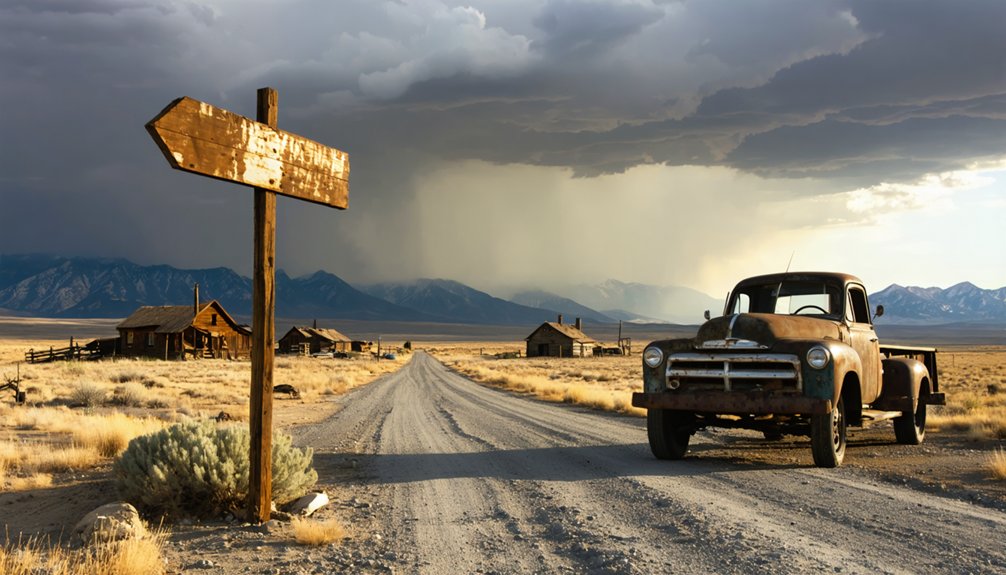
Gebo rewards exploration, but Wyoming’s ghost town riches extend far beyond this single coal camp—within a two-hour radius, you’ll find everything from crumbling badlands communities to alpine mining camps tucked against mountain walls.
Your historic mining heritage journey expands with these worthwhile detours:
- Crosby Coal Camp sits just south, accessible via the same rutted district road that connects these linked company communities
- South Pass City offers Wyoming’s best-preserved ghost town experience with 20+ buildings, museum exhibits, and summer Gold Rush Days featuring gold panning
- Miner’s Delight showcases visible mine shafts and collapsed structures against Wind River Range peaks
- Kirwin demands four-wheel drive deep in the Absarokas, with guided August tours and May-October recreational opportunities
- Lost Cabin provides photogenic sunset shots of oil-boom remnants near Casper’s mountain biking trails
Frequently Asked Questions
Is Camping Allowed Near the Gebo Ghost Town Ruins?
Yes, you’ll find free overnight accommodations on BLM land surrounding Gebo’s haunting structures. With no 14-day stay limit posted, campsites nearby offer raw freedom—just gravel, sagebrush, and abandoned mining relics beneath Wyoming’s endless starlit sky.
Are There Guided Tours Available for the Gebo Mining District?
No private guided tours exist at Gebo—you’ll explore freely among the ruins. Local preservation efforts focus on maintaining the cemetery and interpretive signs, letting you discover this haunting coal town’s crumbling foundations and rusted equipment at your own pace.
Can I Bring My Dog to Explore the Cemetery?
Your faithful companion can join you—no pet-friendly policies restrict cemetery access. However, consider photographic considerations: keeping dogs leashed protects crumbling headstones, prevents disturbing grave markers, and shows respect while you’re documenting this windswept memorial.
Is Cell Phone Service Available in the Gebo Area?
Cell phone service in Gebo’s remote terrain is extremely limited. You’ll likely find minimal cell tower coverage and weak signal strength from major carriers. Download offline maps before venturing out—this ghost town sits beyond civilization’s digital reach.
Do I Need Permission to Photograph the Ruins and Graves?
No permission’s needed for photographing Gebo’s ruins and graves—you’re free to capture history. However, check drone regulations with BLM beforehand, as historical preservation policies may restrict aerial photography over this protected mining district site.
References
- https://www.onlyinyourstate.com/experiences/wyoming/an-abandoned-wy-town-that-most-people-stay-far-away-from
- https://bighorndrifters.com/elementor-2633/
- https://cowboystatedaily.com/2024/07/07/wyoming-history-gebo-was-built-by-a-mining-boom-now-its-a-ghost-town/
- https://county10.com/lookback-gebo-a-true-wyoming-ghost-town/
- https://bighornbasinexplorer.com/2025/08/14/gebo-wyoming/
- https://www.atlasobscura.com/places/gebo-ghost-town
- http://www.wyomingtalesandtrails.com/coalgebo.html
- https://www.blm.gov/visit/gebo-crosby-historic-mining-district
- https://www.youtube.com/shorts/S2C-3lUYzEM
- https://ahcwyo.org/2017/11/26/mileva-maravic-remembers-gebo-wyoming/