Your ghost town adventure to Gem starts at Wallace’s Exit 62, where you’ll follow Idaho Highway 4 north through Burke Canyon‘s narrow basalt corridor. Pack heavy-duty gloves, sturdy boots, and high-lumen flashlights before tackling the winding 6-8 mile route to the power substation parking area. Plan your visit between late spring and early fall when roads are accessible and wildflowers blanket the canyon walls. The article ahead reveals three branching trails, hidden photography spots, and essential safety protocols for exploring this silver-rush relic.
Key Takeaways
- Take Exit 62 off I-90 in Wallace, then drive north on Highway 4 for 6-8 miles through a narrow canyon.
- Visit late spring through early fall when weather permits safe exploration and Silver City’s facilities are open.
- Bring heavy-duty gloves, sturdy boots, high-lumen flashlight with backup batteries, and prepare for no cell service.
- Explore three trails from the power substation parking area leading to abandoned mines and decaying structures.
- Watch for hazards including rotting floorboards, asbestos insulation, unstable walls, rusty nails, and mine tailings pollution.
Discovery of Gem’s Remote Canyon Setting
Tucked into a volcanic gorge where few travelers venture, Gem clings to the canyon walls of Owyhee County in Idaho’s untamed southwest corner. You’ll discover remote landscape features shaped by millions of years of Earth’s raw power—stacked basalt flows that tower 800 feet above the river.
These geologic formation processes began with volcanic eruptions depositing resistant rock layers, then gravity and water carved narrow passages through the plateau. When Lake Idaho drained three million years ago, rivers gained the energy to slice deeper, exposing the dark basalt walls you’ll see today. The Columbia River became the new base level for regional streams, fundamentally changing how water carved through this landscape.
The isolation here isn’t accidental—it’s engineered by nature’s architecture. Ancient tectonic plate shifting millions of years ago created the foundation for these dramatic formations, setting the stage for the volcanic activity that followed. You won’t find tour buses or crowded overlooks, just volcanic cliffs standing guard over a forgotten settlement where independence still echoes.
Mining Boom That Built the Settlement
You’ll find Gem’s origins in the silver-lead rush that swept Burke Canyon during the 1880s, when prospectors carved claims into these narrow rock walls and triggered a settlement boom.
The Helena-Frisco mine anchored operations here, its mill processing ore alongside smaller outfits that transformed this remote gulch into a working community by the early 1890s.
As you stand where miners once blasted tunnels into the canyon face, you’re witnessing the exact landscape that drew thousands to Idaho’s Coeur d’Alene district when base-metal production soared after 1885.
This mining fever mirrored the excitement in the nearby Lava Creek district, where discoveries attracted eastern capital and spawned boom towns like Era with its six saloons and thousands of residents at peak production.
The promise of mineral wealth served the same purpose as gem discoveries across Idaho, helping to attract settlers and investors who transformed wilderness into thriving communities during the territorial period.
Gold and Silver Discovery
Like countless prospectors drawn to Idaho’s rugged mountains, you’ll find Gem’s story begins with the glitter of precious metals that first captivated treasure-seekers in the 1860s. While Idaho’s mineral rushes started with gold discoveries near Pierce in 1860—drawing 1,600 claims within months—Gem emerged later amid Burke Canyon’s rich silver veins.
You’re standing where the Helena-Frisco mine once dominated ore processing history, its massive mill crushing rock into fortune. The district’s change from gold to silver around 1883 transformed these mountains into one of America’s most profitable mining regions. Idaho’s total silver production would eventually reach three times that of Nevada’s famous Comstock Lode. The Morning Star mine, one of the country’s deepest mines, produced over 300 million ounces of silver from the Coeur d’Alene district.
Canyon Mining Operations Expand
The discovery of coal in Horseshoe Canyon changed everything for this remote settlement. When Henry Flamm opened that first mine in 1882, he unleashed triggered an industrial boom that’d transform these rugged hillsides.
By 1920, operations were pulling 30,000 tons annually, fueling communities from Dillon to Pocatello.
You’ll find the real story in what’s left behind. Mine tailings choked Canyon Creek, causing floods that spread contamination downstream. A 1903 lawsuit exposed the brutal truth: a farmer’s poisoned animals and dead crops meant nothing against mining’s economic power. Idaho’s Constitution literally prioritized mine water use over agriculture.
These environmental impacts and legal disputes shaped Gem’s destiny. William Hillman filed the original Brown Bear Mine claim in 1901, marking the beginning of organized extraction in the area. Early mills using stamp mills and jigs recovered less than 75% of the valuable metals, leaving concentrated lead and arsenic behind. By 1927, over 200 workers called this place home, complete with school and post office—a thriving town built on both ambition and consequence.
Burke Region Settlement Growth
On May 2, 1884, prospectors struck lead-silver-zinc ore in Burke Canyon, and within seventy-two hours the land rush was on. The Tiger Mine claimed its stake first, followed by the Poorman just three days later.
You’ll find it hard to imagine seventy mining claims crammed into this narrow gorge, but that’s exactly what happened. The Burke surname itself traces back to Irish origins, later becoming associated with this remote mining settlement that bore its name. The town officially incorporated in 1887, marking its transformation from mining camp to established community.
Best Routes to Reach Burke Canyon
Reaching Burke Canyon requires traversing through Idaho’s rugged Silver Valley, where your journey begins at Exit 62 off I-90 in Wallace—a historic mining town that serves as your gateway to this narrow geological corridor.
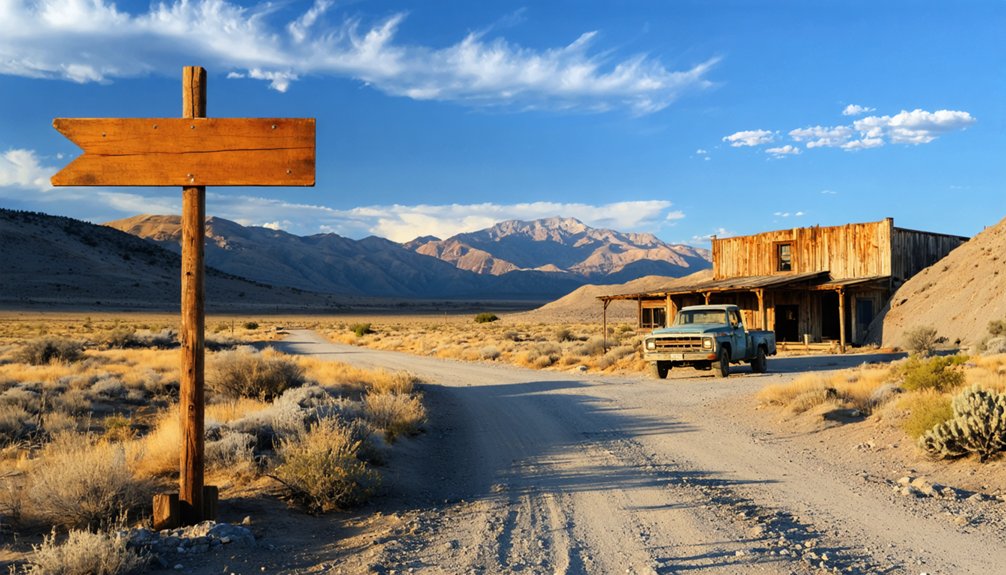
Turn north onto Idaho State Highway 4 and prepare yourself for six to eight miles of winding road conditions that’ll test your driving skills. The pavement snakes through a canyon barely 300 feet wide, hugging Burke-Canyon Creek as you pass ghost towns like Gem, Black Bear, and Yellow Dog. You’ll share this tight passage with history—the same route where trains once threaded through town centers.
At eight miles, you’ll spot a power substation parking area offering wide spaces for trailers. This is your unloading zone, where three trails branch outward into Silver Valley’s abandoned past.
What Remains at the Gem Townsite Today
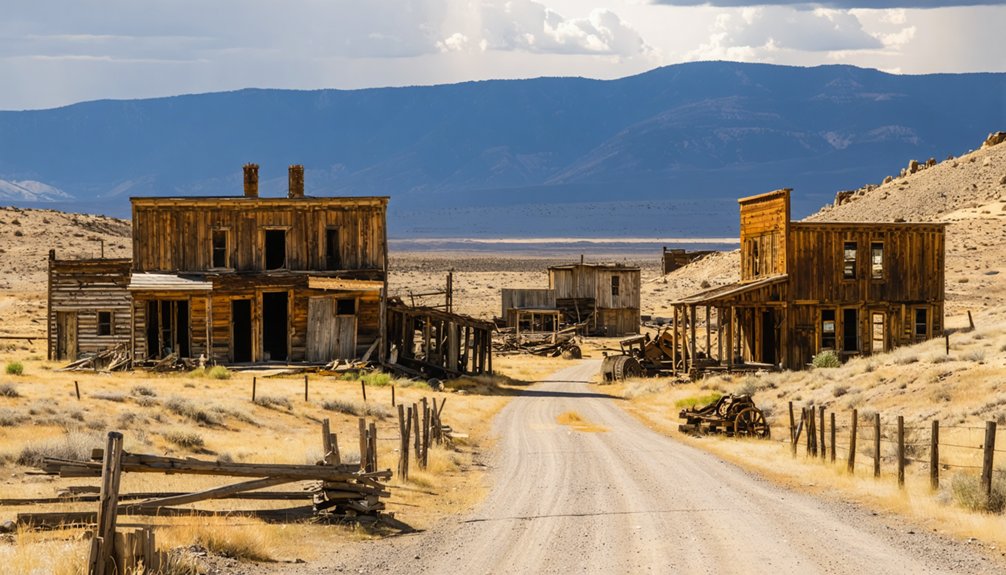
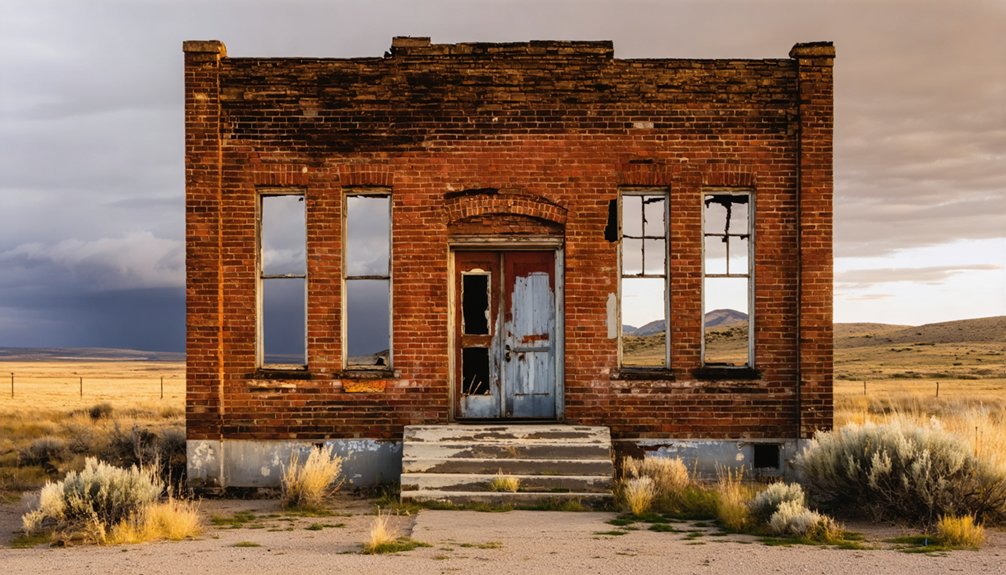
After traversing Burke Canyon’s serpentine road, you’ll discover a haunting landscape where fourteen weathered structures cling to existence along a nearly one-mile loop trail. The crown jewel remains the 1882 Gilmer and Salisbury stamp mill—a multi-story monument echoing the mountain’s contours.
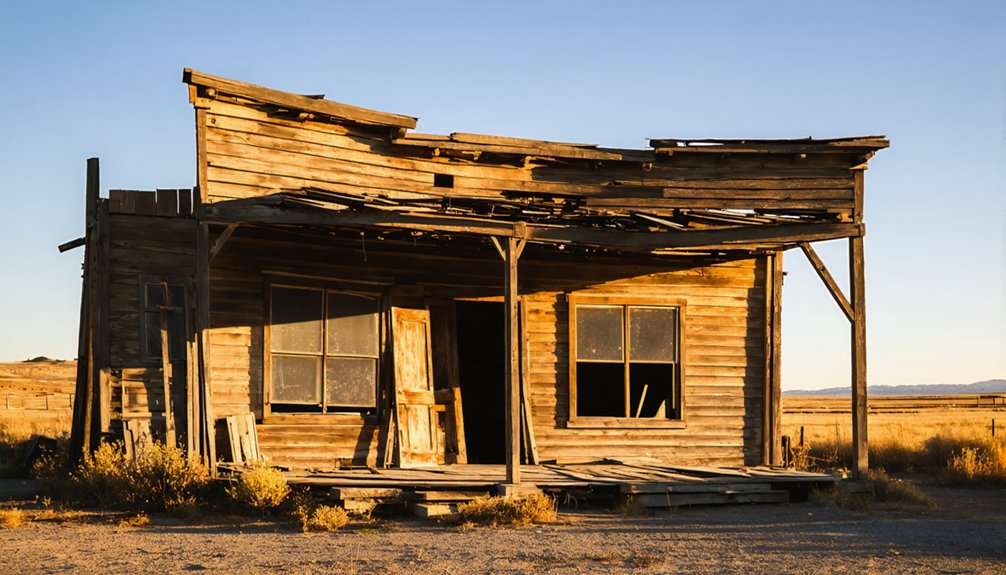
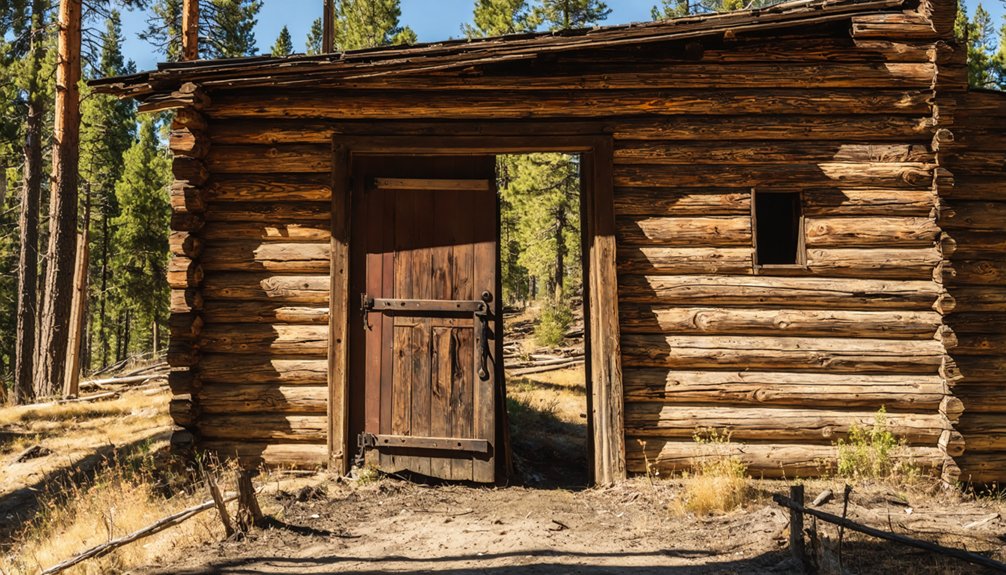
You’ll find preserved buildings like the stone Wells Fargo structure, intentionally stabilized in “arrested decay” to maintain authentic character rather than pristine reconstruction. Miners’ cabins from the 1880s boom still stand, their weathered planks telling stories of harsh winters at 6,000 feet. Ruined charcoal kilns dot the periphery, silent witnesses to silver smelting operations that generated millions.
The loop trail offers scenic viewpoints where canyon walls frame these relics against Idaho’s wilderness—perfect for photographers and history seekers craving unmanicured authenticity.
Essential Gear for Exploring Remote Ghost Towns
Exploring Gem’s decaying structures demands preparation beyond a casual day hike. You’ll encounter potential hazardous conditions like rotting floorboards, asbestos insulation, and unstable walls that’ve weathered Idaho’s harsh seasons since the 1950s. Your gear becomes your lifeline when you’re miles from cell service.
Abandoned mining towns hide serious dangers—crumbling floors, toxic materials, and zero communication access make proper preparation absolutely critical.
Pack these essentials:
- Heavy-duty gloves and sturdy boots – Rusty nails and broken glass lurk everywhere in abandoned mining structures
- High-lumen flashlight with backup batteries – Gem’s collapsing buildings create pitch-black interiors even at midday
- First-aid kit and plenty of water – The nearest hospital’s over an hour away through mountain roads
Don’t forget equipment maintenance requirements: test your flashlights beforehand, check boot treads, and replace respirator filters. I learned this the hard way when my backup light died exploring Gem’s old mill.
Nearby Historic Mining Settlements Worth Visiting
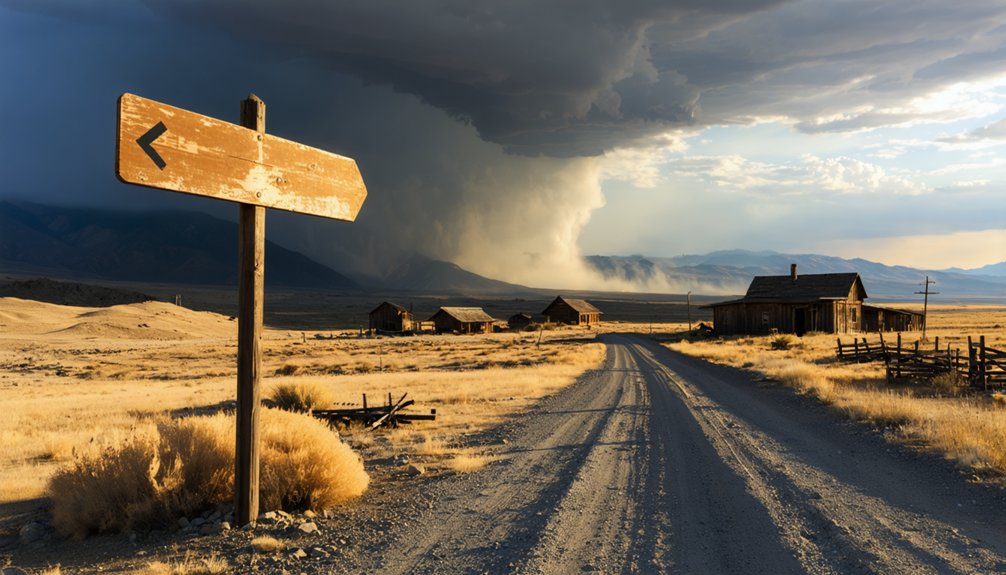
While you’re traversing the narrow roads through Burke Canyon to reach Gem, you’ll pass weathered mine entrances and crumbling mill foundations that mark where other settlements once thrived between Wallace and Burke.
The canyon walls still echo with stories of the Helena-Frisco operation, where miners like J.S. Murray met tragic ends and accidents claimed lives in the darkness below ground.
Plan your route to allow stops at these skeletal remnants—each twisted timber and rusted rail car tells you something about the men who extracted fortunes from these unforgiving mountains.
Burke Canyon Mining Towns
The steep walls of Burke Canyon squeeze together so tightly that prospectors in 1884 had nowhere to build except in a narrow 300-foot corridor shared with Canyon Creek, a wagon road, and eventually two competing railroad lines. You’ll discover a lost silver boom economy where the Tiger and Poorman claims sparked a rush that planted settlements like Burke, Gem, Frisco, and Mace along this compressed canyon floor.
What you’ll encounter:
- Weathered remnants where trains once rumbled directly through town centers instead of past them
- Evidence of mining pollution impacts—tailings still visible where crude mills dumped waste straight into Canyon Creek
- Stories of 1892 armed union committees stopping scab workers at gunpoint, demanding $3.50 daily wages
Today, fewer than 15 souls remain among these weather-beaten relics of rebellion and riches.
Regional Ghost Town Circuit
Beyond Burke Canyon’s compressed corridor, a constellation of forsaken mining camps dots Idaho’s backcountry, each telling its own tale of silver strikes and shattered dreams.
Silver City preserves 75 structures from the 1860s boom, when 2,500 souls chased glittering veins through mountain rock.
You’ll find Bonanza and Custer abandoned since 1911, their community history frozen in weathered buildings and windswept cemeteries. Bayhorse ran silver for decades before fire and drought killed production in 1915.
Gilmore’s canyon resources once fed bustling smelters near Montana’s border, while Gibbonsville’s eight saloons served miners who extracted $2 million in gold.
These settlements aren’t manicured tourist traps—they’re raw glimpses into lives lived hard and fast, then abandoned when the ore ran out.
Seasonal Considerations for Your Journey
Planning your ghost town adventure to Gem, Idaho means choosing the right season for your expectations and comfort level. Understanding seasonal weather patterns helps you pack smart and maximize your exploration time in this remote high desert landscape.
One of the most intriguing aspects of your journey may be discovering ghost town attractions in Custer, where remnants of history whisper tales of the past. As you explore these forgotten streets and decaying buildings, you’ll gain insight into the lives of those who once thrived in this now-silent community. Be sure to bring your camera to capture the eerie beauty that surrounds you.
In addition to Custer, there are many other ghost towns to explore in Idaho that offer unique stories and stunning landscapes. Each site presents a different chapter of the state’s rich history, inviting you to wander through time as you uncover forgotten relics and landscapes frozen in time. As you journey from one ghost town to another, take a moment to appreciate the natural beauty that Idaho has to offer, from breathtaking mountain views to tranquil desert vistas.
Best times to explore:
- Late spring through early fall – Silver City’s hotels and shops open Memorial Day weekend, giving you full access to preserved buildings and authentic ghost town atmosphere
- Spring wildflower season – Waterfalls cascade and vibrant blooms paint the hillsides, creating spectacular photography opportunities without summer’s intense heat
- Fall’s golden hours – Cooler temperatures and orange-yellow landscapes provide comfortable hiking conditions with fewer crowds cluttering your shots
Winter’s freezing temperatures and snow-blocked streets limit access, making summer and shoulder seasons the ideal tourist seasons for unrestricted wandering through Idaho’s mining past.
Photography Opportunities in the Canyon
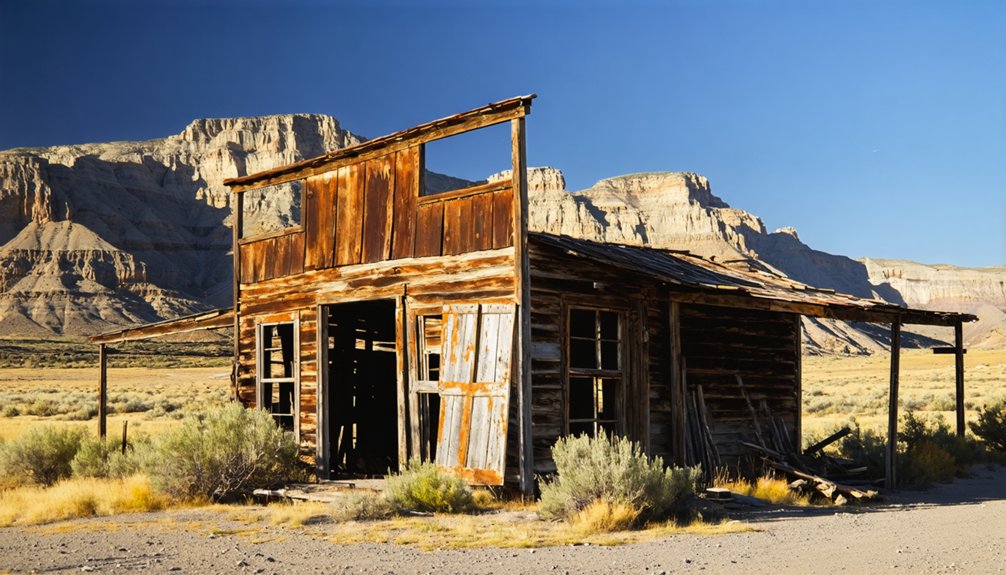
When golden light spills across Snake River Canyon’s rim, photographers discover why southern Idaho’s volcanic gorges rival anything in the American West. You’ll find seasonal lighting transforms these landscapes—autumn brings orange foothills at Lucky Peak, while summer illuminates spring-fed cascades at Scott’s Pond.
Swan Falls delivers stunning sunset compositions where desert sagebrush meets canyon walls, with Owyhee Mountains providing dramatic backdrops.
Remote access points make these shots achievable without extreme hiking. Dierkes Lake sits minutes from your car, offering canyon overlooks and water features. Jump Creek Falls requires just 15-20 minutes walking through creek-carved narrows.
For epic waterfall shots, Caldron Linn Falls (locally called Star Falls) presents raw Snake River power near Murtaugh. Pack your telephoto for distant canyon details and wide-angle for sweeping gorge perspectives.
Respecting Historical Sites and Forest Service Regulations
While wandering through Gem’s weathered structures feels like stepping into a sepia photograph, you’re actually standing on legally protected ground that demands careful stewardship. These ruins hold National Register eligibility, making community preservation initiatives critical for maintaining this ghost town’s authentic character.
Essential practices for respecting site integrity:
- Stay clear of fenced areas like Hecla Mines—barriers exist because unstable structures and contaminated soil from mining operations create genuine hazards
- Leave artifacts untouched—that rusted lantern or weathered ledger contributes to the historical narrative future explorers deserve to witness
- Check Forest Service access rules before departing, as some routes require foot travel only
You’ll find freedom in exploration coexists beautifully with preservation when you treat these remnants as the irreplaceable time capsules they are.
Frequently Asked Questions
What Was Gem’s Peak Population During Its Mining Boom Years?
Historical mining records don’t document Gem’s exact peak population, but you’ll find it roughly doubled the 1910 census count of 123. The geographic landscape features surrounding these remote canyon mines once bustled with approximately 250 fortune-seeking souls.
When Exactly Was Gem Abandoned as a Functioning Mining Town?
You’ll find Gem’s exact abandonment date remains elusive, but evidence suggests it declined after 1909’s last recorded incident. The causes behind Gem’s decline as a mining town included violent labor conflicts and ore depletion, marking the historical significance of Gem’s abandonment.
Are Overnight Camping Facilities Available Near the Gem Townsite?
Picture dusty trails leading to starlit evenings—you’ll find nearby campgrounds like Silver City Campground offering primitive sites, while private accommodation options remain limited around Gem’s remote location. Embrace self-sufficient camping for your ghost town adventure.
Do I Need Special Permits to Explore the Gem Ghost Town?
You don’t need special permits for casual exploration of Gem’s public areas. However, respect private property concerns and avoid trespass risk by staying on roadsides. Always watch for posted signs marking boundaries before wandering freely.
What Mining Minerals Were Extracted From Gem’s Canyon Operations?
Gold and silver dominated Gem’s canyon operations, though you’ll find evidence of copper and lead extraction too. The mining processes used in Gem’s canyon shaped valleys through hydraulic methods, revealing the historical significance of Gem’s mining operations across Idaho’s rugged frontier.
References
- https://www.youtube.com/watch?v=bijPI1s7ilI
- https://motoidaho.com/articles/gold-mining-ghost-towns-near-boise/
- https://ptrca.org/2003hertel/
- https://westernmininghistory.com/towns/idaho/gem/
- https://idaho-forged.com/idahos-ghost-towns-eerie-yet-approachable/
- https://www.thegoldminehotel.com/ghost-towns-and-haunted-places-in-idaho
- https://1043wowcountry.com/idahos-own-atlantis-explore-the-underwater-ghost-town/
- https://www.gemcountymuseum.org/history-Pearl-index.html
- https://www.youtube.com/watch?v=5CGywLo23Ds
- https://whitewatertours.com/how-was-hells-canyon-formed/