Navigate 60 miles north of Wichita via US Highway 56 to reach Geneva’s haunting remains in Rice County’s agricultural expanse. You’ll discover the partially intact 1860s Congregational Church, a weathered two-story academy building, and stone foundations scattered across the prairie where ambitious settlers once dreamed of building a thriving college town. Plan your visit during spring or fall’s shoulder seasons for comfortable exploration, and use nearby Lyons as your supply base since Geneva lacks modern amenities. The complete story of this vanished settlement awaits below.
Key Takeaways
- Geneva ghost town is located in Rice County, 60 miles north of Wichita via US Highway 56.
- Visit during spring or fall for mild weather; spring wildflowers and fall’s calm winds enhance exploration.
- Pack layered clothing, sturdy boots, rain gear, cameras, water, maps, and flashlights for your trip.
- Use Lyons as a supply base since Geneva lacks modern amenities like gas stations and restaurants.
- Key sites include the 1860s Congregational Church, frame academy building, stone foundations, and 1887 cemetery.
The Rise and Fall of a Pioneer Settlement Dream
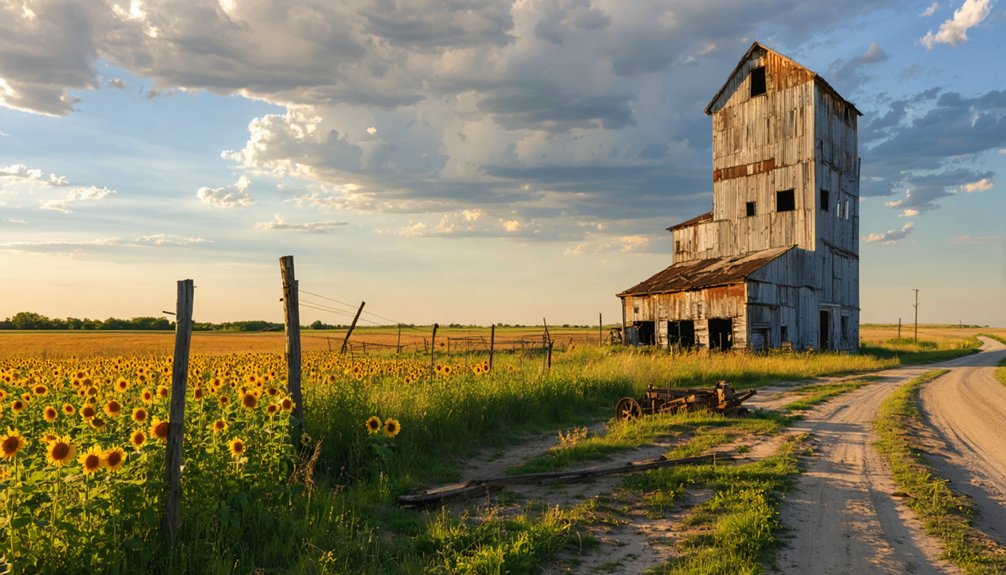
In the spring of 1857, while much of America looked westward with dreams of manifest destiny, two men in St. Johns, Michigan—Dr. Stone and Merritt Moore—ignited a vision that would spark a frontier settlement in Kansas’s Neosho Valley. They formed the Union Settlement Association, attracting colonists from Michigan and New York who’d build Geneva on fertile prairie bordered by timber-lined streams. The plan promised grandeur: 300 families, a non-sectarian college, mills, and shelter houses for newcomers.
Reality delivered harsh lessons. Only seventy-five families arrived, most lacking funds for proper provisions. Eastern settlers struggled with frontier hardships, leading to suffering and claim disputes. The shifting demographics and missed opportunities transformed Geneva’s ambitious college into a modest academy, its grand town into scattered cabins—a settlement diminished before truly rising.
What to See at the Geneva Ghost Town Site Today
The dreams that once animated Geneva’s founders have long faded into the Kansas prairie, leaving behind scattered traces of ambition frozen in stone and earth. You’ll discover the partially intact Congregational Church from the 1860s, its weathered walls standing defiant against time.
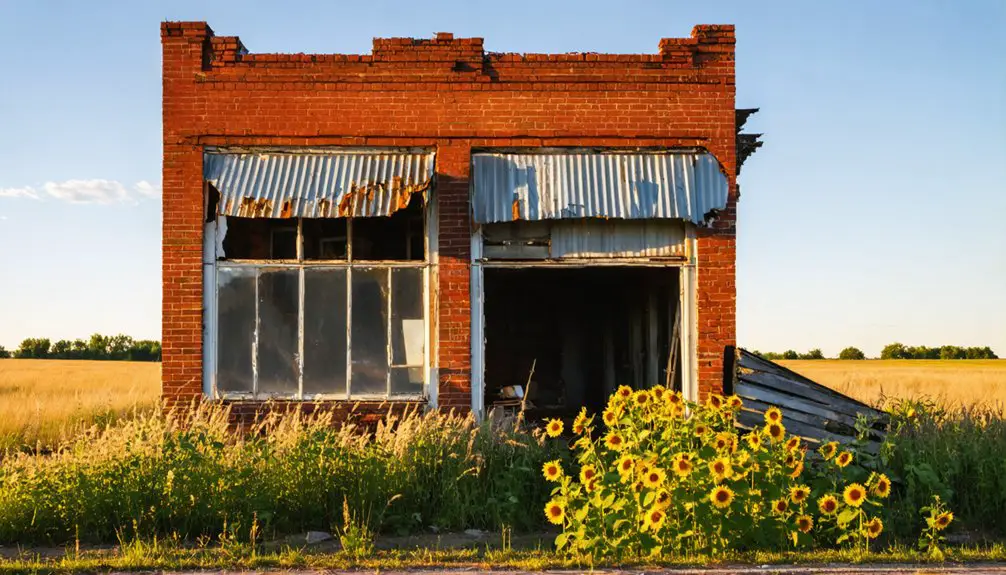
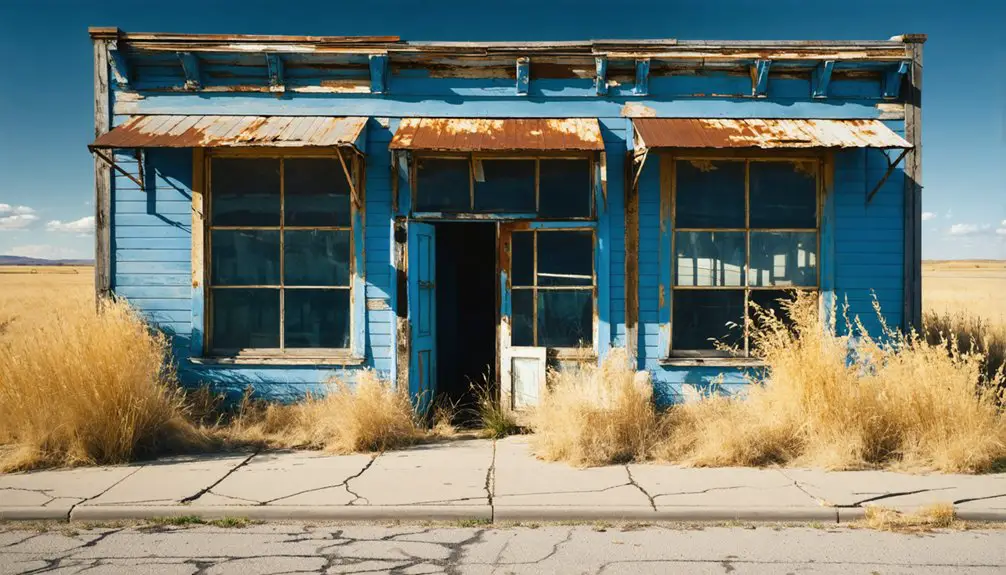
Nearby, the two-story frame academy building still rises above the grassland, monument to educational aspirations that never fully materialized. Stone foundations with eroded, squared edges dot the landscape where businesses once thrived—stores, blacksmith shops, and hotels reduced to archaeological whispers.
The dilapidated buildings and sawmill remnants along Indian Creek’s bank invite exploration. West of town, the cemetery holds markers dating to 1887, headstones spanning pioneer eras in quiet solitude, surrounded by endless farm fields beneath vast Kansas skies.
Getting There: Directions and Nearby Landmarks
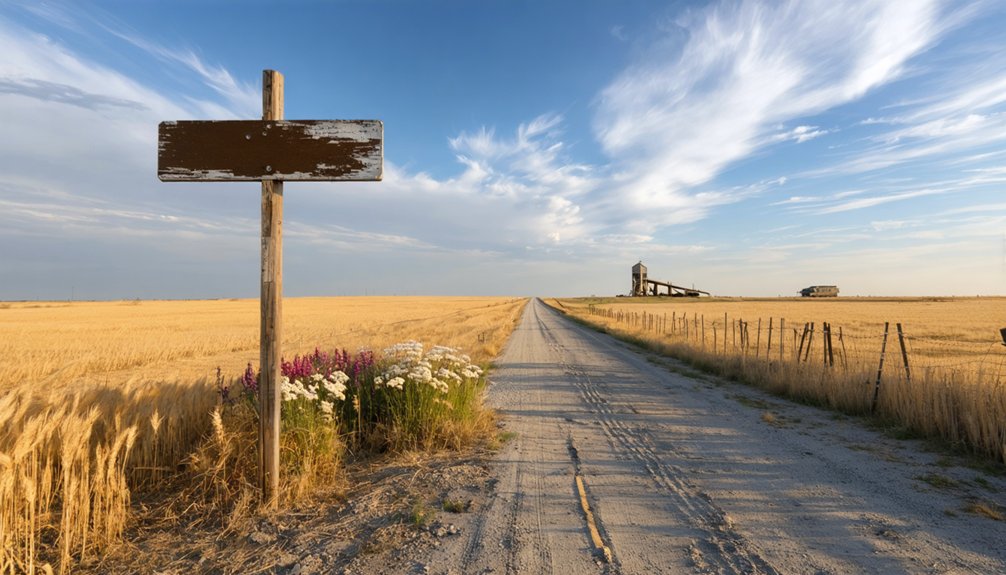
Reaching Geneva requires commitment to backcountry exploration, as this ghost town sits tucked away in the heart of Rice County’s agricultural expanse, roughly 60 miles north of Wichita along routes that trade interstate efficiency for rural character. You’ll navigate regional transportation infrastructure that hasn’t changed much since Geneva’s abandonment, following US Highway 56 through windswept prairies where local economic development favors grain elevators over gas stations.
Key Navigation Points:
- From Wichita’s airport, take I-135 north for 50 miles, then head east on US-56
- Use Lyons (10 miles north) as your supply base—Geneva lacks amenities
- Sterling and Little River mark your proximity; you’re threading between communities that survived
The Quivira National Wildlife Refuge lies 30 miles south, offering wildlife viewing after your ghost town exploration.
Best Time to Visit and What to Bring
Timing your Geneva expedition determines whether you’ll experience Kansas prairie mystique or merely endure it, and that difference hinges on choosing the sweet spots between April and June or September through November when temperatures hover in the 50s-70s°F range.
Visit Geneva during spring or fall shoulder seasons when mild temperatures transform exploration from uncomfortable obligation into pure prairie adventure.
These shoulder seasons deliver ideal conditions for wandering crumbling foundations and photographing wind-weathered structures without battling winter’s freezing grip or summer’s scorching heat.
Weather preparedness means packing layered clothing—light jackets shed easily when afternoon sun warms those abandoned storefronts you’re exploring. Sturdy boots handle uneven terrain while rain gear protects against sudden thunderstorms. Bring cameras, water, maps, and flashlights for investigating darkened buildings safely.
Seasonal variations dramatically transform your experience; spring wildflowers frame photogenic ruins beautifully, while fall’s reduced winds make extended exploration comfortable. Avoid January-February’s bitter cold and July-August’s oppressive heat entirely.
Exploring Other Abandoned Towns in Allen County
Allen County holds more forgotten places beyond Geneva, where railroad decisions and prairie economics left entire communities to dissolve into farmland.
You’ll find Cofachique’s vanished streets along the Neosho River near Iola, once the county’s first government center before its buildings rolled away on wagons in the 1860s.
The failed utopian experiment of Octagon City exists now only in state records, while coal mining settlements like those near Ransomville collapsed after 1914 when the seams ran dry and the trains stopped coming.
Nearby Ghost Town Sites
The rolling prairie landscape surrounding Geneva harbors scattered remnants of communities that once thrived during Kansas’s settlement boom. You’ll discover weathered foundations and forgotten cemeteries marking where pioneers built their dreams before economic shifts and railroad decisions guaranteed these towns’ fates.
Essential exploration sites include:
- Cofachique – Abandoned grain elevators stand sentinel over empty streets where community preservation efforts battle against time’s relentless march
- Historic Allen settlements – Crumbling schoolhouses and church ruins reveal the regional economic impact when agricultural markets collapsed
- Unmarked homestead locations – Hidden beneath tall grass, original settlement plots offer authentic connections to frontier life
You’re free to wander these sites independently, though respecting private property boundaries maintains continued access. Pack water, wear sturdy boots, and bring cameras to document your discoveries across Allen County’s vanishing heritage.
Railroad Bypass Impact
When railroad companies drew their routes across Kansas prairie in the 1860s, they unknowingly signed death warrants for dozens of hopeful settlements. Geneva’s story mirrors countless others across Allen County—towns platted with optimism, only to watch steel rails curve away toward neighboring sites. The demographic decline hit immediately after 1869, when the anticipated line bypassed Geneva entirely. Population froze at 100 residents, never expanding despite later becoming a minor Atchison, Topeka & Santa Fe station.
You’ll find business stagnation etched into every foundation stone. Enterprises built on speculation collapsed when freight wagons rolled elsewhere. By 1910, Geneva served merely as a shipping point—a consolation prize that couldn’t resurrect its original ambitions. Similar rail-dependent towns like Goff faced identical fates when line consolidations and buyouts stripped away their economic lifelines.
Prairie Settlement Patterns
Three dramatic examples reveal the harsh truth:
- Cofachique (1855) – Pro-slavery settlement abandoned after poor water access and political shifts forced complete relocation to Iola by 1860
- Carlyle Colony (1857) – Peaked at 200 residents with railroad access before economic pressures converted the townsite back into farmland
- Vegetarian Settlement – Collapsed within one year when Indian raids destroyed crops, proving agricultural sustainability demanded more than idealistic planning
Each ghost town marks where independence-seeking pioneers gambled everything on self-sufficient communities, only to learn prairie survival required adaptability over stubbornness.
The remnants of abandoned structures in Devizes Kansas stand as poignant reminders of dreams that once flourished. Each crumbling wall and sagging roof tells a story of ambition that met the harsh realities of frontier life. In their silence, they beckon the curious to reflect on the tenacity and struggles of those who sought a better future amidst vast and unforgiving landscapes.
Capturing the History: Photography Tips for Your Visit
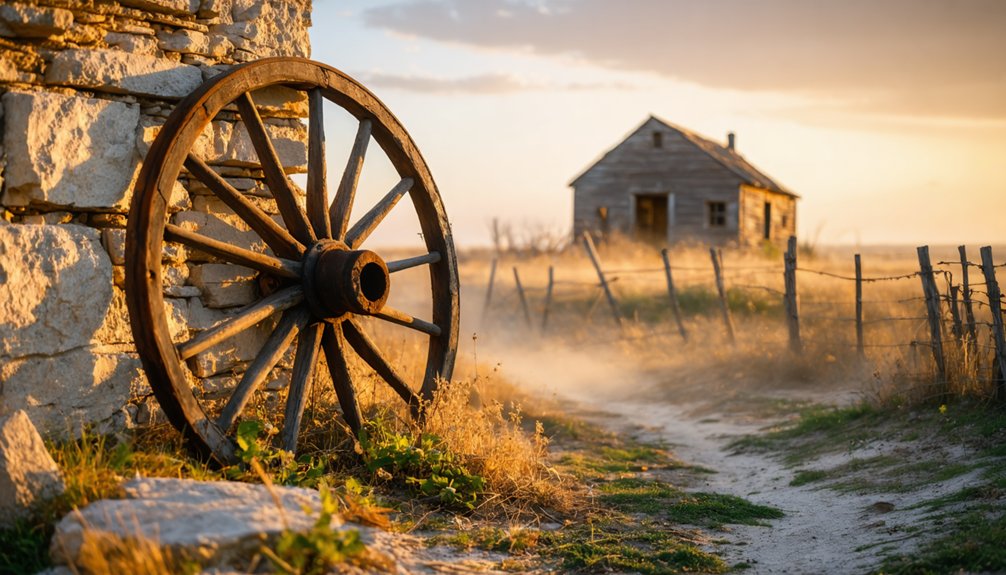
Golden hour transforms Geneva’s abandoned structures into a photographer’s canvas, where honey-colored light spills across the Stone Congregational Church’s weathered facade and ignites the tall prairie grasses surrounding the 1866 academy’s skeletal frame. You’ll navigate historic photography challenges by arriving at dawn, when soft light reveals intricate details without harsh shadows obscuring timber preservation techniques visible in remaining structures.
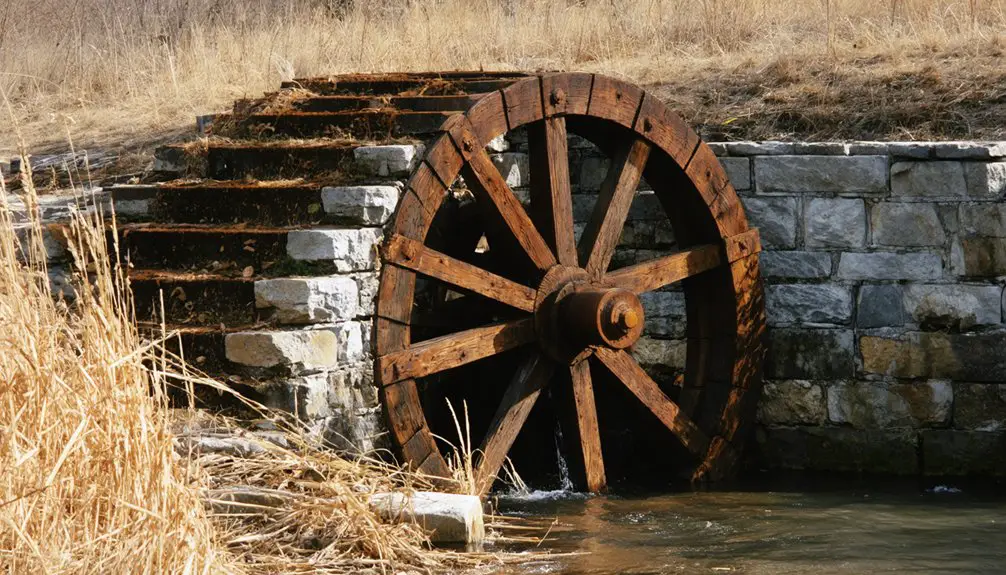
Position your camera low to emphasize the academy’s two-story skeleton against expansive skies, or track Indian Creek’s banks toward the 1858 sawmill foundation using natural leading lines. Wide-angle lenses capture the 640-acre townsite’s desolate beauty, while macro shots immortalize rusted artifacts. Overcast conditions work perfectly here—diffused light brings out textures in crumbling stone without blown highlights. Pack your tripod; Geneva’s fading remnants demand careful composition.
Frequently Asked Questions
Are There Any Safety Concerns When Visiting the Geneva Ghost Town Site?
Yes, you’ll face unsecured structures ready to collapse, potential wildlife dangers lurking in overgrown ruins, plus toxic soil contamination from mining operations. Stay alert, stick to public roads, and don’t climb debris piles or enter unstable buildings.
Is Permission Required to Access Private Property at the Geneva Location?
Like a locked gate protecting hidden treasure, trespassing concerns demand you obtain permission before exploring Geneva’s remains. Potential legal liability awaits uninvited visitors on posted private land. Respect property rights—contact local authorities or landowners first to guarantee, verify, or ascertain you’re exploring legally and freely.
What Facilities or Services Are Available Near the Ghost Town Area?
You’ll find minimal facilities at Geneva itself, so you’ll need potential lodging options and nearby dining establishments in Neosho Falls or Colony, both small towns located within eight miles offering basic traveler amenities and supplies.
Can Artifacts or Historical Items Be Collected From the Site?
No, you can’t legally claim “finders keepers” here. Obtaining artifacts without permission violates Kansas law and risks $10,000 fines. Instead, you’re free to explore responsibly—preserving historical integrity through photography while leaving Geneva’s treasures untouched for future adventurers.
Are There Guided Tours or Historical Markers Explaining Geneva’s History?
No guided tours or self-guided audio tours exist at Geneva’s remote site. You’ll find no historical signage marking the scattered ruins. Your exploration relies entirely on independent research and imagination while wandering these forgotten prairie remnants freely.