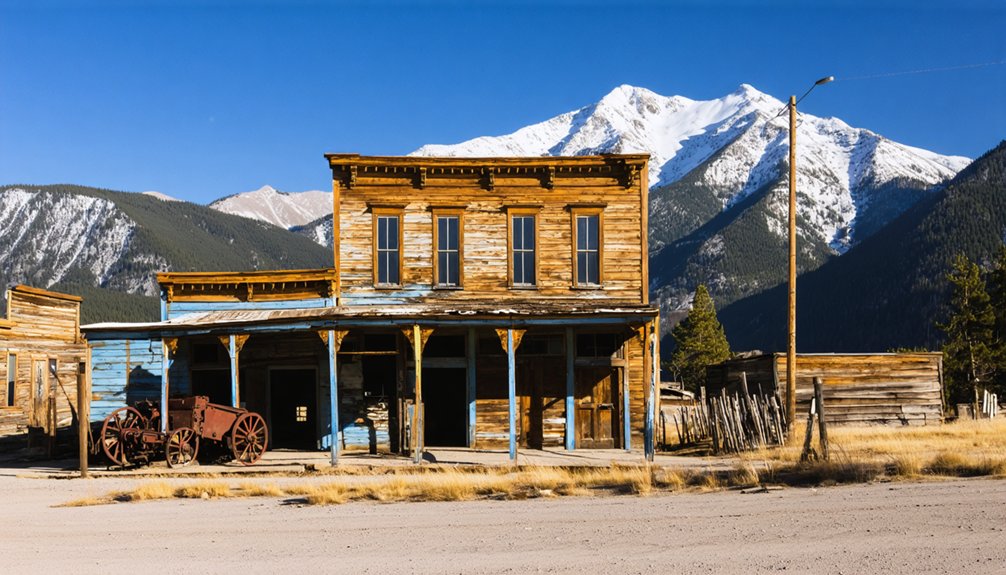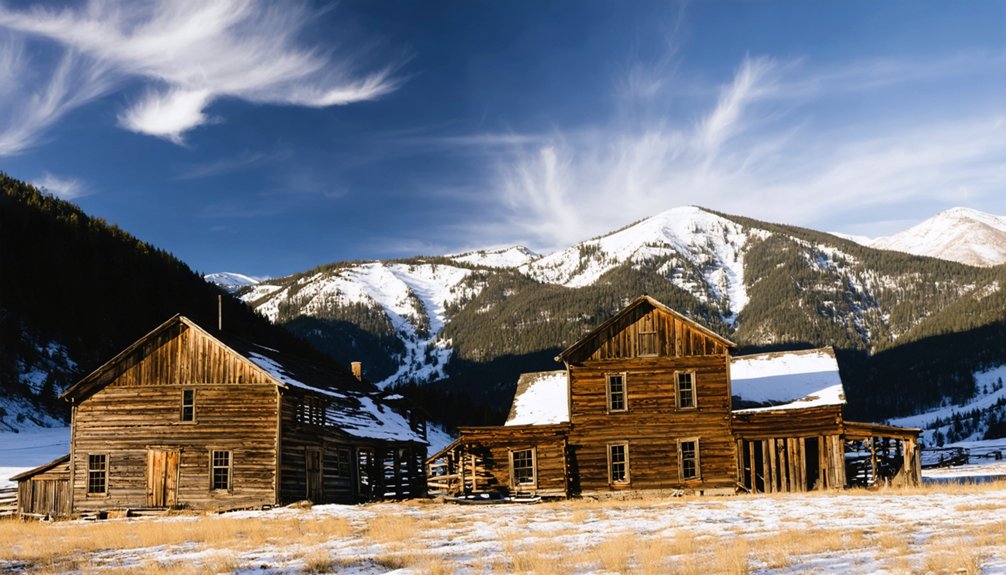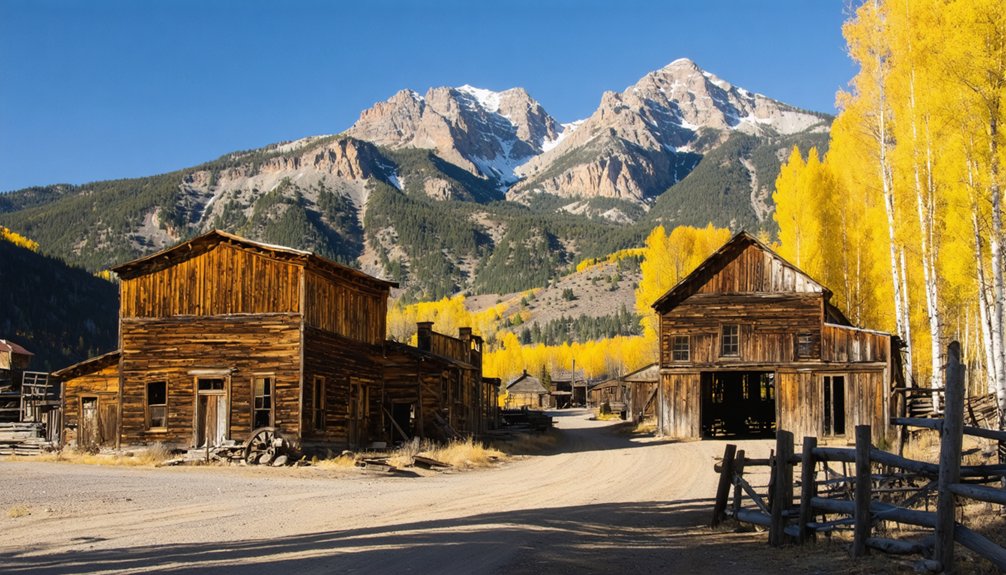
You’ll find Georgetown nestled at 8,530 feet in Clear Creek Valley, just an hour west of Denver on Highway 24. This Victorian mining town survived the 1893 silver crash, preserving its historic storefronts and museums year-round. Book the Georgetown Loop Railroad May through October to spiral 600 feet up Devil’s Gate High Bridge, or explore four fascinating museums showcasing everything from 1895 firefighting equipment to Victorian mining wealth. Summer brings mild 69-76°F temps perfect for wandering these weathered streets, though fall’s golden aspens draw fewer crowds and equally stunning views.
Key Takeaways
- Georgetown sits at 8,530 feet in Clear Creek Valley, accessible via Highway 24 or hourly buses from Denver.
- Visit May through October for the Georgetown Loop Railroad’s scenic corkscrew route and Devil’s Gate High Bridge crossing.
- Explore four museums including Hotel de Paris and Alpine Hose #2 for $10 admission showcasing mining-era history.
- Summer offers mild 69-76°F weather; shoulder season brings fewer crowds and fall foliage in September-October.
- Winter brings extreme conditions with 108-177 inches of snow requiring avalanche awareness and proper vehicle equipment.
From Gold Rush to Silver Boom: Georgetown’s Mining Legacy
The glint of gold in a mountain stream changed everything for George Griffith in 1859. His shafts yielded hundreds of dollars, sparking Colorado’s first significant silver discoveries—though miners initially ignored the white metal.
By 1861, over 2,000 claims dotted these peaks, but you’d have faced serious obstacles: existing technology couldn’t handle the complex ores, and the Civil War drained both manpower and capital.
Everything shifted in 1866 when silver-lead deposits transformed Georgetown into a roaring boom town. You’ll find remnants of legendary operations like the Pelican and Dives mines today. The challenges of complex ores demanded innovative smelting solutions, including the game-changing Bruckner furnace.
While hardships during silver crash devastated the district in 1893, Georgetown’s adaptability kept it alive—unlike countless ghost towns that weren’t so fortunate.
Getting There: Directions and Road Conditions
Georgetown’s remarkable mining history might draw you in, but reaching this mountain town requires some planning. You’ll find Highway 24 cutting through Clear Creek Valley at 8,530 feet, where transportation infrastructure has evolved from historic railroads to modern routes. Hourly buses run from Denver if you’d rather skip the drive, though nothing beats having your own wheels for exploring nearby ghost towns like Gilman, seven miles west toward Vail.
Winter demands respect here—avalanche risk mitigation shapes road maintenance schedules, and you’ll want proper tires and emergency supplies. Summer’s your best bet for maximum freedom, with clear roads and open storefronts lining the main drag.
The Georgetown Loop Railroad offers an authentic alternative route between Georgetown and Silver Plume, letting you experience the valley as miners once did.
Must-See Historic Attractions and Museums
Stepping off Main Street into the Alpine Hose #2 Firefighting Museum feels like interrupting a crew mid-shift in 1895. Century old firefighting equipment fills the brick building—hand-drawn hose carts stand ready, leather helmets rest on benches, and brass bells gleam under dusty light filtering through the tower windows.
Your museum crawl should include:
- Hamill House Museum – Victorian architectural elements dominate this 1867 Country Gothic mansion at 305 Argentine Street, where gaslighting, walnut woodwork, and a six-seater privy showcase mining wealth’s excesses
- Georgetown Energy Museum – Working turbines from 1900 still generate power while you explore America’s oldest continuously operating hydroelectric plant
- Hotel de Paris Museum – Original 1875 furnishings preserved exactly as French immigrant Louis Dupuy left them
Each $10 admission reveals layers of frontier ingenuity you won’t find sanitized elsewhere.
Riding the Georgetown Loop Railroad
You’ll step aboard authentic narrow-gauge steam locomotives that navigate one of the most ambitious railroad routes ever conceived in the 19th century—a corkscrew track that spirals 600 feet up through Clear Creek Canyon, crossing the river four times in just two straight-line miles.
The journey takes you over Devil’s Gate High Bridge, a 95-foot steel trestle that’ll have you peering straight down into the rushing waters below while your guide shares tales of the silver miners who once rode these same rails.
Plan your visit between May and early October when the trains run daily, and book tickets in advance during peak summer months and fall foliage season to secure your spot on this living piece of Colorado history.
Engineering Marvel and History
Winding through Clear Creek Canyon like a steel ribbon, the Georgetown Loop Railroad climbs 600 feet in elevation over just two miles—a feat that demanded three years of sporadic surveying work and some serious 19th-century ingenuity. Completed in 1884, this iconic railroad infrastructure conquered impossible terrain through hairpin turns and horseshoe curves averaging 3.5% grade.
The silver boom demanded solutions, and engineers delivered:
- Devil’s Gate High Bridge soars 95 feet above the canyon floor on timber trestlework
- Four Creek crossings navigate hazardous winter conditions through the narrow gorge
- Corkscrew design includes a dramatic 30-degree horseshoe curve
You’ll appreciate the Colorado Historical Society’s 1980s restoration, which rebuilt this engineering marvel using authentic techniques. The narrow-gauge track still operates summer excursions with Baldwin steam locomotives—freedom on rails.
Seasonal Schedule and Tickets
The Georgetown Loop operates March through December, and timing your visit right means the difference between a standard scenic ride and an unforgettable themed adventure. I’ve witnessed Opening Weekend’s face painting chaos, sipped coffee at dawn departures, and collected enough custom Faro Chips to fill a mason jar.
Your ticket reservations should align with special event offerings—Bunny Train for spring energy, Celticfest if you’re craving fiddle music and whiskey culture, or Sasquatch Adventure when July heat demands mountain escape. Evening trains depart Silver Plume at 6:30 PM throughout June, perfect for photographers chasing golden hour.
Book online at GeorgetownLoopRR.com or call 888.456.6777. Weekend and holiday slots vanish fast. Arrive thirty minutes early—these locomotives don’t wait for stragglers.
Best Times to Visit for Weather and Events
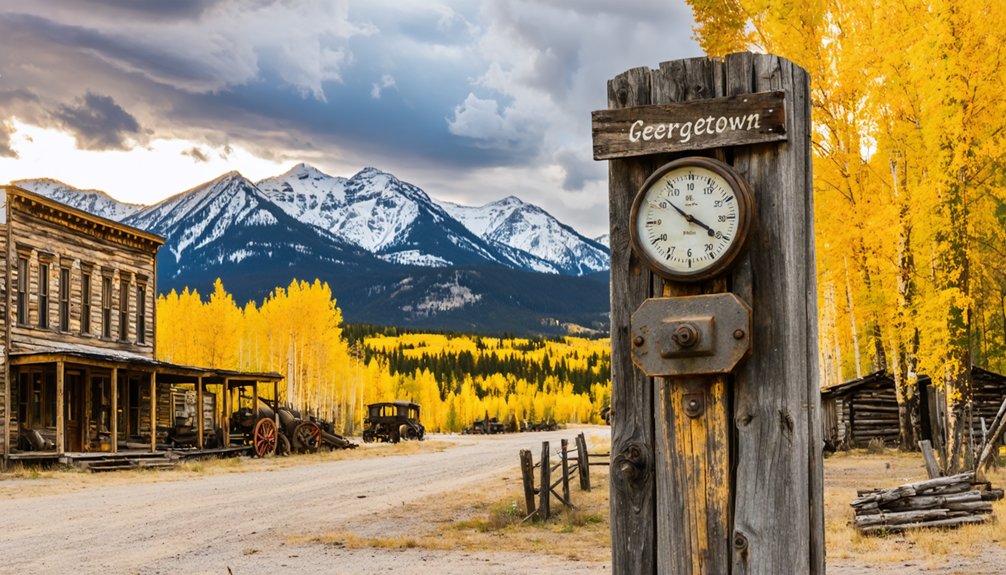
Planning your Georgetown ghost town adventure requires careful consideration of the weather, as this high-altitude Colorado destination transforms dramatically with each season. You’ll find the sweet spot between June and August when temperatures hover around 69-76°F, perfect for exploring abandoned structures without weather challenges in winter limiting your access. Peak seasons for visitation bring crowds, so consider September’s comfortable 67°F highs for a more solitary experience.
Summer months offer ideal conditions for ghost town exploration, with mild temperatures and clear skies making abandoned sites easily accessible.
Optimal Visit Windows:
- Summer Freedom (June-August): Crystal-clear skies among 247 annual sunny days let you photograph decaying buildings in perfect light
- Shoulder Season Magic (September-October): Enjoy 50-70°F temperatures with exceptional 26-28 mile visibility and fewer tourists
- Winter Caution: Expect 108-177 inches of snow and bone-chilling 9-17°F lows that’ll restrict road access completely
What Makes Georgetown Different From Other Ghost Towns
Unlike true ghost towns where you’ll peer through broken windows at crumbling ruins, Georgetown greets you with meticulously maintained Victorian homes featuring their original walnut woodwork and gas lighting fixtures—structures you can actually walk through rather than photograph from behind caution tape.
You’re not limited to a single summer season either; the town’s year-round residents keep shops, museums, and candy stores open whether you visit during peak fall foliage or quiet winter months when snow blankets the 8,530-foot elevation.
The Georgetown Loop Railroad adds an engineering spectacle most ghost towns can’t match, carrying you across a dizzying 95-foot-high trestle that spirals above the valley floor.
Preserved Victorian Architecture Thrives
While most Western mining towns crumbled into skeletal ruins after the ore played out, Georgetown transformed itself into a living museum of Victorian grandeur. You’ll discover Colorado’s pioneering preservation spirit here—the town passed the state’s first historic preservation ordinance in 1970, protecting its architectural treasures through mandatory design reviews.
Georgetown’s architectural highlights you can’t miss:
- Gothic Revival masterpieces like the Curtis-Tison House (1870s) displaying ornate woodwork and period-authentic details
- Hotel de Paris (1875), restored to its original elegance as one of the West’s finest Victorian inns
- Hamill House (1879), where restoration projects showcase silver baron lifestyles with authentic furnishings and heritage gardens
Community engagement through nonprofits like Historic Georgetown, Inc. safeguards these structures aren’t just preserved—they’re interpreted, celebrated, and accessible for exploration.
Accessible Year-Round Tourism
Georgetown’s location just off Interstate 70 makes it the rare ghost town you can visit in February without four-wheel drive or survival gear. You’ll find modern transportation access that transforms this 1860s silver camp into something genuinely unique—a Victorian time capsule without the isolation that claimed most mining towns.
The year round visitor amenities here tell a different story than abandonment. Stop for après-ski at authentic saloons that’ve welcomed travelers since the 1950s, browse museums that actually stay open beyond summer, and grab lunch at cafes serving a population that never fully departed.
That 8,500-foot elevation stays manageable because state plows keep I-70 clear, and the town’s 1,324 residents guarantee shops don’t shutter when snow flies. You’re free to explore history on your schedule, not nature’s.
Engineering Marvel Railroad Loop
Most ghost towns died when their mines ran dry, but Georgetown survived partly because someone built something extraordinary to get there—a railroad that corkscrewed up a canyon wall like a steel ribbon defying gravity.
The Georgetown Loop climbed 600 feet in just two miles through counterbalance engineering that still amazes visitors. You’ll understand why when you see it:
- The Devil’s Gate Viaduct construction placed curved iron 100 feet above Clear Creek, where the track literally crosses over itself
- Four hairpin turns snake through horseshoe curves at 4% grades—steep enough that trains used steel plates instead of couplers
- Seven daily trains once hauled silver ore and adventurers through this engineering marvel
Today’s restored route lets you ride that 1884 achievement yourself, experiencing freedom those original miners chased into these mountains.
Frequently Asked Questions
Are There Restaurants and Lodging Options Available in Georgetown Today?
You’ll find excellent dining options like Cooper’s on the Creek and Pho Bay open now, plus accommodation availability at Georgetown Mountain Inn and Super 8. This historic mountain town welcomes travelers with diverse restaurants and comfortable lodging year-round.
How Long Should I Plan to Spend Exploring Georgetown’s Historic District?
You’ll need an eternity—or realistically 6-8 hours—to properly explore Georgetown’s historic buildings and local attractions. Plan a full day wandering Victorian streets, touring museums, and riding the railroad. You won’t regret dedicating time to this preserved gem.
Is Georgetown Suitable for Visiting With Young Children?
Yes, Georgetown’s perfect for young children! You’ll find child friendly activities like age-appropriate playgrounds, gentle lake trails, and gold panning. Family friendly attractions include the steam train, ice cream shops, and interactive mining tours that’ll captivate little adventurers.
Can I Tour the Lebanon Silver Mine Year-Round?
No, you can’t tour the Lebanon Silver Mine year-round. Mine tour schedules run April through mid-September only, and mine accessibility requires riding the Georgetown Loop Railroad during daytime departures. Book ahead—tours fill fast!
Are Pets Allowed on the Georgetown Loop Railroad Trains?
Like a guardian at freedom’s gate, train service policies exclude pets from Georgetown Loop Railroad—only ADA service animals board. You’ll need pet friendly lodging nearby while exploring, though Georgetown’s shops welcome your four-legged companion.