Plan your Gilmore ghost town adventure for June through August, when you’ll navigate 65 miles of Highway 28 south from Salmon, then tackle a moderate gravel spur to reach eight stabilized structures from the 1920s mining era. You’ll need a four-wheel-drive vehicle, layered clothing, and plenty of water as you explore the hollow post office, weathered hotel, and skeletal 30-ton smelter surrounded by 20,000 feet of tunnels honeycombing the mountain. The following sections reveal hidden artifacts, nearby alpine recreation, and winter survival considerations.
Key Takeaways
- Gilmore is 65 miles south of Salmon on Highway 28, requiring a four-wheel-drive vehicle for the moderate-difficulty gravel spur road.
- Visit June through September for optimal weather, with temperatures ranging from 60-85°F and accessible roads before harsh winter conditions.
- Eight stabilized historic structures remain open, including an old hotel, post office, and wood-frame buildings from the 1930s mining era.
- Pack emergency supplies including GPS, water, layered clothing, and waterproof boots for this remote location with no facilities available.
- Explore nearby attractions like Meadow Lake Campground, alpine hiking trails, and Salmon River rafting within the Lemhi Range wilderness.
Getting to Gilmore: Routes and Road Conditions
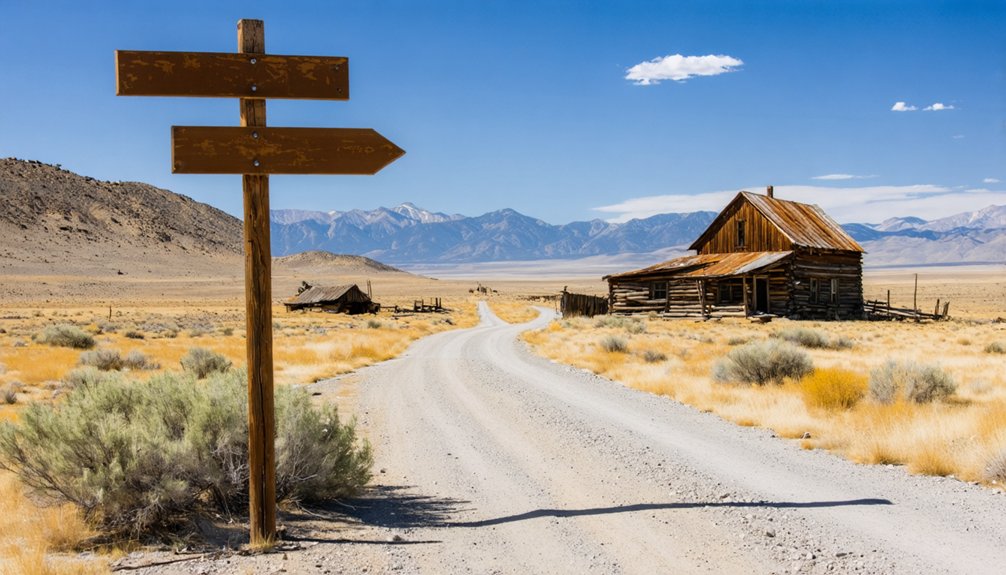
Tucked away in the rugged mountains of eastern Idaho, Gilmore sits approximately 65 miles south of Salmon along Highway 28, where a short gravel spur peels off toward the weathered remains of this ghost town. You’ll spot the Riolite Road sign marking your entry.
Sixty-five miles of mountain highway leads to Gilmore’s weathered remnants, where a gravel spur branches toward Idaho’s authentic ghost town solitude.
From Idaho Falls, it’s roughly 100 miles northwest—about 130 minutes of open highway driving. The gravel segment rates moderate difficulty, though snow complicates winter access considerably. Summer and fall offer your best conditions for exploration.
Watch for old railway grades threading through the landscape as you approach. Remote location challenges mean planning ahead: there aren’t bathrooms at primitive campsites nearby.
Private property concerns require vigilance—resist entering buildings or fenced areas. This isolation that once delayed mining development until 1910 now rewards you with solitude and authentic frontier atmosphere.
What Remains: Historic Buildings and Structures to Visit
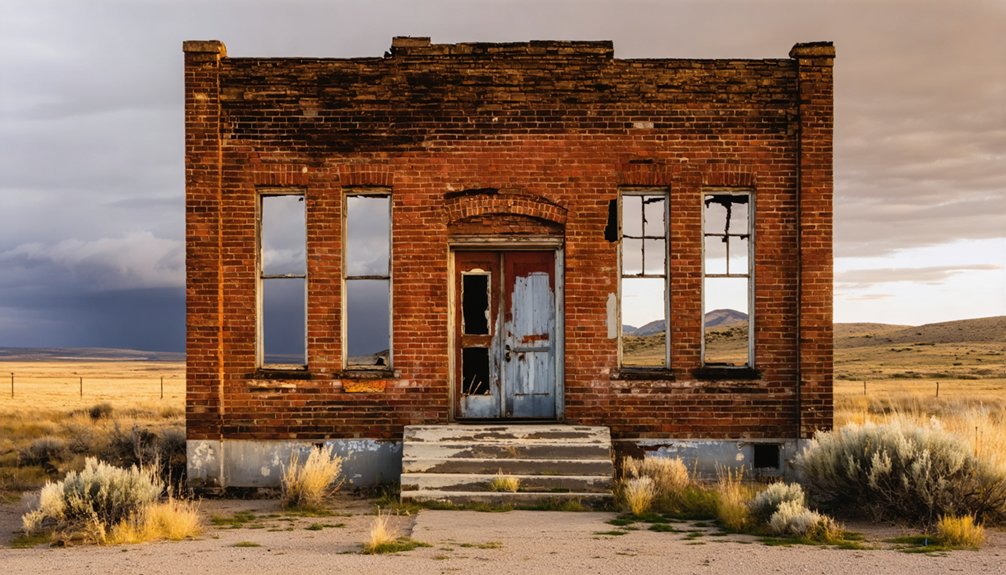
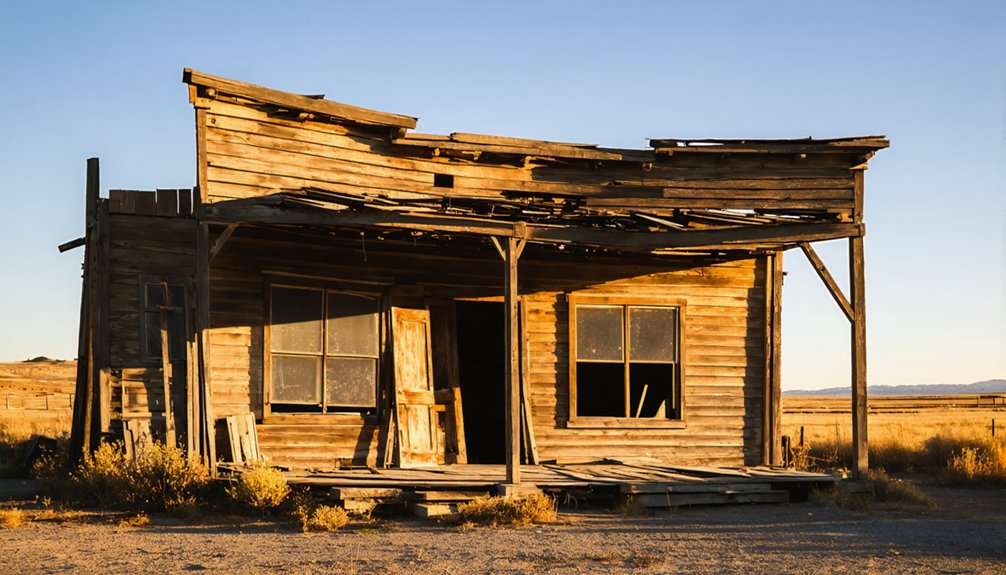
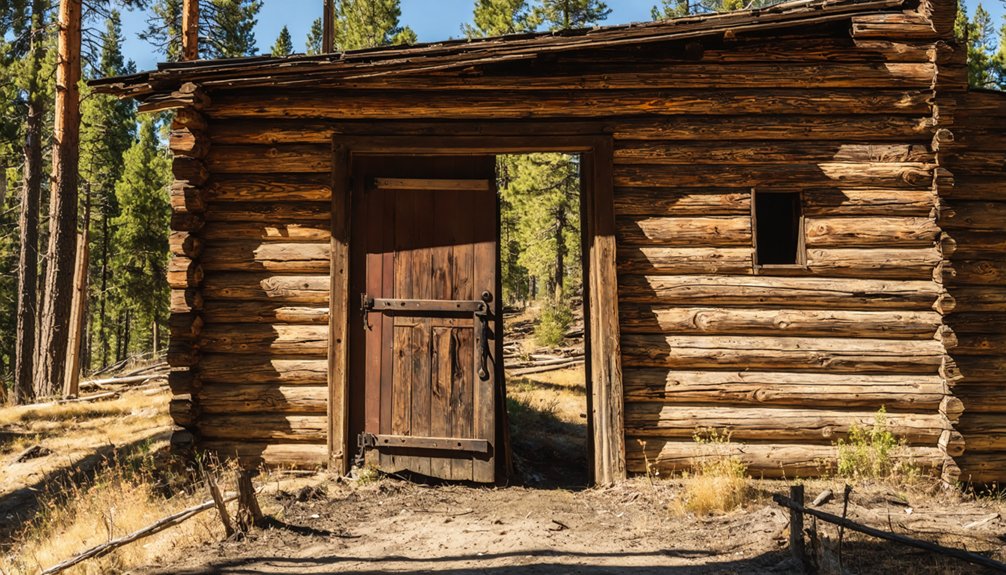
When you crest the final hill and Gilmore’s skeletal remains spread before you, you’ll immediately spot the eight log and frame structures the Lemhi County Historical Society stabilized back in 2010—weathered sentinels standing against a backdrop of sage-covered slopes.
Wander among the old hotel with its candy store remnants, the hollow post office, and wood-frame buildings dating to the early 1930s. Four untouched structures display historic signage explaining their original purposes during Gilmore’s peak population of 600.
The two cemeteries—particularly the lower one with graves from 1871 to 1911—offer haunting glimpses into mining-town mortality. Recent property restrictions have closed Upper Gilmore, but visitor safety guidelines still permit respectful exploration of the main townsite. Watch for unstable floors and heavy metal contamination from century-old mining operations.
Best Time to Visit and What to Bring
Planning your Gilmore adventure means timing it right—those crumbling structures won’t appreciate you slip-sliding through spring mud or battling subzero windchills that’ll numb your fingers before you’ve snapped a single photo. Target June through August when weather patterns deliver 70-85°F days and minimal precipitation across those 200+ annual sunny days.
September offers solitude with comfortable 60-75°F temps before winter’s harsh grip returns.
Pack layered clothing for dramatic temperature swings, waterproof boots for unpredictable precipitation, and sturdy gloves for handling rusty relics. Your four-wheel-drive vehicle needs emergency blankets, GPS, and ample water—that 60-mile gravel stretch from Salmon demands respect.
Avoid seasonal events like eastern Idaho’s brutal winters, when -20°F means and 70-inch snowfalls transform this ghost town into genuinely hostile territory.
Exploring the historic sites in Gilmore, Idaho can provide a fascinating glimpse into the past, allowing visitors to appreciate the rich history of this once-thriving mining town. Despite its harsh winters, the remnants of the area’s elegant architecture and the stories they tell remain captivating year-round. For those willing to brave the cold, the stark beauty of the snowy landscape adds a unique charm to your journey through history.
Exploring the Mining History and Artifacts
Silver-laced veins that once pulsed with $135,000 worth of industrial ambition still snake through Spring Mountain’s fractured limestone, their legacy scattered across Gilmore’s weathered landscape in rusted machinery and collapsing timber frames. You’ll discover remnants of mining operations that transformed early prospecting efforts into an industrial powerhouse—20,000 feet of tunnels honeycomb the mountain beneath your boots.
Key artifacts you’ll encounter:
- Skeletal remains of the thirty-ton smelter that processed ore starting in 1882
- Portal entrance to the massive 6,000-foot tunnel completed in 1916
- Rusted narrow-gauge railroad tracks from the “Get Off and Push” line
- Weathered timber supports marking shaft entrances throughout the district
Tread carefully around open shafts and unstable structures—this freedom comes with responsibility for your safety.
Nearby Attractions and Recreational Activities
Beyond the ghostly remnants of industrial fortune, the Lemhi Range unfolds into a playground of alpine wilderness that’ll test your boots and reward your camera roll. Drive five miles up the gravel road to Meadow Lake Campground, where crystalline waters mirror ten peaks exceeding 11,000 feet. You’ll find paddle boarding opportunities on glass-smooth mornings before the wind picks up.
The ridge line trail gains 1,000 feet to the pass—manageable in a morning, spectacular at sunrise. Alpine lake recreation includes cold-water swimming for the brave and fishing for the patient. Base camp here for backpacking deeper into the Lemhi backcountry, or loop above the lake for quick afternoon vistas.
Down-valley, the Salmon River offers rafting trips that include historic gold mine tours, blending adrenaline with archaeology.
Frequently Asked Questions
Is Camping Allowed on the Private Land Parcels in Gilmore?
No, you can’t camp on Gilmore’s private parcels without explicit private landowner permission. Pitching your tent uninvited raises potential trespassing concerns that’ll kill your freedom-seeking adventure. Always ask first—respectful wanderers maintain access for everyone.
Are Any Original Structures Available for Overnight Accommodation or Rental?
No, you can’t rent any original structures—despite restoration status stabilizing eight buildings, they’re unsafe ruins without furnishings or onsite caretakers. The collapsed cabins and hotel remnants stand as skeletal monuments to freedom-seekers, meant for exploration only, not overnight stays.
What Permits or Permissions Are Needed to Explore the Townsite?
You’ll need landowner permission for private property restrictions in lower Gilmore and upper town. However, the original hillside townsite on federal land follows simple public access guidelines—explore freely around stabilized structures while respecting “don’t disturb” principles.
Is the Old Railroad Route Still Visible or Accessible for Hiking?
Want to trace history’s footsteps? You’ll find the old Gilmore railroad route visible from the highway, with public access along gravel sections. Trail conditions vary—expect rocky terrain near mine dumps and steep draws requiring sturdy boots for your adventure.
Are There Guided Tours Available at the Gilmore Ghost Town?
Guided tours aren’t provided regularly, but you’ll find self-guided exploration available throughout the ghost town. Wander freely among 40 abandoned buildings, reading descriptive signage at your own pace. The caretaker occasionally offers personalized tours if you’re lucky.