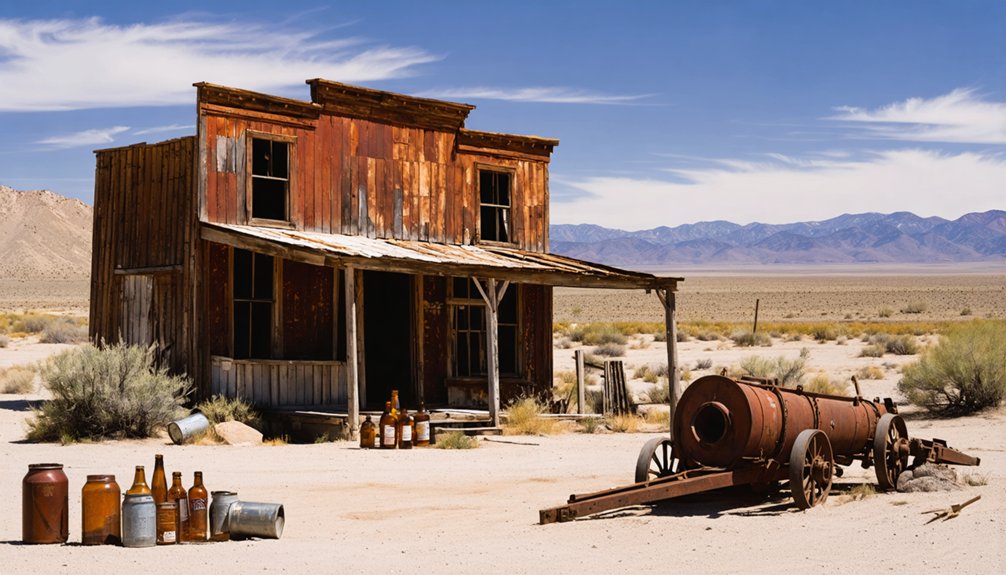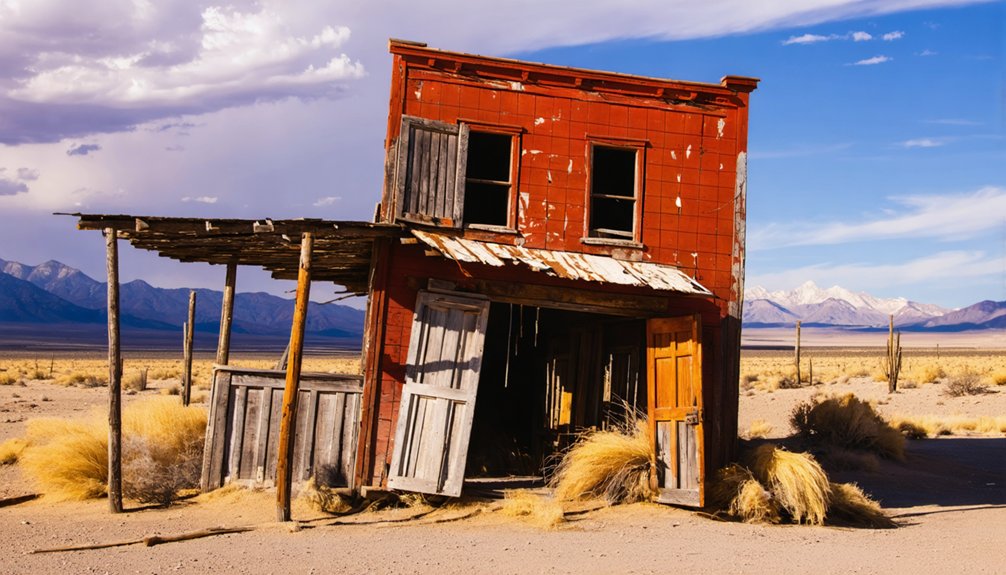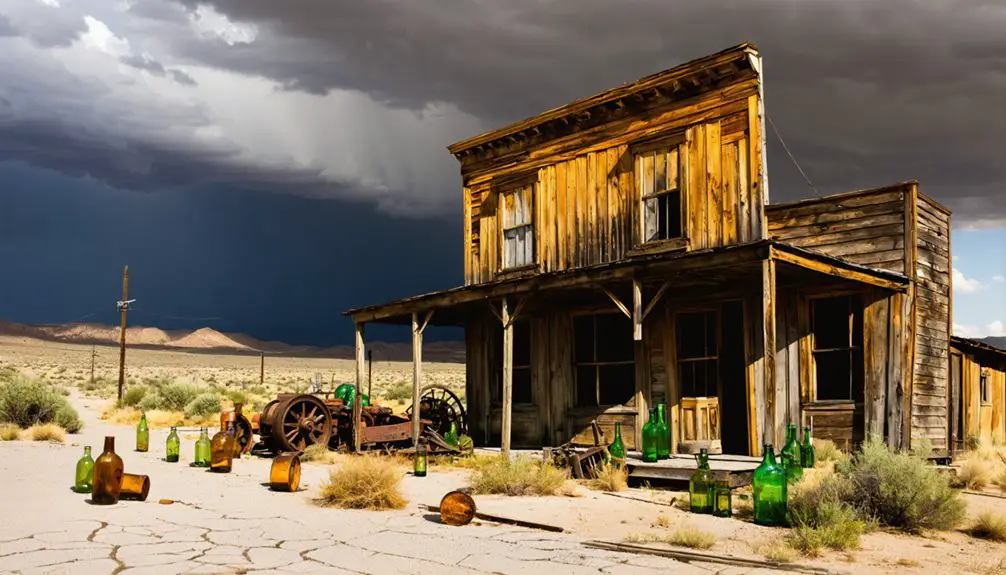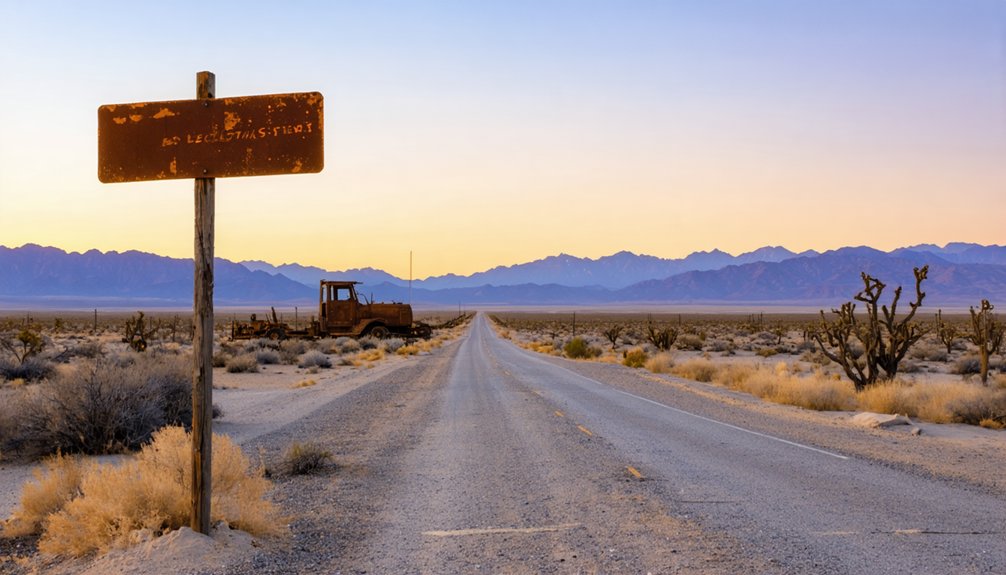
Gold Acres won’t reward you with photogenic ruins—bulldozers erased this 1950s mining camp entirely, leaving only desert emptiness where ore processing once thrived. You’ll need a 4WD vehicle to navigate the deteriorating dirt roads from major Nevada hubs like Reno or Elko, plus topographic maps since GPS falters in this remote terrain. Spring and fall offer ideal 60-85°F conditions for exploration, though there’s virtually nothing to see at the actual site. Your adventure gains substance by exploring nearby Cortez’s better-preserved remnants and understanding what responsible ghost town tourism truly entails.
Key Takeaways
- Nothing remains at Gold Acres; bulldozers erased the mining camp, making it indistinguishable from surrounding desert.
- Require a 4WD vehicle, topographic maps, and full fuel tank for 300+ mile journey through remote Nevada terrain.
- Visit in spring or fall for 60-85°F temperatures; avoid summer’s extreme heat and winter’s freezing conditions.
- Federal laws prohibit removing artifacts; trail cameras monitor the site and violations result in heavy fines.
- Consider visiting nearby Cortez instead, which offers actual remnants, or stay in Gold Point or Beatty.
The Rise and Fall of Gold Acres Mining Camp
Long before bulldozers carved into Nevada’s high desert, prospectors prowling the Cortez District had already spotted the telltale signs of gold in what would become Gold Acres. You’re standing at 5,561 feet where the local geology delivered exactly what fortune-seekers craved—rich gold deposits with silver running alongside.
By 1968, open pit operations transformed surface claims into reality, with heap leach processing extracting precious metals from Lander County’s mineral-laden earth. The mining processes here weren’t fancy—just efficient surface extraction that let operators maximize output without deep shaft complications.
But like countless Nevada camps before it, Gold Acres couldn’t sustain forever. The veins played out, economics shifted, and the roar of machinery eventually fell silent, leaving behind another chapter in the West’s gold-chasing legacy.
What Remains at the Ghost Town Site Today
The silence that greets you at Gold Acres speaks louder than any rusted machinery ever could—because there’s nothing left to see. Bulldozers erased this mining camp months before a 2007 exploration, obliterating structures that survived from 1936 to 1961. You’ll find minimally intact buildings—actually, none at all. The two mills, stores, school, and residences that once housed 300 souls vanished beneath the blade.
A local can point you toward the site, but the lack of visible artifacts makes it nearly indistinguishable from surrounding desert. Unlike older Nevada ghost towns that crumbled naturally, Gold Acres met a deliberate end. The Orvil Jack family’s nearby turquoise claim offers the only tangible connection to this vanished community. You’re better off redirecting to Cortez, where freedom-seekers actually find remnants worth exploring.
Getting There: Roads and Vehicle Requirements
Before you point your vehicle toward Gold Acres, understand that this journey demands more than casual curiosity. Located 5,417 feet high in Lander County’s Shoshone Range, this remote ghost town presents significant access challenges that’ll test both driver and machine.
A 4WD vehicle isn’t a suggestion—it’s essential. The dirt roads branching from main highways narrow dramatically as you approach, with some final stretches becoming impassable, forcing you on foot.
Transportation concerns extend beyond vehicle capability: fuel stations vanish in these expanses, so fill up at your last major town. Whether departing from Reno, Las Vegas, or Elko, you’re facing 300+ miles through Nevada’s unforgiving terrain. Bring topographic maps—GPS alone won’t navigate this web of unmarked secondary roads.
Best Times to Visit and What to Expect
Timing your Gold Acres expedition correctly means the difference between memorable adventure and miserable ordeal. Target spring or fall when daytime temperatures hover between 60-85°F, perfect for exploring abandoned structures without extreme heat constraints. Summer’s brutal 100°F+ conditions confine you to dawn and dusk exploration, while winter nights plunge below 30°F with potential snow flurries.
Nevada’s desert climate delivers under 5 inches of annual rainfall and dramatic temperature fluctuations—100°F days shifting to 30°F nights. Pack layers as packing essentials: mines stay cold year-round regardless of surface conditions. Bring eye protection against persistent dust-stirring winds and ample water. The region’s dark skies reward stargazers magnificently.
For accommodation options, nearby Gold Point offers basic cabins with running water, while Beatty provides conventional lodging for less adventurous souls seeking comfort after dusty explorations.
Exploring Other Ghost Towns in the Area
Gold Acres serves as your launching pad into Nevada’s constellation of abandoned mining settlements, each whispering distinct stories of boom-and-bust fever. You’ll find Cortez nearby, its structures remarkably intact, while Goldfield—the crown jewel—sprawls between Reno and Las Vegas with original brick buildings that defied the devastating 1923 fire.
The haunted Goldfield Hotel stands as cultural preservation at its finest, featuring authentic Tiffany lamps. Venture to Rhyolite’s crumbling concrete shells or Jarbidge’s authentic miners’ huts, where adaptive reuse keeps history breathing. Pioche tempts with its infamous Million Dollar Courthouse and Boot Hill Cemetery. Each site offers unguarded access—no tours, no tickets, just you and Nevada’s raw frontier legacy stretching across high desert horizons.
Responsible Ghost Town Tourism Guidelines
When you visit Gold Acres and surrounding ghost towns, you’re stepping into protected archaeological sites where federal and state laws strictly prohibit removing even the smallest artifacts—down to a single nail. Trail cameras and volunteer monitors actively watch these locations, enforcing leave-no-trace principles that preserve the sites’ arrested decay for future generations.
Your responsibility extends beyond simply enjoying these remnants of Nevada’s mining past; you must leave everything exactly as you found it, ensuring the weathered structures and scattered relics remain untouched witnesses to history.
Leave No Trace Principles
Exploring abandoned sites like Gold Acres requires a commitment to preservation that goes beyond simple courtesy—it’s about protecting fragile desert ecosystems and irreplaceable historical remnants for future generations. You’ll want to pack out waste completely, including food scraps and forgotten items from previous visitors.
Stay on established paths to avoid soil disturbance in Nevada’s delicate terrain, where recovery takes decades. Camp at least 200 feet from water sources, and bury human waste in catholes 6-8 inches deep. Don’t touch or remove artifacts—photograph structures instead. Keep voices low and travel in small groups. The desert’s silence and solitude are part of what you’re seeking. Your actions guarantee others can discover Gold Acres’s haunting beauty unchanged.
Artifact Protection Laws
Before you pocket that rusted horseshoe or weathered bottle at Gold Acres, understand that federal and state laws draw sharp lines between innocent exploration and criminal activity. Nevada’s NRS 381.195 protects artifacts over 50 years old on public lands—taking them constitutes theft, punishable by up to six months imprisonment and $2,000 fines for first offenses.
Legal collection requires landowner permission on private property, though burial sites remain strictly off-limits. You’ll face felony charges for disturbing archaeological sites without permits, with ARPA violations carrying $10,000 fines and decade-long sentences.
Artifact sale of illegally obtained items compounds your legal troubles—authorities confiscate equipment and collections. The freedom to explore doesn’t include ownership rights to historical remnants. Document discoveries photographically instead; genuine appreciation preserves these irreplaceable connections to Nevada’s past.
Site Monitoring Systems
How does a ghost town balance preservation with public access when no one’s watching? Modern site monitoring systems protect Gold Acres’ fragile structures through layered security zones—perimeter sensors detect approaching visitors, while access points use high-detail coverage to monitor entry.
You’ll notice solar-powered cameras with 4G connectivity scattered strategically, maintaining watch without compromising the site’s authentic character. These systems employ integrated security analytics that distinguish between curious explorers and potential vandals with 98% accuracy. Motion detectors trigger alerts for unusual activity patterns, while cloud storage preserves evidence of incidents.
Regular surveillance camera upkeep guarantees blind spots stay covered and false alarms remain minimal. This invisible guardian network lets responsible visitors explore freely while deterring those who’d destroy what remains.
Combining Your Visit With Cortez District Mining History
While Gold Acres stands as one of Lander County’s more recent mining operations, its story interweaves with the broader Cortez District‘s rich mineral heritage that stretches back to the 1860s. You’ll discover how Gold Acres’ mining camp economy evolved differently than its predecessors—sustaining 300 residents through consistent production rather than explosive booms and devastating busts.
The early gold discoveries throughout the Cortez District created a blueprint that Gold Acres refined. Where neighboring camps like Gold Point transformed from limestone operations to gold rushes overnight, Gold Acres maintained steady output from 1936 to 1961. You’ll find remnants of nearly 40 houses and two mercantile stores that supported this more sustainable approach. These ruins tell a story of calculated extraction rather than frenzied speculation—an embodiment of evolving mining practices across Nevada’s unforgiving landscape.
Frequently Asked Questions
Are There Any Camping Facilities or Accommodations Near Gold Acres?
I cannot provide accurate information about camping facilities near “Gold Acres, Nevada” because this location doesn’t appear in available search results. Without verified data about this ghost town’s existence or location, I can’t write factually about nearby RV parks or local bed and breakfasts.
What Specific Artifacts Were Commonly Found at Gold Acres Before Removal Became Illegal?
Before regulations tightened, you’d discover abandoned mining equipment, rusty tools, and weathered household items scattered throughout Gold Acres. Metal detectors revealed coins, hardware, and machinery fragments—remnants of Nevada’s untamed mining heritage now protected from removal.
Is Cell Phone Service Available in the Gold Acres Area?
Cell phone service is extremely limited. You’ll likely lose wireless connectivity miles before reaching Gold Acres, as cell tower coverage doesn’t extend into this remote mining ghost town. Download maps offline and prepare for complete digital disconnection.
How Long Does the Typical Visit to Gold Acres Take?
The length of visitor stay at Gold Acres varies widely based on your appetite for exploration. Typical visitor activities include wandering among cabins, examining relics, and saloon visits—ranging from brief stops to immersive multi-hour adventures at your own pace.
Are There Any Guided Tours Available for Gold Acres Ghost Town?
No guided tours exist for Gold Acres since the buildings were bulldozed years ago. You’ll find only self-guided tours possible here, walking the ruins independently via dirt roads—a true freedom-seeker’s adventure requiring maps and determination.