Plan your Gold Hill road trip by arriving early to explore the cemetery, mine ruins, and the Gold Hill Hotel before crowds gather. From Reno, take US-395 South to US-50, then north on NV-341 through Gold Canyon—under an hour with stunning elevation changes. Bring water, sturdy footwear, and a camera. This wasn’t just a mining camp; it was a city of 8,000 souls. Stick around to uncover the full story behind Gold Hill’s rise, ruin, and remarkable survivors.
Key Takeaways
- Gold Hill, Nevada, is a historic ghost town with mine ruins, a cemetery, and the oldest operating hotel in Nevada to explore.
- From Reno, take US-395 South to US-50 East, then north on NV-341; from Carson City, NV-341 leads directly to Gold Hill.
- Visit Gold Hill in the morning for a quieter experience, then drive north to Virginia City by midday for preserved storefronts and museums.
- Bring sturdy footwear, water, sun protection, and downloaded maps, as cell service is unreliable and terrain near old mine workings is uneven.
- The Gold Hill Cemetery holds graves of notable figures like Sandy and Eilley Bowers, offering meaningful insight into the Comstock era’s rise and decline.
Why Gold Hill Deserves a Spot on Your Nevada Road Trip
When most Nevada road trippers head for the Comstock, they stop at Virginia City and call it done—but Gold Hill sits just down the canyon and rewards anyone willing to drive the extra mile.
Gold Hill’s significance runs deeper than most ghost towns. It wasn’t a seasonal camp or a rumor that grew into legend—it was a functioning industrial city of nearly 8,000 people by 1877, built directly over some of the richest ore deposits on the continent.
Gold Hill wasn’t a rumor or a seasonal camp—it was an industrial city of 8,000 built over the richest ore on the continent.
Its mining heritage shaped western Nevada’s economy and drew thousands chasing independence and fortune.
What remains today—ruins, surviving landmarks, and layered history—gives you a rare chance to walk ground that genuinely changed America.
That’s worth the detour.
What Survives in Gold Hill’s Ghost Town Today
When you pull into Gold Hill today, you’re not met with a fully restored Main Street or a polished tourist district — you’re met with what actually survived.
The Gold Hill Hotel still stands as the oldest operating hotel in Nevada, anchoring the historic core and giving the townsite a rare sense of continuity.
Beyond it, you’ll find crumbling mine ruins, scattered structural remnants, and a cemetery where the Bowers family rests alongside others who staked everything on the Comstock.
Gold Hill Hotel Standing
Though much of Gold Hill has faded into foundation stones and rusted debris, the Gold Hill Hotel still stands as the area’s most tangible surviving landmark—and it’s one of the oldest operating hotels in Nevada.
Built during the Comstock boom, it’s weathered fire, abandonment, and decades of desert isolation.
When you walk through its doors, you’re stepping into historic accommodations that haven’t lost their authenticity. The stone walls carry real weight—not the manufactured charm of a themed roadside stop, but the presence of a structure that actually survived.
Staying here puts you directly inside the history rather than observing it from a distance. For ghost town travelers who want more than a quick stop, the Gold Hill Hotel delivers something rare: a genuine overnight connection to the Comstock era.
Mine Ruins And Remnants
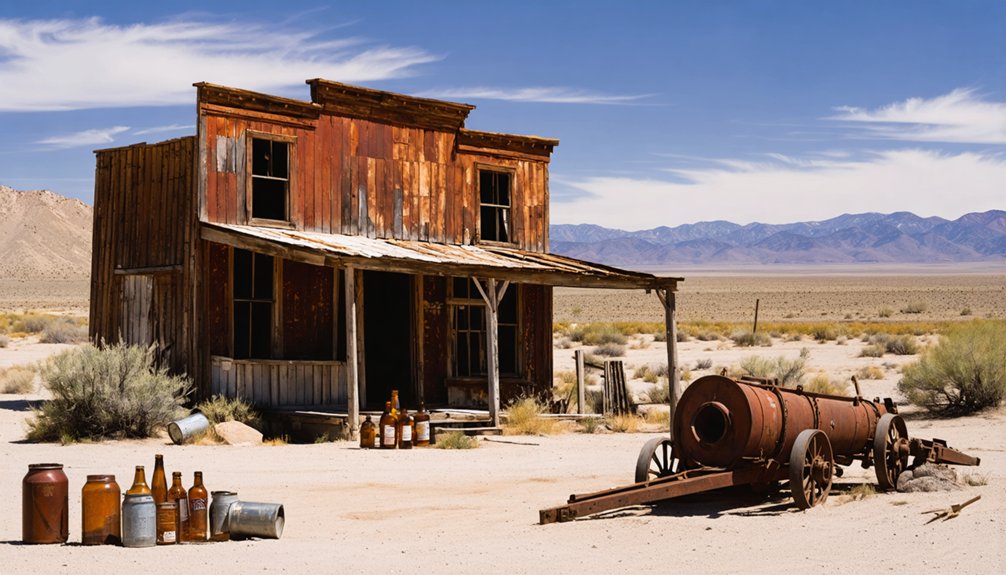
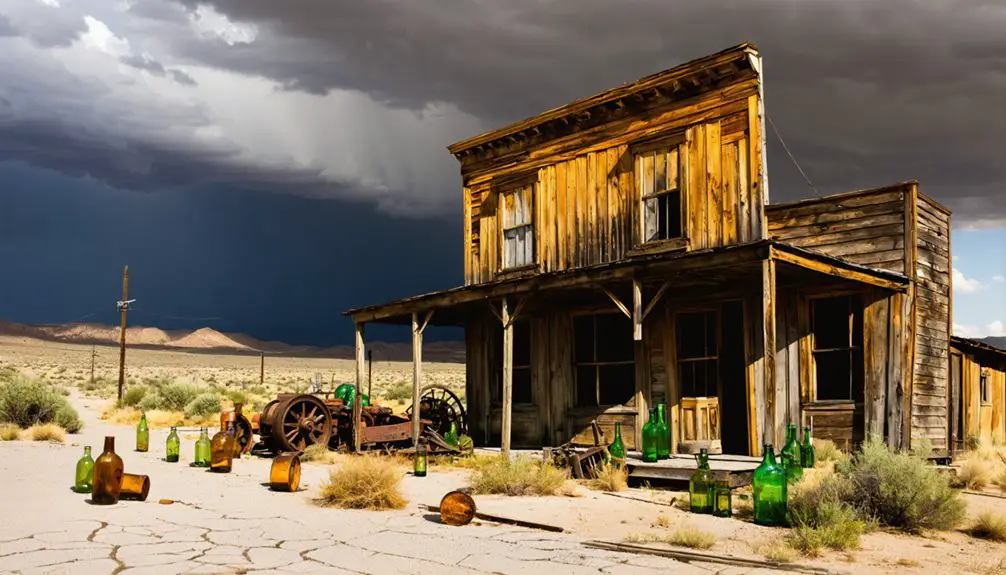
Beyond the Gold Hill Hotel, the landscape opens into something rawer and less curated. Scattered foundations, collapsed headframes, and rusted machinery mark where industrial-scale mining once operated.
You’re walking through a working ghost town, not a sanitized exhibit. The remnants aren’t labeled or fenced off. That freedom rewards careful mine exploration, letting you read the terrain on your own terms.
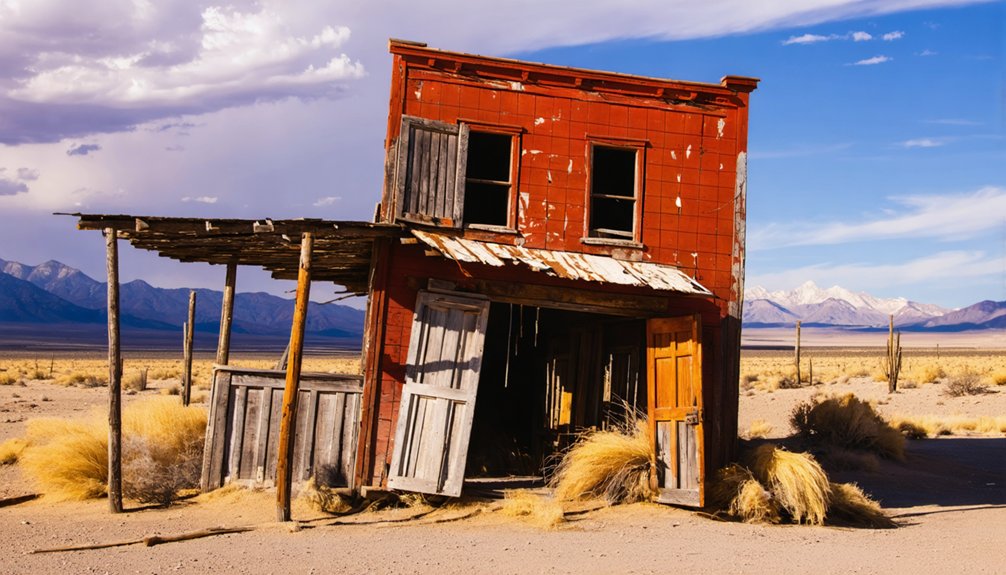
Weathered timbers jut from hillsides. Stone walls hold their shape despite decades of exposure. The density of what’s left reflects how seriously Gold Hill once functioned as an economic engine.
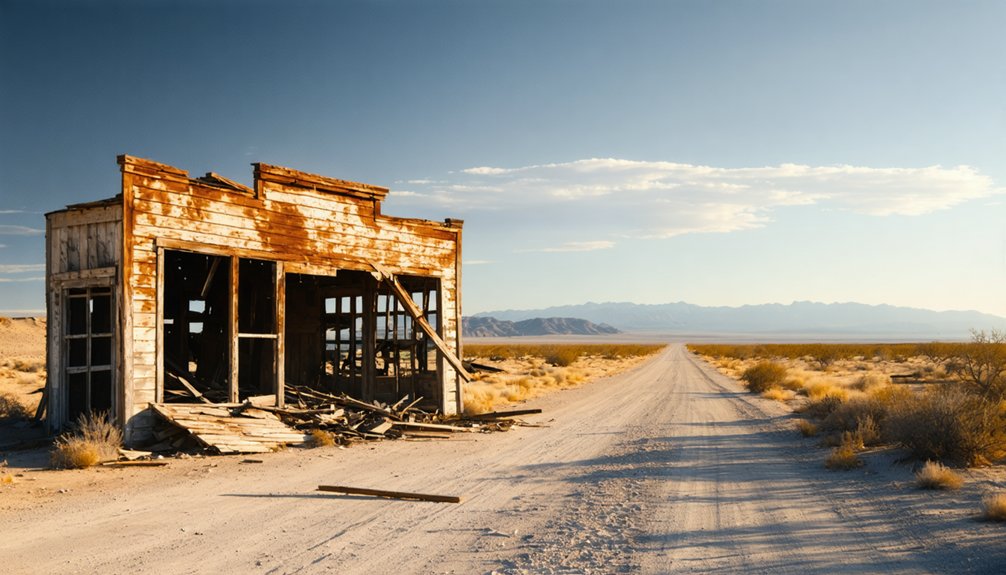
Historical preservation here is selective and honest. Some structures stand; others have surrendered to the desert. That tension between survival and ruin is exactly what makes Gold Hill worth the drive.
Historic Cemetery Remains
Up the hill from the mine ruins, the Gold Hill Cemetery holds some of the most personally significant ground on the entire Comstock. Here, Sandy and Eilley Bowers rest alongside their adopted daughter Persia — three lives that captured Gold Hill’s full arc from fortune to loss.
The cemetery symbolism runs deep: these graves mark not just individuals but an entire era’s ambitions, heartbreaks, and hard-won stories. You’ll find weathered markers standing against the high-desert sky, each one a quiet tribute to the people who built something real in a volatile place.
Historic preservation efforts keep the site accessible, so you can walk among the graves, read the names, and feel the weight of what this community actually meant to the people who lived it.
How Gold Hill Boomed, Burned, and Became a Ghost Town
Gold Hill didn’t just grow—it exploded. After gold discoveries in early 1859, the Comstock Lode ignited a full-scale rush. By 1860, nearly 1,300 people had settled in, and by 1877, the population hit roughly 8,000.
Advanced mining methods pulled staggering wealth from the earth, fueling dense construction and industrial expansion across the hillside.
The earth gave up its riches, and Gold Hill answered with iron, timber, and ambition.
Then came the fire. On July 5, 1870, flames tore through town, destroying much of what had been built. Reconstruction followed fast, but the boom couldn’t last forever.
Ore yields declined, operations slowed, and residents left. What remained became the quiet, weathered landscape you’ll walk through today—a place still thick with ghost stories, half-standing structures, and the unmistakable weight of a community that once roared with life.
Eilley and Sandy Bowers: The People Who Built Gold Hill
When you walk through what remains of Gold Hill, you’re tracing ground that Eilley Orrum Bowers helped claim before almost anyone else arrived.
She built one of the town’s first structures—a log boarding house and restaurant—long before the Comstock rush turned the canyon into a boomtown.
Her later marriage to miner Sandy Bowers combined two mining claims into a fortune that briefly made them among Nevada’s wealthiest residents.
Their story carries the full weight of Comstock-era life: a hard-won rise, a lavish mansion, and a slow unraveling that ended with both of them buried in the Gold Hill Cemetery just up the road from where it all began.
Eilley’s Early Pioneer Life
Few pioneers in the American West carried a story as layered as Eilley Orrum Bowers. Born in Scotland, she crossed an ocean and a continent before planting roots in Gold Hill.
She survived pioneer challenges that broke others — two failed marriages, financial hardship, and relentless frontier uncertainty. Yet she kept moving forward.
When gold brought chaos to Gold Canyon, Eilley saw opportunity. She built one of Gold Hill’s first structures: a log boarding house and restaurant that fed miners and anchored an early community still finding its footing.
She wasn’t waiting for someone else to shape the West. She grabbed a piece of it herself.
Understanding her early life helps you grasp why Gold Hill became more than a mining camp — it became a real town.
Sandy Bowers Mining Fortune
Eilley’s luck shifted when she met Lemuel “Sandy” Bowers, a barely literate muleskinner who’d drifted into Gold Canyon chasing the same dream as everyone else.
Their adjacent mining claims, when combined through marriage, sat directly atop one of the Comstock’s richest veins. The mining impact was immediate and staggering — the ground beneath them produced roughly $100,000 per month at peak output.
Suddenly, two people who’d arrived with almost nothing were among Nevada’s wealthiest residents. Sandy’s fortune wasn’t inherited or manipulated; he’d simply claimed the right ground at the right moment.
That raw luck defined the Comstock experience. The Bowers legacy would extend beyond the mines, shaping Gold Hill’s identity in ways you’ll still recognize when you walk the town today.
Their Lasting Gold Hill Legacy
The fortune Sandy and Eilley pulled from the ground didn’t stay underground — it rose into stone, timber, and iron, shaping Gold Hill into something more substantial than a camp of desperate prospectors.
Their legacy significance extends beyond personal wealth. Eilley’s early boarding house gave struggling miners a foothold, and Sandy’s mining success signaled to outsiders that real money existed here.
Together, they helped transform Gold Hill from a raw extraction site into a functioning community. That cultural heritage still resonates when you walk the area today.
Their graves rest in Gold Hill Cemetery alongside their adopted daughter Persia, a quiet reminder that real lives — full of ambition, loss, and consequence — unfolded across this high-desert landscape you’re now free to explore on your own terms.
How to Pair Gold Hill With a Virginia City Day Trip
Gold Hill and Virginia City sit close enough together that combining them into a single day trip makes obvious sense, yet each town rewards a dedicated stretch of time on its own.
Start your morning in Gold Hill, where the quieter atmosphere lets you move through the cemetery, hotel grounds, and mine remnants without the crowds.
By midday, drive the short stretch north into Virginia City, where the Comstock’s commercial heart still stands in preserved storefronts, museums, and saloons.
You’ll feel the contrast immediately — Gold Hill offers solitude and ruin, while Virginia City delivers density and living history.
Give each stop at least two hours, and you’ll leave with a fuller picture of how one legendary mining district built two very different towns along the same canyon road.
Getting to Gold Hill From Reno or Carson City
Once you’ve mapped out how Gold Hill and Virginia City fit together as a paired destination, the next step is figuring out how you’ll actually get there.
From Reno, take US-395 South toward Carson City, then head east on US-50 before cutting north on NV-341 through Gold Canyon.
From Carson City, NV-341 puts you directly on the Comstock corridor, climbing into the Virginia Range with striking high-desert views.
Both scenic routes take under an hour and reward you with dramatic elevation changes and mining-era landscapes before you arrive.
Travel tips worth noting: fuel up before leaving Carson City, check road conditions in winter, and give yourself time to stop at viewpoints along the canyon.
The drive itself sets the tone for everything you’ll explore in Gold Hill.
What to Bring, Skip, and Watch For at Gold Hill
Arriving at Gold Hill prepared makes the difference between a satisfying visit and a frustrating one.
Know what to bring: sturdy footwear for uneven terrain, water, sun protection, and a camera ready for dramatic mine ruins and weathered architecture. Cell service is unreliable, so download your maps beforehand.
Know what to skip: rushing through without reading historical markers, or bypassing the Gold Hill Cemetery where Sandy and Eilley Bowers are buried. That cemetery tells the Comstock story more honestly than any gift shop.
Watch for unmarked terrain near old mine workings — unstable ground isn’t always obvious. Watch also for shifting afternoon light, which transforms the high-desert landscape into something genuinely cinematic.
You’re moving through living history here, and it rewards the attentive traveler.
Frequently Asked Questions
Is Gold Hill Hotel Currently Open for Overnight Stays and Reservations?
Like a beacon from the past, the Gold Hill Hotel’s accommodation options remain open for reservations. You’ll experience its deep historical significance firsthand by booking a stay directly through their official website.
Are There Any Guided Tours Specifically Focused on Gold Hill Alone?
You won’t find tours exclusively focused on Gold Hill, but you can explore its gold mining legacy and historical significance independently, walking among mine ruins and landmarks that tell the story of Nevada’s remarkable Comstock boom yourself.
What Is the Best Time of Year to Visit Gold Hill?
Spring and fall are your golden windows, offering mild weather conditions perfect for exploring. You’ll dodge summer’s scorching heat and winter’s chill, letting seasonal activities like photography and historic site visits truly shine.
Is Gold Hill Cemetery Open to the Public for Visits?
You can visit Gold Hill Cemetery, where Sandy, Eilley, and Persia Bowers rest beneath the Nevada sky. Respect the cemetery history by following visitor guidelines—tread carefully, leave nothing behind, and honor the Comstock era’s enduring legacy.
Are There Any Entrance Fees Required to Explore Gold Hill Today?
Once home to 8,000 residents, you’ll find no entrance fees to explore Gold Hill’s ghost town history today. Roam freely among mine ruins and uncover local legends without paying a single cent.
References
- https://www.alllaketahoe.com/virginia_city_attractions/gold_hill_ghost_town.php
- https://www.youtube.com/watch?v=tU5wJDzvGNk
- https://www.facebook.com/groups/Oldwestvirginiacity/posts/10159995358031845/
- https://www.nvexpeditions.com/storey/goldhill.php
- https://nvtami.com/2021/01/17/gold-hill-the-most-heartbreaking-grave-and-the-lost-headstone/
- https://westernmininghistory.com/towns/nevada/gold-hill/
- https://www.facebook.com/groups/nevadaghosttowns/posts/2444395492665648/
- https://travelnevada.com/nevada-magazine/a-haunting-on-the-comstock/
- https://vegasghosts.com/the-gold-hill-hotel/