You’ll want to exit I-70 at Minturn and follow Highway 24 southeast for 13 miles before turning onto Homestake Road, where a seven-mile dirt route winds toward Gold Park’s haunting remains. Time your visit between June and September when mountain snows retreat, with September offering the sweet spot of 71°F days and golden aspen groves framing weathered cabin foundations. Your standard vehicle handles the journey fine, though checking COtrip.org beforehand saves you from unexpected road closures that’ll turn your ghost town dreams into a roadside disappointment. Discover what awaits beyond the trailhead.
Key Takeaways
- Exit I-70 at Minturn, follow Highway 24 southeast for 13 miles, then take Homestake Road seven miles to Gold Park.
- Visit between June and September when roads are open; September offers ideal weather with 71°F highs and minimal precipitation.
- Standard vehicles can handle the well-maintained dirt route, making the ghost town accessible without four-wheel drive requirements.
- Explore a three-quarter-mile loop trail featuring cabin foundations, mining equipment, Revenue Tunnel, and the preserved Tobasco Cabin.
- Check COtrip.org for road closures before departure, as winter snows and black ice conditions make access impossible.
The Rise and Fall of Gold Park Mining Camp
When word spread of a rich silver vein near Holy Cross City in 1882, prospectors swarmed into the Eagle County wilderness like moths to a flame. Gold Park exploded overnight into a 400-person camp, fueled by dreams of striking the “Mother Lode.”
The Gold Park Mining and Milling Company poured $500,000 into developing 23 claims on French Mountain, constructing an ambitious cast-iron flume between sister camps.
But factors affecting mining operations soon crushed those dreams. The flume’s faulty grade created bottlenecks, while rich surface ores vanished without deeper veins materializing. Like Caribou, which was located at an elevation of almost 10,000 feet, Gold Park faced the harsh realities of high-altitude mining. Ore values plummeted from $100 per ton at two feet deep to a mere $9 per ton just four feet below the surface.
Social dynamics within the camp turned explosive—superintendent Turney abruptly dismissed 150 armed miners after threats erupted. A vigilance committee formed as tensions boiled over. Within years, you’d find nothing but weathered buildings and abandoned dreams.
What Remains at the Gold Park Site Today
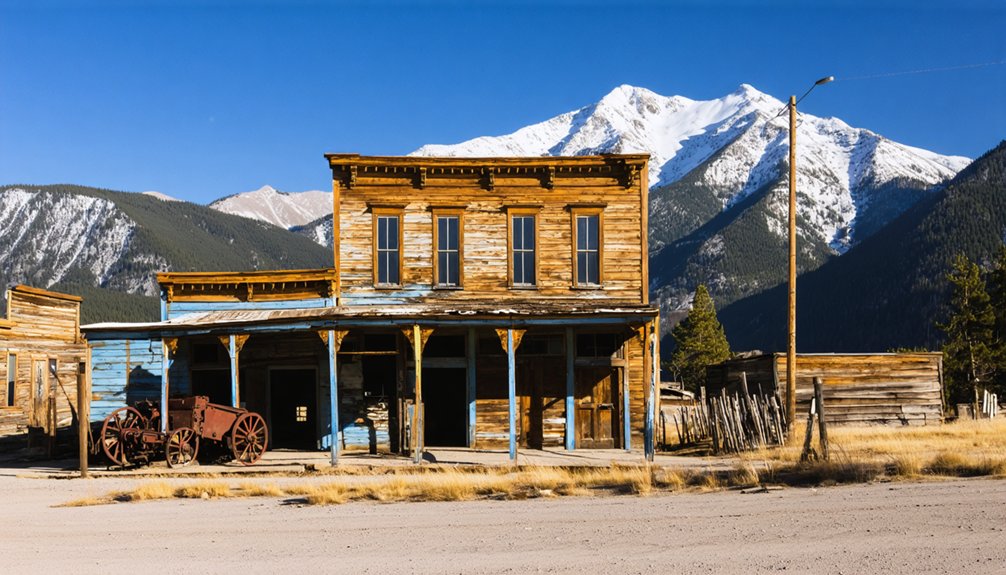
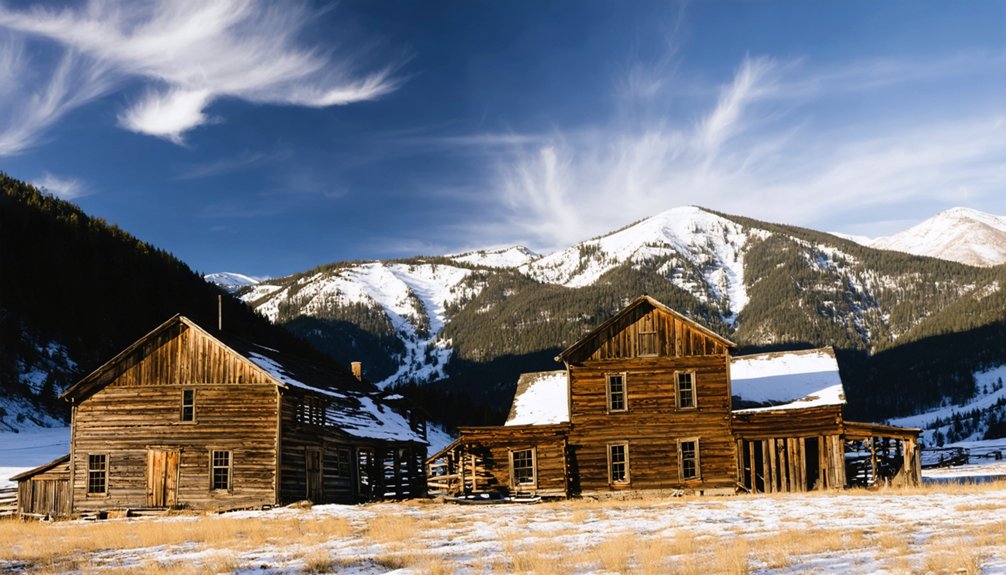
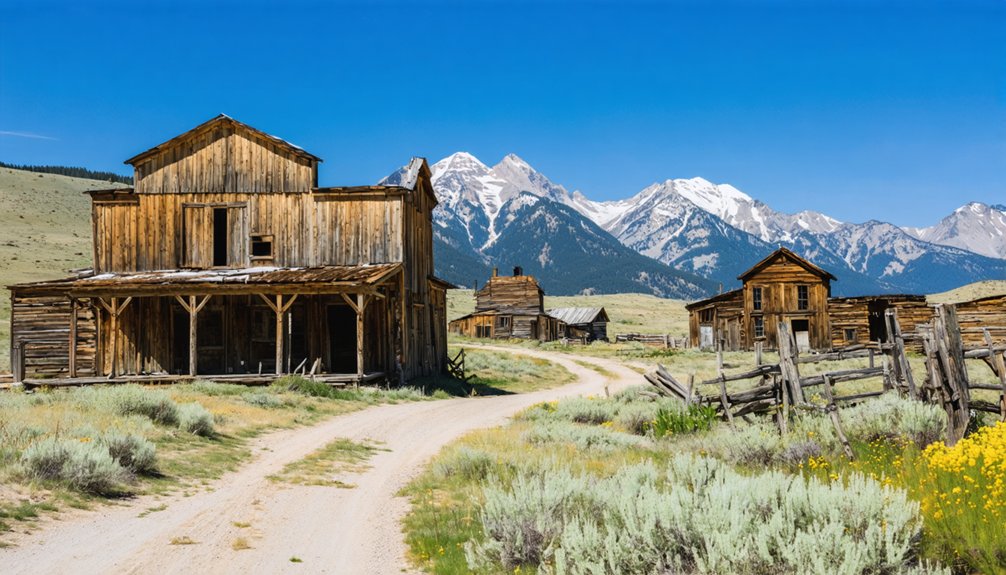
The dreams may have crumbled, but Gold Park refused to disappear entirely. You’ll discover a haunting landscape where mining relics preservation meets raw wilderness—cabin foundations jutting through pine needles, rusted ore-hauling equipment frozen mid-task, weathered outhouses standing sentinel.
Where silver fever dreams hardened into rust and stone, history waits beneath the pines—unguarded, untamed, unforgotten.
The three-quarter-mile loop trail transforms you into a townsite archeology explorer, weaving past 19th-century tombstones and the skeletal remains of structures that once housed 4,000 souls chasing silver dreams.
The Revenue Tunnel’s $27 million legacy echoes through hollow hillsides, while Tobasco Cabin stands defiant as the last witness to its namesake operation. National Register protection keeps nature’s reclamation at bay—barely. Unlike the nearby original Buckskin Joe cemetery, which stands as the sole remnant of that once-thriving gold mining town, Gold Park offers visitors multiple structural ruins to explore. Exercise caution while wandering these historic grounds and never enter abandoned mine shafts, as their unstable conditions pose serious danger.
Dense aspen and pine frames each discovery, creating an atmospheric theater where you’re free to touch history’s tangible remnants without velvet ropes or admission fees.
Getting There: Routes and Road Conditions
You’ll exit I-70 at Minturn and follow Highway 24 southeast for 13 miles before turning onto Homestake Road, a well-maintained dirt route that winds seven miles through forested valleys to Gold Park Campground.
The journey feels like stepping back through time as pavement gives way to packed earth, with Homestake Creek gurgling alongside your route and towering peaks framing the narrow valley ahead.
Plan your visit between spring and fall—winter snows lock these high-country roads tight, transforming accessible passages into impassable white corridors until April’s thaw reopens the gateway to this forgotten mining enclave. For those interested in exploring additional ghost towns, consider driving the Gold Belt Tour byway, which connects multiple historic mining sites throughout the region. From Black Hawk, take CO 119 toward Nederland and look for Apex Valley road off of Colorado 119, where the road forks leading to historic mining sites and remaining structures.
Primary Access Routes
Reaching Gold Park requires a scenic mountain drive that begins at Exit 171 off I-70, where you’ll peel away from the interstate’s hum and drop into the historic mining town of Minturn.
From there, Highway 24 carves southeast through thirteen miles of high country before Homestake Road beckons you deeper into wilderness. This seven-mile stretch of well-maintained dirt delivers you straight to camp, where aspen groves frame your basecamp for exploring remote hiking trails into Holy Cross Wilderness.
Your phone becomes a paperweight here—no towers pierce this valley’s silence. Pack maps, not data plans. The drive takes forty minutes, but wildlife precautions start immediately. Bears own these woods, so hard-sided storage isn’t optional.
Standard vehicles handle the route fine, making freedom accessible without requiring specialized gear. The campground sits at an elevation of 9,239 feet, so acclimate accordingly before tackling strenuous trails.
Once settled, Homestake Reservoir waits just three miles west, offering additional recreation opportunities beyond the campground itself.
Seasonal Road Challenges
Mountain weather doesn’t care about your itinerary. I’ve watched I-70 transform from clear pavement to whiteout conditions in twenty minutes flat, trapping unprepared travelers beyond Eisenhower Tunnel. You’ll face black ice lurking on Georgetown’s steep grades and slippery refreezing near the tunnel entrance. Ten Mile Canyon becomes a sliding zone when temperatures drop.
Smart adventurers check road closure notifications on COtrip.org before leaving—those barricades mean business, with hefty fines for bypassing and potential days-long rescue delays. Your driving safety precautions start with proper tires and chains for non-AWD vehicles, but even four-wheel-drive won’t save you from deep powder or sudden storms rolling through. Blowing snow and ice polish the road surface, creating treacherous black ice that’s nearly impossible to spot. Forest Service roads close seasonally, sometimes without warning. The downhill section of Vail Pass sees frequent accidents when drivers misjudge the rapid descent, making it one of I-70’s most dangerous stretches during winter conditions. Freedom means respecting the mountains’ terms.
Best Time to Visit and Weather Considerations
When should you venture to Gold Park for the ultimate ghost town experience? Target June through September when freedom calls loudest on open roads. September delivers perfection—71°F highs, 42°F lows, and gloriously calm conditions for exploring abandoned structures without crowds.
June opens snow-free alpine trails by mid-month, though shoulder season challenges persist with unpredictable storms rolling through mountain passes. Expect daytime temperature fluctuations that’ll have you peeling off layers by noon, then bundling up come evening around weathered cabins.
July’s peak heat—averaging 77°F to 88°F—transforms sand surfaces into 150°F furnaces. Plan your dune photography for sunrise or sunset. August maintains warmth but brings afternoon thunderheads that materialize without warning. Winter? That’s 195 inches of snowfall blocking your ghost town pilgrimage entirely.
Safety Tips for Exploring Abandoned Mining Areas
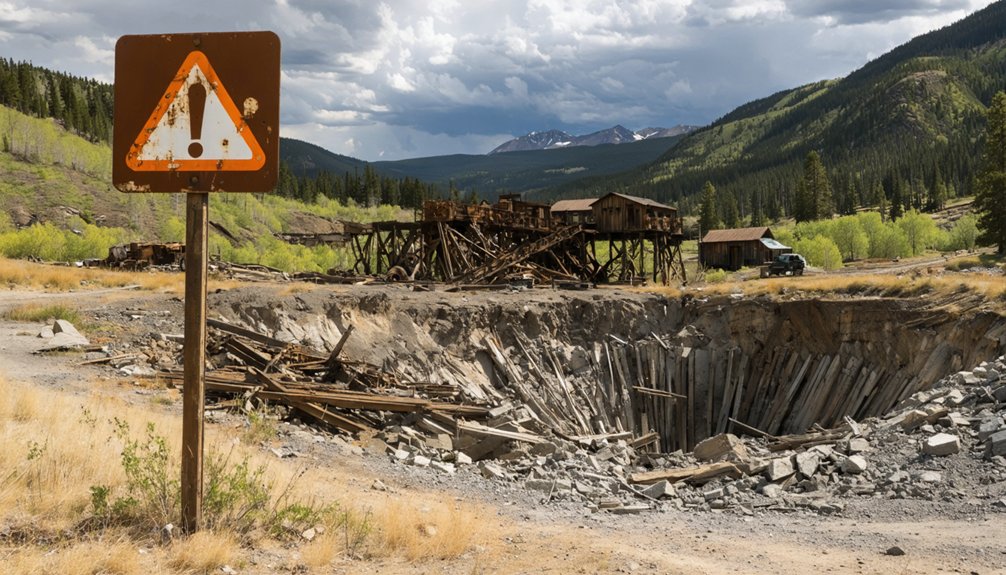
Those weathered timbers framing Gold Park’s abandoned mine shafts aren’t charming relics—they’re rotting traps waiting to collapse. You’ll want to avoid unstable structures entirely, as decayed supports can crumble without warning.
Those vertical highwalls? They’re equally treacherous.
Keep your distance from open shafts and water-filled pits—falling into darkness isn’t the adventure you’re seeking. The standing water you’ll encounter hides jagged machinery and toxic chemicals, making it deceptively deadly despite its calm surface.
Maintain situational awareness at all times. Watch for unstable ground that caves beneath your boots, and never touch deteriorated explosives left behind. They’re sensitive enough to detonate from simple vibrations.
Remember: trespassing charges and body recoveries aren’t the souvenirs you want from Colorado’s backcountry.
Nearby Ghost Towns to Add to Your Itinerary
While Gold Park offers its own quiet charm, you’ll find Holy Cross City just a few miles north—a stunning ghost town nestled at 11,500 feet beneath the shadow of Mount of the Holy Cross. I’ve stood in its weathered cabins, imagining the miners who braved winters at this extreme elevation, and the remoteness still takes my breath away.
From there, you can continue to Independence and Teller City near Aspen, where log structures and mill remnants scatter across alpine meadows that explode with wildflowers each July.
Holy Cross City Connection
Standing beside the weathered timbers of Gold Park, you’ll find yourself within striking distance of Holy Cross City—another abandoned mining camp that tells a strikingly similar tale of golden promises and bitter disappointments. Named after the majestic Mount of the Holy Cross, this settlement swelled to 300 souls by 1883, lured by reports of rich gold ore deposits.
Yet pyrite-laced ore proved impossible to process profitably, yielding a pitiful $6,400 across the entire district by 1884’s end.
Today, you’ll discover four scattered cabins and collapsed stamp mills along the Holy Cross City Trail—a steep, rocky pathway carved in 1883. The double murder of 1881 still haunts these ruins, where mining dreams died harder than the prospectors themselves. These mountains keep their gold fiercely guarded.
Independence and Teller City
Push eastward from Gold Park, and you’ll crest Independence Pass at a lung-crushing 10,900 feet—where Independence spreads across the alpine tundra like forgotten playing cards scattered by mountain winds. This place roared with 1,500 souls in 1882, their seasonal mining cycles dictating every boardinghouse meal and saloon toast.
You’ll walk among weathered cabins where independent cultural events like the Hunter’s Pass Ski Club race once celebrated human grit—miners fleeing the legendary 1899 blizzard on homemade skis, racing toward Aspen for one ham sandwich entry fee. Today, the Farwell Stamp Mill stands sentinel over ghost-town silence. Visit mid-June through Labor Day when Highway 82 reopens, park your rig roadside, and breathe that thin, liberated air where prospectors once chased $190,000 in gold dust.
Frequently Asked Questions
Are Camping Facilities or Accommodations Available Near Gold Park?
You’ll find Homestake Campground’s 12 first-come sites welcoming your adventure spirit just miles away. While nearby RV parks and local bed and breakfasts are limited, this rustic spot offers genuine wilderness freedom beneath towering pines.
Can I Bring My Dog to Explore the Gold Park Site?
You’ll likely find no official pet-friendly policies or leash requirements at Gold Park’s abandoned ruins. Your dog can roam these windswept mining remnants freely, exploring alongside you through history’s forgotten corridors where mountain air meets adventure.
Are Guided Tours of Gold Park Available for Visitors?
Unfortunately, no guided tours are available specifically for Gold Park itself. However, you’ll discover private guided tours offered at nearby ghost towns and historic mines in Idaho Springs and Central City, where adventure awaits your independent spirit.
Do I Need Permits to Visit Gold Park Ghost Town?
You won’t need permits for permitted access to Gold Park’s windswept ruins—just roll up freely and explore. There aren’t formal parking requirements either; find a spot along the trail, grab your boots, and chase adventure through Colorado’s forgotten past.
What Cell Phone Coverage Can I Expect in the Area?
You won’t find good cell signal strength here—that’s the beauty of it. All major carriers show limited cell coverage options at Gold Park. Download offline maps beforehand and embrace the digital detox in Colorado’s wilderness.
References
- https://eaglecountyhistoricalsociety.com/holy-cross-city/
- https://sweptawaytoday.com/2017/07/04/independence-ghost-town/
- https://www.visitnorthparkco.com/ghost-towns-of-jackson-county/
- https://www.cityofcripplecreek.com/visit-cripple-creek/page/history
- https://www.pikes-peak.com/about-cripple-creek/
- https://www.colorado.com/articles/colorado-ghost-towns
- https://en.wikipedia.org/wiki/List_of_ghost_towns_in_Colorado
- https://www.youtube.com/watch?v=KYo7T8YG_rE
- https://findinggoldincolorado.com/gold-rush-ghost-towns/
- https://westernmininghistory.com/5833/a-tour-of-colorado-mining-towns/