Planning a ghost town road trip to Golden Arrow, Nevada means heading 40 miles southeast of Tonopah into raw, roadless desert where two deaf-mute prospectors once sparked a gold rush that blazed from 1904 to 1908 before burning out completely. You’ll need a 4×4, extra fuel, spare tires, and several days’ worth of water. It’s a rugged, rewarding journey into Nevada’s forgotten past, and there’s far more to uncover about what awaits you out there.
Key Takeaways
- Golden Arrow, Nevada, sits 40 miles from Tonopah, requiring a 4×4 vehicle to navigate rough desert tracks and dim remote roads.
- Pack essential supplies including extra fuel, two spare tires, a recovery kit, and at least three days’ worth of water.
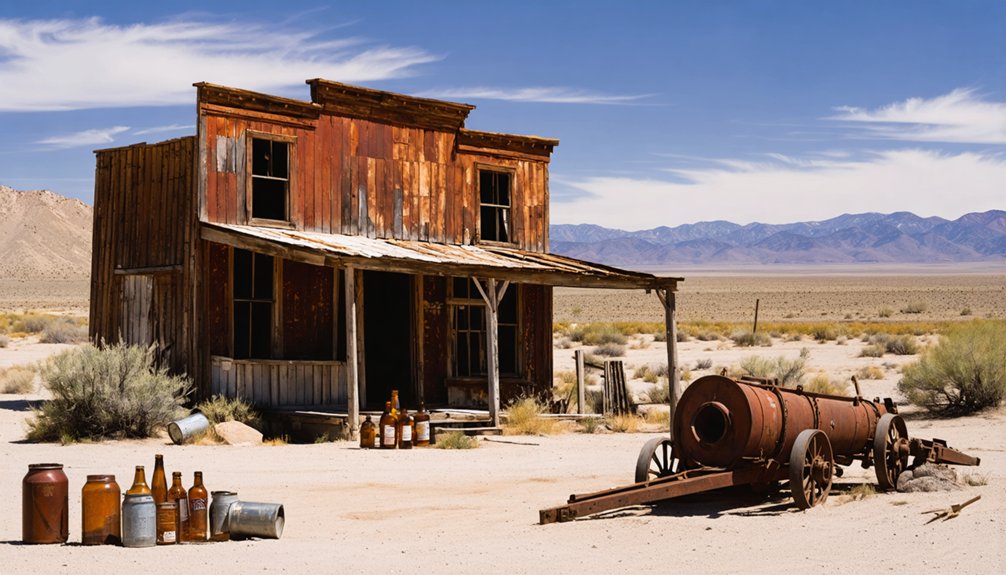
- Weathered wood-frame structures, crumbling foundations, and scattered mining equipment remnants make Golden Arrow a rewarding ghost town exploration destination.
- Nearby attractions include Silver Bow ghost town, wild horses, pronghorn antelope, and Area 51’s perimeter along Highway 375 near Rachel.
- No cell service exists in the area, so bring detailed topographic maps and quality shelter for extreme desert temperature fluctuations.
What Makes Golden Arrow Worth the Drive?
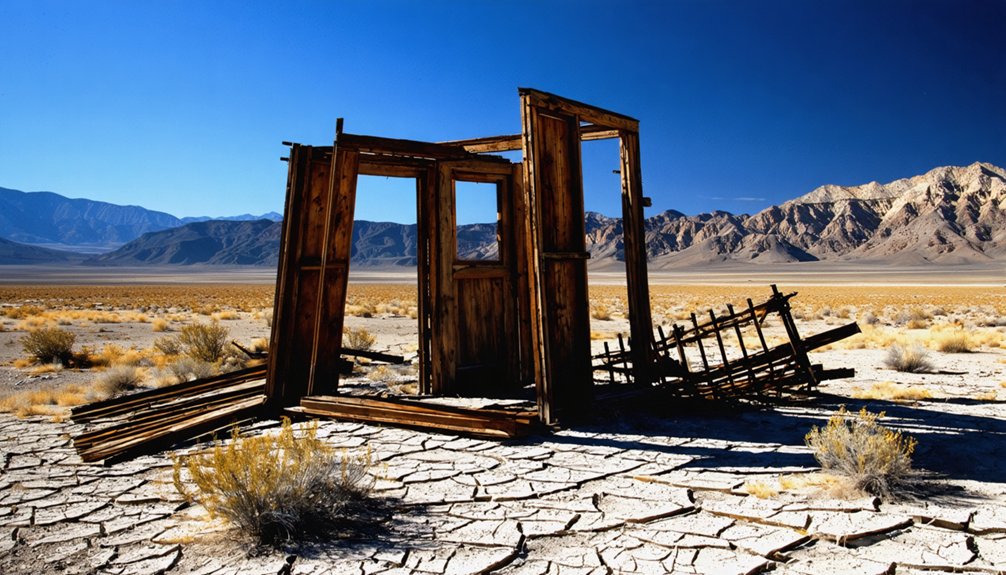
Though it sits forgotten in the dust of Stone Cabin Valley, Golden Arrow packs a remarkable story into its ruins: two deaf-mute prospectors named Claudet and Marl Page struck gold here between 1904 and 1905, quietly sold their claims for $45,000, and touched off a boom that raised a two-story hotel, six saloons, and a mercantile store practically overnight.
By 1908, the ore was gone, and the town collapsed just as fast as it rose. That rapid arc of mining history is exactly what makes this place compelling.
You’ll walk through abandoned structures, foundations, and scattered equipment without a tourist crowd in sight. No fences, no admission fees — just open desert, wild horses, and the unfiltered remnants of a forgotten Nevada rush entirely on your own terms.
How to Reach Golden Arrow From Tonopah?
Forty miles of Nevada desert separate Tonopah from Golden Arrow, and you’ll cover most of that distance on roads that grow progressively rougher as Stone Cabin Valley opens up around you.
Among the best travel routes, heading southeast through open range delivers the most direct path.
Essential road trip tips before you go:
- Pack a 4×4 vehicle — dim desert tracks demand it
- Navigate via Reveille or Bellehelen for reliable access points
- Watch for wild horses crossing unmarked paths
- Carry water, fuel, and supplies — zero services exist out here
- Reference the 1987 USGS map for accurate landmark orientation
The railroad surveyed here in October 1906 was never built, meaning freedom-seekers still reach Golden Arrow exactly as early prospectors did — on their own terms.
What Else Can You Visit Near Golden Arrow?

Once you’ve traced the old stagecoach paths to Golden Arrow, the surrounding Nye County desert rewards further exploration.
Head toward Silver Bow, another abandoned mining settlement sharing the valley’s raw silence. Both sites offer weathered foundations, abandoned mines, and scattered equipment that speak plainly about ambition meeting geology’s limits.
Weathered foundations and scattered equipment tell Silver Bow’s story plainly — ambition measured against geology’s indifferent limits.
Rachel, Nevada lies within range too, drawing visitors curious about Area 51’s mysterious perimeter along Highway 375.
Between stops, you’ll encounter local wildlife that now owns this territory outright — wild horses moving in loose bands, pronghorn antelope crossing open flats, and coyotes threading through sagebrush at dusk.
The nearby Clifford and Ellendale districts offer additional mining remnants worth investigating.
Bring enough water and fuel; this stretch of Nevada doesn’t accommodate the unprepared.
What Survives at the Golden Arrow Site Today
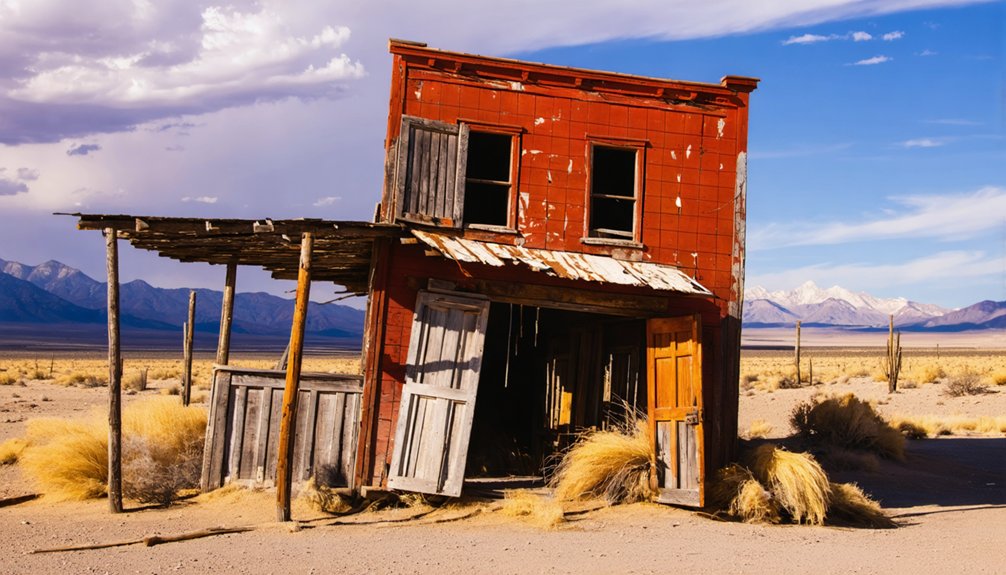
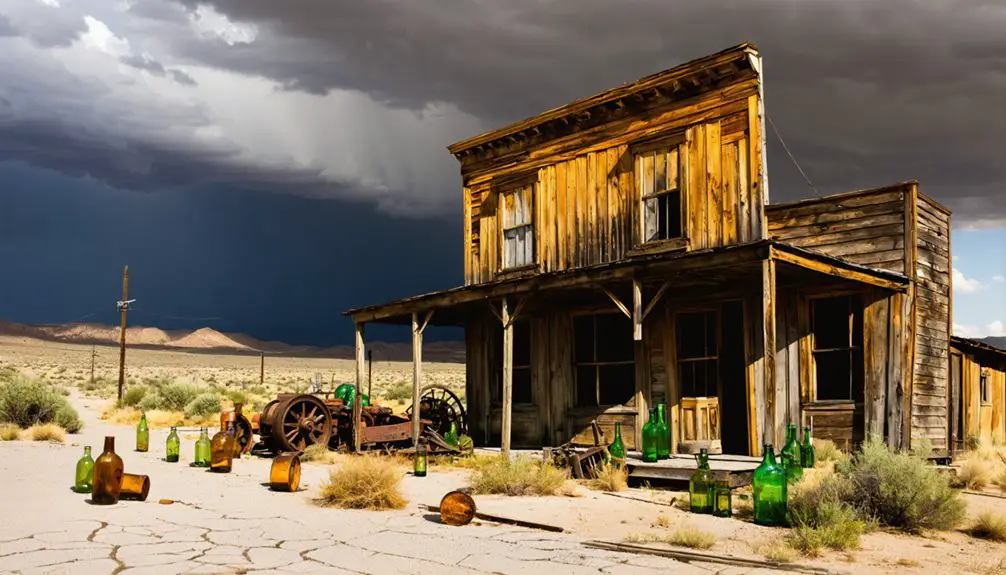
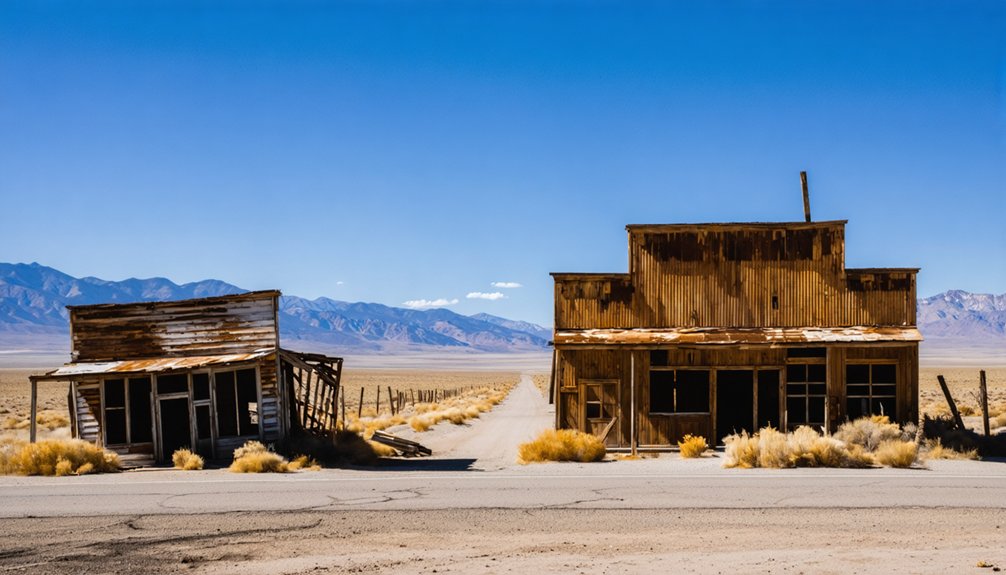
More than a century of desert wind and neglect have done their work at Golden Arrow, yet the site hasn’t surrendered everything. Your ruins exploration will uncover tangible fragments of this brief but spirited chapter in mining history:
- Crumbling foundations marking where saloons and a two-story hotel once stood
- Scattered remnants of old mining equipment frozen mid-decay
- A few weathered wood-frame structures still defying the elements
- Rubble fields outlining the original townsite plat from 1906
- Mine ruins dotting the western base of the Kawich Range
Walk the ground slowly. Each broken timber and rusted bolt tells a story of men who rushed here chasing ore and left just as fast.
The desert has reclaimed most of it, but enough remains to feel the ghost.
Gear and Supplies for the Golden Arrow Drive
Thirty-five miles of remote Nevada desert separate you from the nearest services, so what you pack into that 4×4 determines whether Golden Arrow stays a rewarding adventure or becomes a survival situation.
Stock your off road vehicles with extra fuel, two spare tires, a recovery kit, and enough water for three days minimum. The same Stone Cabin Valley that once supplied timber and water to 200 residents now offers neither to travelers.
Treat camping essentials seriously: high-quality shelter protects against desert temperature swings, and a reliable navigation tool replaces cell service that won’t exist here.
Carry a first aid kit, satellite communicator, and detailed topo maps matching the 1987 USGS survey.
Golden Arrow rewards the prepared explorer and punishes the careless one equally.
Frequently Asked Questions
Who Originally Discovered Gold at the Golden Arrow Site in Nevada?
Claudet and Marl Page, two deaf-mutes, made the gold discovery between 1904–1905, shaping Golden Arrow’s mining history. They sold their claims for $45,000—you’re tracing the footsteps of bold, self-made pioneers who seized freedom.
Did Golden Arrow Ever Have an Official Post Office or School?
Despite its lively community life, Golden Arrow never had a post office history to speak of — no school either. You’d have roamed free there, unburdened by civic institutions, among saloons, hotels, and rugged independent miners.
How Much Did the Original Discoverers Sell Their Mining Claims For?
You’d be fascinated to know that Claudet and Marl Page, the deaf-mute pioneers who shaped Golden Arrow’s mining history, sold their claim value for $45,000 in January 1906—a remarkable sum that ignited the region’s bold frontier spirit.
Was a Railroad Ever Successfully Built to Serve Golden Arrow?
No railroad ever reached you at Golden Arrow. Surveyors mapped the Tonopah-Ely route in October 1906, but railroad construction never broke ground, leaving this mining history chapter defined by isolation, wild terrain, and unfulfilled promises.
What Animals Currently Inhabit the Abandoned Golden Arrow Townsite Today?
You’ll encounter wild horses, antelope, coyotes, and rodents during your wildlife sightings at Golden Arrow’s haunting ghost town ecology — free-roaming creatures that’ve reclaimed this once-bustling 1907 boomtown as their own untamed, boundless sanctuary.
References
- https://www.ghosttowns.com/states/nv/goldenarrow.html
- https://www.desertusa.com/desert-activity/nevada3b.html
- https://www.youtube.com/watch?v=KnZyJPhiups
- https://www.rachel-nevada.com/places/golden_arrow.html
- https://www.forgottennevada.org/sites/photos/Golden Arrow/album/index.html
- http://www.raydunakin.com/Site/Golden_Arrow_NV.html
- https://westernmininghistory.com/library/38092/page1/
- https://pubs.usgs.gov/bul/0640f/report.pdf
- https://www.mindat.org/loc-263010.html