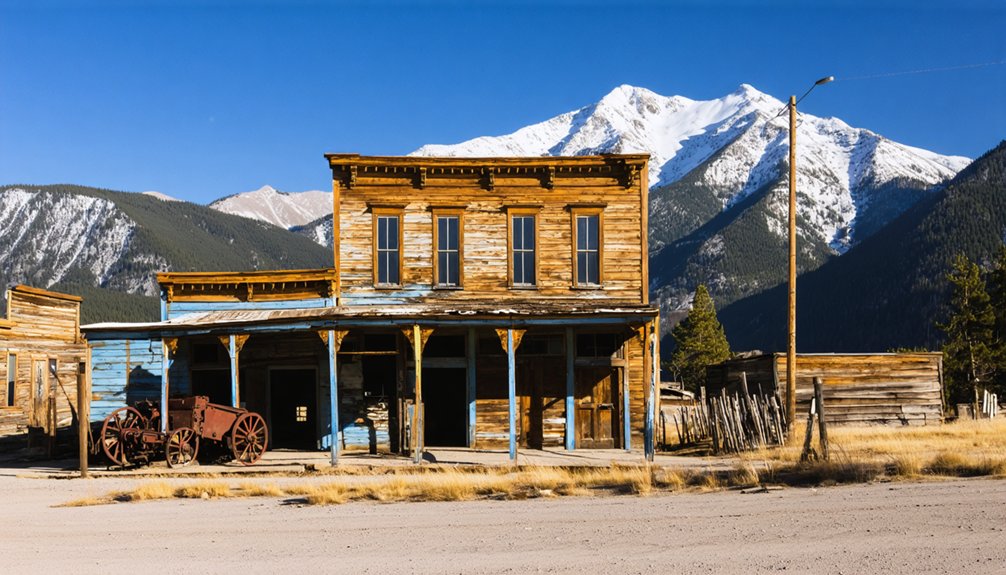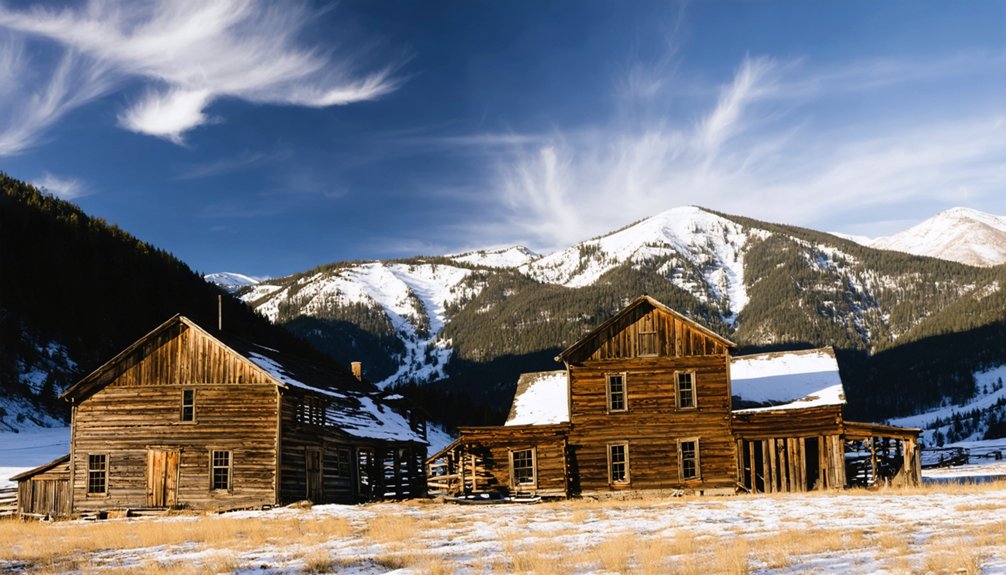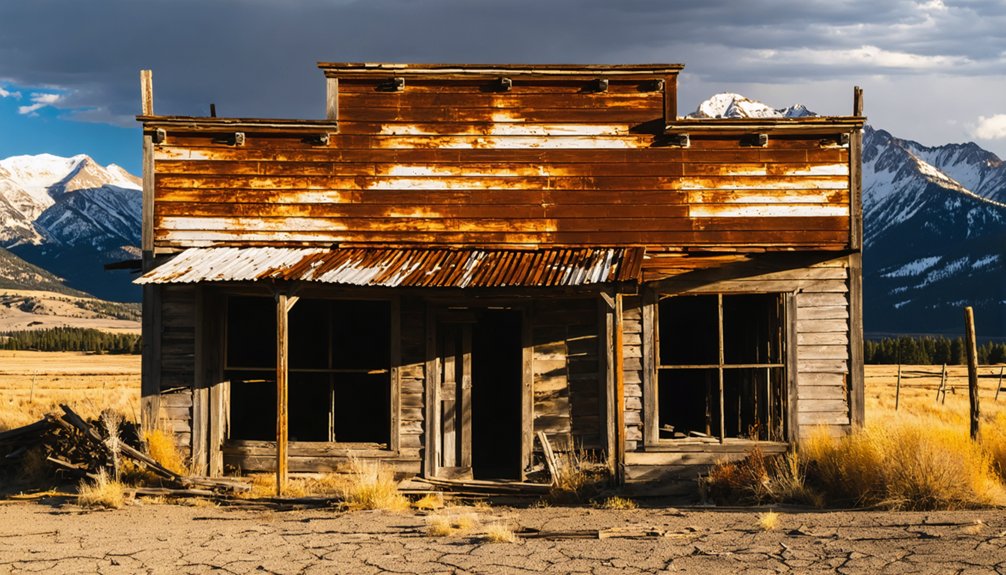
Planning a ghost town road trip to Goldfield, Colorado puts you right in the heart of the Cripple Creek mining district, where gold fever once drove a population of 4,000 residents. You’ll find Gothic-style ruins, rusting mining equipment, and walls scrawled with messages from long-gone settlers. Pair your visit with nearby Cripple Creek and Victor for a fuller experience of Colorado’s gold rush legacy. There’s far more to this haunted landscape than meets the eye.
Key Takeaways
- Goldfield, located in Colorado’s Cripple Creek mining district, is a ghost town that declined after gold ore depletion in 1897.
- Remnants include a Gothic-style town hall, rusting mining equipment, and an abandoned house with wall scrawls from former residents.
- Goldfield is private property, so trespassing carries legal consequences; virtual tours offer a safe exploration alternative.
- Nearby accessible towns Cripple Creek and Victor welcome visitors, offering preserved Victorian architecture, mine tours, and rich mining history.
- Research mountain road conditions before traveling west from Colorado Springs, as weather and road conditions can change rapidly.
What Made Goldfield, Colorado a Ghost Town?
Once a roaring hub of the Cripple Creek mining district, Goldfield’s rise and fall hinged entirely on gold. At its peak, you’d have found anywhere from 500 to 4,000 people living and working here, supported by saloons, hotels, a brewery, and a schoolhouse.
The mining impact was undeniable — when gold ore depleted by 1897, job cuts triggered a rapid exodus, and the town became a ghost town by 1898’s end.
Revival attempts between 1910 and 1926 couldn’t resurrect what the mines had abandoned. Residents tore down houses to dodge taxes or salvage lumber.
Goldfield at Its Peak: Saloons, Mines, and 4,000 Residents
Before Goldfield became a cautionary tale of boom-and-bust mining, it was alive with the kind of energy that only gold fever can produce.
At its peak, you’d have found yourself in a thriving frontier community built entirely around the mining boom near the Superstition Mountains. Up to 4,000 residents called it home, supported by:
At its peak, Goldfield was a thriving frontier community of 4,000 residents built entirely around gold fever.
- Multiple saloons fueling a raw, unfiltered saloons culture
- A general store, post office, and boarding house serving daily needs
- A blacksmith, meat market, and hotel keeping commerce moving
- A schoolhouse anchoring community life beyond the mines
- A brewery satisfying the thirst of hardworking prospectors
From tents scattered across open land in 1892, Goldfield grew into 28 permanent structures — a true reflection of what ambition and gold can build overnight.
Why the Gold Ran Out and Goldfield Emptied
By 1897, Goldfield’s gold ore had run dry, forcing workers out and turning a once-thriving town into a ghost town within a year.
You might think someone would’ve stepped in to save it, but revival attempts between 1910 and 1926 produced nothing, and even a rename to Youngsberg couldn’t breathe new life into exhausted mines.
What had drawn thousands of hopeful miners to the Superstition Mountains simply vanished, and the people followed the gold right out the door.
Gold Ore Depleted Fast
The gold that built Goldfield vanished almost as quickly as it appeared. By 1897, the ore was gone, and with it, every reason to stay.
Here’s what that collapse looked like:
- The gold rush that sparked Goldfield’s rise lasted barely a decade.
- Depleted ore veins forced immediate job cuts across every mine.
- Workers packed up and left, draining the population overnight.
- By end of 1898, the town had already earned ghost town status.
- Revival attempts between 1910 and 1926 confirmed the mining legacy was truly finished.
You’re looking at a place that burned bright and died fast.
No second chances, no hidden reserves. When the gold stopped, Goldfield stopped. That’s the raw, unfiltered truth of boom-and-bust frontier life.
Workers Forced To Leave
When the gold dried up, the workers had no choice but to follow it out the door. By 1897, Goldfield’s ore deposits were exhausted, and the mining hardships that followed hit fast and hard. Employers slashed jobs without warning, leaving miners with nothing to stay for.
You can almost picture the scene — families packing wagons, boarding houses emptying, streets going quiet almost overnight.
Labor disputes had already created tension throughout the region, pushing some workers out even before the gold gave out completely. By the end of 1898, Goldfield had transformed from a thriving community into a ghost town.
The freedom these workers sought through mining had vanished along with the ore, forcing them to chase opportunity somewhere else entirely.
Revival Attempts All Failed
Even after the gold dried up and the workers left, some refused to give up on Goldfield. Community efforts between 1910 and 1926 tried breathing new life into the town, but revival failures kept mounting. Nothing worked.
Here’s what those attempts looked like:
- Revivals ran from 1910 through the mid-1920s, producing zero results.
- Organizers even renamed the town “Youngsberg,” hoping a fresh identity would spark interest.
- Mines were reopened and explored, but produced no additional gold.
- Houses disappeared — torn down to dodge taxes or stripped for lumber.
- Vacant lots sat abandoned, available only for back taxes.
You can’t force a ghost town back to life when the earth holds nothing left to offer.
What Still Stands in Goldfield Today
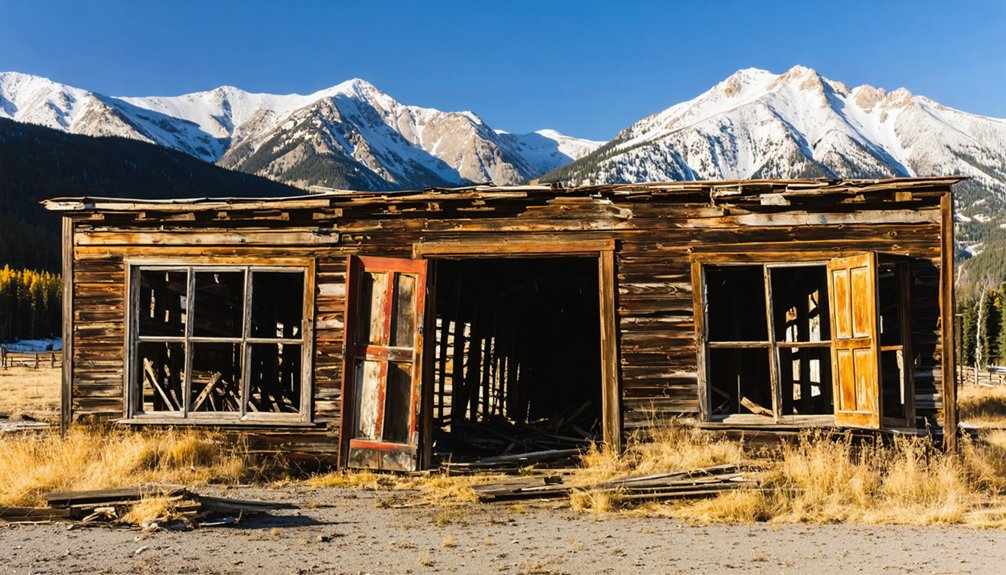
When you visit Goldfield today, you’ll find a handful of haunting structures that refused to surrender to time, including the iconic Gothic-style town hall that still commands attention.
You can spot a partially underground stone building, a tiny structure with an old workbench still inside, and an abandoned house where wall scrawls tell silent stories of the people who once lived there.
Rusting mining equipment dots the landscape, offering you a raw, tangible connection to the gold rush era that once drove thousands to this now-quiet ghost town.
Remaining Historic Structures
Goldfield’s most recognizable landmark, the Gothic-style town hall, still stands today as a remodeled tribute to the town’s ambitious past.
It’s a reflection of historic preservation efforts in a place that time nearly swallowed whole.
Beyond the town hall, you’ll find scattered remnants of Goldfield’s mining heritage waiting to be discovered:
- A partially underground stone building, mysterious and weathered
- A tiny structure still housing an old workbench
- Rusting mining equipment frozen in time across the landscape
- An abandoned house with wall scrawls left by former residents
- Weathered architectural details hinting at the town’s peak-era ambitions
Each structure tells a story of lives once lived here.
Rusting Mining Equipment
Scattered across Goldfield’s landscape, rusting mining equipment stands as one of the most striking remnants of the town’s gold-chasing era.
These rusty relics tell stories no history book fully captures — machinery that once drove an economy, now frozen in time beneath Colorado’s open sky.
You’ll spot abandoned tools and equipment that workers left behind when the gold ran dry in the late 1890s, forcing an exodus that emptied streets almost overnight.
Each piece connects you directly to Goldfield’s mining history, offering raw, unfiltered glimpses into the grueling work that once drew thousands here.
Since the site remains private property, you’re best viewing these remnants from a distance or exploring through available virtual tours to stay safe while satisfying your curiosity.
Where Goldfield Sits on the Colorado Map
Nestled just west of Colorado Springs and Pueblo, Goldfield sits in the heart of Colorado’s early mining country, putting you within a stone’s throw of both Cripple Creek and Victor.
This Goldfield geography places you inside one of Colorado history’s richest chapters. Here’s what surrounds you:
- Cripple Creek and Victor sit minutes away, making day trips effortless
- The Superstition Mountains frame the landscape dramatically
- Early mining trails wind through the area, connecting historic sites
- Colorado Springs offers modern amenities before you head into the backcountry
- Pueblo anchors the southern route, giving you flexible road trip options
You’re not just visiting a ghost town — you’re standing inside a region that once roared with 50,000 gold-hungry souls.
Can You Actually Visit Goldfield’s Private Property?
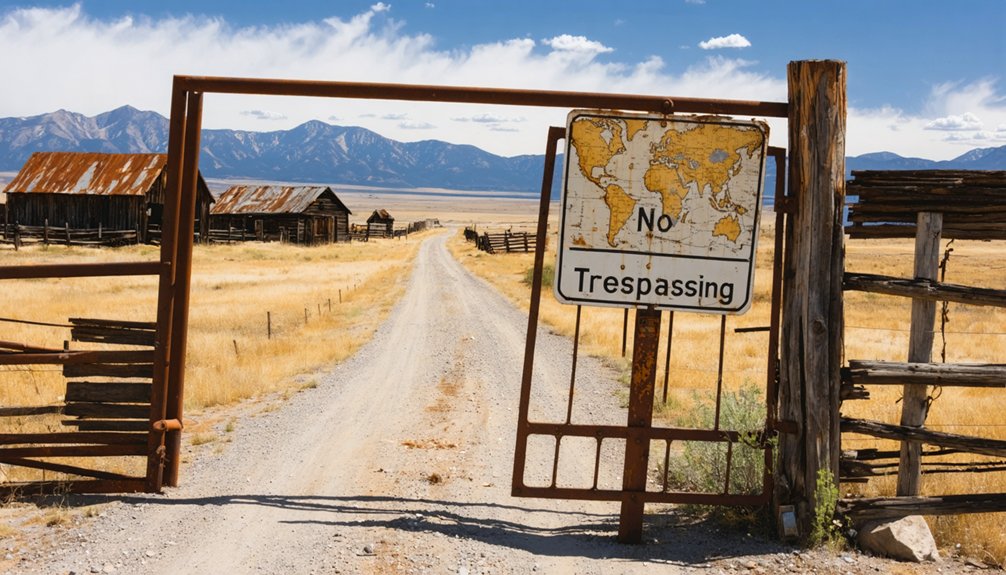
Goldfield sits on private property, meaning you can’t just wander in without risking both bodily harm and prosecution. Private access isn’t guaranteed, so you’ll want to respect the boundaries before planning your ghost town adventure.
Trespassing here carries real legal consequences, and the abandoned structures present genuine physical dangers.
That said, you don’t have to miss out entirely. Virtual tours let you explore Goldfield’s crumbling buildings, rusting mining equipment, and historic remnants safely from home.
You can also view the iconic Gothic-style town hall and surrounding structures from a respectful distance.
Combine your trip with nearby Cripple Creek and Victor, two accessible ghost towns that welcome visitors freely. These communities share Goldfield’s rich mining history while giving you the hands-on exploration experience you’re craving.
How Goldfield Pairs With Cripple Creek and Victor
While Goldfield itself remains off-limits, its neighbors Cripple Creek and Victor sit just a stone’s throw away and welcome visitors with open arms. Together, these towns create a complete ghost town tourism experience rooted in authentic mining history:
- Walk Victor’s historic streets, once home to 18,000 residents during the gold rush peak.
- Explore Cripple Creek’s preserved Victorian architecture and working mine tours.
- Visit the Cripple Creek Heritage Center for in-depth explorations into regional gold mining history.
- Photograph rusting equipment and abandoned structures scattered across the surrounding landscape.
- Drive the scenic mountain roads connecting all three towns for stunning views.
You’ll piece together Goldfield’s story through its living neighbors, making your road trip far richer than a single stop ever could.
What to Know Before You Make the Drive to Goldfield
Before you load up the car and head west of Colorado Springs into the mountains, there are a few things you’ll want to know about visiting Goldfield.
The site is private property, meaning trespassing carries real legal and physical risks. You can still soak in the ghost town legends and mining history from a respectful distance, taking in the Gothic-style town hall and rusting equipment without stepping onto restricted land.
Virtual tours offer another way to explore the structures up close. If you’re combining Goldfield with stops in Cripple Creek and Victor, plan your timing carefully since mountain roads and weather can shift quickly.
Do your research, respect the boundaries, and you’ll walk away with a genuinely memorable slice of Colorado’s wild past.
Frequently Asked Questions
Who Were Burns and Doyle, and Why Did They Rename Gold Knob?
Burns history and Doyle legacy live on as the bold, brave duo who platted the town in January 1895, renaming Gold Knob to Goldfield — you’ll discover they transformed a rough mining camp into an official, thriving community.
What Happened to the Stolen City Hall Safe and Its Documents?
Unfortunately, you won’t find answers about the stolen safe’s fate — it simply vanished. The stolen safe, bearing “City of Goldfield” in gold leaf, disappeared along with its missing documents, leaving history frustratingly incomplete and mysteries forever unsolved.
How Did a Forest Fire in the 1870S Lead to Goldfield’s Founding?
You’d be amazed how the 1870s forest fire impact sparked Goldfield’s future! Regrowth brought lush grass, wildflowers, and raspberries, attracting settlers who discovered gold, igniting the mining boom that transformed the area into a thriving community.
Who Was Jack Ried, and How Did He Become Marshal After Amputation?
You’d admire Jack Ried’s resilience — he suffered an amputation during Goldfield’s brutal labor war, yet after amputation recovery, he rose to serve as town marshal, earning the fitting nickname “Peggy” from tough, freedom-loving citizens.
Why Did the 1920S Attempt to Rename Goldfield to Youngsberg Fail?
Coincidentally, just as you’d pack up and rebrand yourself, the mines stayed silent too. The 1920s name change to Youngsberg failed because community resistance held firm, and the exhausted mines produced no gold to justify it.
References
- https://westernmininghistory.com/towns/colorado/goldfield/
- https://kjzz.org/content/31696/did-you-know-goldfield-ghost-town-was-alive-1800s
- https://95rockfm.com/colorado-goldfield-ghost-town/
- https://gowandering.com/places/goldfield-ghost-town-and-mine-tours-inc
- https://www.youtube.com/watch?v=VSDDe1CN038
- https://www.victorheritagesociety.com/reflections-on-goldfield-by-carol-roberts.html