You’ll find Goshen along remote Goshen Road in Whatcom County, accessible via Highway 542 east from Bellingham through Deming, then south on Highway 547 near Everson. What remains of this 1885 logging settlement includes weathered farmsteads, overgrown rail spurs disappearing into forest regrowth, and the haunting Goshen Nooksack Cemetery where Chief Seclamatan rests. The site offers unrestricted exploration without visitor centers or markers, letting you discover crumbling barns and rusted equipment at your own pace while nearby ghost towns like Barron and Shuksan await further adventure.
Key Takeaways
- From Seattle, take I-5 north to Bellingham, then SR 542 east to Highway 547 near the Everson-Goshen Road intersection.
- Visit Goshen Nooksack Cemetery, the settlement’s oldest remnant, featuring burials of Chief Seclamatan and maintained by Nooksack Tribal Council.
- Explore agricultural remnants including crumbling barns, weathered fence lines, and overgrown rail spurs reclaimed by forest regrowth.
- No visitor center or historical markers exist, allowing unrestricted exploration of pioneer farmsteads and logging community remnants.
- Extend your trip to nearby Whatcom County ghost towns like Barron, Shuksan, Standard, and Park for diverse historical experiences.
History and Decline of Goshen’s Logging Community
When settlers carved out Goshen in 1885 along Washington’s remote western frontier, they planted roots where the Nooksack River bent through virgin timber stands that seemed limitless. You’d have found a hundred souls here by 1915, their post office humming with logging camp orders and farm reports.
Donkey engines screamed through hillsides as railroads hauled massive old-growth logs to distant mills. But freedom from civilization came with a price—those seemingly endless forests fell faster than anyone imagined. The Great Depression crushed lumber production from 7.3 billion board feet to barely 2.2 billion, leaving half the loggers jobless.
Post depression industry struggles only accelerated the inevitable. By the 1980s, old growth depletion on private lands left nothing worth cutting, and Goshen’s last residents drifted away like morning fog.
What Remains to See in Modern Goshen
Standing where Goshen once thrived, you’ll find absence speaks louder than presence. Goshen Road cuts through what remains—a landscape reclaimed by time and nature.
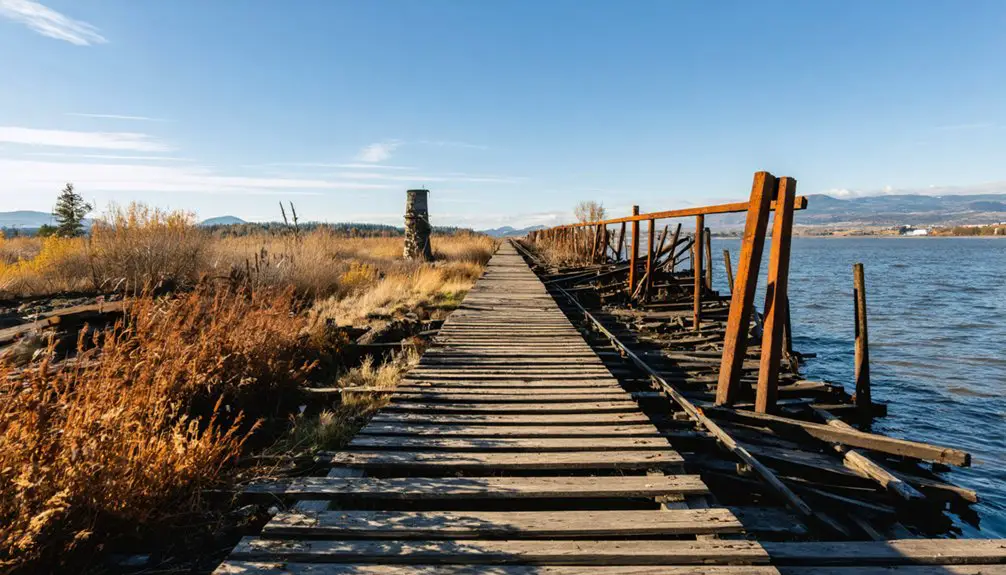
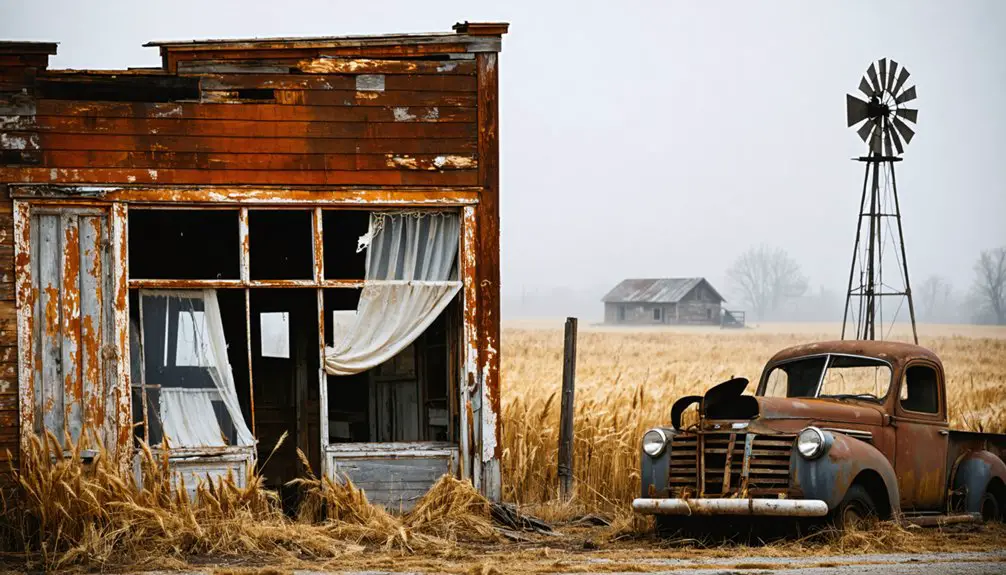
You’ll spot agricultural remnants in crumbling barns and weathered fence lines marking boundaries nobody defends anymore. Overgrown rail spurs disappear into forest regrowth, where second-generation timber erases logging scars. Pioneer farmsteads stand hollow against Whatcom County hills, their stories written in rotting boards and rusted equipment.
Drive slowly along Everson-Goshen Road. There’s no visitor center directing your exploration, no historical markers explaining what vanished. That’s the appeal. You’re free to interpret scattered foundations and irrigation ditches however you choose. The clearing where mills once roared now whispers through Douglas fir saplings, offering solitude five miles from Bellingham’s bustle.
Getting to Goshen From Highway 542
Your exploration of Goshen’s ghostly remains demands finding it first, and State Route 542 provides your gateway into Whatcom County’s agricultural heartland.
From Seattle, chart your route overview from Seattle north on I-5 to Bellingham, then exit east onto SR 542—the Mount Baker Highway. You’ll wind through Deming where the highway intersects with SR 9, tracking the BNSF rail line through valley farmland.
Beyond Deming, watch for your access to Goshen via Highway 547 near the Everson-Goshen Road intersection, where a compact roundabout marks the junction. This southeastern branch off the main highway delivers you to Goshen’s fading footprint.
The drive unfolds through pastoral landscapes where logging communities once thrived, and your destination awaits among fields that swallowed a frontier settlement.
Exploring the Goshen Nooksack Cemetery
As you venture down Roberts Road and turn north for a tenth of a mile, the Goshen Nooksack Cemetery emerges as the oldest surviving record, chronicle, or account to this vanished settlement—a sacred acre donated by Robert Sulkanon from his 160-acre homestead where Nooksack people established roots in 1885.
The original land donation traces back to “Indian Joe,” with Yelkanum Seclamatan and Tenas George sharing construction expenses for this hallowed ground. Among the notable burials rest Seclamatan himself—the Nooksack chief known as Lynden Jim—alongside his son Tenas George and community members spanning from the 1880s through the 2000s.
Maintained by the Nooksack Tribal Council, these weathered markers stand defiant amid encroaching modern houses, preserving stories of pioneers who chose freedom in frontier wilderness.
Extend Your Trip to Other Whatcom County Ghost Towns
The abandoned settlements scattered across Whatcom County beckon ghost town enthusiasts to transform a single-site visit into an extensive exploration of Washington’s vanished mining frontier. You’ll find Barron’s intact cabins and open shafts revealing gold-rush desperation, while Shuksan’s skeletal remains whisper tales of saloons and general stores serving hopeful miners.
As you plan your trip to Walville, be sure to explore the rich history behind its settlements. The remnants of its past tell a story of ambition and hardship, echoing the dreams of those who once sought fortune in the rugged landscape. With each stop, you’ll uncover more tales that will inspire your journey through the heart of the mining frontier.
Additional Whatcom County ghost town sites like Standard and Park dot the backcountry, their fading foundations accessible through nearby hiking trails and ghost town overlooks that reward your adventurous spirit. The Lake Whatcom region clusters several extinct settlements within striking distance, letting you chart your own course through these time-forgotten places.
Each site offers distinct remnants—from Barron’s 6-cylinder diesel engine to Shuksan’s business district foundations—creating an unforgettable journey through territorial ambition and abandonment.
Frequently Asked Questions
Are There Any Restaurants or Gas Stations Near Goshen for Road Trippers?
You won’t find local eateries or nearby fuel sources in Goshen itself—it’s a true ghost town. You’ll need to fuel up and grab provisions in Fall City or North Bend before venturing down these remote, adventure-beckoning roads.
What Is the Best Season to Visit Goshen Ghost Town?
Spring offers ideal weather conditions with 70°F days, making April-June perfect. You’ll discover prime wildflower blooming season transforming Goshen’s abandoned streets into colorful corridors, while fewer crowds grant you freedom to explore this forgotten landscape undisturbed.
Can I Camp Overnight Near the Goshen Nooksack Cemetery Area?
Cemetery camping policies don’t permit overnight stays at Goshen Nooksack Cemetery. You’ll need to explore nearby campgrounds instead, where you’ll find designated sites that let you sleep beneath starlit skies while respecting this historic resting place’s sacred grounds.
How Long Should I Plan to Spend Exploring Goshen?
You’ll barely need an hour to absorb Goshen’s historical significance—the weathered cemetery stones and Goshen Community Church’s notable architecture whisper forgotten tales. Plan 45-60 minutes wandering freely through these evocative remnants of frontier dreams.
Are There Any Guided Tours Available for Goshen Ghost Town?
No formal guided tours exist at Goshen—you’ll explore freely through weathered buildings at your own pace. Unlike destinations with history docents, these self-guided tours let you wander unscripted, discovering forgotten stories wherever curiosity leads you.