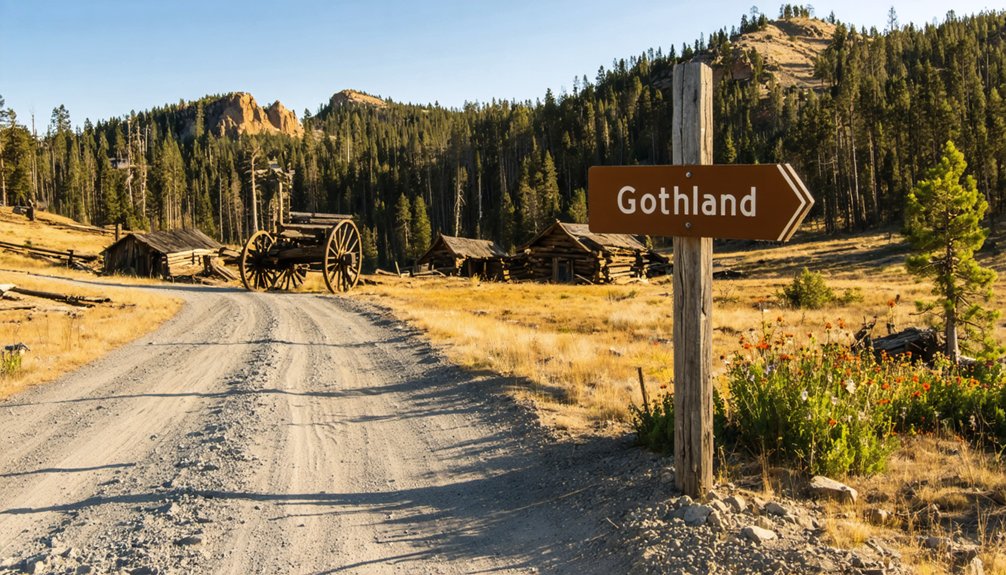
You’ll need four-wheel drive and a full tank to reach Gothland’s 15-25 abandoned buildings scattered across private land in the Black Hills backcountry. Summer offers the best access with mild 70-80°F temperatures, while winter roads stay impassable November through May. Don’t miss the collapsing 1904 church, weathered Longhorn Saloon, and combo church-jail with street-visible cells. Pack emergency supplies, offline maps, and survival gear since cell service vanishes in these remote gulches where fortunes were made following Custer’s 1874 gold discovery and the legendary Homestake claim transformed wilderness into boomtowns.
Key Takeaways
- Gothland features 15-25 abandoned buildings including a collapsing 1904 church, combination church-jail, and the weathered Longhorn Saloon.
- Visit during summer when temperatures reach 70-80°F and gravel roads are passable; roads close November through May.
- Require four-wheel drive with all-terrain tires, full gas tank, spare tire, emergency supplies, and offline maps.
- Expect no cell service and privately-owned terrain; test ground stability and never explore deteriorating structures alone.
- Nearby ghost towns include Spokane near Elk Heaven campground and Galena in Vanocker Canyon with intact schoolhouse.
Discovering the History of Gothland’s Mining Era
The Black Hills exploded with possibility in 1874 when miners Ross and McKay pulled the first documented gold from French Creek during the Custer Expedition. You’ll find Gothland’s story woven into that wild rush—when Deadwood Gulch yielded massive placer deposits in November 1875, thousands of prospectors flooded in, facing early prospecting challenges that tested every newcomer’s resolve.
By 1876, the Sioux had ceded these hills, and fortune-seekers staked claims wherever bedrock showed promise. The Manuel brothers discovered the legendary Homestake claim that April, setting the stage for industrial-scale operations. Meanwhile, transportation infrastructure development crawled behind the gold fever—rough trails connected camps like Gothland to supply centers.
Within five years, miners extracted $6-8 million in placer gold before the easy pickings vanished, leaving ghost towns scattered across these pine-covered slopes.
What to See Among the Ruins and Remnants
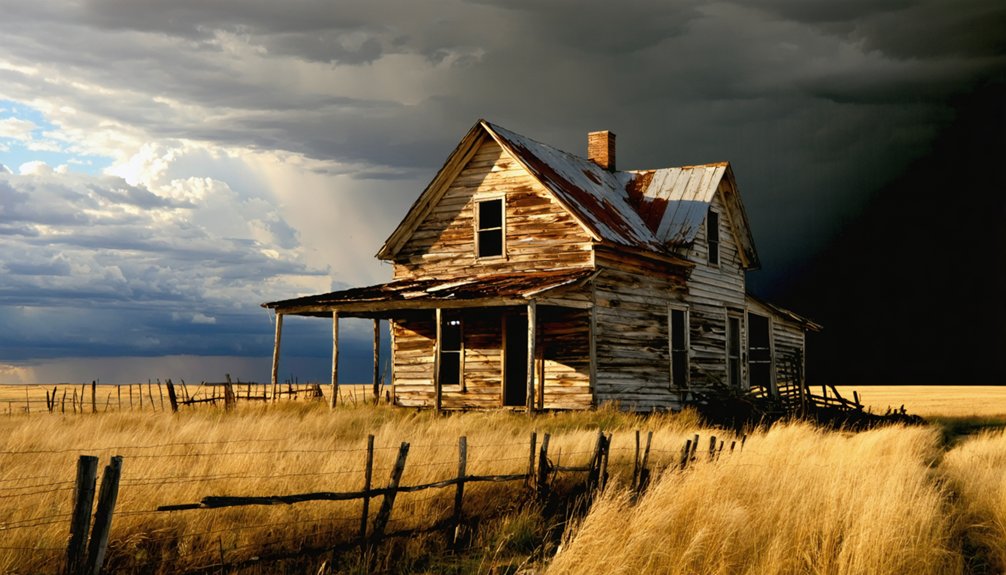
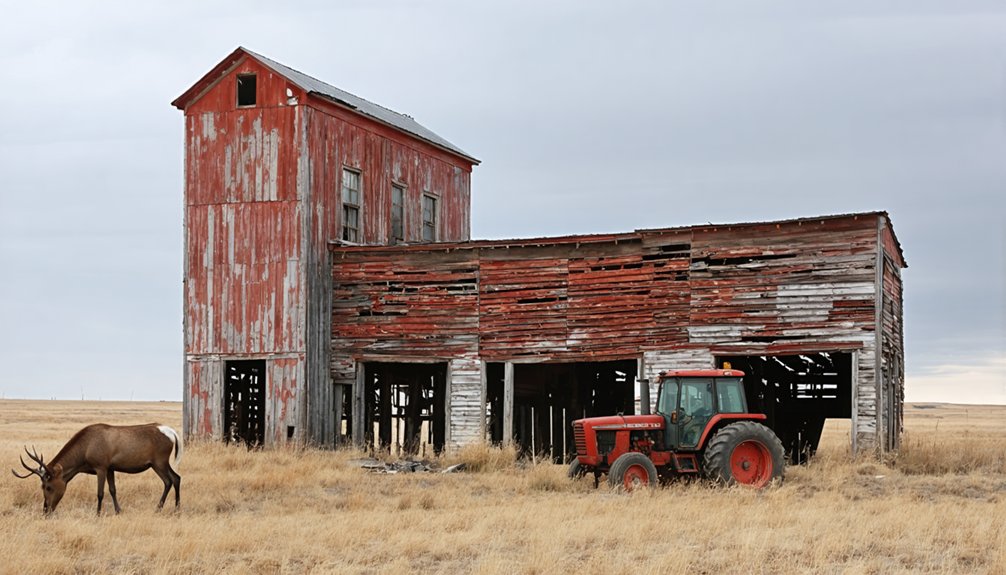
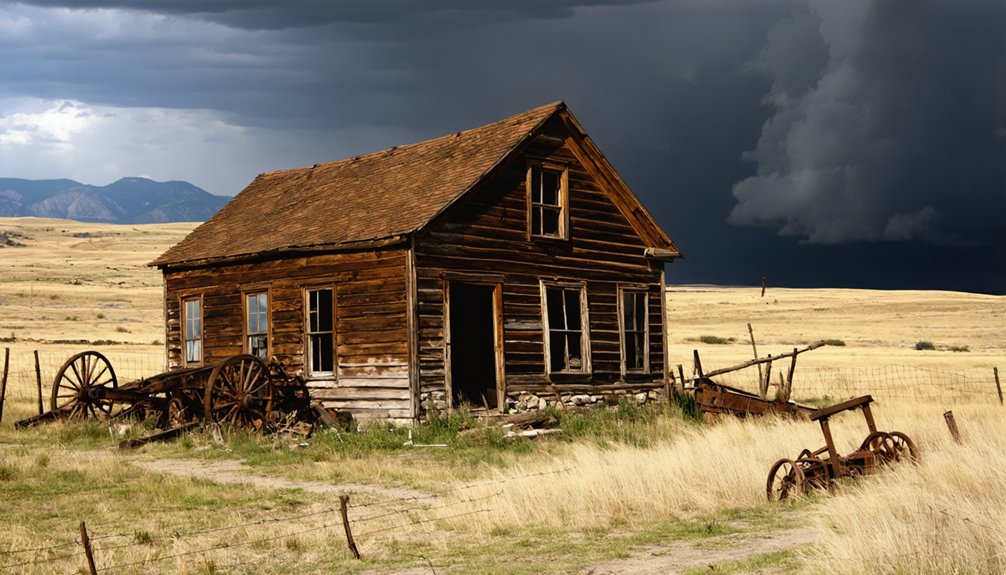
Weathered timber frames rise from knee-high prairie grass like skeletal fingers reaching toward the Black Hills sky. You’ll find 15 to 25 abandoned buildings scattered across this privately-owned terrain, each telling stories of boom-times past.
The collapsing church details reveal its 1904 founding, while remnants of the public bath house crumble nearby. Wander past the combo church-jail building where street-visible cells once held rowdy miners. The Longhorn Saloon stands weathered, its famous Budweiser sign long vanished, though the ox yoke remains. Original saloon operations like Moonshine Gulch still hold their ground, alongside the Irish Gulch Dance Hall.
The mine manager’s house, occupied until the 1970s, offers the best-preserved glimpse into daily life. Remember—no climbing structures. Respect the ruins, preserve what freedom built.
Exploring Other Black Hills Ghost Towns Along Your Route
Your journey to Gothland opens doors to a constellation of abandoned settlements scattered across these pine-covered hills. Just seventeen minutes from Powder House Lodge, you’ll find Spokane’s crumbling foundations near Elk Heaven campground, while Galena’s weathered structures in Vanocker Canyon mark where Sarah Campbell became the first woman to stake a mining claim in 1876.
For a haunting detour, stop at Pactola Lake along Route 385, where a lone cabin overlooks 150 feet of water concealing an entire town—Camp Crook’s dance halls, businesses, and miners’ homes perfectly preserved in their cold, dark grave since the 1950s.
Galena’s Historic Mining Remains
Just north of your main destination lies Galena, a silver mining camp that sprang up in 1876 as the Black Hills’ first major non-gold rush settlement. You’ll find fascinating remnants along Galena Road in Vanocker Canyon, where lead and silver ore deposits once fueled a thriving community of 400 residents.
What you can still explore:
- The intact Galena schoolhouse standing ready for photography
- Historic mining structures scattered through the canyon alongside modern homes
- Evidence of the McDonald Smelter, the Black Hills’ first processing facility from 1877
The mining town’s economic decline began after an 1886 legal dispute between the Sitting Bull and Richmond mines, followed by ore depletion and plummeting silver prices. By the 1940s, prospectors and homesteaders had abandoned their claims, leaving these weathered monuments to Black Hills independence.
Rockerville’s Preserved Manager House
Continue your ghost town exploration 10 miles south of Rapid City, where Rockerville clings to its mining heritage with stubborn authenticity. The Manager House stands as the most intact preserved mining remnant from the 1876 gold rush, occupied until the 1970s before becoming a monument to the boom-and-bust cycle that shaped these hills.
You’ll hear tales of music inspiration connecting this structure to the Marshall Tucker Band‘s legacy—stories that add mystique to the weathered walls. While a 2016 fire training exercise claimed surrounding buildings, this survivor remains amid rural development. The Gaslight Restaurant and Saloon offers your only chance for refreshments while you’re exploring.
Position yourself here between Mt. Rushmore and Rapid City, with Reptile Gardens just five minutes away. It’s perfect basecamp territory for chasing Black Hills history.
Pactola Lake Submerged Sites
Beneath Pactola Lake’s shimmering surface lies the drowned remnant of an 1875 mining camp that flourished, faded, and finally surrendered to the waters when engineers dammed Rapid Creek in 1956. You’ll find the Black Hills’ largest reservoir concealing foundations, a Civilian Conservation Corps dynamite bunker, and preserved mining equipment scattered across the lake bottom.
If you’re certified, scuba diving experiences here reveal what bureaucracy couldn’t erase—tangible connections to prospectors who defied the Treaty of Fort Laramie. One cabin survived downstream, standing defiantly above the waterline.
- 80 miners stranded by blizzard filed $50,000 in claims during March 1876
- Sherman House hotel served stagecoach passengers before submersion
- Buildings relocated to Silver City when government condemned the land
The drowned town serves Rapid City’s water needs while offering adventurous souls underwater time travel.
Mapping Your Black Hills Ghost Town Adventure
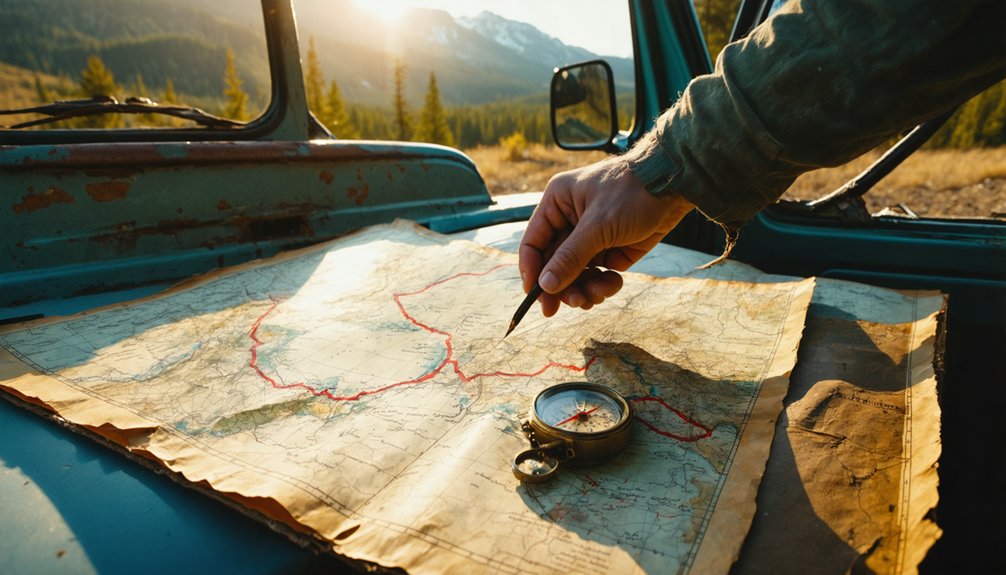
Your Black Hills ghost town adventure sprawls across a landscape where Highway 16 threads through Rockerville’s weathered storefronts between Rapid City and Mount Rushmore, while Route 385 cuts south past mining camps where Deadwood’s outlaws once fled with stolen gold.
As you delve deeper into the region, you’ll uncover morganfield’s rich ghost town history, offering a glimpse into the fascinating lives of early settlers and miners. Wandering through the remnants of this once-thriving community, you can almost hear the echoes of its past bustling with activity. Discovering these hidden gems adds another layer to your exploration, making the journey through the Black Hills even more unforgettable.
Southwest, you’ll discover collapsing homesteads near a 1904 town where Kappa Hotel ruins mark a community that once housed 300 residents.
Head north from Edgemont to Buena Vista, where abandoned homesteader sites dot the prairie alongside crumbling grindstones.
Don’t miss Tinton’s 1927 community hall with its ghost of a basketball court, or venture into Custer State Park where Camp Success and Gordon Stockade remnants hide southeast of Jim Boll Ranch.
Each route reveals collapsing edifices and dance halls frozen in time.
Essential Tips for Visiting Remote Mining Sites
The sun beat down on my neck as I approached my first abandoned mine shaft near Rochford, and that’s when I noticed the timber frame sagging like a tired old man—a stark reminder that these sites demand respect, not just curiosity. Before you venture into Gothland’s forgotten mining territory, understand that site accessibility doesn’t guarantee safety. These aren’t theme parks with worker training programs anymore.
Your survival checklist:
- Test ground stability before stepping near shaft openings or deteriorating structures
- Carry a headlamp with backup batteries—cellphone flashlights won’t cut it in pitch-black tunnels
- Never enter alone; tell someone your exact location and expected return time
Watch for unmarked vertical drops, toxic gas pockets from decades-old chemical reactions, and crumbling rock faces. Freedom means accepting responsibility for your choices.
Understanding the Black Hills Gold Rush Legacy
When George Armstrong Custer‘s expedition stumbled upon gold flakes in French Creek during the summer of 1874, they didn’t just discover precious metal—they ignited a frenzy that would reshape the Dakota Territory and obliterate the Fort Laramie Treaty’s promises to the Sioux.
By fall 1875, thousands of prospectors flooded Deadwood Gulch, extracting placer gold by the spadeful with zero government permission. This massive trespass fueled territorial development conflicts that culminated in the Battle of the Little Bighorn.
The Homestake Mine, discovered in 1876, became America’s most productive vein—pumping out 40 million ounces over 125 years and supplying 10 percent of the world’s gold. These gold mining operations transformed wilderness into boomtowns overnight, creating the legacy you’ll witness exploring Gothland’s abandoned foundations today.
Best Times and Preparations for Your Journey
Gold fever may have built these Black Hills settlements, but Mother Nature determines when you’ll actually reach them. Summer’s your sweet spot—mild 70-80°F days make gravel roads to Gothland passable without wrestling snowdrifts or mud. Winter? Forget it. Roads close November through May, trapping these ghost towns in isolation.
Summer owns these roads—70-80°F perfection versus seven months of impassable isolation when winter locks the ghost towns away.
Your vehicle needs teeth for this adventure:
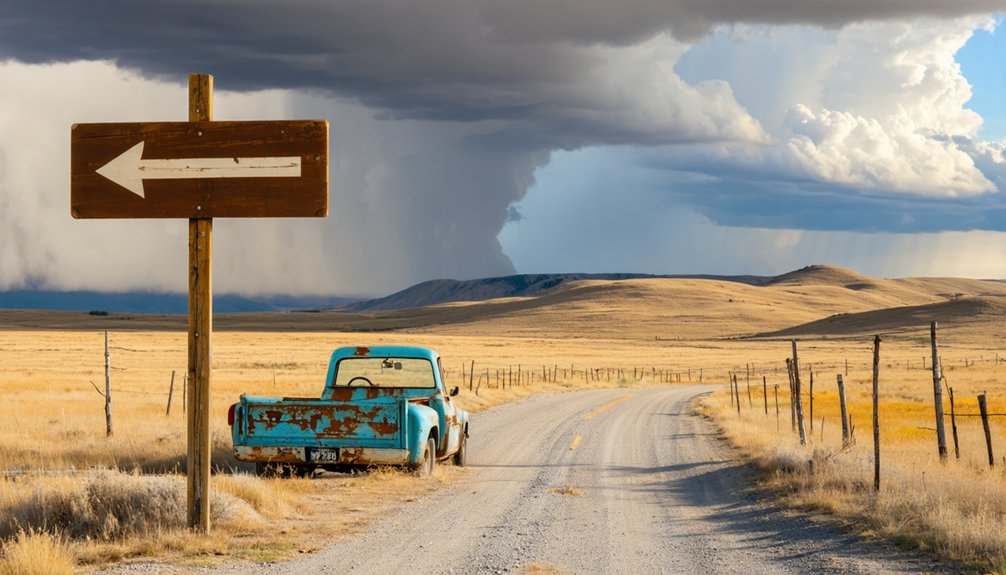
- Four-wheel drive with all-terrain tires for washboarded gravel stretches
- Full tank, spare tire, and tool kit—no gas stations dot these forsaken routes
- Emergency supplies including chains, shovel, water, and offline maps
Recommended safety precautions aren’t suggestions here—they’re survival basics. Pack seasonally appropriate gear, inform someone of your plans, and carry cash. Cell service vanishes where gold camps once thrived, leaving you beautifully, terrifyingly alone.
Combining Ghost Town Exploration With Regional Attractions
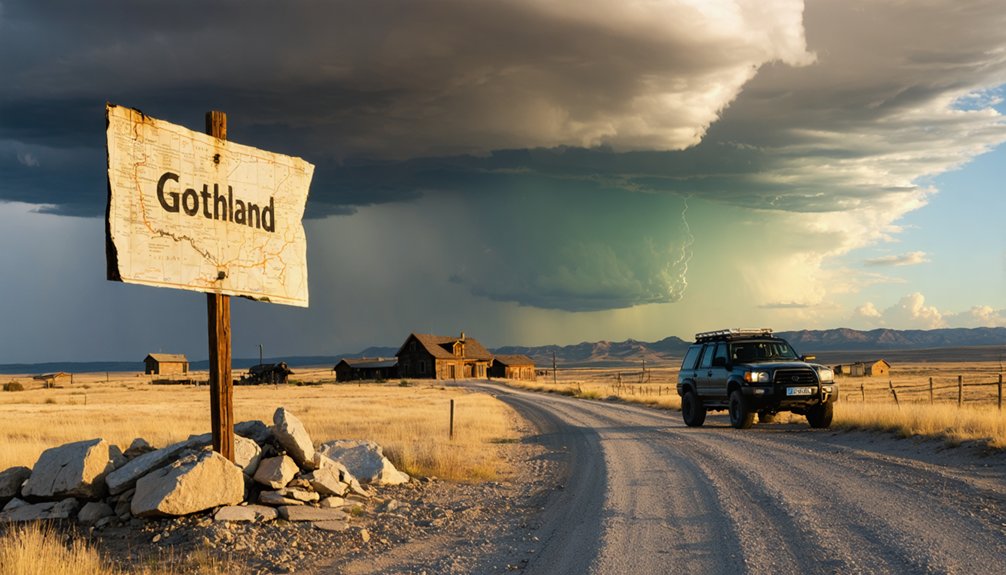
Your Gothland pilgrimage doesn’t exist in a vacuum—these ghost towns cluster within striking distance of each other, begging for multi-stop adventures that’ll fill memory cards and journals.
Link Mystic’s restored schoolhouse with Rochford twelve miles south, creating a morning-to-afternoon circuit through preserved frontier architecture. From Keystone, you’re five minutes from Etta Mine’s manager house and ninety minutes from Pringle’s southern reaches. Deadwood pairs naturally with Mount Moriah Cemetery tours before diving into local heritage museums downtown.
Ardmore sits one mile from Nebraska’s border—stack it with Igloo for a Fall River County double feature. Highway 385 connects Lake Pactola recreation with Rochford exploration, letting you camp lakeside after prowling abandoned storefronts. These aren’t isolated destinations; they’re breadcrumbs through mining history.
Frequently Asked Questions
Are There Any Guided Tours Available for Gothland Ghost Town?
Ironically, you’ll find no guided tours available for Gothland—it doesn’t exist. You’re free to explore real Black Hills ghost towns independently, though costs of guided tours elsewhere run $15-30. Your adventure awaits in actual abandoned sites.
Can I Camp Overnight Near Gothland or Other Ghost Town Sites?
You’ll find primitive camping facilities on nearby BLM lands, though you should verify local authorities’ policies first. I’ve experienced incredible starlit nights dispersed camping near ghost towns, but always confirm current regulations before pitching your tent.
What Wildlife Should I Watch for While Exploring Black Hills Ruins?
You’ll encounter over 350 native bird species while exploring ruins. Watch for bison, bighorn sheep, and coyotes year-round. During seasonal wildlife migrations, September brings bugling elk and eagle activity peaks at dawn near Ponderosa Pines—pure freedom awaits.
Are Metal Detectors Allowed at Gothland and Surrounding Ghost Towns?
Metal detectors aren’t allowed at Gothland without permits and landowner permission. You’ll face strict metal detector regulations on public lands—no digging artifacts over 100 years old. Connect with nearby metal detecting clubs for legal alternative sites instead.
How Physically Demanding Are the Hiking Trails to Gothland Ruins?
The trails present moderate terrain difficulty with uneven ground and prairie grass obscuring old foundations. You’ll navigate crumbling structures and prairie slopes, so sturdy footwear recommended. I’ve twisted ankles on easier paths—don’t risk your adventure with flimsy shoes.