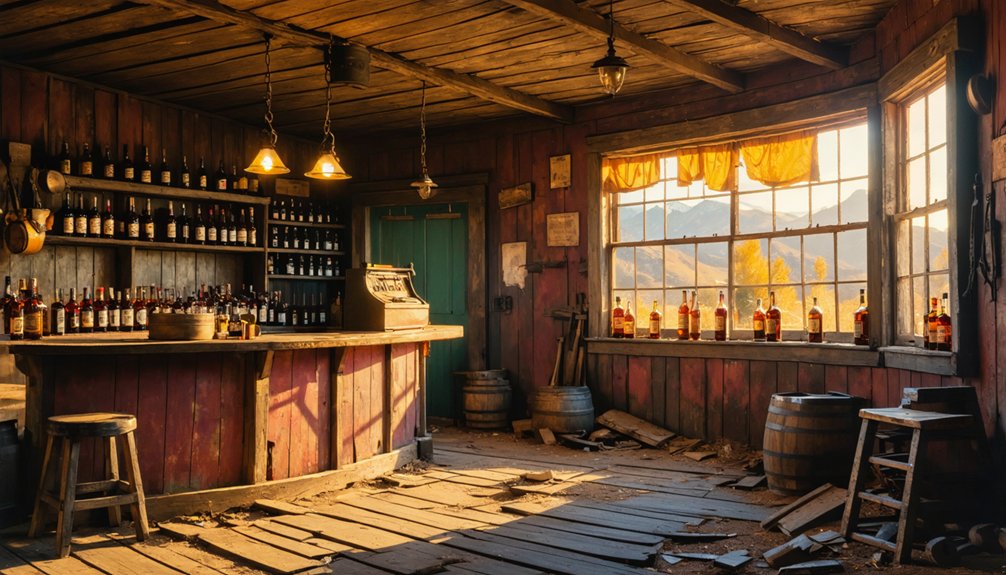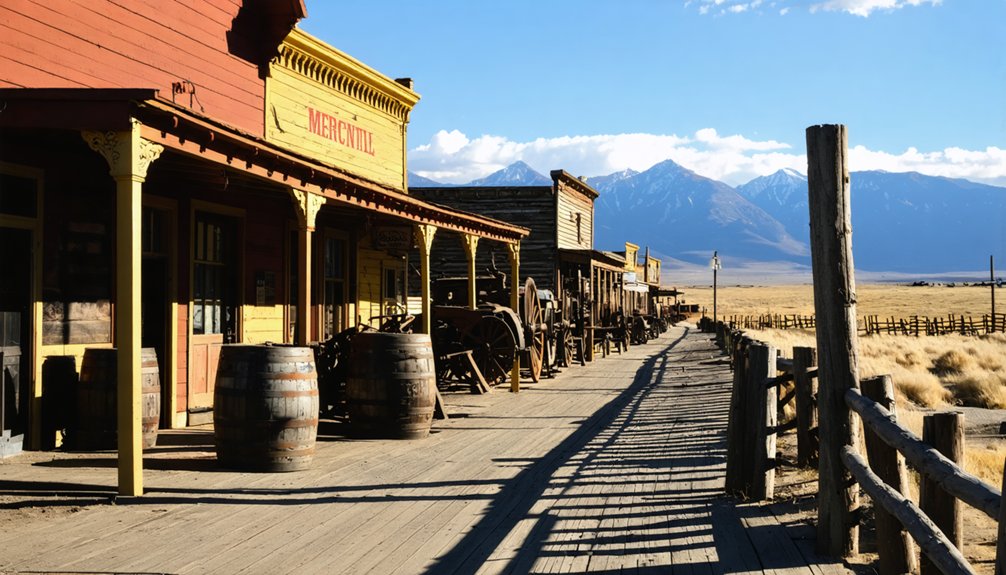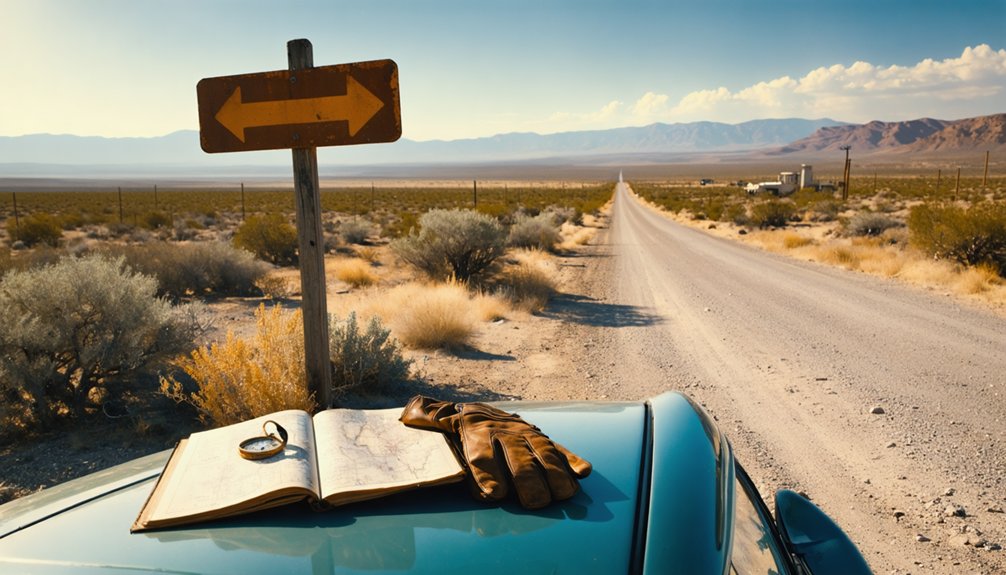
“Gyle” is actually Calico Ghost Town, located 25 miles northeast of Ridgecrest via US-395 and unpaved Calico Ghost Road—about 250 miles from Los Angeles. You’ll discover corrugated metal buildings against Calico Peak’s rust-striped slopes, explore the self-guided Maggie Mine tour for $3.50, and wander among 1880s structures and Walter Knott’s authentic replicas. The Mojave Desert’s harsh terrain demands high-clearance vehicles, especially during spring snowmelt and desert storms. Your adventure deepens when you understand the boom-and-bust cycles that shaped this silver mining camp’s remarkable history.
Key Takeaways
- Goler Heights (often misheard as “Gyle”) is 25 miles northeast of Ridgecrest via US-395 and unpaved high-clearance roads.
- The restored mining town features five authentic 1880s structures, self-guided mine tours, gold panning, and Saturday ghost tours.
- Visit late spring through early fall for ideal conditions; winter brings snow and spring snowmelt makes roads impassable.
- Drive 250 miles from Los Angeles (5 hours) via CA-14 and CA-58, then navigate Trona-Wildrose and Goler Heights roads.
- Expect corrugated metal buildings, weathered facades, original mining inventory, and views of Calico Peak’s striped slopes.
Getting to Gyle: Directions and Route Planning
Where the Mojave Desert’s sun-bleached vastness swallows highway lines into shimmering horizons, the ghost town of Goler Heights—often misheard as “Gyle” in local parlance—waits among the Panamint Valley‘s abandoned mining scars.
You’ll navigate 25 miles northeast from Ridgecrest via US-395, then veer onto unpaved Trona-Wildrose Road before accessing Goler Heights Road’s high-clearance track.
From Los Angeles, take CA-14 through Mojave to CA-58 east—250 miles demanding five hours and desert self-reliance. Download digital mapping resources like Maps.me before cell towers vanish; offline GPS coordinates (35°25′37″N 117°44′45″W) prove essential when asphalt surrenders to dirt.
Pack twenty gallons of fuel, water reserves, and spare tires. Summer’s 110°F heat punishes unprepared travelers, while winter flash floods transform roads into impassable mud. Check BLM road status before departure—freedom here requires preparation, not recklessness.
What to Expect When You Arrive
The corrugated metal buildings and weathered timber facades materialize like a film set against Calico Peak’s rust-and-cream striped slopes, their 1880s silhouettes preserved across 480 acres of San Bernardino County parkland at 2,283 feet elevation. You’ll park near the restored mining town entrance, where five authentic structures stand among Walter Knott’s 1950s replicas.
The dry, dusty terrain frames attractions with minimal entry guidelines—Maggie Mine’s self-guided 1,000-foot tour costs just $3.50, while most buildings welcome free exploration. Accessibility for visitors extends beyond basic mine tours to gold panning, horseback riding, and Saturday ghost tours through the schoolhouse.
This California Historical Landmark once housed 1,200 residents and 500 mines, producing $20 million in silver before its 1890s collapse into abandonment.
Exploring the Historic Buildings and Structures
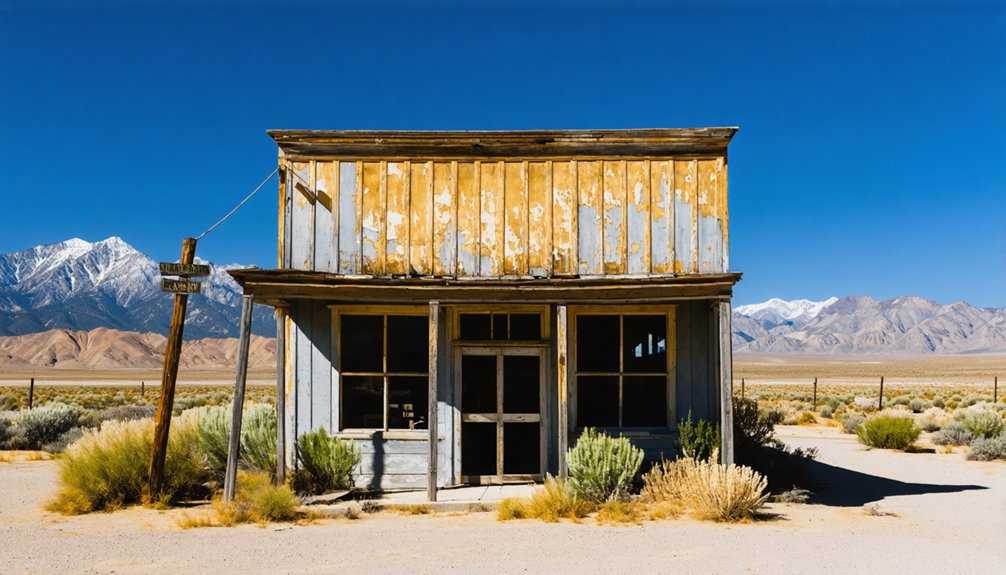
Stepping through Calico’s entrance, you’ll encounter a remarkable architectural timeline where five authentic 1880s structures stand shoulder-to-shoulder with Walter Knott’s meticulously crafted replicas, each building revealing the mining town’s layered history through weathered timber and corrugated metal.
The Boone Store and Warehouse preserves shelves lined with original mining-era inventory—dynamite, equipment, and provisions frozen in time. Peer through dusty windows to discover interior furnishings that showcase surprisingly ornate pieces, evidence of prosperity amid frontier hardship.
The Bottle House demonstrates ingenious resourcefulness in construction, while Maggie’s Mine offers underground exploration through connected tunnels. You’ll find diverse architectural styles reflecting the community’s social hierarchy, from simple worker dwellings to elaborate commercial buildings featuring period-specific brick and granite techniques that defied decades of desert elements.
Gold Rush History and Mining Heritage
On January 24, 1848, James W. Marshall’s discovery at Sutter’s Mill sparked California’s transformation. You’ll find Gyle’s remnants rooted in this frenzied era when 300,000 fortune-seekers flooded goldfields between 1848-1855.
Gold fever transformed California overnight as Marshall’s 1848 discovery drew hundreds of thousands to chase fortune in Gyle’s unforgiving goldfields.
The ghost town archaeology reveals placer mining‘s evolution—from simple pans to destructive hydraulic operations that carved landscapes and poisoned waterways with mercury for millennia.
Walking these abandoned sites, you’ll confront uncomfortable truths about freedom’s cost. The rush enabled California’s 1850 statehood while triggering systematic native american displacement through massacres and Governor Burnett’s declared “war of extermination.”
Gyle’s crumbling structures testify to boom-and-bust cycles where individual prospectors yielded to corporate machinery by the mid-1850s. These weathered foundations preserve stories of ambition, violence, and environmental devastation that shaped California’s identity.
Best Time to Visit and Seasonal Considerations
You’ll find Gyle’s accessibility shifts dramatically with the seasons, transforming your ghost town experience from sun-baked summer exploration to winter’s snow-dusted solitude.
The park operates on limited hours during off-peak months, so you’ll need to confirm current schedules before making the journey into California’s remote backcountry.
Weather patterns here can turn primitive dirt roads impassable within hours, particularly during spring snowmelt and sudden desert thunderstorms that sweep across the valley.
Seasonal Park Operating Hours
Planning your ghost town adventure requires understanding that most San Bernardino County Regional Parks, including Calico Ghost Town, maintain consistent daily hours from 9 AM to 5 PM throughout the year—with Christmas Day as the sole exception. You’ll find weekend availability matches weekday schedules, giving you flexibility to explore on your terms without seasonal restrictions limiting your spontaneity.
Unlike Bodie State Historic Park, which reduces to winter hours of 9 AM to 4 PM, Calico keeps its full schedule year-round. However, note that holiday hours mean Christmas closures across all county parks.
Some regional parks like Glen Helen operate extended schedules from 7:30 AM to 5 PM, while Mojave River Forks runs Thursday through Monday only. Check specific locations beforehand to maximize your exploration time.
Weather and Road Conditions
When you’re mapping out your journey to Gyle, California’s abandoned remnants, the desert climate dictates a clear winner for timing: late spring through early fall delivers ideal conditions for ghost town exploration.
As you venture further into the region, consider the allure of ghost towns near Gerstley, California, which offer a unique glimpse into the past. Each deserted structure tells a story of bygone eras and the people who once called this harsh landscape home. The stark contrast of decaying buildings against the vibrant desert backdrop creates an unforgettable experience for adventurers and history enthusiasts alike.
You’ll encounter comfortable temperatures averaging 75°F, crystal-clear skies, and bone-dry roads that won’t challenge your vehicle’s traction.
Winter brings complications—precipitation peaks in December with roughly 16 inches annually, elevating flash flood potential in desert washes and turning dirt access roads into treacherous mud. Snow accumulation levels remain negligible in Goleta’s coastal zone, though surrounding high-desert routes might see occasional dustings.
The arid summer months eliminate water-related hazards entirely, giving you unrestricted access to remote sites. Plan your departure during extended daylight hours, and you’ll maximize exploration time while avoiding winter’s slippery conditions.
Preparing for Remote Terrain and High Elevation
Before venturing into California’s backcountry to explore abandoned settlements like Gyle, understanding the state’s dramatic elevation shifts becomes essential for survival. You’ll navigate terrain ranging from 282 feet below sea level in Death Valley to Sierra Nevada peaks exceeding 14,000 feet. These elevation changes create construction challenges in ghost towns, where crumbling structures on steep slopes present serious fall hazards.
Pack accordingly for high desert elevations around 4,200 feet, where ground snow loads reach 55 psf during winter months. California’s average elevation of 3,048 feet means you’ll encounter steep, rugged terrain carved by glacial activity and tectonic forces. Study topographic maps showing two-foot contour intervals before departure. The state’s remote areas demand self-sufficiency—frost depths, unstable fill slopes, and unobstructed flat areas won’t forgive poor planning.
Park Entry Fees and Tour Options
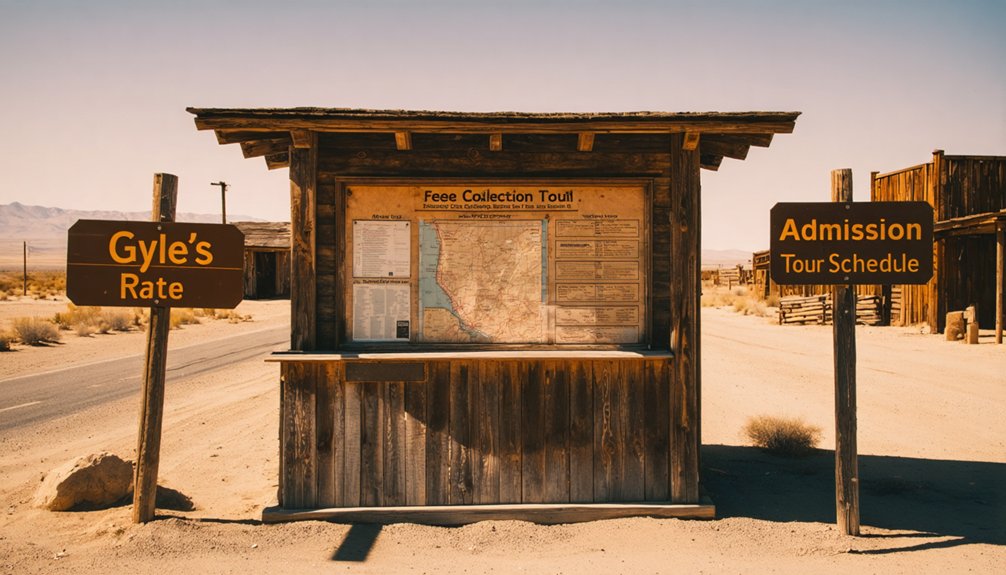
You’ll find Calico Ghost Town offers straightforward admission pricing—$8 for adults and $5 for youth ages 4-11, while children three and under enter free. The park operates year-round with extended hours during peak season, though you’ll want to confirm specific times before your visit since they vary by month.
Once inside, you can explore the historic buildings at your own pace or enhance your experience with guided tours like the Maggie Mine combo package ($13 adults, $7 children) or the atmospheric nighttime Ghost Tours that wind through darkened streets and abandoned structures.
Standard Admission Pricing Structure
Planning your adventure to Calico Ghost Town starts with understanding the straightforward admission structure that keeps this historic destination accessible to families and solo travelers alike. You’ll pay $8 for adults and $5 for youth aged 4-11, while children three and younger enter free. If you’re bringing your furry companion, there’s a modest $1 dog fee (service dogs excluded).
The real value emerges with family pass pricing at $50 annually—perfect for repeat visitors seeking unlimited access throughout the year. Beyond basic entry, you’ll find discounted group rates through specialized packages: the bundled tour option combines three attractions for $12 per adult. Each experience operates independently, allowing you to customize your exploration without mandatory add-ons restricting your journey.
Seasonal Operating Hours
While most historic sites operate on limited schedules, Calico Ghost Town welcomes visitors daily from 9 AM to 5 PM throughout the year, closing only on Christmas Day. You won’t face the restricted schedules that plague other desert destinations like Goffs Ghost Town, which limits access to weekend-Monday operations and experiences inconsistent closures due to various restrictions.
Your spontaneous desert adventures remain possible with Calico’s reliable hours:
- Plan sunrise departures knowing gates open consistently at 9 AM
- Explore Lucy Lane Museum without appointment hassles or uncertainty
- Tour Maggie Mine’s depths on your schedule, not theirs
- Pan for gold whenever wanderlust strikes during operating hours
For Goffs visits, you’ll need advance notice—several days recommended—and should call 760-733-4482 to confirm availability before venturing into the Mojave.
Self-Guided Vs Ranger-Led
Bodie State Historical Park’s $10 entry fee grants you access to over 170 weathered structures frozen in time, where you can wander independently through dusty streets once trampled by 10,000 fortune-seekers. Self-guided exploration offers pacing flexibility—you’ll photograph sun-bleached saloons and peer through windows without schedules constraining your adventure. Maps at the entrance direct you through Chinatown remnants and abandoned hotels across this $34 million gold-producing site.
Ranger-led tours provide expert historical context about Bodie’s darker chapters: vigilante justice, mysterious murders, and the town’s founder. These hour-long walks illuminate stories behind the Boone Store and Miner’s Union Hall at no additional cost beyond entry. Daily tours run during peak season, though group sizes stay limited. You’ll choose between unfettered freedom or guided narratives revealing secrets these arrested-decay buildings guard.
Photography Tips for Capturing Authentic Western Atmosphere
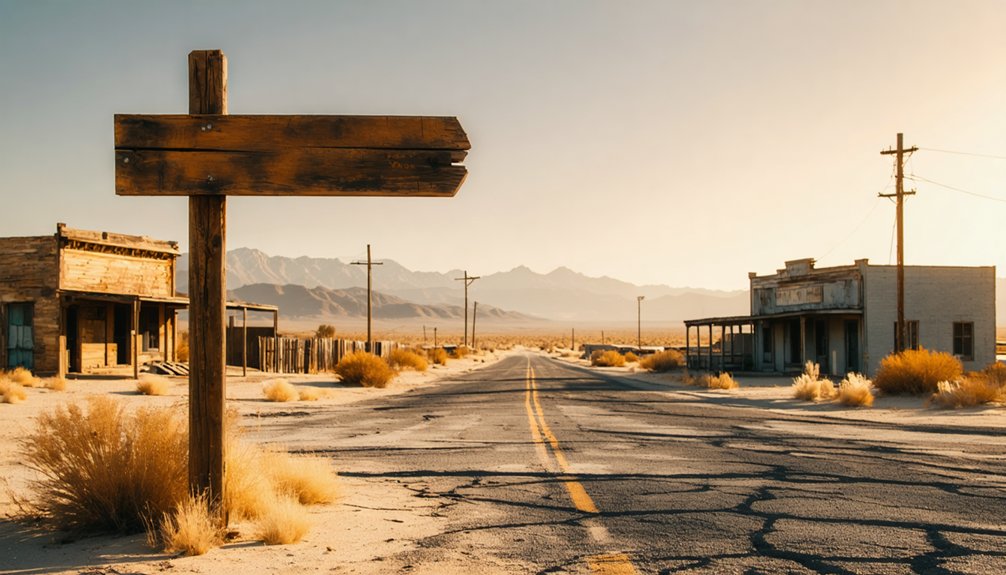
Because ghost towns exist as frozen moments in history, your camera becomes the instrument that translates their weathered authenticity into compelling visual stories.
Your lens transforms decay into narrative, freezing the ghost town’s silent testimony before wind and weather erase these fragments forever.
Master these compositional techniques to capture Gyle’s untamed essence:
- Apply the rule of thirds by positioning weathered structures off-center, letting vast desert expanses amplify the isolation that defines ghost town atmosphere
- Follow leading lines through dirt roads and fence rails that converge at crumbling storefronts, creating dynamic pathways through your frame
- Layer your depth with foreground cacti, midground buildings, and distant mountains to transform flat images into immersive experiences
- Exploit chiaroscuro effects during golden hour, when hard shadows beneath wooden porches contrast against sunlit walls, revealing weathered textures that tell decades of abandonment
Frame subjects through doorways and windows, allowing natural elements to emphasize the desolate beauty you’re documenting.
Preservation Efforts and Respecting the Site
Since 1962, California’s arrested decay policy has transformed how we preserve ghost towns, maintaining structures exactly as their final occupants left them—dust-covered tables still set for meals never eaten, rusted tools hanging where miners abandoned them mid-shift. You’ll find roughly 200 buildings frozen in time, preserving historic integrity through minimal intervention that stops collapse without erasing authenticity.
The Bodie Foundation funds critical stabilization projects, from cemetery headstones to the railroad depot, while Save Bodie campaigns target at-risk structures. You’re welcome to peer through weathered windows and tour the Standard Stamp Mill, but respect the boundaries. No metal detecting, no looting, no entering most buildings. Avoiding further decay means balancing your access with protection—letting you witness abandonment’s stark beauty while ensuring future wanderers experience the same freedom.
Frequently Asked Questions
Are There Any Restaurants or Accommodations Available Within Bodie State Historic Park?
You’ll find no food options or lodging availability within Bodie itself—but that’s part of its authentic charm. The preserved ghost town keeps you immersed in history, while nearby Lee Vining offers restaurants and accommodations for your adventure.
Can Visitors Enter the Buildings or Only View Them From Outside?
You’ll find interior access restrictions at Bodie protect the historic structures, so you’re limited to exterior exploration opportunities. You can peer through windows into frozen-in-time rooms, but you can’t enter buildings to preserve their authentic arrested decay.
Is Bodie Suitable for Young Children or Elderly Visitors?
You’ll need to pick your battles here. While accessibility for disabled visitors includes specialized wheelchairs and paved sections, the high elevation, uneven terrain, and exposure demand serious safety precautions for exploration with young children or elderly guests.
What Happened to the Original Residents After the Town Was Abandoned?
After population decline over time and reasons for abandonment like mine depletion, original residents scattered to new gold strikes across the West. They left behind belongings, seeking freedom and fortune elsewhere, while some repurposed buildings in surviving towns.
Are There Any Reported Ghost Sightings or Paranormal Activities at Bodie?
Bodie brims with bizarre, bone-chilling reports of ghostly apparitions and alleged supernatural occurrences. You’ll encounter the Chinese maid’s suffocating presence, hear phantom children’s laughter, smell mysterious Italian cooking, and witness little Evelyn’s angelic spirit playing among tombstones.