You’ll find Haile Homestead three miles west of I-75 Exit 384 on Archer Road, where a 6,200-square-foot antebellum mansion stands as Florida’s most intimate ghost town. Unlike abandoned ruins, this 1856 estate preserves 12,500 handwritten words scrawled across its “Talking Walls”—diary entries, poems, and cryptic messages left by the Haile family and those who labored here. Tours run Saturdays and Sundays for just $5, revealing stories that standard history books never capture in quite the same visceral detail.
Key Takeaways
- Historic Haile Homestead is located at 8500 SW Archer Road in Gainesville, accessible via I-75 Exit 384 westbound.
- The 1856 antebellum mansion features over 12,500 handwritten words on its famous “Talking Walls” from the 1850s onward.
- Open Saturdays 10am-2pm and Sundays 12pm-4pm with $5 admission; children under 12 enter free with docent-led tours.
- The site preserves stories of 66 enslaved laborers who built the mansion and documents Reconstruction-era history.
- Explore 40 acres of conserved grounds, visit the Graham Visitors Center, and browse the small gift shop.
Getting to the Historic Haile Homestead Near Gainesville
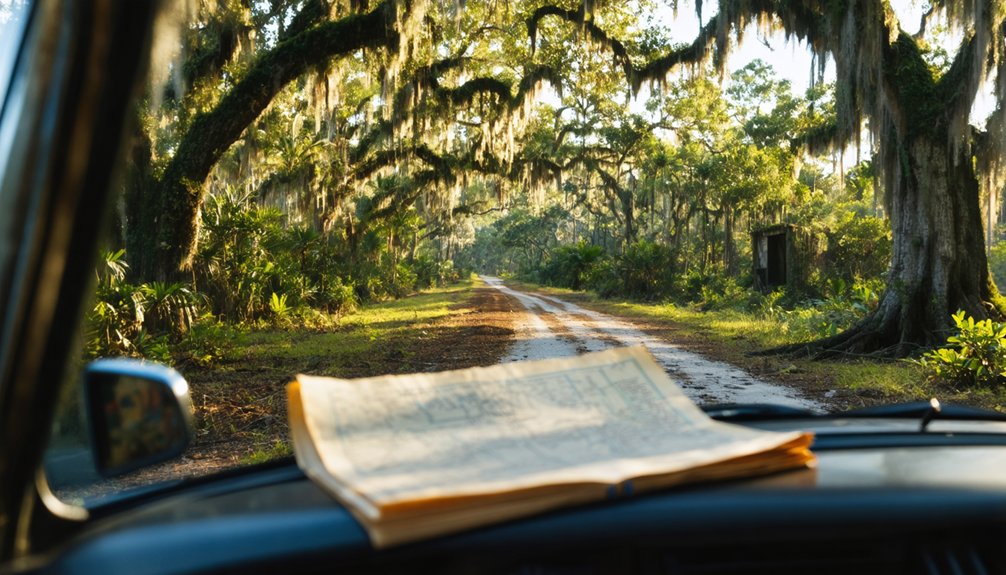
Tucked along SW Archer Road in Gainesville, the Historic Haile Homestead beckons travelers to step back into Florida’s antebellum past. You’ll find this 6,200-square-foot chronicle to historic architecture at 8500 SW Archer Road, clearly marked by brown and white signage on SR 24’s north side. From I-75, take Exit 384 and head west for three miles—it’s about a mile past Tower Road.
The homestead welcomes explorers Saturdays from 10am to 2pm and Sundays from noon to 4pm. Tours cost just $5, with kids under twelve entering free. Built in 1856 by enslaved craftsmen on the former Kanapaha plantation, these “Talking Walls” hold over 12,500 handwritten words. The tours highlight the brutal realities of slavery and explore the lasting impacts of Reconstruction and Jim Crow laws on the community. The Allen & Ethel Graham Visitors Center, which opened in 2017, provides additional exhibits about the Haile family and the enslaved laborers who worked the plantation. This National Register site offers visitor amenities through docent-led experiences that reveal authentic stories of Florida’s complex heritage.
What Makes Haile a Unique Ghost Town Destination
Discussing the homestead’s preservation efforts reveals dedicated work: transcription in 2001, restoration through state grants, and National Register designation.
Meanwhile, investigating the modern Haile community development shows how the area evolved from cotton fields to phosphate mining to today’s residential neighborhoods, while this 1856 homestead stands as an unfiltered window into Florida’s complex past. The walls themselves tell stories through the unusual family practice of writing directly on them, with the oldest writings dating back to the 1850s and offering insights into the lives of the Haile family, enslaved laborers, and freedmen who lived at the Kanapaha Plantation. The Historic Haile Homestead welcomes visitors on Saturdays and Sundays, with guided tours departing at 15 minutes after every hour for a modest admission fee.
Exploring the Famous Wall Writings Inside the Homestead
Upon entering the Haile Homestead, you’ll encounter something unprecedented in historic inscription preservation: over 12,500 words scrawled across walls, closets, and doorframes throughout the 6,200-square-foot house. These writings, dating from the 1850s, transform ordinary surfaces into intimate chronicles of frontier life.
Over 12,500 handwritten words cover the walls, closets, and doorframes of this 6,200-square-foot antebellum home.
Visitor guided tours reveal remarkable discoveries:
- Ben Haile’s 1859 scribblings at age seven, possibly sparking the family tradition
- Diary entries and guest lists concentrated in the music room and parlor
- The 1886 freeze notation penned beside a southern window
- Cryptic messages like “THE HOUSE WAS BRIEFLY ALIVE” alongside comedic poems about croquet flirtations
The Allen & Ethel Graham Visitors Center provides essential context before you explore these “Talking Walls,” fully transcribed in 2001 and preserved exactly as written. Evans Haile, a prominent defense attorney, used the homestead to entertain friends and family with elaborate parties, dances, and hunts, with many party goers leaving their names on the parlor walls. The homestead is open for tours every Saturday from 10am to 2pm and Sunday from 12pm to 4pm, with admission costing $5 per person while children under 12 enter free.
Understanding the Plantation’s Slavery and Reconstruction Legacy
Beyond the compelling wall writings lies a darker, more complex history that the Haile Homestead refuses to sanitize. You’ll discover that 66 enslaved laborers built this 6,200-square-foot mansion in 1856 while living in cramped one-room frame houses.
The museum now prioritizes archiving enslaved laborers’ stories through educational videos and bare-bone census records that preserve their first names.
The site’s commitment to commemorating enslaved community extends beyond the homestead itself. In the final tour room, you’ll find inscriptions honoring these silent builders. During Reconstruction, freedmen navigated bankruptcy and agricultural shifts alongside the Hailes. The 12,500 words documenting the Haile family legacy appear on the homestead’s unpainted “Talking Walls.”
The Homestead is operated by HHH Inc., a private 501c3 non-profit organization that relies on donations and volunteers to maintain this historic site. Today’s interpretation confronts slavery’s brutal truth head-on—over 100 people gathered in 2025 to acknowledge this legacy. The preservation honors builders, not enslavers.
Planning Your Visit to the Museum and Surrounding Grounds
The Allen & Ethel Graham Visitors Center and Museum serves as your gateway to understanding the Haile family’s complex legacy and the enslaved community that built their world. Before exploring the 6,200-square-foot antebellum homestead, you’ll discover exhibits and videos like “Enslavement to Freedom” that contextualize this preserved history.
Essential visiting information:
- The museum’s open Saturdays 10 AM-2 PM and Sundays 12 PM-4 PM
- Museum pricing remains accessible at $5 per person (children under 12 enter free)
- Docent-guided tours depart up to 45 minutes before closing
- Groups of 10+ can arrange specialized tours by phone
Visitor amenities include a small gift shop and the 40-acre conserved grounds at 8500 SW Archer Rd. You’ll walk the same paths where enslaved people labored, their stories finally being told. The homestead’s most distinctive feature is its Talking Walls, where over 12,500 words written by the Haile family and friends dating back to the 1850s offer an intimate glimpse into their daily lives. Thomas Evans and Serena Chesnut Haile established the 1500-acre Sea Island cotton plantation known as Kanapaha after relocating from Camden, South Carolina in 1854.
Frequently Asked Questions
Are There Any Other Ghost Towns Near Haile Worth Visiting?
You’ll discover Rochelle nearby, where abandoned cattle ranches blend with history along the Gainesville-Hawthorn Bike Trail. Venture to Ellaville’s Suwannee River ruins, showcasing remnants of sawmill operations that once employed hundreds. Both offer authentic exploration opportunities beyond Haile’s boundaries.
What Happened to the Railroad Line That Once Served Haile?
Like Magnolia Springs’ once-grand fountains running dry, the railroad serving Haile succumbed to railroad abandonment after Atlantic Coast Line’s 1967 merger. Economic decline sealed its fate—freight routes shifted, tracks were pulled, leaving only overgrown rail beds marking freedom’s forgotten pathways.
Can Visitors Explore the Phosphate Mining Areas Around Haile?
You can’t explore Haile’s active phosphate mining operations, but you’ll discover reclaimed sites nearby. Visit Tenoroc’s fishing lakes or Alafia River State Park’s trails—former mines transformed into recreational havens. Phosphate mining history comes alive through restored landscapes you’re free to roam.
What Filming Locations From “Gal Young Un” Remain Accessible Today?
You won’t find abandoned film sets rotting romantically in the wilderness—just the meticulously preserved historical structures at Haile Homestead. Visit Saturdays 10 AM-2 PM or Sundays 12 PM-4 PM to explore this authentic 1856 plantation house.
Are There Descendants of the Haile Family Still in Florida?
Yes, Haile family descendants remain involved through their co-ownership partnership. You’ll find their family histories intertwined with community preservation efforts at the Homestead, where they’ve maintained active management roles since the 1980s restoration.
References
- https://www.atlasobscura.com/places/haile-homestead
- https://www.thejaxsonmag.com/article/the-historic-haile-homestead-the-talking-walls/
- https://en.wikipedia.org/wiki/Haile_Homestead
- https://bhunt34.wordpress.com/2015/05/31/lost-towns-of-alachua-county/
- https://www.mainstreetdailynews.com/local-living/florida-finds-historic-haile-homestead
- https://www.hailehomestead.org/history
- https://www.thephilanthropyhub.org/organizations/historic-haile-homestead-inc
- https://www.florida-backroads-travel.com/historic-haile-homestead-at-kanapaha-plantation.html
- https://sweetwaterinn.com/blog/haile-homestead/
- https://www.mapquest.com/us/florida/historic-haile-homestead-inc-413680986