You’ll need to launch from Ely, Nevada, traveling 50 miles west to the Illipah Reservoir turnoff before traversing 10 miles on Forest Road 401 to reach Hamilton’s 8,058-foot perch. Plan your visit between late May and September when roads are passable, and arrive during golden hour for the best photography. The extreme elevation demands 24-48 hours of acclimatization to avoid altitude sickness, so pack plenty of water and headache medication. This exhaustive guide covers everything from seasonal conditions to exploring nearby ghost towns.
Key Takeaways
- Launch from Ely and drive to Illipah Reservoir turnoff, then navigate 10 miles on Forest Road 401 to reach Hamilton.
- Visit between late May and September for accessible roads; spring and fall offer comfortable temperatures and ideal photography conditions.
- Acclimate 24-48 hours at 8,058-foot elevation before exploring; stay hydrated and descend immediately if experiencing nausea or dizziness.
- Photograph during golden hour or before 8 AM to avoid heat haze; skip the harsh 10 AM-3 PM window.
- Pack hydration supplies, altitude medication, lens cloths, neutral density filters, and monitor weather for safe high-desert travel.
The Wild History of Hamilton’s Silver Boom
Late 1867 brought fortune-seekers scrambling up Treasure Hill after prospectors struck one of the richest silver veins Nevada had ever seen. The discovery vein stretched 40 feet wide and 70 feet long, sitting just 28 feet below surface—easy pickings for miners who’d initially lived in caves around the area since 1865.
Primary ore assay results confirmed this was Nevada’s purest silver, worth $1 million by 1869. The stampede intensified through 1868-1869, drawing 10,000 adventurers to this remote White Pine district. Hamilton emerged from the chaos in May 1868, quickly establishing historic mining operations that’d eventually produce $20 million.
Within months, you’d find a rough-edged town of 600 residents, four saloons, and ambitious plans anticipating 50,000 future inhabitants.
Getting to Hamilton Ghost Town
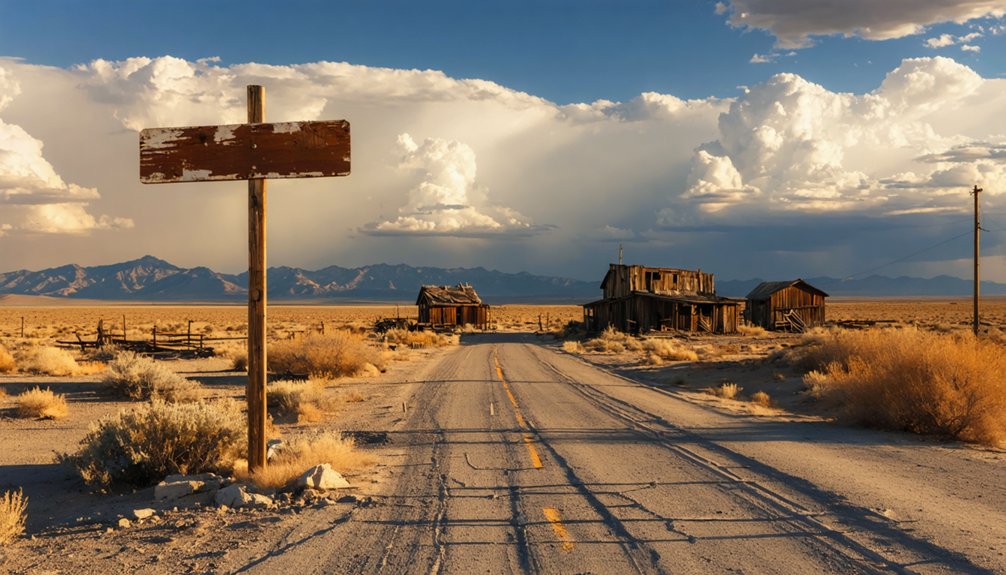
Your journey to Hamilton begins in Ely, the White Pine County hub that serves as your launching point into Nevada’s remote high desert. Head east on US Highway 50 for 47.5 miles—roughly 1.5 hours—watching for the Illipah Reservoir turnoff marked by a blue historic marker.
Here, adventure kicks in: a 10-mile stretch along Forest Road 401 demands your attention. Gravel road conditions feature twists, ruts, and slow-going terrain best tackled with high-clearance, four-wheel-drive vehicles. Patient drivers in standard cars can manage during dry weather, but skip it when wet.
As you climb toward the Mokomoke Mountains, scenic mountain overlooks reveal sweeping vistas of Mt. Hamilton and the White Pine Range. Summer and fall offer ideal conditions for this wind-swept route into history.
What to Expect at 8,000+ Feet Elevation
At 8,058 feet, Hamilton sits higher than most visitors anticipate, and you’ll feel the difference the moment you step from your vehicle. The thin air makes even short walks more strenuous than at sea level, and those unaccustomed to altitude may experience headaches, shortness of breath, or dizziness within the first few hours.
Weather swings wildly throughout the day—scorching sunshine can give way to sudden cold snaps, and the intense UV radiation at this elevation burns exposed skin faster than you’d expect.
Extreme Weather Year-Round
Hamilton’s 8,000-foot perch subjects visitors to weather extremes that shift violently within a single day. You’ll face winter lows plummeting below freezing from November through March, where wind chill drops perceived temperatures to -5°C even at midmorning.
Summer brings its own challenges—66°F highs under relentless sun combine with 48% humidity and dry heat that amplifies solar radiation. Shifting weather patterns mean rapid temperature swings: sunny afternoons near 48°F crash to 35°F by nightfall as clear skies accelerate cooling.
Northwest winds sustain 5-15 mph, stirring dust and magnifying exposure risks across open terrain. Unpredictable precipitation keeps things interesting—mostly clear conditions dominate, yet winter snow can surprise you.
Pack layers, windbreakers, and sunscreen; this ghost town doesn’t compromise.
Altitude Sickness Precautions
Over 70% of visitors arriving at Hamilton’s 8,058-foot elevation experience headaches within their first day—a stark reminder that this ghost town sits precisely at altitude sickness’s threshold. Your body needs time to adapt, so plan accordingly.
Rest 24-48 hours before exploring Treasure Hill’s upper reaches at 10,500 feet. Implement hydration strategies by drinking 4-5 liters daily—the high-desert air here strips moisture faster than you’ll notice. Pack ibuprofen for headaches and consider acetazolamide if you’re ascending from sea level, though medication precautions require starting 24 hours before arrival.
If nausea or dizziness strikes, descend immediately; the sagebrush terrain offers few quick escape routes. Acclimatization isn’t weakness—it’s survival intelligence in country that once challenged 10,000 unprepared fortune-seekers.
Limited Oxygen Affects Exertion
Beyond the immediate symptoms of altitude sickness lies a more insidious challenge: your body’s fundamental inability to perform as it normally does. At Hamilton’s 8,000-foot elevation, you’ll encounter 25% less oxygen with each breath, transforming simple hikes into grueling slogs.
Your muscles fatigue faster, shortness of breath strikes during minimal exertion, and recovery times stretch unnervingly long. That modest trail climb? It’ll leave you gasping. Your heart rate spikes, your strength diminishes, and activities you’d breeze through at sea level become genuine tests of endurance.
Proper altitude acclimatization requires patience—arrive a day early if possible. Meeting hydration requirements becomes critical since the dry climate compounds oxygen deprivation. Respect these limitations; pushing too hard invites more than mere exhaustion.
Best Times to Visit the High Desert
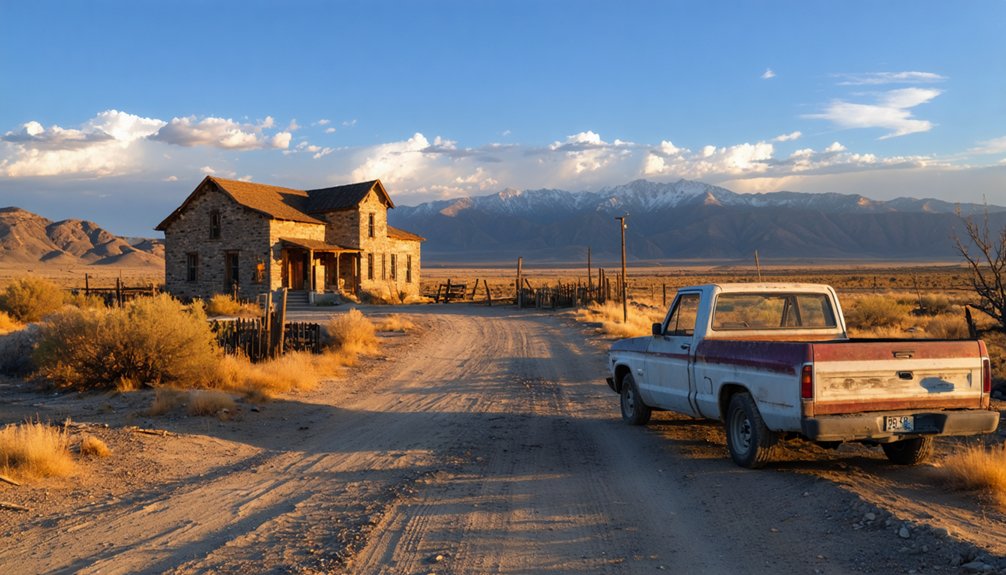
You’ll find Hamilton most accessible from late May through September, when snowmelt opens the mountain roads and temperatures climb into comfortable ranges for exploring stone ruins and hiking between mining sites.
Spring visits from March through early May offer dramatic lighting for photography as storm systems pass through, but you’re gambling on road conditions—that 20-foot snowpack doesn’t disappear overnight at 8,000 feet.
Winter closes Hamilton almost entirely, with sub-freezing temperatures, relentless winds gusting past 50 mph, and impassable roads that strand even experienced high-desert travelers.
Seasonal Weather Considerations
Planning your ghost town adventure to Hamilton means understanding the high desert’s dramatic temperature swings and choosing your season wisely. Spring brings comfortable 60°F days by late March, though wind patterns intensify to 7 mph with occasional gusts.
Summer delivers scorching 95°F peaks alongside bone-dry conditions—freedom comes with sun exposure risks. Fall offers ideal exploration weather with 70°F temperatures and precipitation trends hitting their lowest point at just 7.10 rainy days, though winds can gust to 50 mph unexpectedly.
Winter’s harsh reality means January lows plummet to 18°F with December dumping 152mm of moisture. You’ll find freezing nights from October through April, making late spring and early fall your sweet spots for unencumbered high desert exploration without battling extreme elements.
Avoiding Snow Closure Risks
When winter’s grip transforms Hamilton’s access road into an impassable ribbon of snow and ice, even the most adventurous explorers must wait for nature’s retreat. The high-elevation terrain demands respect—complete seasonal closures extend throughout winter months, making road access challenges absolute rather than negotiable.
Your freedom to explore hinges on strategic timing. Summer offers the clearest path forward, while spring and fall present acceptable windows. June and September stand out as prime months for traversing the ten-mile journey. Weather pattern monitoring becomes your essential ally before departure, as conditions shift rapidly with precipitation.
Clay-heavy sections turn treacherous with minimal moisture, transforming a passable route into a slippery gauntlet. Plan your adventure between May and August for maximum reliability, ensuring Hamilton’s ghostly streets remain within reach.
Photography and Lighting Conditions
The high desert’s crystalline atmosphere transforms Hamilton into a photographer’s canvas where light becomes your most powerful collaborator. You’ll capture ideal shots during golden hour—6-7 AM and 5-7 PM—when warm side-lighting sculpts the ruins’ textures through dramatic shadows. Spring and fall deliver elongated light angles below 30 degrees, perfect for architectural details across Hamilton’s scattered structures.
Plan your sensor selection around the intense UV exposure at 9,000 feet; neutral density filters tame midday glare while preserving long-exposure capabilities. Morning shoots before 8 AM eliminate heat haze, while twilight’s blue hour adds ethereal depth to stone foundations. Avoid the harsh 10 AM-3 PM window when flat contrast washes out character. Pack lens cloths for dust mitigation and shoot at f/8+ apertures to combat elevation’s shortened depth of field.
Exploring the Ruins and Remnants
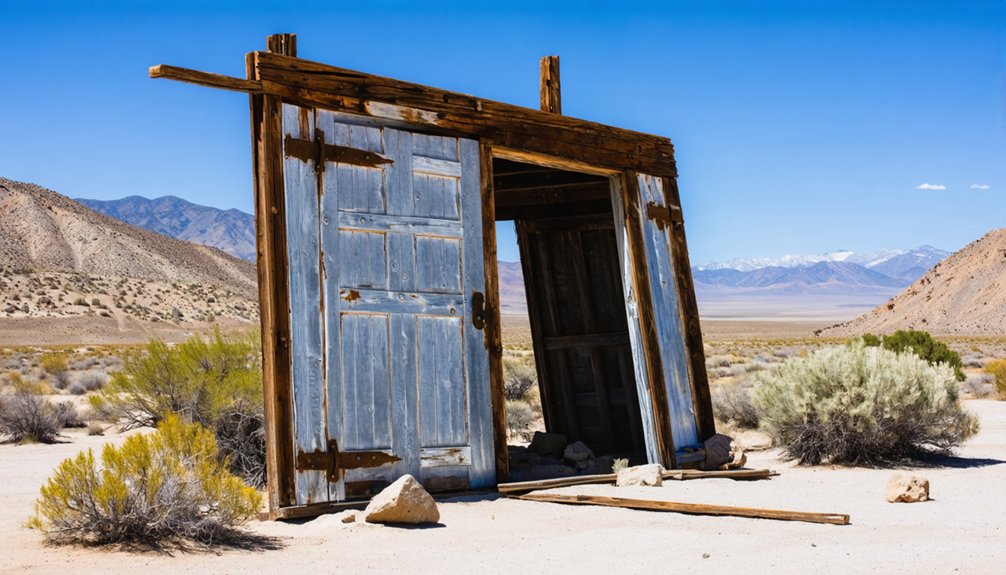
Before you reach Hamilton’s main ruins, stop at the cemetery located about nine miles from the highway turnoff. You’ll find grave markers revealing raw frontier stories—a powerful introduction to your cemetery exploration. The markers north of the townsite show this settlement’s true scale.
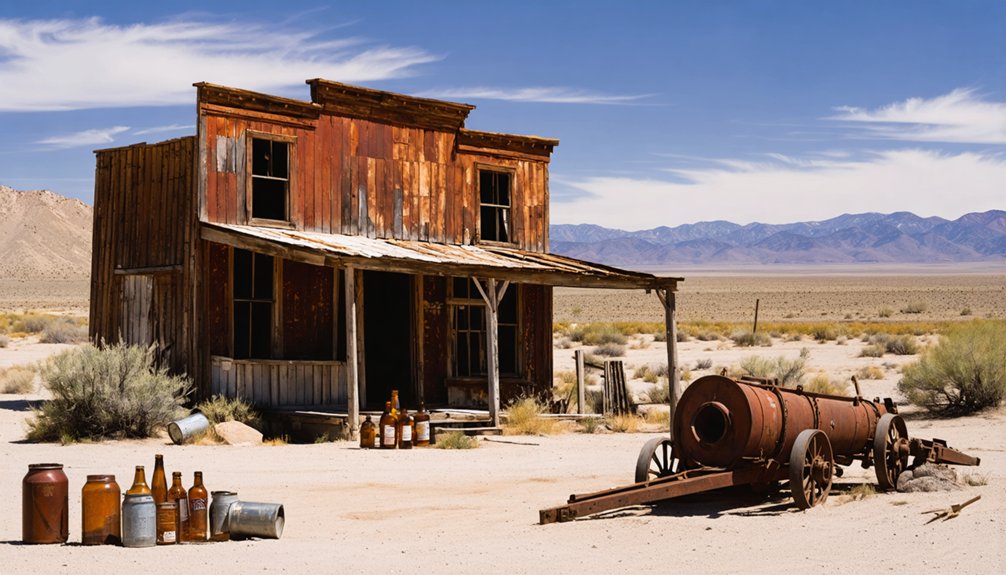
Beyond the graves, scattered ruins and artifacts sprawl across the basin. Stone footings, weathered wooden studs, and spectral walls trace an overgrown street grid. You’ll spot rusted trailers and metal buildings from WWII-era mining operations dotting the hillside. The town endured devastating blows: fires in 1873 and the 1880s, Congress’s 1873 silver demonetization, and relentless desert storms. What remains tells stories of 8,000-foot elevation winters and champagne-fueled boom times—now reduced to debris, foundations, and memories.
Notable Structures Still Standing
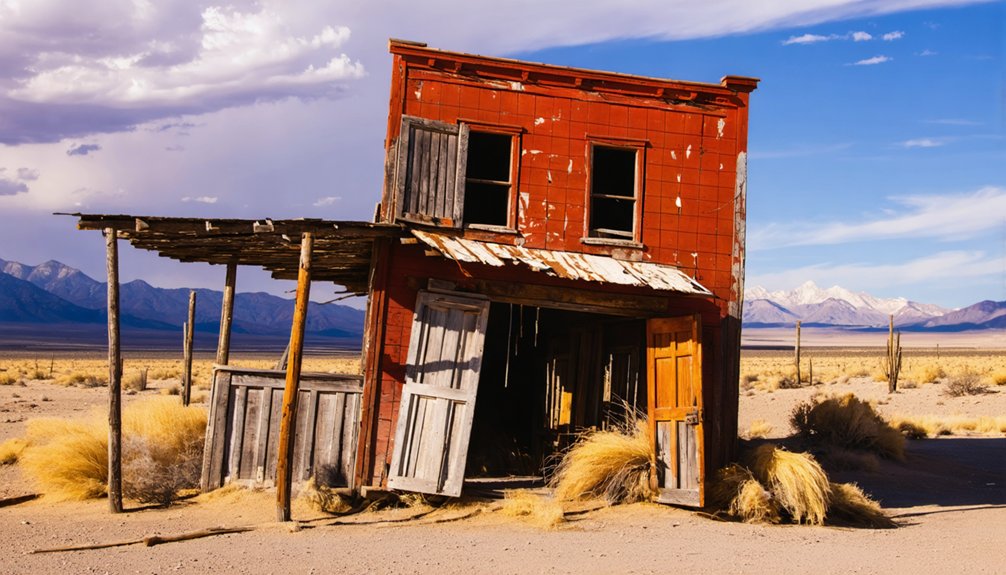
Among Hamilton’s windswept ruins, crumbling brick walls of the old Wells Fargo bank anchor the ghost town’s most recognizable profile. You’ll spot the assay office standing nearby, its brick masonry details deteriorating annually from Nevada’s harsh elements. The mill site’s brick chimney pierces the sky, while 20-30 stone walls scatter across the terrain—testament to impressive stone architectural elements that once housed a population of 12,000.
Metal bands still grip tall stone chimneys, fighting gravity’s pull. You’ll discover interconnected stone pits where materials burned, and residence ruins with tin can roofs. The J.B. Withington Hotel’s stone facade—once Nevada’s priciest structure—lies earthquake-toppled. At the hilltop cemetery, church ruins await exploration, marking where Episcopal and Roman Catholic congregations once gathered.
Nearby Ghost Towns Worth Visiting
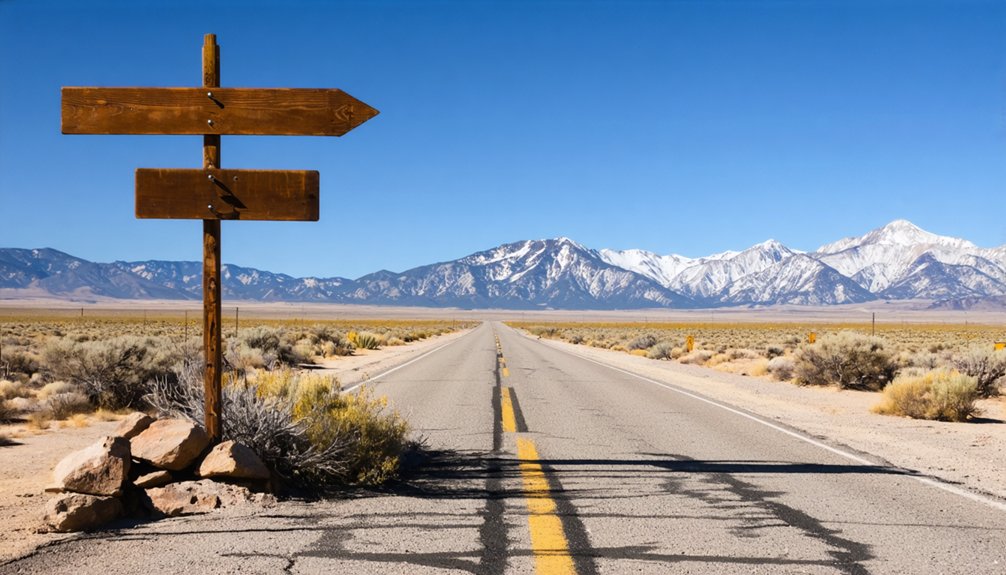
Hamilton’s stone walls and crumbling facades tell only part of White Pine District’s story—four neighboring ghost towns within a few miles showcase the area’s complete mining saga. You’ll find Treasure City perched high above Hamilton, where champagne bottles and oyster tins scattered among walkable stone buildings reveal the 1870s extravagance that defined peak boom years.
Eberhardt, Shermantown, and Swansea cluster together eleven miles south, each contributing unique remnants to the district’s 24,000-person legacy. Historic site preservation here means minimal interference—you’ll explore authentically weathered structures without modern intrusions.
The scenic route connecting these towns offers excellent visitor accessibility from US-50, letting you experience multiple sites in a single day while discovering how silver strikes, railroad connections, and devastating fires shaped Nevada’s frontier landscape.
Photography Tips for Capturing the Past
Your camera becomes a time machine in Hamilton’s weathered landscape, but only if you understand the desert’s harsh light and unforgiving conditions. The golden hours of dawn and dusk transform crumbling brick facades into glowing monuments, while midday sun creates stark shadows that can either flatten your compositions or add dramatic dimension to peeling wallpaper and collapsed rooflines.
You’ll need to protect your gear from penetrating dust, pack extra batteries that drain quickly in temperature extremes, and position yourself to capture authentic details—a rusted door hinge, wind-carved wood grain, or the precise angle where sunlight pierces a bullet hole in corrugated tin.
Best Times for Lighting
The darkest skies in America await you in White Pine County, where Hamilton’s crumbling ruins stand beneath a canopy so pristine that the nearby Great Basin National Park earned International Dark Sky Park certification in 2016. You’ll want to escape civilization’s glow by targeting new moon phases—full moonlight complicates canyon compositions and washes out the Milky Way you’re chasing.
For light painting intensity levels, dial down to 1-2 when illuminating close foreground elements on moonless nights, then bump up to 3-4 for brief flashes on distant structures. Your 30-second exposures allow multiple passes across weathered boards and rusted machinery.
Moon phase scheduling determines everything: darker nights demand lower intensity, while partial moonlight at 50% mimics workshop conditions, bathing ruins in ethereal natural light that transforms your compositions.
Equipment for Desert Conditions
Desert photography demands equipment that can withstand Hamilton’s punishing environment—fine alkaline dust that infiltrates every crevice, temperature swings from freezing nights to scorching afternoons, and relentless wind that turns sand into an abrasive weapon against exposed glass.
Your essential equipment starts with a weather-sealed camera body—full-frame preferred—paired with UV filters that shield lens elements from scratches. A sturdy tripod anchors long exposures when capturing star trails above abandoned buildings.
Pack extra batteries since cold desert nights drain power fast, and bring airtight bags to seal gear between shots.
Desert safety means carrying lens cleaning kits and microfiber cloths; you’ll use them constantly. Invest in a rugged, water-resistant backpack with reinforced padding. Remote shutter releases eliminate vibrations during those golden-hour timelapses when Hamilton’s ruins glow amber against endless sky.
Composing Authentic Historical Shots
Before you press the shutter, understanding Hamilton’s layered past transforms snapshots into historical documents. You’ll capture Nevada’s mining heritage through deliberate composition techniques that honor the town’s 1860s boom-and-bust narrative.
Essential Composition Approaches:
- Wide-angle exterior shots of Hamilton’s main street establish context, while tight interior frames reveal intimate decay details like collapsed staircases and broken windowpanes.
- Selective depth of field considerations isolate rusting door handles against blurred backdrops, creating haunting focal points that tell individual stories.
- Juxtaposition framing places corroded mining equipment against vast desert skies, emphasizing human absence in frozen scenes.
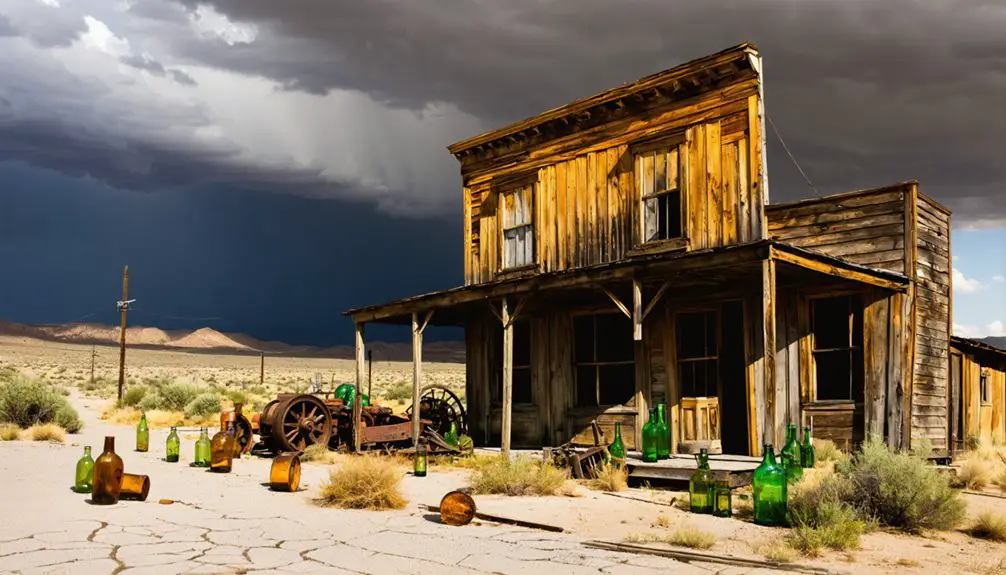
- Detail concentration on artifacts—bottles, tools, signage—preserves authentic period representation without over-romanticizing abandonment.
Skip the tourist-angle clichés. Your lens becomes a time machine when you frame Hamilton’s authentic remnants with intentional precision.
Safety Considerations Among the Debris
Why do ghost towns lure us with their weathered facades while concealing dangers that have claimed over fifty lives in Nevada’s abandoned mines alone during the past half century? Hamilton’s crumbling structures hide genuine threats—vertical shafts plunge into darkness without warning, unstable timbers collapse unexpectedly, and poisonous gases lurk in confined spaces.
You’ll encounter abandoned mine hazards at every turn: old dynamite that detonates on contact, bad air causing sudden unconsciousness, and ground that gives way beneath your boots.
Before exploring, master vehicle safety precautions. Clay roads become ice-slick when wet, stranding travelers beyond cell range. Pack recovery gear and inform someone of your itinerary. Stay completely out of mine entrances—no photograph justifies risking cave-ins or toxic atmospheres. Your freedom depends on respecting these ruins’ lethal secrets.
Essential Supplies for Your Trip
When Hamilton’s windswept ruins call to you from their 8,000-foot perch in the White Pine Range, your survival hinges on what you’ve packed. This remote frontier demands self-sufficiency—no services exist along those 10 miles of dirt roads or among the crumbling foundations.
Critical supplies for your expedition:
- Water reserves – Minimum one gallon per person daily; hydration strategies must account for elevation and desert aridity
- High-energy provisions – Non-perishable trail foods; food storage methods include coolers for multi-day adventures to nearby Simon and Gold Hitt
- Layered clothing – Wind-resistant gear, sturdy boots for rubble navigation, long sleeves against debris
- Navigation essentials – Your high-clearance 4×4’s full tank, maps for USFS 623, first-aid kit
You’ll face Hamilton’s elements alone—prepare accordingly.
Frequently Asked Questions
Are There Any Fees or Permits Required to Visit Hamilton?
You won’t pay any entrance or parking fees at Hamilton ghost town. The public lands offer free primitive camping with parking availability along pull-over spots. You’ll find nearby amenities at Illipah Reservoir’s complimentary campground, seventeen sites waiting first-come.
Can I Camp Overnight Near the Hamilton Ghost Town Ruins?
Yes, you can camp overnight on BLM public lands near Hamilton’s ruins. Practice proper camping etiquette by leaving no trace, and stay aware of potential safety concerns like unstable structures and seasonal fire restrictions for true freedom.
Is Cell Phone Service Available in the Hamilton Area?
Cell phone service in Hamilton is extremely limited due to cellular coverage limitations in this remote Nevada location. You’ll likely experience intermittent connectivity at best, so download maps offline and inform someone of your travel plans before venturing out.
Are the Remaining Structures Safe to Enter and Explore?
No, the structures aren’t safe to enter. Dilapidated dwellings demonstrate dangerous structural stability issues—150 years of deterioration created collapsing hazards. Despite their historical significance, you’ll find unstable ruins, scattered debris, and rusted nails threatening your freedom to explore safely.
How Long Should I Plan to Spend Exploring Hamilton?
You’ll want to plan adequate time for at least 2-3 hours exploring Hamilton’s scattered ruins and nearby cemetery. Bring necessary supplies like water and snacks, since you’re miles from civilization. Add extra time for photography and wandering freely.