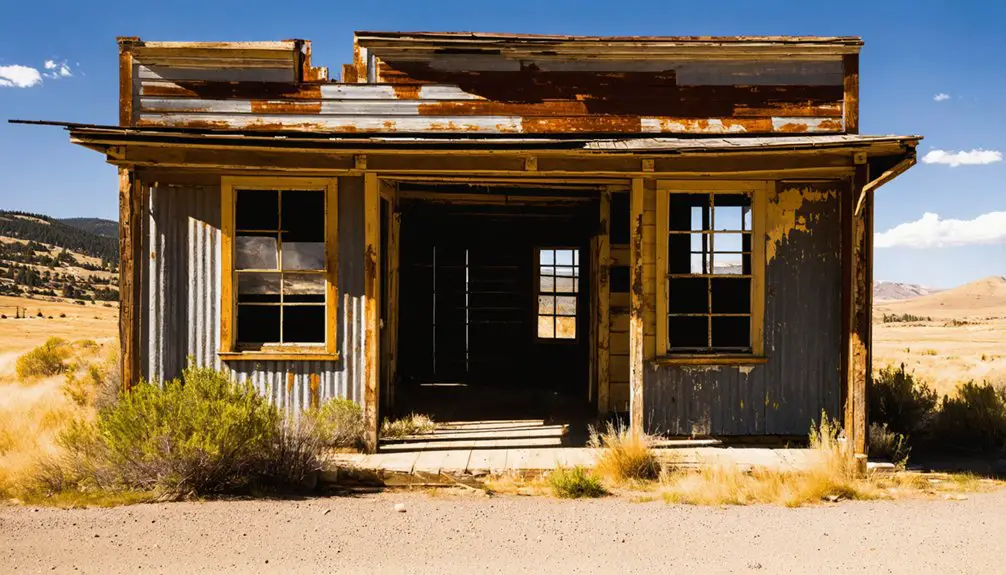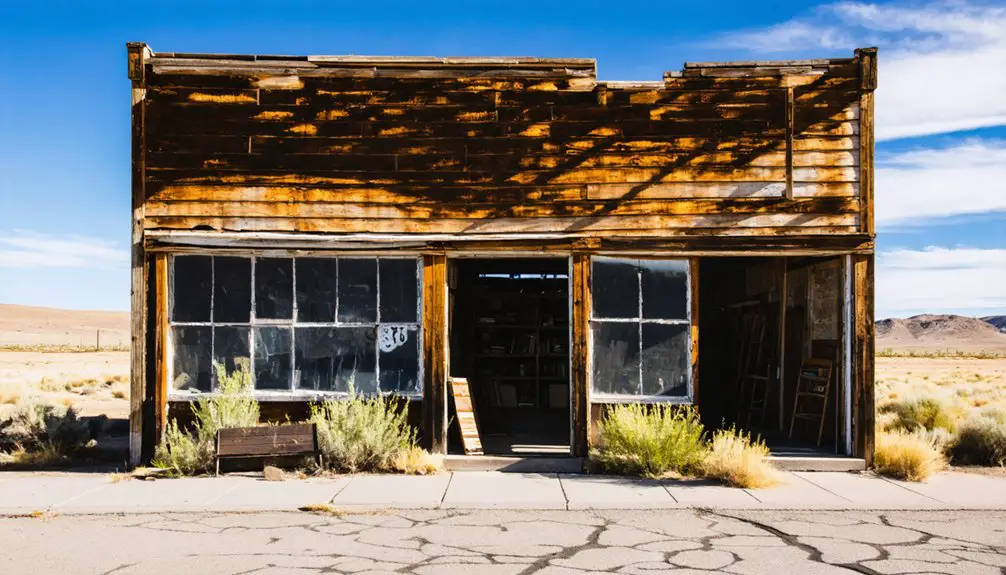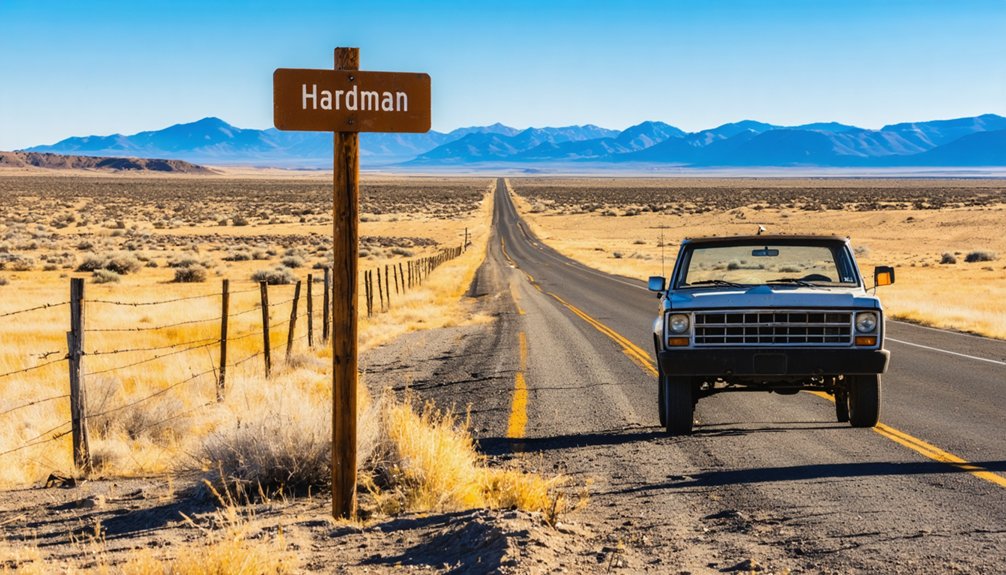
You’ll find Hardman 70 miles southeast of Pendleton, accessible via U.S. 395 to State Route 74 through Heppner, then 20 miles on Route 207. This authentic semi-ghost town rewards adventurous travelers with remarkably preserved 1880s buildings, including the striking two-story IOOF Lodge Hall. Plan your visit during spring or fall for ideal weather, and fuel up in Heppner since services are minimal. The town’s 20-50 residents welcome visitors year-round to explore Eastern Oregon’s frontier heritage and discover what kept this isolated community alive.
Key Takeaways
- Drive 70 miles from Pendleton via U.S. 395, State Route 74, and Route 207 through remote high desert terrain.
- Visit spring or fall for mild weather; avoid winter when snow may close Route 207.
- Fuel up in Heppner before the final 20-mile stretch; carry maps and emergency supplies for isolated route.
- Explore the IOOF Lodge Hall, a two-story historic building serving as Hardman’s community center.
- Expect minimal services and infrastructure in this semi-ghost town with only 20-50 residents.
The Rise and Fall of a Frontier Farming Hub
In 1870, John F. Royse and his brother carved out Hardman from raw frontier, establishing what’d become Morrow County’s premier agricultural center. You’ll discover this settlement thrived on wheat and grain production, supported by water powered industry including two timber mills and a substantial grist mill that processed farmers’ crops.
The town’s strategic location made it essential transportation infrastructure—the only stopping point for freight teams hauling wood between the Blue Mountains and Columbia River. Teams carried grain to railway warehouses while stagecoaches crossed these eastern Cascade plains serving miners and settlers alike.
Hardman peaked when Neal Knighten launched Satisfaction Whole Wheat Products in the 1930s, distributing across northeastern Oregon. However, WWII rationing devastated this thriving enterprise, triggering the town’s inevitable decline into abandonment.
What Makes Hardman a Semi-Ghost Town Today
The railroad’s arrival in Heppner during the 1920s sealed Hardman’s fate as a semi-ghost town, stripping away its commercial lifeline and leaving behind a historic community that exists more as a monument than a municipality.
Hardman transformed from thriving commercial hub to preserved relic when rail commerce bypassed it, becoming monument over municipality.
Today, you’ll find a settlement caught between preservation and abandonment, where demographic challenges of unincorporated status meet stubborn rural character.
Factors supporting Hardman’s preservation include:
- Geographic isolation at 3,600 feet elevation, 20 miles from Heppner
- Agricultural economy dependence serving surrounding farm communities
- Historic designation protecting frontier-era structures
- Limited infrastructure via Oregon Route 207, constraining growth
You’ll discover a place where fewer residents than Morrow County’s 12,360 maintain an authentic slice of Oregon’s frontier past, untouched by modern development pressures.
Historic Buildings and Landmarks Worth Exploring
Standing as Hardman’s architectural crown jewel, the IOOF Lodge Hall commands attention with its two-story false front and weathered horizontal wood siding—a symbol of 1870s frontier craftsmanship that’s earned its place on the National Register of Historic Places. You’ll discover architectural details that tell Oregon’s pioneer story: the stone foundation anchoring corrugated metal roofing, interior meeting halls with original dais and raised seating galleries, and T 1-11 siding revealing authentic construction methods.
State-funded preservation efforts have kept this rare commercial building functional as Hardman’s community center. You’re free to explore during October’s annual Oyster Feed or hunters’ breakfasts, where the first-floor general store space and kitchen addition continue serving gatherings. It’s the only active downtown structure remaining—your tangible connection to Eastern Oregon’s fraternal lodge heritage.
Getting There: Driving Directions and Route Information
Reaching Hardman requires commitment to remote highways and sweeping grasslands where cell signals fade and gas stations grow scarce. Your adventure begins in Pendleton, covering approximately 70 miles through Oregon’s high desert country at 3,600 feet elevation.
Primary Route from Pendleton:
- Head 23 miles southwest on U.S. 395
- Continue 37 miles on State Route 74 to Heppner
- Drive 11 miles southeast on combined routes 206/207
- Take the southern fork onto Route 207 for the final 9 miles
Road infrastructure challenges include minimal services and unpredictable weather conditions. Local transportation options are fundamentally/completely/virtually non-existent—you’re driving yourself.
Fuel up before leaving Heppner, carry paper maps, and pack emergency supplies. This isolation defines the authentic ghost town experience you’re seeking.
Best Times to Visit and Community Events
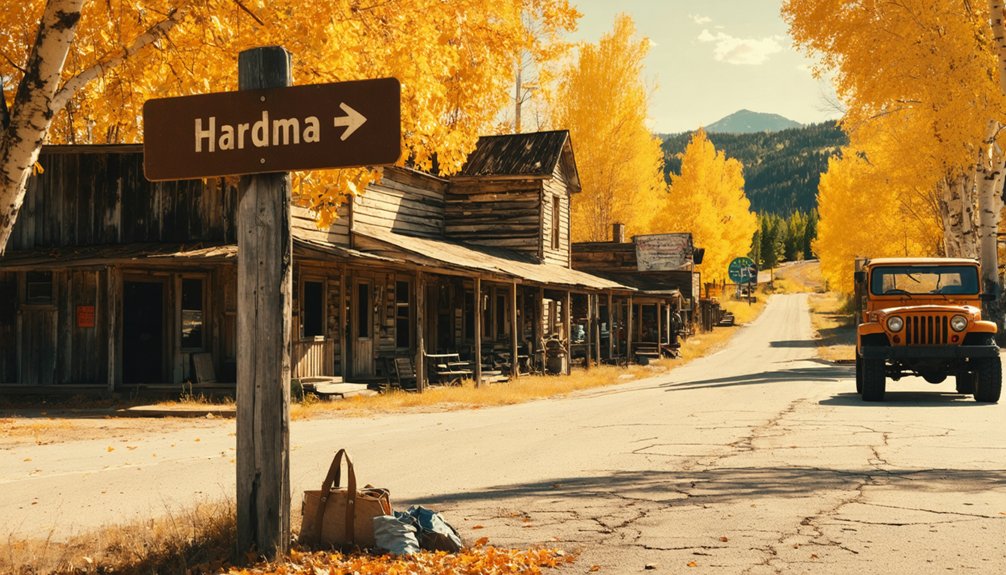
When planning your Hardman expedition, spring and fall deliver the sweet spot between accessibility and comfort. April through June brings mild 60-70°F days perfect for exploring historic remnants, while September-October offers cooler weather and solitude.
Summer’s 80-90°F temperatures showcase golden grasslands, though you’ll want early morning or late afternoon visits to beat midday heat.
The 20-50 residents provide year round hospitality without rigid schedules—you’re free to explore the National Register-listed lodge and former stagecoach stop anytime. The Hardman Historical Society operates from the old general store, hosting informational gatherings that celebrate the merged Raw Dog and Yellow Dog towns’ heritage.
Winter risks snow closures on SH 207, limiting access. Local seasonal activities remain informal, embracing the ghost town’s unhurried pace.
Photography Tips and Nearby Attractions
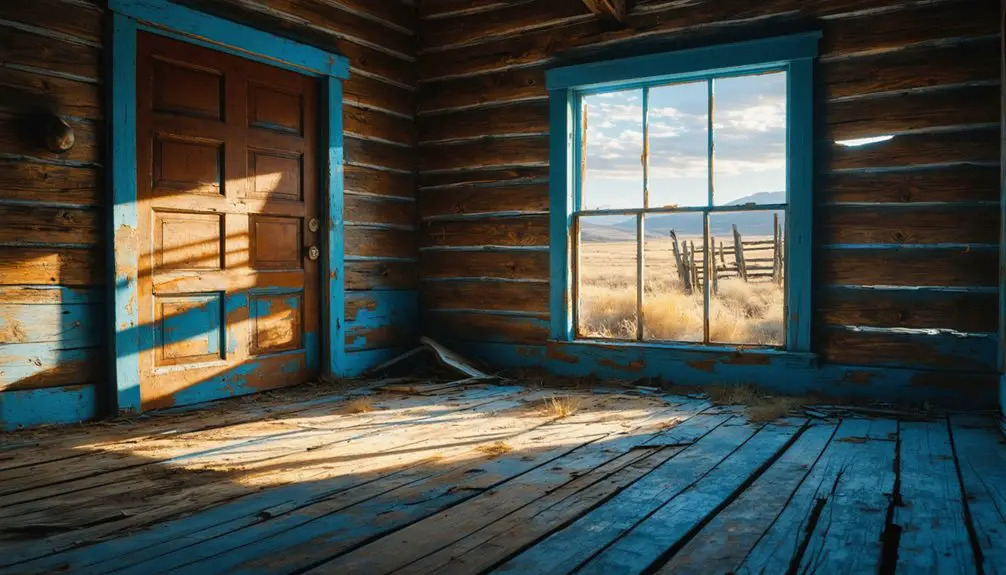
Through your camera lens, Hardman transforms into a photographer’s dream where weathered clapboard buildings and rusted relics compose perfectly against Eastern Oregon’s endless skies. Wide-angle shots capture architectural details while black-and-white imagery emphasizes photogenic decay across semi-abandoned structures.
Essential Photography Elements:
- Buildings: Target the jail, saloon, church, and National Register-listed old lodge for creative compositions featuring original clapboard siding
- Details: Focus on door handles, window reflections, latticing, and ornamental features
- Atmosphere: Photograph free-ranging animals, abandoned wagons, vintage vehicles, and interior artifacts like bottles and tools
- Landscape: Capture surrounding wheat fields, sagebrush plateaus, and wind farms en route
Before exploring, research access requirements—some areas are private. Nearby ghost towns like Sumpter and Golden extend your adventure through Oregon’s historic high desert.
Frequently Asked Questions
Are There Any Restaurants or Food Services Available in Hardman?
No restaurants operate in Hardman—it’s a true ghost town with limited dining options nearby. You’ll need to venture to Boardman or Condon for meals, so pack your own supplies featuring locally sourced ingredients for authentic freedom.
Can Visitors Enter the Historic Buildings or Are They Closed?
You can’t enter the historic buildings—they’re closed to protect these fragile structures. Preservation efforts underway keep them intact for future generations. However, guided tours available occasionally let you explore interiors while respecting conservation needs.
Is There Cell Phone Service in Hardman and Surrounding Areas?
You’ll find Hardman’s a connectivity black hole—cell tower coverage is virtually nonexistent in this remote ghost town. Bring backup power options like solar chargers and download offline maps beforehand, since you’re venturing beyond civilization’s digital reach.
Are There Accommodations or Camping Facilities in or Near Hardman?
Hardman lacks accommodations, but you’ll find nearby bed and breakfasts in Heppner and Fossil offering comfortable lodging. Seasonal campgrounds nearby include Anson Wright Memorial Park and Cutsforth Park, where you can pitch your tent under Oregon’s expansive skies.
What Safety Precautions Should Visitors Take When Exploring Abandoned Structures?
You’ll need to watch for structural instability like weakened floors and collapsing roofs. Bring proper protective gear including sturdy boots, gloves, and dust masks. Never explore alone, and always tell someone your plans beforehand.