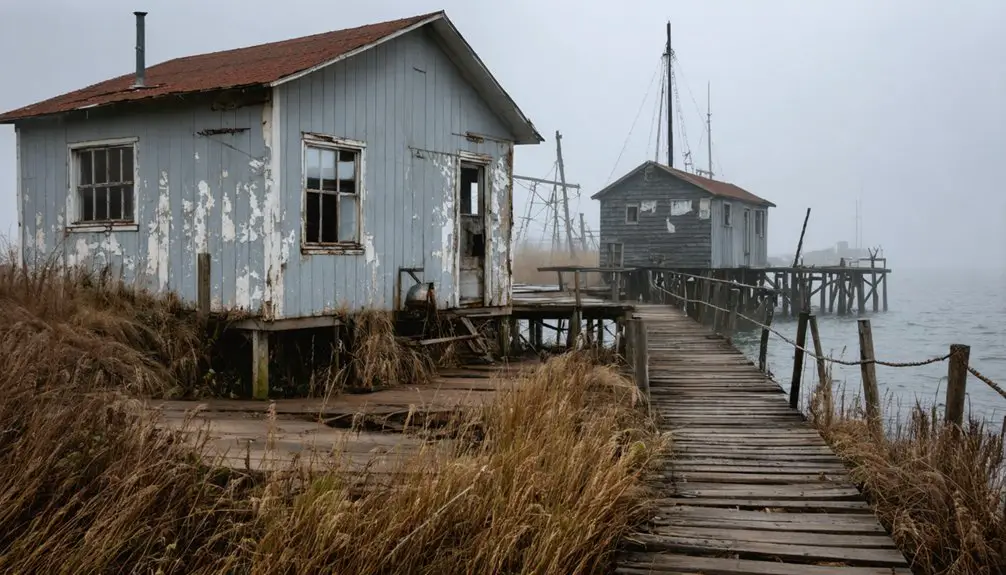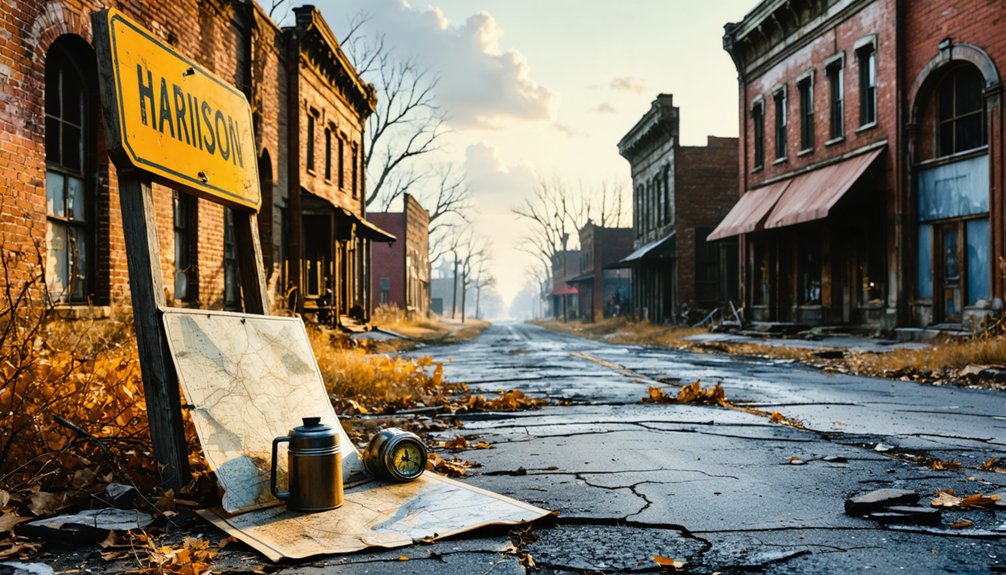
You’ll find Harrison off Wisconsin Highway 55 in Calumet County, where Saint Anthony Catholic Cemetery marks what remains of this once-thriving community. Plan your visit for fall when temperatures hover in the 60s and trails stay accessible—you’ll need an ATV permit to explore the surrounding 47-mile Harrison Hills system. The town’s claim to fame? Hosting one of America’s largest Prohibition-era distilleries that made national headlines when raided. Pack layers, sturdy boots, and bug spray, because there’s much more to uncover about this bootlegging ghost town.
Key Takeaways
- Harrison Road intersects Wisconsin Highway 55 at coordinates 44°08′03″N 88°17′30″W in Calumet County’s farmland region.
- Saint Anthony Catholic Cemetery marks the former church community site, accessible from Harrison Road’s WIS 55 intersection.
- Visit mid-September through early October for ideal 60s-70s temperatures and drier trail conditions.
- Harrison Hills ATV Trail System offers 47.8 to 65 miles of moderate trails requiring Wisconsin ATV permits.
- The town’s history includes late 1800s lumbering, immigrant settlement, and notorious Prohibition-era bootlegging operations.
Getting to Harrison: Routes and Road Conditions
Finding Harrison requires traversing the quiet backroads of Calumet County, where Wisconsin Highway 55 cuts through farmland and forest between the small communities of Stockbridge and Sherwood. You’ll spot Harrison Road intersecting WIS 55 at coordinates 44°08′03″N 88°17′30″W—look north from the highway to glimpse what remains. There’s no formal lot, but parking options include pulling safely onto the shoulder where the roads meet. I’ve found early mornings best for exploring without traffic interruptions.
MapQuest provides current road conditions, though this route rarely sees closures. Nearby amenities cluster in Little Chute and Appleton, roughly fifteen minutes away, where you’ll find accommodations like Quality Inn and dining at Countryside Bar & Grill. Pack provisions—Harrison’s ghost town status means zero services remain onsite.
What Remains: The Cemetery and Historical Markers
Today’s Harrison visitor encounters just one tangible remnant of the 1870s settlement—Saint Anthony Catholic Cemetery, standing where a thriving church community once gathered. You’ll find it positioned between Stockbridge and Sherwood, accessible via Harrison Road’s intersection with WIS 55. The grave markers here preserve memories of residents who built their lives around the Catholic church established under Rev. John Adt’s leadership.
Unlike Wisconsin’s more sensationalized haunted sites, this cemetery offers quiet historical significance without supernatural claims. By the 1970s, every building had vanished, leaving only these burial grounds at 988 feet elevation. There aren’t detailed historical markers explaining the ghost town’s story, so you’re free to explore and interpret Harrison’s past independently.
Dorn Cemetery nearby rounds out the area’s historical burial grounds.
Exploring the Surrounding Trails by ATV and Snowmobile
The Harrison Hills ATV Trail System transforms this ghost town’s surroundings into a premier off-road destination, spreading 47.8 to 65 miles across Lincoln County’s wooded terrain. You’ll navigate logging roads through hills ranging from 1650 to 1800 feet, tackling sharp curves and steep segments on trails rated moderate for technical difficulty. Your ATV or UTV (up to 65 inches wide) will handle the mix of sand, gravel, and stone beautifully.
Trail permit requirements are straightforward—just secure your Wisconsin ATV permit before hitting the paths. Six parking areas provide easy access, including the main trailhead on Turtle Lake Road.
Winter riders can explore the same routes via snowmobile through the Knight Owls Club’s 120-mile network. Call the trail hotline at 715-539-1033 for current conditions before venturing out.
Harrison’s Wild Past: From Bootlegging to Present Day
Beyond the modern trails and recreational pursuits, Harrison’s story reads like a Hollywood screenplay spanning over 130 years of boom, bust, and reinvention. You’ll discover a town that rose from lumbering operations in the late 1800s, transformed through hardworking Dutch and Belgian immigrants into early farming communities, then shocked the nation during Prohibition.
Harrison’s most notorious chapter unfolded when federal agents raided one of America’s largest illegal distilleries:
- The operation supplied bootleg whiskey to Chicago, Milwaukee, and Minneapolis
- Raids made national headlines as authorities dismantled the sprawling enterprise
- Remote location proved perfect for hiding illicit operations
Today, you’re free to explore what remains—a haunting cemetery and trails cutting through history. Father Charles Hoogstoel’s vision of Catholic settlers cultivating this wilderness couldn’t have predicted such wild detours.
Best Times to Visit and What to Bring
Timing your Harrison ghost town adventure correctly makes all the difference between mosquito-slapped misery and perfect exploration conditions. You’ll find mid-September through early October delivers ideal temperature ranges in the 60s and 70s—warm enough for comfortable wandering through abandoned structures, cool enough to dodge summer’s humidity. Favorable precipitation levels occur during fall’s drier spells, keeping trails accessible and photography conditions stellar.
Pack layered clothing since Wisconsin’s weather shifts faster than a bootlegger fleeing revenuers. Sturdy hiking boots handle uneven terrain around decaying foundations. Waterproof gear protects against surprise showers. Summer visitors (mid-June through early September) need bug repellent—those northern woods mosquitoes don’t mess around. Winter explorers brave freezing temperatures and snow, but you’ll encounter zero crowds at these forgotten settlements.
Frequently Asked Questions
Are There Any Nearby Accommodations or Lodging Options for Overnight Stays?
You’ll find plenty of overnight options nearby, from family friendly hotels like Hilton Appleton Paper Valley to quaint bed and breakfasts. I’d recommend the lakefront cabins at Shady Rest Lodge—they’re perfect for adventurers seeking authentic Northwoods freedom.
Can Visitors Access the Cemetery Grounds Year-Round?
You’ll likely find cemetery accessibility at Saint Augustine year-round, though Wisconsin winters may challenge visits. No posted restrictions exist, so you’re free to explore whenever you choose. Bring sturdy boots for unpredictable ground conditions during year-round operations.
Do I Need Special Permits for UTV or ATV Use?
You’ll need Wisconsin registration ($30) and proof of ATV safety certification if born after 1988. Harrison’s roads welcome your UTV, though noise regulations and terrain conditions vary. Always check local ordinances for specific restrictions beyond state requirements.
Are There Any Guided Tours Available for Harrison’s History?
No guided tours by local historians are currently available for Harrison’s history. You’ll explore this ghost town through self-guided walking tours of historical sites, mainly the cemetery remnants. Grant Voermans’ book provides excellent background for your independent adventure.
What Other Ghost Towns Are Near Harrison Worth Visiting?
Like forgotten chapters in Wisconsin’s story, you’ll find Gratiot’s Grove and Voree nearby. Start by visiting nearby historical museums for context, then try exploring abandoned buildings. These settlements reveal freedom-seekers’ dreams that faded when resources dried up.