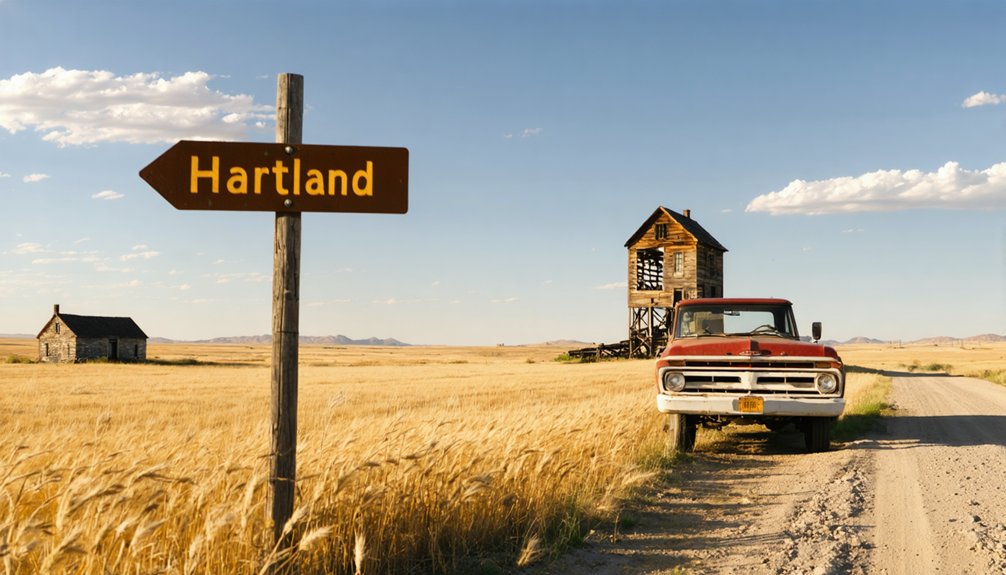
You’ll find Hartland seven miles southwest of Lakin along River Road, where cattle now graze where 2,000 pioneers once lived. The last house disappeared in 2006, leaving only weathered gravestones and a Santa Fe Trail marker across 14 wind-swept acres. Plan your visit for early October when temperatures hit 60°F and golden prairie grass glows in autumn light. Pack water, sturdy boots, and layers for this remote location—and prepare yourself for seasonal mud and the occasional rattlesnake encounter that makes exploring Kansas’s forgotten railroad towns an adventure worth the journey.
Key Takeaways
- Depart from Lakin heading southwest on River Road for 7 miles along the dry Arkansas River bed to reach Hartland.
- Visit in early October for ideal 60°F temperatures, minimal wind, and golden prairie grass while avoiding extreme seasonal conditions.
- Bring water, layered clothing, sturdy boots, wind-resistant jacket, and rattlesnake first aid for the remote prairie environment.
- Explore the 14-acre site featuring repurposed stockyards, overgrown cemetery, and Santa Fe Trail stone monument marking the 1885 railroad town.
- Extend your trip to Kearny County Museum, original Santa Fe Trail wagon ruts, and Deerfield’s historic Texaco station nearby.
The Rise and Fall of a Kansas Railroad Town
In 1885, the Atchison, Topeka & Santa Fe Railroad planted a station at the mouth of Bear Creek, where the landscape itself seemed to invite progress—a natural pass cutting through endless sand hills toward the southwest trade routes. You’ll find that early settlement and development happened fast. Within months, 500 pioneers staked their claims on unsettled prairie, building a depot, schoolhouse, stores, and even a roller skating rink. The Madison House hotel rose from shipped lumber, while businesses multiplied along dusty streets.
Then came the prize: county seat status in 1889, swelling Hartland’s population to 2,000. But economic factors affecting town growth proved fickle. When Lakin reclaimed the title in 1894, buildings got disassembled and hauled away. By 1933, nothing remained but railroad memories.
What Remains at the Hartland Ghost Town Site Today
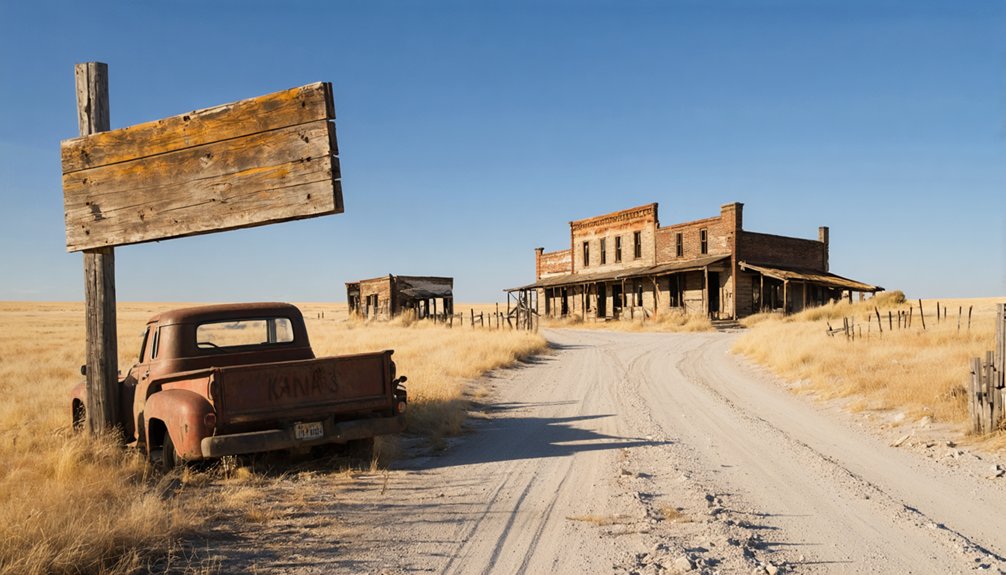
Where 2,000 souls once bustled through streets lined with storefronts and saloons, cattle now graze across empty prairie. You’ll find nothing but trampled grass along River Road where Hartland once stood. Dennis Grubbs tore down the last house in 2006, leaving only repurposed stockyards as his corral.
Head northeast a few miles to discover what truly remains: the cemetery. Cemetery upkeep has surrendered to nature here—short grass swallows forgotten graves while weathered gravestones mark the identities time hasn’t completely erased. A stone monument identifies the nearby Santa Fe Trail, standing as your sole companion in this windswept landscape.
Willie Carter owns fourteen acres of this ghost town where he once grew up. It’s yours to explore, a tangible reminder that even county seats fade into legend.
Getting to Hartland: Directions and Access Points
Finding Hartland requires traversing a landscape where modern GPS coordinates matter less than understanding the ghost town’s relationship to living landmarks. You’ll depart Lakin heading southwest on River Road, following the dry Arkansas River bed for seven miles. The twenty-minute train journey settlers once took now becomes a contemplative drive through cattle-dotted prairie.
Watch for the stone marker indicating the Santa Fe Trail’s proximity—it’s your signal you’re close. The cemetery lies two miles northeast of the main townsite, offering concrete evidence of Hartland’s existence.
Seasonal accessibility challenges include muddy conditions after rainfall and potential road washouts. Key navigational considerations for visitors involve respecting private property boundaries and understanding that no structures remain. Lakin provides your last fuel, supplies, and reference point before venturing into this forgotten territory.
Best Times to Visit and What to Bring
Timing your Hartland visit demands respect for Kansas prairie extremes that can transform a contemplative journey into a survival exercise within hours. Early October delivers that sweet spot—60°F highs, minimal wind, and prairie grass gold under vast skies. You’ll dodge summer’s fifteen days exceeding 100°F and winter’s brutal wind chills.
Visitor demographic trends show weekday explorers avoiding cattle operations, while seasonal recreation opportunities peak when fall’s clarity reveals cemetery markers through thinner vegetation.
Pack like you’re genuinely remote: gallon of water per person, layered clothing for 40°F temperature swings, sturdy boots for uneven terrain. Wind-resistant jacket handles year-round gusts. Long sleeves combat ticks in tall grass. Add SPF 50+ sunscreen, DEET spray, and rattlesnake-ready first aid. Freedom means self-sufficiency here.
Nearby Attractions and Historical Sites in Kearny County
Your Hartland exploration sits within Kearny County’s unexpected treasure trove of frontier history, anchored by the remarkable Kearny County Museum Complex in Lakin—just seventeen miles east on Highway 50. Spread across 20,000 square feet, you’ll discover unique museum exhibits including an exceptionally preserved Conestoga wagon and the twelve-sided barn built in 1909. The architectural styles featured range from the Great White House’s early 1900s elegance to the 1876 Santa Fe Railroad Depot and Columbia School’s 1893 design.
Three miles east of Lakin, you can still trace original Santa Fe Trail wagon ruts cutting through prairie grass—tangible evidence of westward migration. The Deerfield Texaco station, a Tudor Revival gem on the National Register, offers another compelling stop when open during special events, accessible via the Old Highway 50 exit.
Frequently Asked Questions
Is It Legal to Explore the Hartland Ghost Town Site?
You’ll find no explicit restrictions blocking access, though Hartland’s historical significance means you should respect any posted boundaries. The site’s archaeological importance deserves careful treading—imagine those 200-300 transient voters once flooding these vanished streets seeking fortune.
Are There Any Safety Hazards or Risks When Visiting Hartland?
Yes, you’ll face real dangers: unmarked open wells hide in overgrown grass, unsafe building structures risk collapse, and deteriorating debris falls without warning. Remote isolation means help’s far away, so tread carefully and stay alert.
Can I Camp Overnight Near the Hartland Ghost Town Location?
The prairie won’t offer you a pillow here—no designated camping exists at Hartland’s actual site. You’ll need landowner permission for private property or seek distant public lands while respecting local camping regulations in remote western Kansas.
Are There Restroom Facilities or Services Available at Hartland?
No restroom facilities exist at Hartland—it’s completely abandoned with zero local businesses or water availability. You’ll need to plan ahead and use facilities in nearby towns before venturing into this desolate, infrastructure-free ghost town location.
Do I Need Special Permission to Photograph the Remaining Structures?
Want to capture Hartland’s haunting beauty? You’ll likely need to obtain landowner permission since remaining structures sit on private property. Consider the historical significance while respecting boundaries—freedom means honoring others’ rights while exploring Kansas’s ghostly past.
As you journey through these ghost towns to explore in Kansas, keep your camera ready to document the remnants of a bygone era. Each location tells a story of resilience and change, inviting you to imagine the lives once lived within these faded walls. Be mindful of the local lore, as the whispers of the past often linger in the air, enhancing the eerie charm of your adventure.