You’ll find Hilltop Ghost Town nestled in Arizona’s Chiricahua Mountain foothills, accessible from Phoenix (280 miles) or Tucson (120 miles) via I-10 East. Exit at Bowie, then navigate 14 miles of graded gravel roads requiring a high-clearance vehicle. Once there, you’ll explore weathered wooden frames, crumbling stone foundations, and scattered mining remnants from the 1880s copper boom. Don’t expect cell service or much signage in this remote location. Pack plenty of water, fuel, and navigation tools—discovering the settlement’s secrets requires proper preparation and understanding of what awaits beyond those desert horizons.
Key Takeaways
- From Phoenix, drive 280 miles (4.5 hours) via I-10 East through Tucson; high-clearance vehicle required for final gravel roads.
- Expect no cell service and minimal signage; prepare supplies and navigation tools for this remote, isolated location.
- Peak visiting includes upper mine workings, Kasper Tunnel entrance, weathered structures, and scattered mining equipment from the 1880s era.
- Explore remnants of miners’ homes, post office, jail cells, and concrete processing facilities across uneven, altered terrain.
- Best access from Tucson (120 miles) exiting at Bowie, then 14 miles southeast on graded gravel from San Simon.
Getting to Hilltop Ghost Town From Major Arizona Cities
Tucked away in the rugged Chiricahua Mountains near the Arizona-New Mexico border, Hilltop sits at 5,702 feet elevation in remote Cochise County—a genuine ghost town that’ll test your navigation skills and reward you with solitude.
From Phoenix, you’re looking at 280 miles and 4.5 hours via I-10 East through Tucson, exiting at Bowie for US-191 South. Tucson cuts the journey to 120 miles—take I-10 East, exit at Bowie, then navigate 14 miles southeast from San Simon on graded gravel roads. Sierra Vista offers the shortest approach at 85 miles via AZ-90 North to I-10.
Pack your high-clearance vehicle for that final rough stretch. You’ll find spiritual serenity among the mining remnants, where historical excavation meets absolute freedom from civilization’s noise.
What to Expect When You Arrive at This Remote Mining Settlement
When you pull off the dusty road into Hilltop, you’ll find yourself standing among weathered wooden frames and crumbling stone foundations that mark where miners once lived and worked.
The scattered debris of the old mining operation—rusted equipment, collapsed headframes, and tailings piles—spreads across the hillside like a museum without walls. Be prepared for rough terrain and minimal signage, as nature has reclaimed much of this settlement over the past century.
Remaining Structures and Buildings
The remote settlement of Hilltop greets visitors with a scattered collection of weathered structures clinging to the mountainside, their stories written in sun-bleached wood and crumbling adobe. You’ll spot few occupied buildings as you explore—most stand as hollow witnesses to mining’s glory days.
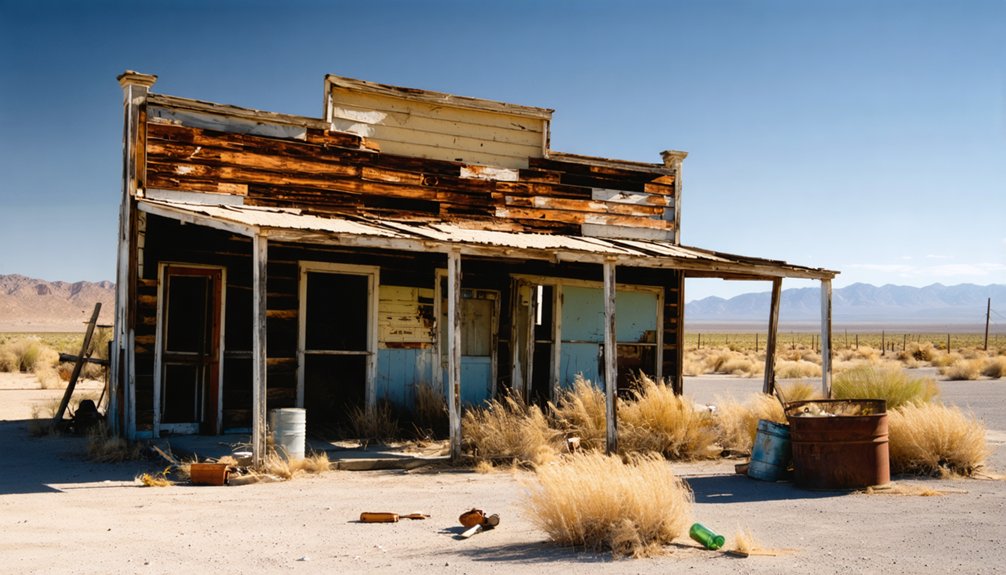
The post office, which served residents from 1920 to 1945, remains viewable from the road alongside deteriorating stores and steadfast jail cells. Some schoolhouses still stand near toppled teacherages, though roof repairs and window preservation have long ceased.
The town’s 1913 automobile, once meticulously maintained, has vanished into history. Stabilized structures now hide behind protective fencing, allowing you to witness these architectural ghosts from designated viewpoints. Each building tells its own tale of isolation, prosperity, and inevitable abandonment.
Scattered Mining Operation Remnants
Beyond these weathered buildings, evidence of Hilltop’s true purpose sprawls across the mountainside in rust and rubble. You’ll discover mining artifacts scattered at 6,401 feet—corroded ore buckets, twisted rails, and fragments of wooden tram systems that once hauled copper, lead, silver, and zinc down to Portal. The Lead Lily Shaft marks the highest workings, though remote setting challenges have accelerated decay since operations peaked in 1924-1927.
Follow faint trails to remnants of the burro-and-wagon routes that carried ore to El Paso smelters. Rusted machinery lies half-buried where miners abandoned it decades ago. The mountain itself reveals colorful mineral deposits—wulfenite crystals still glint in waste rock piles. Each artifact tells stories of Jack Dunn’s 1881 claim and the Hands brothers’ profitable 1890s operations, freedom-seekers who carved prosperity from these unforgiving peaks.
Current Accessibility and Conditions
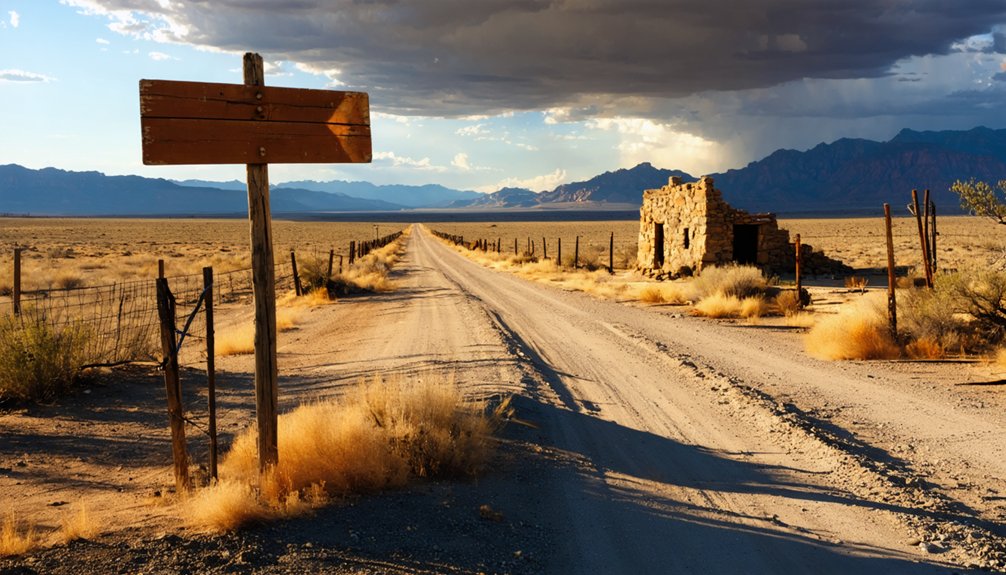
Getting to Hilltop demands serious preparation—this isn’t a site you’ll stumble upon during a casual Sunday drive. The route challenges include steep, narrow dirt roads at 5,732 feet elevation, where high-clearance vehicles become essential rather than optional. You’ll navigate former mine haulage paths through remote Arizona backcountry, where isolation means self-reliance.
Weather considerations shift dramatically throughout the day. I’ve experienced 31°F mornings transforming into pleasant 60°F afternoons, with humidity swinging between 16-83%. You’ll want layers for those temperature extremes and Northeast winds reaching 15 mph.
The scattered tailings and cabin remnants you’ll discover sit amid altered terrain where original landscapes merged with mining operations. There’s no cell service, no facilities—just you, the desert, and authentic frontier solitude.
The Rich Mining Heritage of Hilltop’s Peak Years
Hidden among the rugged peaks of the Chiricahua Mountains at 6,401 feet, Hilltop emerged in the 1880s as fortune-seekers staked their claims to the region’s mineral wealth. Jack Dunn’s Hidden Treasure claim in 1881 sparked what would become a thriving mining camp community extracting lead, copper, molybdenum, and zinc from rich ore bodies.
You’ll find Hilltop’s glory days peaked between 1924 and 1927, when resource extraction innovations and soaring silver prices transformed this remote outpost into a legitimate boomtown. The post office, established in 1920, served miners working the productive Whitetail Canyon operations.
High-grade ore and railroad access fueled prosperity throughout the 1900s, supporting a population that carved their independence from these unforgiving slopes. By the late 1920s, exhausted veins signaled the beginning of Hilltop’s inevitable decline into the ghost town you’ll explore today.
Exploring the Remaining Structures and Historic Buildings
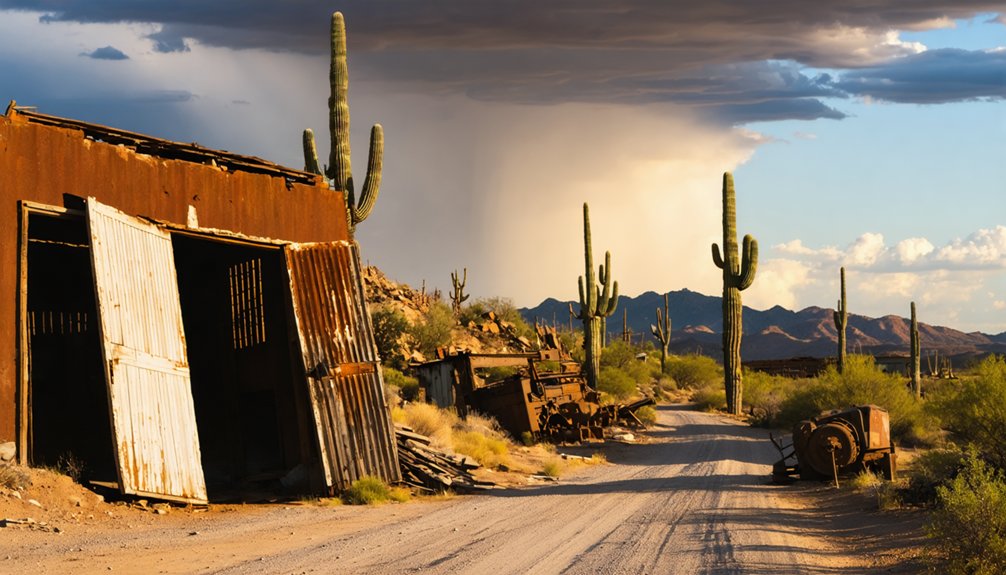
As you climb toward Hilltop’s scattered remains, the hilltop mine’s concrete foundations emerge first—stark geometric shapes against the desert scrub where operations began back in the 1880s.
The town’s layout spreads below in a rough grid, marked by stone walls still standing four feet high and the occasional wooden frame structure defying decades of wind and sun.
For the clearest view of what’s left, position yourself near the upper mine workings where you can trace the settlement’s bones from the mills down through the residential sections to the dump sites that fan across the lower slopes.
Mining Infrastructure Still Standing
Scattered across Hilltop’s western slope, weathered concrete structures stand as silent sentinels to the site’s industrial past. You’ll find foundations where ore processing facilities once humbled with activity, now surrounded by massive tailings piles that dominate the landscape. The Kasper Tunnel entrance remains particularly striking, framed by abundant mine waste and machinery remnants slowly surrendering to the desert.
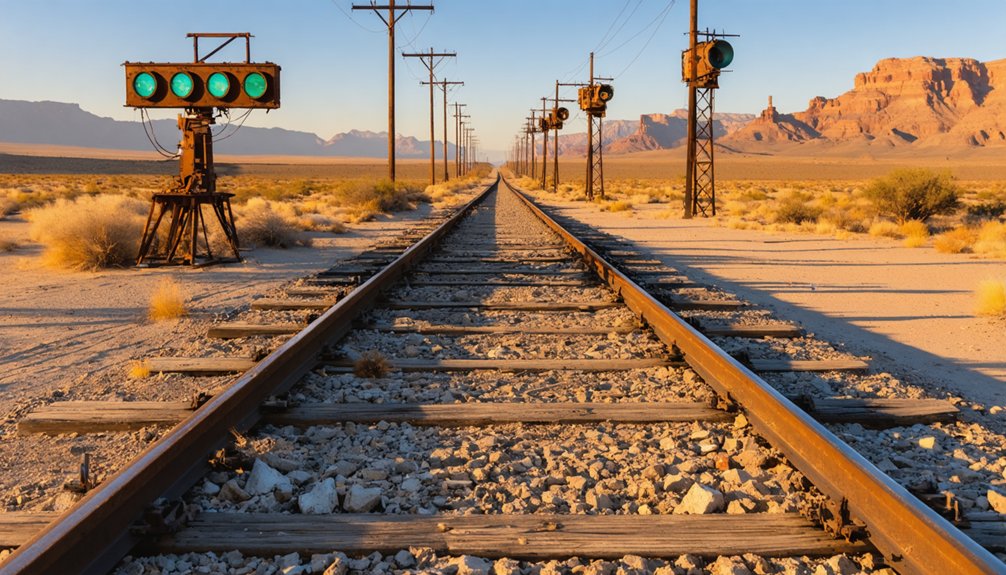
Several tunnel entrances pierce the hillsides, their adits still visible beside collapsed ore chute trestles reinforced with rusting steel. You can trace intact rail segments following their original paths, while the hoist house foundation features a connecting hole that once powered the entire operation. Look for the explosives storage structure and scattered pneumatic drill pipes among the gob piles—tangible evidence of hard-rock mining’s brutal demands.
Town Building Layout Remains
Beyond the mining equipment and processing facilities, Hilltop’s residential and commercial buildings tell a more intimate story of the people who called this rugged hillside home. You’ll discover abandoned buildings scattered across the terrain, their layouts still remarkably intact:
- Stone structures measuring 60 feet long with 4-foot-thick walls, divided into at least two rooms that once housed miners and their families
- A fragile adobe home standing against time, complete with preserved light switches and bathroom features from the early 1900s
- Two-room stone buildings positioned near the processing area, their corners and partial walls revealing daily life patterns
The 1917 underground tunnels through Shaw Peak connected the original settlement to this newer townsite. You’ll spot shiplap wood construction techniques throughout, reminders of frontier resourcefulness before Hilltop’s post office closed in 1945.
Best Viewing Vantage Points
Drive your 2WD vehicle right up to these panoramic overlooks—no restrictions here. From the tunnel’s peak position, you’ll spot the lonely structures below where miners once thrived.
The few remaining buildings anchor your exploration, offering ground-level contrast to hilltop perspectives. Winter’s mild temperatures or summer’s heat won’t stop you from capturing this ghost town’s essence through multiple viewing angles.
Best Times to Visit Based on Weather and Road Conditions
Planning your ghost town adventure to Hilltop means working around Arizona’s dramatic temperature swings and the region’s unpredictable dirt roads. The sweet spot lies in spring and fall when favorable temperature ranges let you explore without battling extreme heat or freezing nights.
Optimal visiting windows:
- March through May – Highs climb from 68°F to 84°F while precipitation patterns remain predictable. Desert wildflowers transform the landscape, and you’ll tackle trails comfortably.
- September through November – Temperatures drop from low 80s to mid-60s. Crisp evenings reward your day’s adventures, and crowds thin out considerably.
- Winter months (January-February) – Mild 56°F-61°F daytime highs work, but check elevation routes for snow and ice. Pack layers for 35°F desert nights.
Summer’s 105°F-115°F heat turns exploration into endurance—skip June through August entirely.
Essential Supplies and Safety Gear for Your Desert Adventure
Your survival in Arizona’s unforgiving backcountry hinges on what you pack before the pavement ends. Your packing checklist should include at least one gallon of water per person daily, plus electrolyte packets for the relentless heat. Vehicle essentials—spare tire, jack, jumper cables—aren’t optional when dirt roads lead to Hilltop. I learned this after nearly stranding myself near Gold King Mine with a shredded tire.
Desert safety precautions demand SPF 50+ sunscreen, wide-brimmed hats, and polarized sunglasses against that brutal glare. Download offline maps; cell service vanishes quickly. Your first-aid kit needs bandages, antihistamines, and blister treatment for unexpected hikes. Pack a flashlight, multi-tool, and emergency blanket. Gas stations disappear in northern Arizona, so maintain a full tank and embrace self-reliance.
Nearby Ghost Towns Worth Adding to Your Itinerary
While Hilltop rewards the determined explorer, southeastern Arizona’s ghost town corridor transforms a single-destination trip into a haunting multi-day odyssey through mining-era ruins.
Your local driving tour options radiate from Tombstone’s hub:
- Gleeson (16 miles east) showcases the 1910 jail, two-story schoolhouse, and cemetery where 500 residents once thrived
- Courtland and Pearce form an eastern loop along the Ghost Town Trail, offering concentrated mining history exhibits within hours of each other
- Dos Cabezas sits beneath twin mountain peaks, where Ewell Spring still marks the old stage depot and hillside graves overlook desert valleys
Each site reveals different chapters of 1880s-1900s copper and silver fever. You’ll navigate accessible 2WD roads connecting these forgotten settlements, building your own frontier narrative across Cochise County’s wide-open backcountry.
Photography Tips for Capturing Hilltop’s Abandoned Landscape
After you’ve mapped your multi-ghost-town route, you’ll want to capture these weathered ruins in ways that honor their haunting beauty. Your camera exposure settings matter here—manual mode lets you balance aperture and shutter speed when Hilltop’s crumbling buildings create extreme light contrasts. Try 30 seconds at f/8 to capture both sun-streaked interiors and shadowed corners.
Lighting techniques transform ordinary shots into compelling stories. Position yourself low to emphasize the desert’s vast emptiness stretching beyond collapsed walls. Shoot upward through broken windows where Arizona’s relentless sky frames decay. Side lighting separates structures from surrounding badlands, while golden hour accentuates textures in peeling paint and warped wood. Focus on abandoned objects—a rusted chair, scattered bottles—that anchor Hilltop’s chaotic narrative with tangible humanity.
Frequently Asked Questions
Are There Camping Facilities or Overnight Accommodation Options Near Hilltop Ghost Town?
Your basecamp awaits at Hilltop Campground’s welcoming embrace. You’ll find RV campgrounds nearby with 36 sites, vault toilets, and drinking water. While historical lodging options remain limited, rural cabins and alternative accommodations dot the surrounding Prescott Basin area.
Do I Need Special Permits or Permission to Visit Hilltop?
You’ll need to respect private property access requirements since Hilltop sits on private land. Check local visitation guidelines before heading out—some owners welcome explorers, while others don’t. Always ask permission first to avoid trespassing issues.
Is Cellular Phone Service Available at Hilltop or Surrounding Areas?
You’ll find minimal to no cell phone signal strength in this remote desert ghost town. Network coverage fades as you venture deeper into Arizona’s backcountry, so download maps beforehand and embrace the off-grid freedom.
Are There Guided Tours Available for Hilltop Ghost Town?
You’ll find Hilltop’s a ghost in every sense—no guided tours exist there. Unlike Jerome’s docent-led walking tours or self-guided audio tours elsewhere, you’re free to explore independently, creating your own adventure through authentic, untouched ruins.
What Wildlife or Hazards Should Visitors Be Aware Of?
You’ll encounter rattlesnake presence in rocky areas, so watch your step. Dehydration risks escalate quickly under Arizona’s relentless sun—I’ve learned to carry double the water I think I’ll need. Stay vigilant and prepared.