Start your Holland ghost town adventure from Abilene, driving 14 miles southwest through Dickinson County’s prairie landscape. You’ll spot the town’s iconic 130-foot smokestack rising from the abandoned settlement, marking where railroad dreams once flourished in the 1880s. Note that Holland sits on private property with no trespassing signs, so you’ll need to admire the weathered ruins from County Road 5000. The surrounding area offers several other forgotten settlements like Arvonia and Preston, each with their own frontier stories waiting to be discovered.
Key Takeaways
- Start your journey from Abilene, located 14 miles northeast, heading southwest through Carlton toward Holland’s former townsite.
- Holland sits on private property with no-trespassing signs; view the smokestack safely from County Road 5000 without entering.
- Expect weathered structures including an old church-turned-town hall and the abandoned Holland Hotel against active farming operations.
- Avoid winter visits due to overgrown brush, crumbling machinery, hidden foundations, and deteriorating structures creating hazardous conditions.
- Extend your trip to nearby ghost towns like Arvonia, Preston, Sylvia, and Turon for additional frontier architecture.
Holland’s History: From Railroad Settlement to Ghost Town
When the railroad fever swept across Kansas in the 1880s, Holland sprang to life as a modest settlement along the tracks, its name echoing the Dutch heritage of early settlers who saw promise in the tallgrass prairie.
You’ll find that economic factors typical of railroad towns shaped Holland’s brief existence—grain elevators, general stores, and boarding houses clustered near the depot. Population dynamics followed the familiar boom-and-bust pattern that defined countless prairie settlements.
As competing rail lines bypassed the town and agricultural markets shifted, residents gradually drifted toward more prosperous communities. Today, you’re free to explore what remains: weathered foundations marking where dreams once flourished, and the endless Kansas horizon that witnessed both Holland’s hopeful beginning and its quiet fade into history.
What You’ll Find at Holland Today
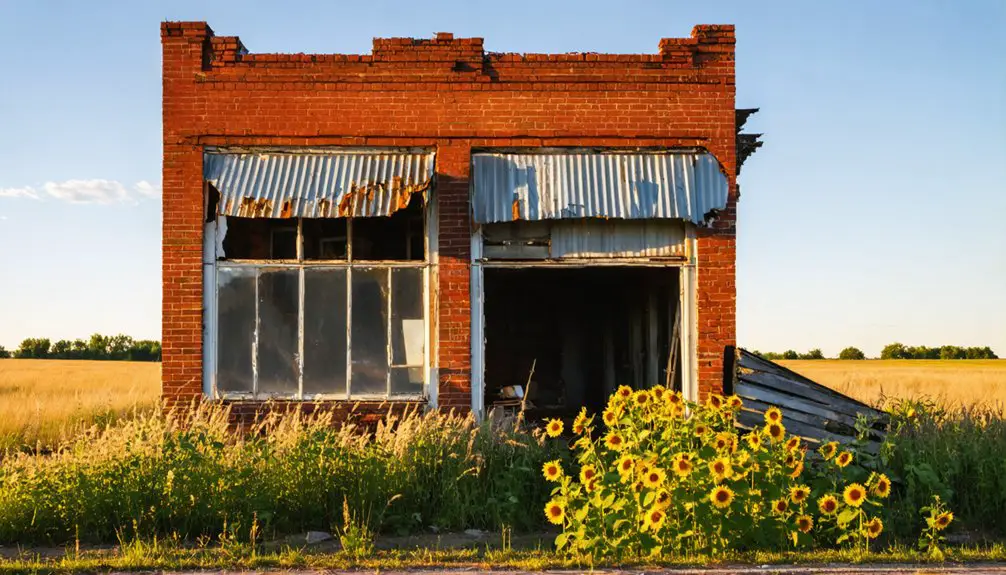
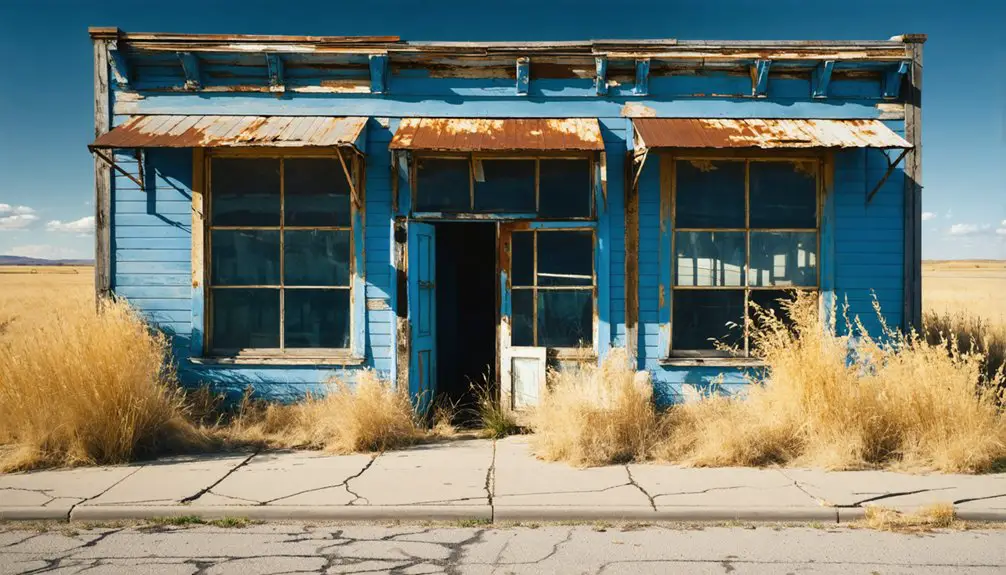
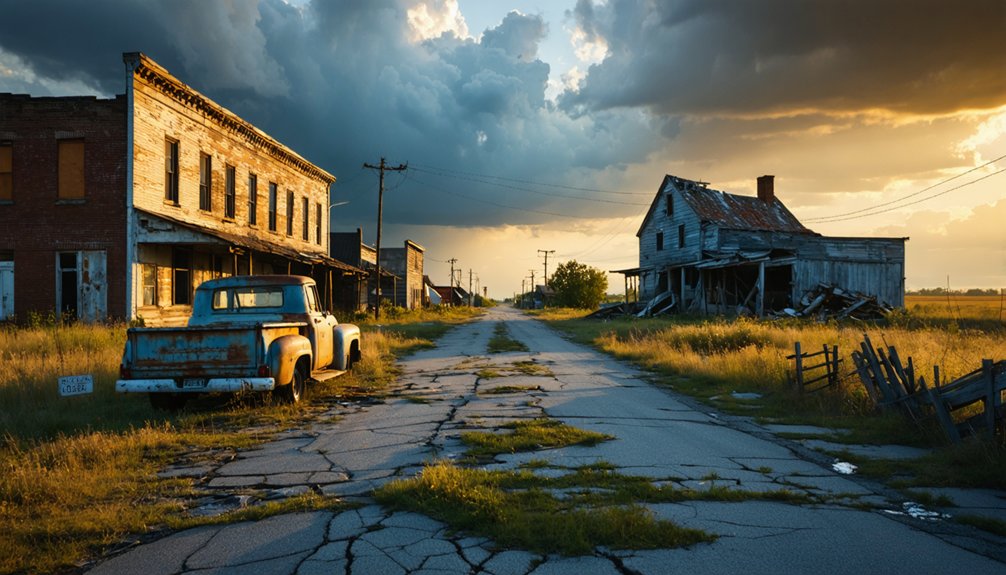
As you roll into Holland today, you’ll encounter a scattered collection of weathered structures standing defiant against the Kansas wind. The old church now serves as the town hall, while the abandoned Holland Hotel sits waiting—a restoration project for someone brave enough. You’ll spot deteriorating structures dotting the landscape, their sagging frames telling stories of better days. Most buildings have surrendered to time, though a few houses still stand.
The site’s surrounded by agricultural land use, with active farming operations creating an interesting contrast to the ghost town remnants. There’s no retail, no bustling main street—just authentic decay you can view from the roadside. You won’t find fences blocking your exploration, making Holland an accessible stop for anyone chasing Kansas’s forgotten railroad-era settlements.
Mapping Your Route Through Dickinson County
Your journey to Holland begins in Abilene, the county seat sitting 14 miles northeast of your destination. Head southwest along county infrastructure that’s weathered significant transportation changes since the 1870s. The Kansas Pacific Railroad once made Carlton—three miles south of Holland—a crucial shipping point, but those iron rails have vanished into history.
Today, you’ll navigate Highway 4 to reach Carlton’s grain elevators, still standing sentinel in Holland Creek Valley. From there, gravel roads wind north toward Holland’s former townsite at 38°39′10″N 97°18′56″W.
Your route crosses 36 square miles of Holland Township, where elevation climbs to 1,375 feet. Watch for cemetery markers and weathered foundations—they’re your breadcrumbs through this forgotten corner of Dickinson County, where freedom means exploring roads less traveled.
Nearby Extinct Towns Worth Exploring
Beyond Holland’s abandoned streets, Dickinson County harbors additional ghost towns that’ll reward your detour with crumbling architecture and frontier stories. Arvonia sits nearby, offering decaying houses worth exploring during short stops—its relics intertwined with local hunting history and open prairie landscapes.
You’ll find Preston in central Kansas, where downtown structures remain from its 1920 peak of 400 residents. Today’s population barely exceeds 100, leaving plenty of abandoned buildings to photograph during early morning drives.
Head to Sylvia for magnificent Main Street edifices and former churches with medieval-era appearances. This town peaked at 630 in 1910, leaving behind architectural treasures.
Turon rounds out your ghost town cluster, part of central Kansas’s declining rural communities. These forgotten settlements showcase America’s shifting heartland, free from tourist crowds and commercial interruptions.
Essential Tips for Visiting Holland’s Ruins
Before venturing into Holland’s ruins, understand that this ghost town sits on private property posted against trespassing, making legal access nearly impossible without landowner permission. Respect these boundaries—worker safety concerns plagued this site during operations, and today’s crumbling machinery and hidden foundations present equal dangers.
If you’re determined to glimpse this abandoned landscape, view the prominent smokestack from County Road 5000 without entering restricted areas.
Historical preservation efforts remain minimal here, leaving nature to reclaim what cement workers built over a century ago. The cemetery half-mile north offers legitimate exploration opportunities.
Winter visits prove particularly treacherous where overgrown brush conceals sidewalks and structural hazards. Consider photographing from public vantage points rather than risking injury or legal consequences within the ruins themselves.
Frequently Asked Questions
Is Holland, Kansas Private Property or Open to the Public?
Holland’s remaining structures sit on a mix of property types. You’ll find the old church-turned-town hall accessible, but respect private landowners who own the abandoned buildings and homes. Always check before exploring to avoid trespassing on someone’s land.
What Caused Holland’s Post Office to Close Permanently in 1906?
Holland’s bustling dreams met harsh reality when decline in population and lack of economic opportunities forced the post office’s permanent closure in 1906. You’ll find freedom exploring where rural isolation ultimately defeated community survival in Kansas’s heartland.
Are There Any Guided Tours Available for Holland Ghost Town?
You won’t find guided tours availability for Holland’s ghost town—no operators run scheduled experiences here. Instead, you’ll explore freely on your own terms, discovering cement plant ruins and abandoned streets without tour scheduling details limiting your adventure.
What Amenities or Facilities Are Available for Visitors in Holland?
You’ll find basic picnic areas and cemetery access via gravel roads, but no public restrooms available or local dining options exist in Holland. You’ll need to bring supplies and plan stops in nearby towns for facilities.
Can the Church-Turned-Town Hall Be Accessed or Only Viewed From Outside?
No records confirm interior accessibility to Holland’s rumored church-turned-town hall. Like most abandoned structures dotting Kansas’s ghost towns, you’ll likely find exterior viewing only, though the building’s historical significance makes even roadside stops worthwhile for freedom-seeking explorers.