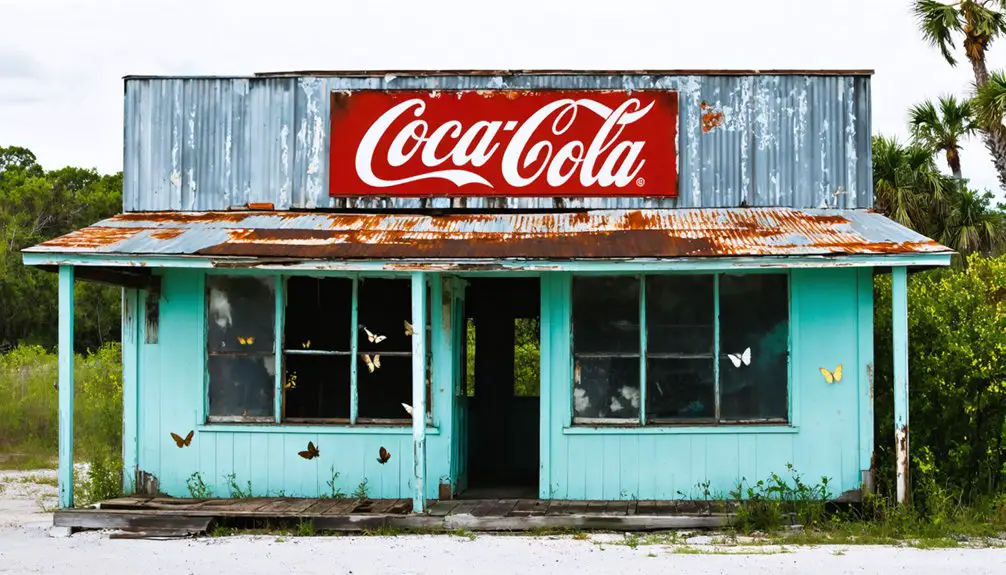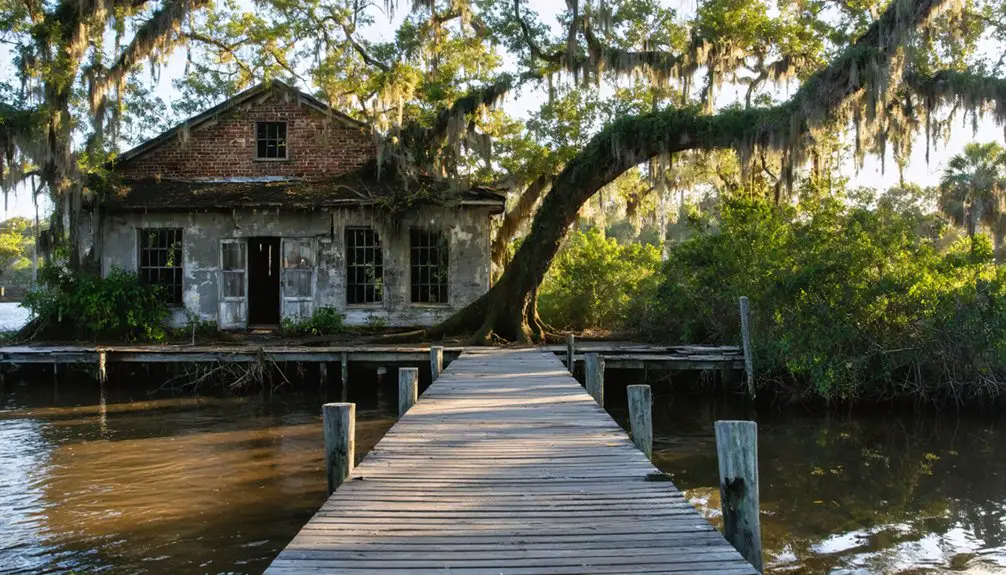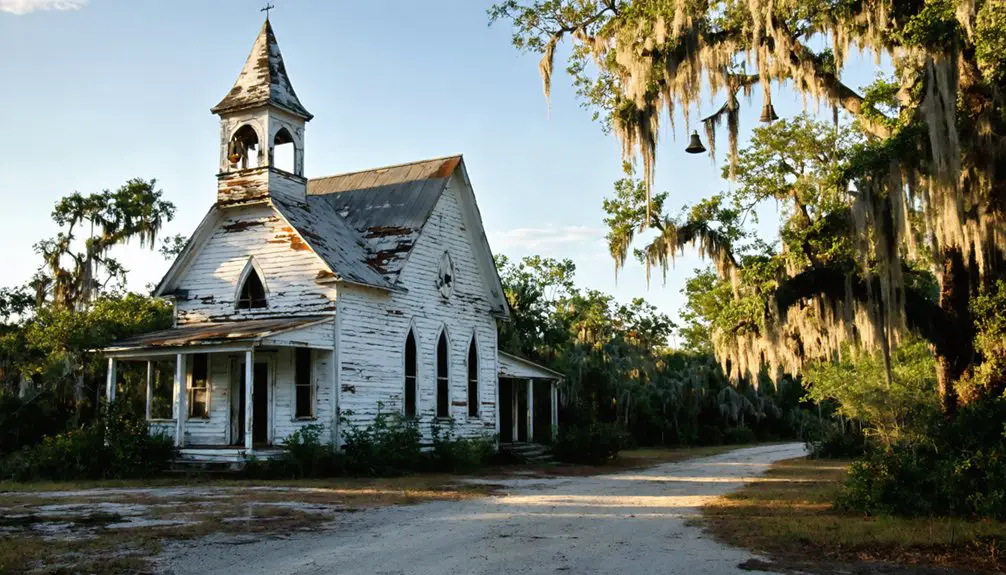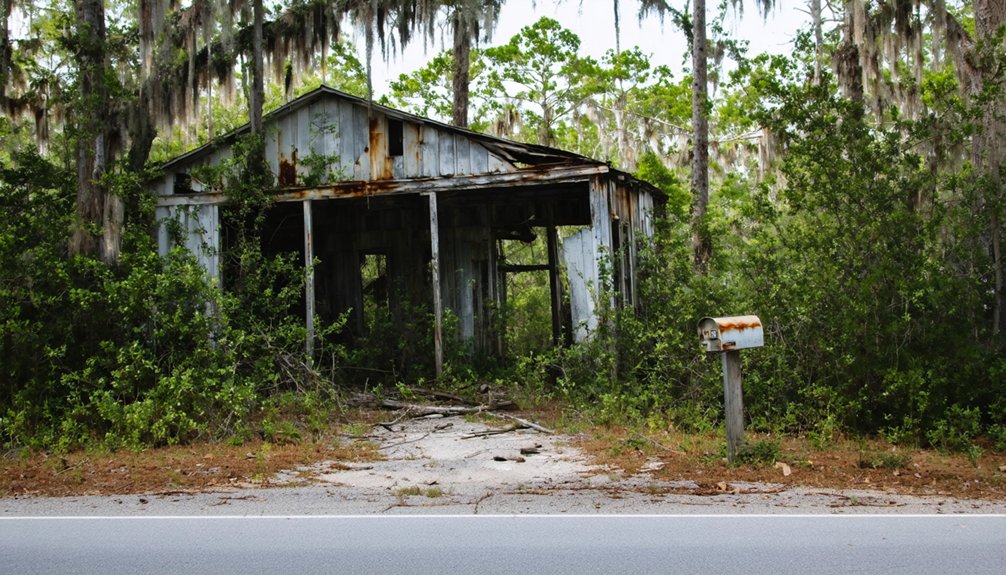
Holopaw, Florida is one of those rare places that time nearly forgot, and it’s only about 45 miles from Orlando via US 441 and US 192. You’ll find a gas station, a couple of scattered stores, two original 1926 houses, and the quiet echo of a boomtown that once topped 2,000 residents. It’s not polished, and that’s the point. Whether you’re chasing history or wide-open rural scenery, there’s more waiting here than you’d expect.
Key Takeaways
- Holopaw is roughly 45 miles from Orlando via US 441 and US 192, making it an easy under-one-hour drive.
- The town peaked at 2,000 residents during its 1923 sawmill boomtown era before declining after the 1946 railroad shutdown.
- Key attractions include two original 1926 houses, remnants of the Florida East Coast Railway corridor, and a roadside gas station.
- The Triple N Ranch Wildlife Management Area offers 16,000 acres of rural exploration, requiring hiking shoes for comfortable navigation.
- Fall through spring provides the most comfortable visiting conditions, though roads remain 2WD-accessible and open year-round.
What Makes Holopaw, Florida Worth a Road Trip?
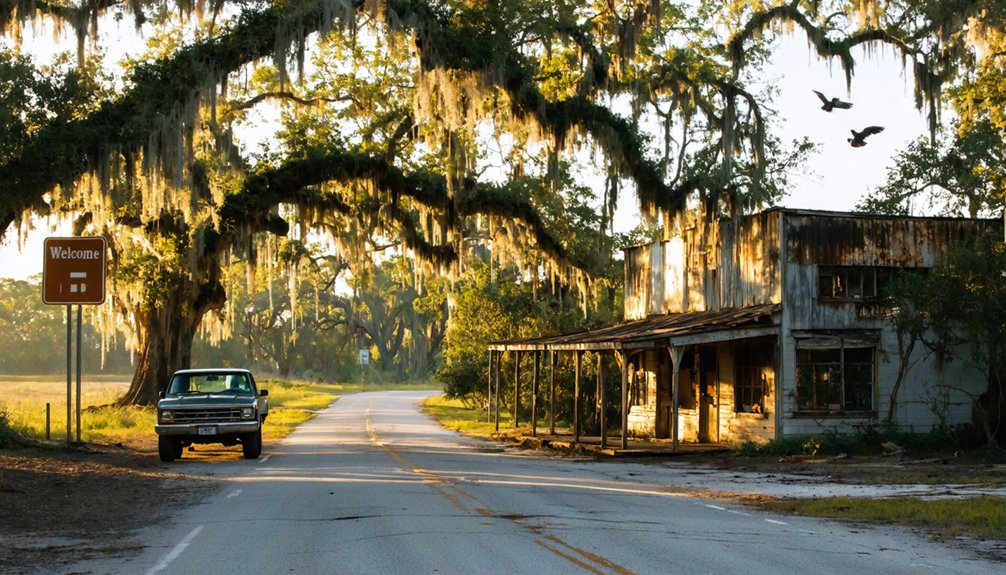
Holopaw isn’t much to look at from the road — a gas station, a few scattered stores, and a handful of rural residents who’ve no connection to the town that once thrived here.
A gas station. A few scattered stores. Barely a whisper of the town that once thrived here.
But that’s exactly what makes it one of Florida’s most compelling hidden gems. You’re not chasing polished tourist attractions; you’re chasing ghost towns with real historical significance.
Holopaw’s community stories stretch back to Creek Indian heritage, a booming sawmill era, and a railroad that vanished in 1946. Rural exploration here rewards the curious traveler who values local culture over convenience.
Combine scenic drives along US 192 with nature trails through the adjacent Triple N Ranch WMA, and you’ve got a road trip that delivers genuine freedom — raw, unhurried, and entirely your own.
How Holopaw Went From Boomtown to Backroad Crossroads
When you learn Holopaw’s backstory, you quickly realize it wasn’t always a quiet crossroads. JM Griffin launched a sawmill operation here in 1923, transforming the area into a company-owned boomtown with streets, rented homes, and a factory general store that once supported more than 2,000 residents.
The Florida East Coast Railway kept the town alive and connected, but when the railroad line shut down in 1946 and the timber ran out, Holopaw lost its two lifelines almost simultaneously, pushing most residents to pack up and leave for work elsewhere.
Sawmill Boomtown Origins
Before the crossroads gas station and scattered trailers, Holopaw was a full-blown boomtown built on timber and turpentine.
In 1923, J.M. Griffin launched a sawmill operation that transformed this remote Florida wilderness into a thriving community overnight. The sawmill history here runs deep — Griffin didn’t just harvest timber, he built an entire town around it.
Streets appeared, houses went up, and a company-owned general store kept workers supplied. Town development moved fast, eventually supporting a peak population exceeding 2,000 residents.
The Florida East Coast Railway’s Kissimmee Valley extension even added a stop here, connecting Holopaw to regional commerce. For a stretch of years, this place hummed with real economic energy — the kind that makes you forget how quickly it can all disappear.
Railroad Abandonment Accelerates Decline
The year 1946 marked the beginning of the end for Holopaw. When the Florida East Coast Railway discontinued its Kissimmee Valley line, the railroad impact hit hard and fast.
Trains had connected residents to broader markets, making the sawmill economy viable. Without that lifeline, the mill’s days were numbered.
Once the timber resources depleted, the sawmill shut down entirely, taking the turpentine operations with it.
Jobs vanished overnight, and community resilience could only hold people so long before economic reality won out. Residents packed up and moved toward employment elsewhere.
How to Get to Holopaw From Orlando and Kissimmee
Whether you’re starting from Orlando or Kissimmee, reaching Holopaw is a straightforward drive that takes you deep into Florida’s rural heartland.
From Orlando, head south on US 441 and pick up US 192 East, following it roughly 30 miles until the roads converge at Holopaw’s quiet crossroads.
Along the way, you’ll pass the edges of the Osceola County flatlands, cattle ranches, and the sprawling Triple N Ranch Wildlife Management Area, all signaling that you’re leaving the theme park corridor far behind.
Driving From Orlando
Reaching Holopaw from Orlando or Kissimmee is a straightforward drive that’ll take you through some of Central Florida’s most scenic rural landscapes.
From Orlando, head south on Florida’s Turnpike, then east on US 192, also known as SR 500. The drive covers roughly 45 miles and takes under an hour.
From Kissimmee, you’ll follow US 192 east directly into Holopaw, passing open ranchlands and wetlands that hint at the region’s rich Holopaw history as an old-growth timber and turpentine town.
These scenic routes reward curious travelers with sweeping views of untouched Florida wilderness, including the sprawling Triple N Ranch Wildlife Management Area.
You won’t need a 4WD vehicle since all roads accessing Holopaw remain paved and accessible year-round, making spontaneous visits entirely hassle-free.
Kissimmee Route Options
Kissimmee offers its own set of scenic launch points for reaching Holopaw, each adding a slightly different flavor to your ghost town adventure.
From downtown Kissimmee, head southeast on US 192/SR 500 through open ranchlands until the crossroads appear. Here are four road trip tips for maximizing your drive:
- Capture Kissimmee scenery along US 192 where cattle ranches replace urban sprawl.
- Watch for local wildlife near Triple N Ranch Wildlife Management Area’s 16,000 acres.
- Note historical landmarks including remnants of the old Florida East Coast Railway corridor.
- Explore cultural experiences by combining Holopaw with nearby Kenansville for deeper Florida Cracker history.
Travel safety reminder: roads stay 2WD-accessible year-round, making scenic routes manageable regardless of season.
Area attractions reward curious, freedom-seeking travelers throughout the journey.
Key Landmarks En Route
Both routes to Holopaw—whether you’re leaving Orlando or Kissimmee—pass through a stretch of Old Florida that’s easy to overlook if you’re not paying attention.
Watch for the Triple N Ranch Wildlife Management Area, a sprawling 16,000-acre preserve flanking US 192. It signals you’re entering genuine backcountry territory, far removed from theme park congestion.
As you approach the intersection of US 192 and US 441, the crossroads itself becomes your landmark.
That quiet junction is Holopaw’s beating heart—or what’s left of it. Two original 1926 houses still stand nearby, offering rare physical anchors to the town’s ghost town history.
For rural exploration enthusiasts, these modest structures carry more weight than any roadside sign. Slow down, look closely, and you’ll start reading the landscape differently.
What’s Left to See in Holopaw Today
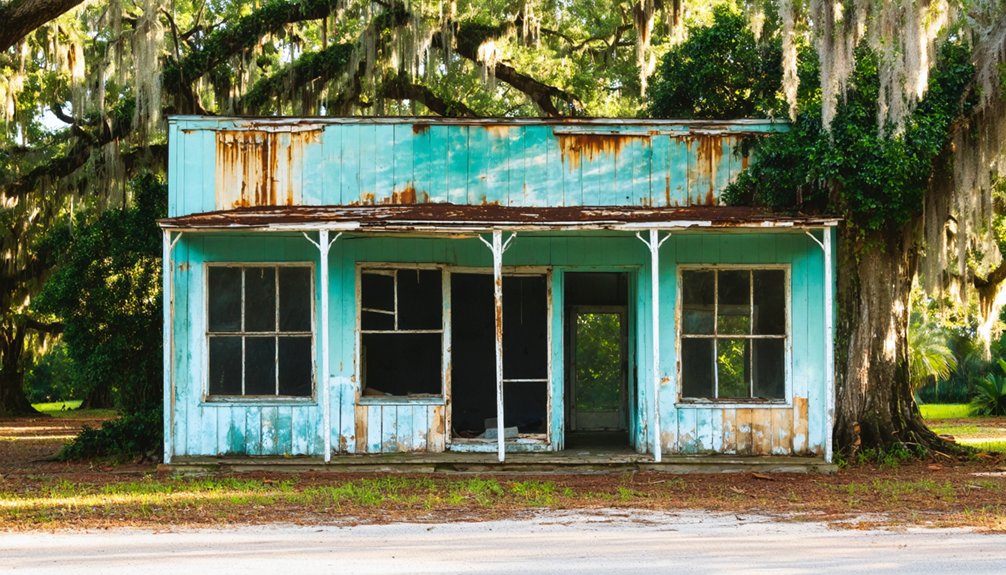
Though little remains of Holopaw’s once-bustling company town, what you’ll find today tells a quiet story of the past.
This ghost town carries deep historical significance, reminding you that thriving communities can simply vanish.
Here’s what you’ll discover:
- Two 1926 Original Houses – Rare survivors standing since Holopaw’s peak population days
- Nature Trails at Triple N Ranch WMA – 16,000 acres of scenic views and wildlife await your exploration
- A Roadside Gas Station and Small Stores – The crossroads still breathes with minimal modern life
- The Old Railway Corridor – Walk where the Florida East Coast Railway once connected this forgotten settlement
These remnants let you experience Holopaw on your own terms, freely wandering its quiet backroads without crowds or barriers.
When Is the Best Time to Visit Holopaw?
Once you’ve soaked in what remains of Holopaw’s quiet crossroads, your next question is simple: when should you make the trip? The good news is you can visit year-round. The 2WD roads stay accessible in every season, so you’re never locked out.
Holopaw welcomes visitors year-round — the 2WD roads stay open every season, so the crossroads is always within reach.
That said, each season offers something different. Florida’s summers run brutally hot and humid, making fall through spring the sweeter window for exploring.
Cooler winters bring comfortable hiking conditions along Triple N Ranch Wildlife Management Area’s trails, where local wildlife becomes more active and visible near the marsh edges.
Seasonal attractions shift with the temperature — wildflowers in spring, migrating birds in winter.
Skip the summer heat unless you’re tough. Otherwise, pick your window, load up the truck, and hit the road.
What to Do at Triple N Ranch Wildlife Management Area
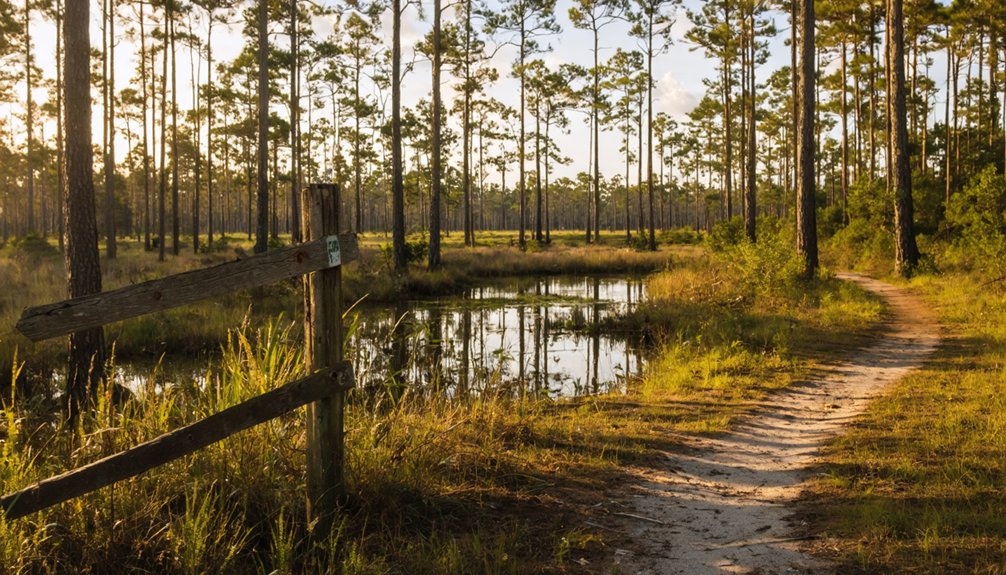
Stretching across 16,000 acres just outside Holopaw, Triple N Ranch Wildlife Management Area gives you far more than a quick roadside stop.
It’s raw Florida land, largely untouched and wide open for exploring on your own terms.
Here’s what you can do:
- Hike the trails — Follow hiking trails through flatwoods and wetlands at your own pace.
- Wildlife observation — Spot deer, wild turkey, sandhill cranes, and native Florida species roaming freely.
- Horseback riding — Bring your horse and cover serious ground across open range terrain.
- Hunting — During designated seasons, the ranch opens for regulated hunting opportunities.
You don’t need a packed itinerary here.
Just show up, breathe the open air, and let the landscape do the rest.
How to Combine Holopaw With Kenansville and Yeehaw Junction
Three ghost towns sit within easy reach of each other in this stretch of central Florida, and linking Holopaw, Kenansville, and Yeehaw Junction into a single day trip turns a casual backroads drive into a genuine slice of forgotten Florida history.
Start in Holopaw, then head south toward Kenansville, where Kenansville history connects deeply to Florida’s open-range cattle era. You’ll find remnants of a ranching community that once thrived along these quiet roads.
Kenansville’s roots run deep in Florida’s open-range cattle era, where ranching ghosts still linger along forgotten backroads.
Continue southeast to Yeehaw Junction, where Yeehaw Junction attractions include the historic Desert Inn, a beautifully preserved roadhouse dating to the 1890s.
The entire loop covers manageable miles on paved roads, requires no special vehicle, and rewards you with three distinct communities that time largely left behind.
The Only Stops Worth Making Along US 192 in Holopaw
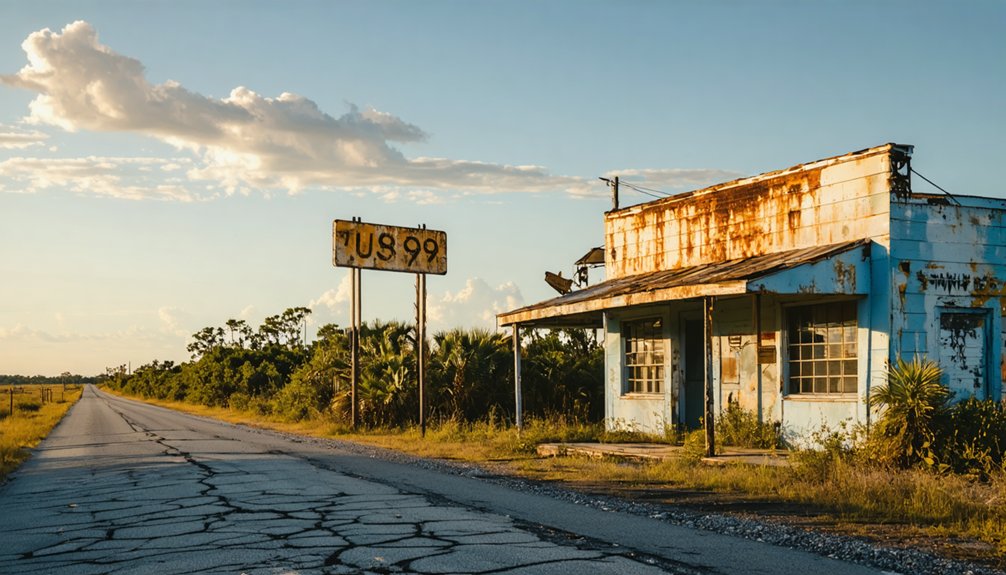
Holopaw doesn’t offer much to stop for along US 192, but the few options that exist give you a clear picture of what the town has become.
These roadside stops quietly reflect the sawmill legacy and ghost town history that define Holopaw‘s identity.
- Gas station – Fill up before exploring the backroads; it’s your only reliable fuel source nearby.
- Convenience stores – Grab supplies for hiking Triple N Ranch WMA trails just adjacent.
- Small restaurant – A simple sit-down spot where locals still gather, keeping a thread of community alive.
- The 1926 houses and trailer – Pull over and observe these original structures, the last physical remnants connecting you directly to Holopaw’s working-town past.
Don’t expect more — that’s exactly the point.
What to Know Before You Drive Out to Holopaw
Before you point your car toward those last standing 1926 houses, know that Holopaw rewards the prepared traveler and frustrates the spontaneous one.
Summer heat hits hard, so pack water and dress light. Winter brings milder temps, making it the better season for ghost town exploration on foot.
US 192 keeps your 2WD vehicle on solid pavement year-round, so no off-road gear is necessary.
Respect the rural lifestyle of scattered residents still living among these community remnants. Holopaw history and cultural heritage won’t announce themselves loudly, so slow down and look closely.
The natural surroundings and local wildlife thrive inside the adjacent Triple N Ranch WMA, so pack hiking shoes.
These road trip tips keep your appreciation for Holopaw’s historical significance and scenic routes genuine and uninterrupted.
Frequently Asked Questions
Is Holopaw’s Original 1926 Housing Privately Owned or Publicly Accessible?
Like pioneers staking claims, you’ll find Holopaw’s original housing remains privately owned — don’t trespass! Property ownership keeps those two 1926 houses off-limits, but you can still admire their weathered facades freely from the roadside.
Were Any Creek Indian Settlements Documented Near the Holopaw Area?
The knowledge base doesn’t confirm documented Creek settlements near Holopaw, but you’ll find Creek History woven into its very name, meaning “Walkway.” Explore Settlement Patterns across Florida’s open range, where Creek people once freely roamed.
Did JM Griffin’s Sawmill Operation Have Connections to Larger Timber Companies?
The knowledge doesn’t confirm J.M. Griffin’s timber industry connections to larger companies, but you’ll find his sawmill history fascinating — he independently built an entire company town, carving streets and homes straight from Florida’s untamed wilderness.
Are There Any Local Historical Preservation Efforts Active in Holopaw Today?
Like a Instagram post frozen in 1926, you won’t find active historical landmarks preservation efforts or strong community involvement in Holopaw today — it’s quietly fading, leaving you free to explore its raw, undisturbed remnants independently.
What Happened to the Florida East Coast Railway Infrastructure After 1946?
After 1946, you’ll find the railway decline left a massive infrastructure impact on Holopaw. The discontinued Kissimmee Valley line abandoned its station, accelerating the town’s fade as residents departed seeking employment elsewhere, leaving ghostly remnants behind.
References
- https://www.ghosttowns.com/states/fl/holopaw.html
- https://www.youtube.com/watch?v=UlF9EgNVCko
- https://www.florida-backroads-travel.com/florida-ghost-towns.html
- https://www.timeout.com/florida/florida-ghost-towns
- https://en.wikipedia.org/wiki/Holopaw
- https://floridatrailblazer.com/2018/06/23/old-homestead-sites-at-triple-n-ranch-wildlife-management-area/
- http://www.gribblenation.org/2018/02/ghost-town-tuesday-yeehaw-junction-and.html
- https://www.youtube.com/watch?v=zKzjDvVjvHc