You’ll discover Howardsville just two miles north of Silverton along a scenic mountain route where Colorado’s first La Plata County courthouse once stood. Plan your summer visit between June and August when weather cooperates, though you should pack layers for 30-40°F evenings even in July. The drive rewards you with preserved structures like the 2008-restored Little Nation Mill and Colorado’s oldest log cabin, while nearby Animas Forks and Capitol City extend your ghost town adventure—and there’s much more to uncover about traversing these telluride-rich canyons.
Key Takeaways
- Howardsville is located 2 miles north of Silverton along an unpaved scenic mountain road with steep grades and weather-dependent conditions.
- Visit June through August for optimal weather; even summer evenings drop to 30-40°F, so pack layers regardless of season.
- Key attractions include the preserved Little Nation Mill, historic log cabin, and Old Hundred Mine’s mountainside boardinghouse from the 1870s.
- Fuel up in Silverton before departure, as services are limited in remote ghost town areas along the route.
- Extend your trip to nearby ghost towns like Animas Forks, Capitol City, and Red Mountain Town for additional mining history.
The Rich Mining Heritage of Howardsville Bullion City
When George W. Howard built his cabin in 1873, he sparked what’d become southwestern Colorado’s pivotal mining hub. By 1874, you’re standing in Bullion City—a thriving camp that served as La Plata County’s first courthouse seat.
The geology here’s exceptional: narrow white quartz veins cutting through pyroxene andesites, loaded with gold and silver tellurides. Sunnyside Mine operations dominated production, connecting underground through American Tunnel to Gold King, Gold Prince, and Great Mogul.
You’ll discover ore processing techniques evolved from simple ball mill crushers to sophisticated froth flotation systems for sulfide recovery. By 1929, this district operated the San Juan Mountains’ largest operation—the biggest mill in southwest Colorado.
Arrastra Gulch and Silver Lake fed this industrial powerhouse through tramlines carving the mountainside.
Getting to Howardsville: Routes and Road Conditions
Perched at 9,747 feet where Cunningham Creek spills into the Animas River, Howardsville sits just 2 miles north of Silverton along a scenic mountain road that’s carried fortune-seekers since 1874. You’ll follow the same route Otto Mears’ Silverton Northern Railroad once traced, connecting you to Animas Forks, Middleton, and Eureka ghost towns.
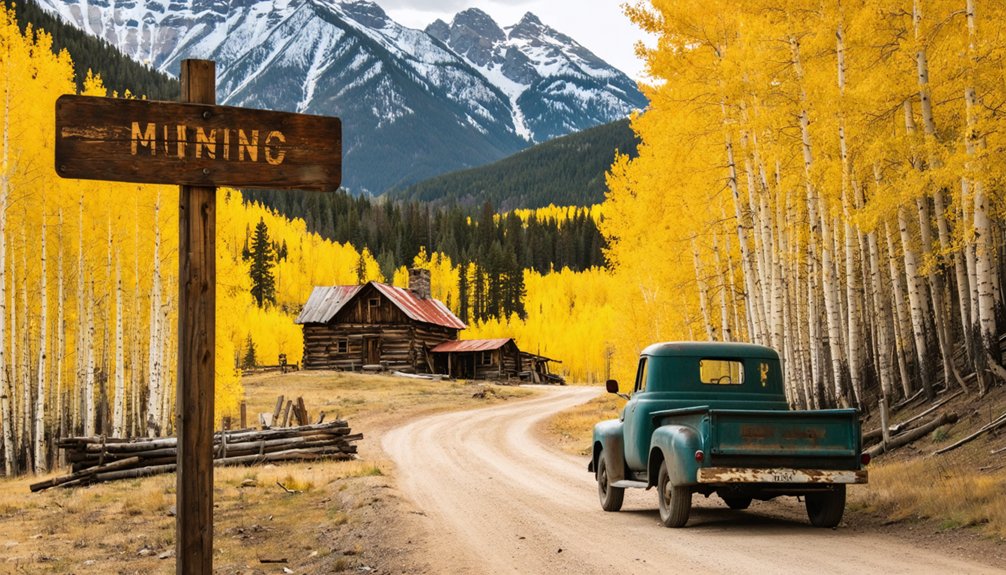
The scenic driving routes through this rugged San Juan terrain reward adventurers with sweeping canyon views and mining remnants. However, accessibility challenges include unpaved surfaces, steep grades, and weather-dependent conditions at elevations reaching 13,552 feet.
Set your clock to Mountain Daylight Time and fuel up in Silverton—this 4-mile journey into the Animas Mining District demands vehicle preparation and respect for Colorado’s high-altitude backcountry.
What to See: Preserved Buildings and Historic Mining Structures
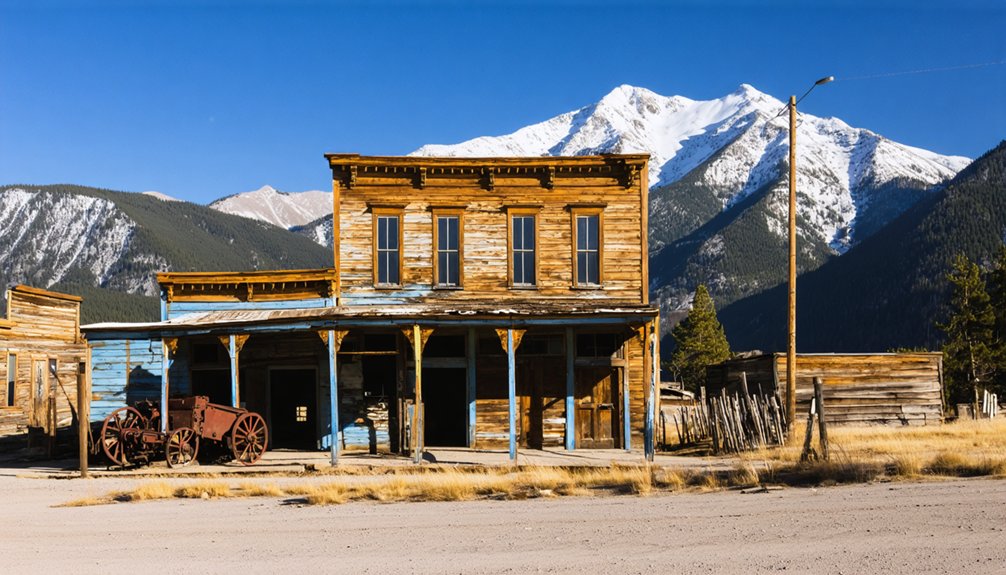
Stepping into Howardsville feels like cracking open a time capsule from Colorado’s silver boom era. You’ll spot the Little Nation Mill immediately—this roadside landmark hasn’t operated since World War II, but conservation efforts in 2008 brought it back from the brink with new roofing, patched floors, and secured tram cables.
The adjacent log cabin might be the oldest structure on Colorado’s western slope, now chinked and stabilized for future generations. Five miles east, the Old Hundred Mine‘s mountainside boardinghouse showcases serious architectural significance, recently documented with 3D drone mapping technology.
Down in town, the 1874 courthouse site—once southwestern Colorado’s government seat at 9,747 feet—burned in 1954, leaving only foundations. These scattered remnants tell stories no museum could capture.
Best Time to Visit and Weather Considerations
Howardsville’s historic structures reward visitors most generously when weather cooperates, and at 10,400 feet elevation, that window narrows considerably. Summer’s June-through-August corridor delivers your prime exploring conditions—60-70°F daytime temps and minimal precipitation patterns that keep roads accessible and cameras dry.
Spring and fall present gambles: April-May brings 40-50°F highs but increasing moisture, while September-October offers 50-60°F days countered by freezing nights. The seasons to avoid run November-March, when 70-80% snow probabilities dump 1-4 inches per event and roads slam shut. Winter’s sub-10°F lows and wind chills below zero transform adventure into survival mode. Pack layers regardless—even July evenings plummet to 30-40°F, and those southwest winds don’t respect your plans.
Nearby Ghost Towns to Add to Your Itinerary
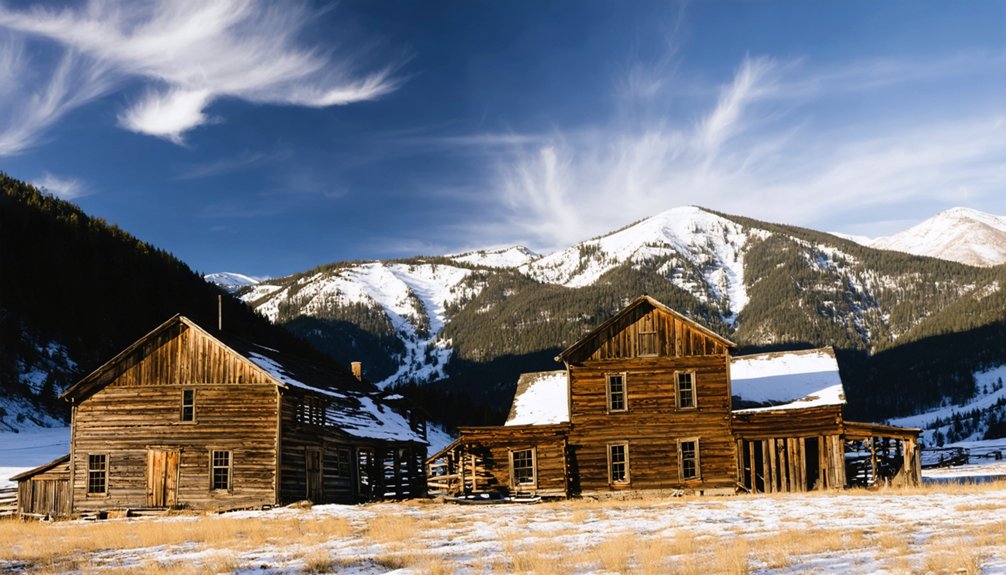
Beyond Howardsville’s weathered cabins, the San Juan Mountains harbor a constellation of ghost towns that’ll turn your day trip into a multi-day expedition. These abandoned settlements reveal Colorado’s silver rush legacy through crumbling historic mine operations and early transportation networks that once connected bustling camps.
As you continue your journey, be sure to explore silver canyon ghost town, where remnants of the past linger amidst the picturesque landscape. Here, you can wander through rusting machinery and faded storefronts, each telling a story of a once-thriving community. The haunting beauty of the canyon’s cliffs adds to the allure, making it a must-visit for those intrigued by history and adventure.
The San Juan Mountains’ ghost towns transform casual sightseers into serious explorers, revealing Colorado’s silver mining heritage across multiple remote locations.
Your expanded itinerary should include:
- Animas Forks – One of the West’s best-preserved ghost towns featuring the Duncan House’s massive bay window where mining heiress Evalyn Walsh penned her biography
- Capitol City – Founded in the 1870s near the Animas River headwaters with scattered original structures
- Red Mountain Town – Accessible ghost town positioned near Silverton
- Winfield and Vicksburg – Reached via Clear Creek Canyon’s four-wheel-drive route, where multiple mining camps operated during the 1880s
You’ll need ATVs or capable 4x4s for most locations.
Essential Supplies and Safety Tips for Your Trip
While ghost town exploration promises unforgettable adventures through Colorado’s mining heritage, venturing into the San Juans at nearly 10,000 feet demands serious preparation. You’ll need a high-clearance 4WD vehicle to navigate rutted dirt approaches that can consume thirty minutes for seemingly short distances.
Pack emergency medical kits—you’re 1.5 hours from help in ideal conditions. Howardsville’s elevation creates unpredictable weather year-round, so bring layered clothing even in summer. Water filtration systems prove essential since reliable sources don’t exist at ghost town sites.
Stock up in Lone Pine before ascending; there’s nowhere to resupply once you’re committed. Fuel consumption skyrockets on mountain terrain, and winter storms can trap you indefinitely. Your freedom here hinges on self-sufficiency and respect for the elements.
Modern Amenities in Silverton for Your Base Camp

After traversing treacherous mountain passes and exploring Howardsville’s weathered cabins, you’ll crave hot water and a real bed. Silverton delivers modern comfort without sacrificing authentic mountain character.
Your lodging options range from Victorian-era suites with full kitchens to newly renovated rooms overlooking snow-capped peaks. Smedley’s Suites features three soaking pools perfect for trail-weary muscles, while Villa Dallavalle’s Wildcrafter Spa offers jetted tubs and complimentary hot tub access.
Downtown dining facilities keep you fueled:
- Full kitchens in select suites for cooking your own meals
- Central locations near Greene Street’s local eateries
- BYOB lounges for après-adventure relaxation
- Walking distance to historic bars and restaurants
You’re minutes from outfitters offering jeep rentals and guided tours into the high country’s ghost town network.
Frequently Asked Questions
Are There Any Guided Tours Available for Howardsville Bullion City?
No guided group tours operate at Howardsville Bullion City itself. You’ll explore these weathered ghost town ruins independently. The nearby Old Hundred Gold Mine offers guided underground experiences, while you’ll navigate Howardsville’s abandoned cabins through self-guided audio tours.
Can Visitors Explore Inside the Remaining Historic Buildings?
Most buildings remain locked or unsafe for interior access. You’ll find self-guided tours limited to exterior viewing due to access restrictions and structural instability. However, you’re free to photograph and explore the atmospheric grounds surrounding these 1870s-era mining remnants independently.
Is Camping Permitted Near Howardsville or Within the Ghost Town?
You’ll find dispersed camping allowed on surrounding BLM and National Forest lands near Howardsville, with established campgrounds nearby along Animas River. Remember the 14-day limit, then relocate 30 miles to maintain your nomadic freedom lifestyle.
Are There Restroom Facilities Available at the Howardsville Site?
No dedicated restrooms exist at Howardsville—you’ll find no portable toilets available or wheelchair accessibility status documented. Plan ahead by using facilities in nearby Silverton before venturing into this remote ghost town’s rugged, untamed backcountry territory.
What Photography Restrictions Exist for the Historic Structures?
You’ll find no photography permits required for these weathered relics—snap away freely. However, drone use policies prohibit flights without BLM authorization. Respect the structures’ fragility; don’t climb inside or disturb artifacts. Your lens captures history best from established trails.