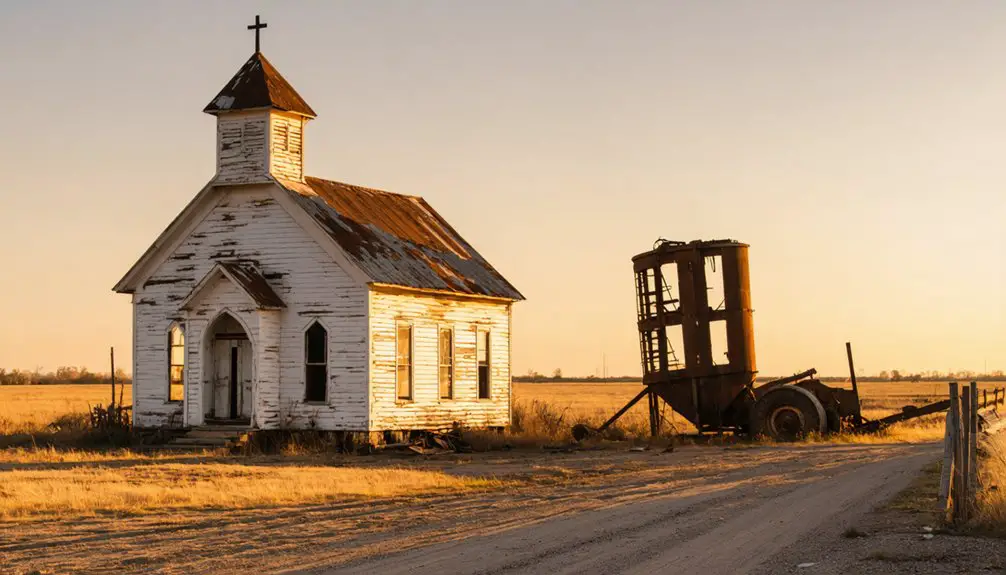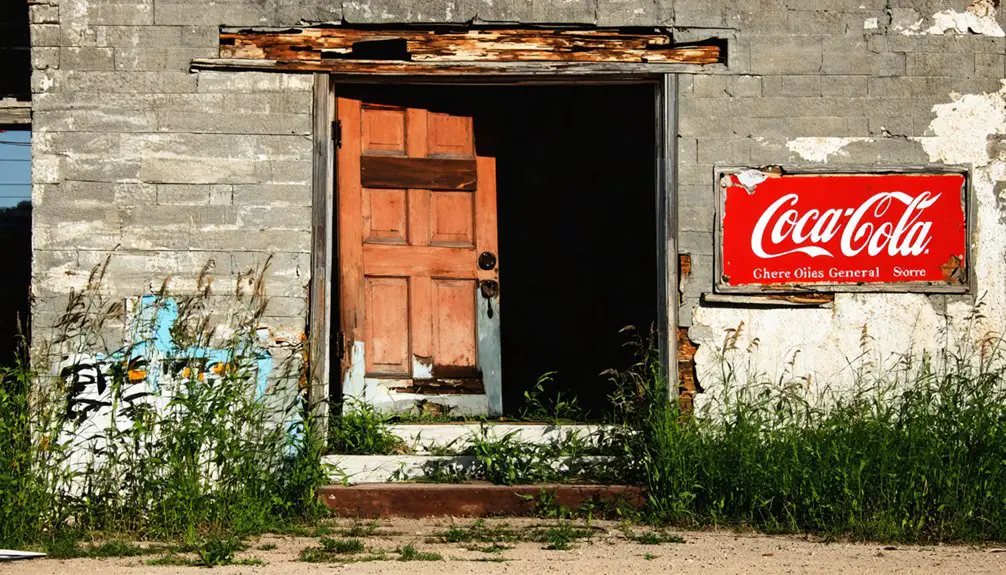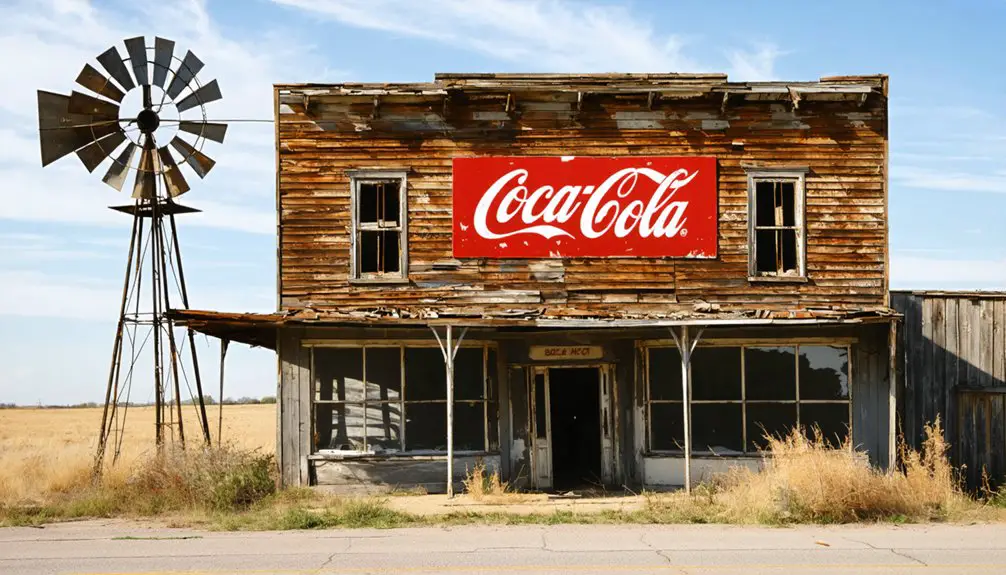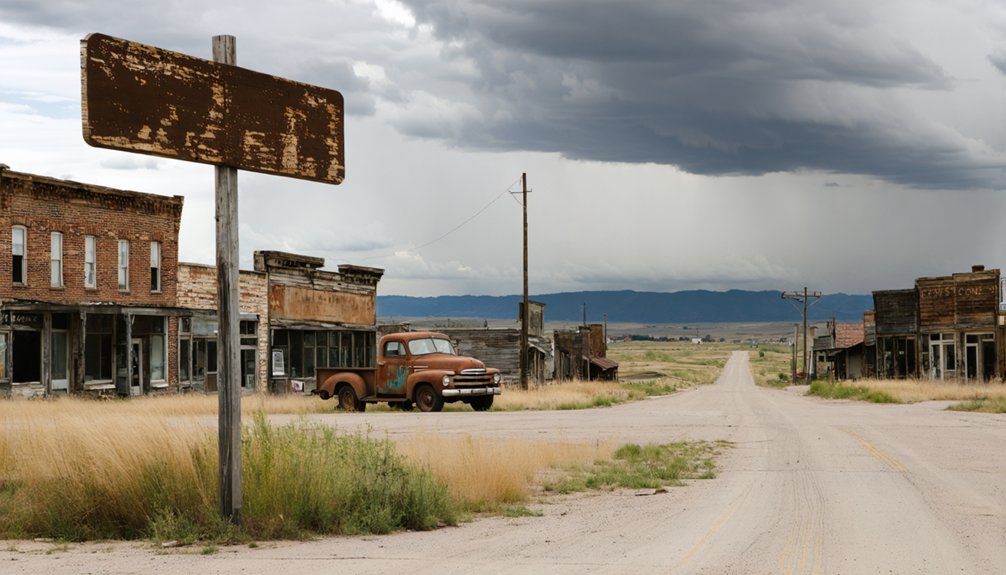
You’ll find Huntville 80 miles southeast of Oklahoma City, where weathered water towers and crumbling brick buildings mark a prison town’s skeletal remains. Spring and fall offer comfortable temperatures for exploring the 86% of structures that collapsed into compromised ground honeycombed with tunnels. Pack sturdy boots, dust masks, and offline maps—cell service falters here. Base yourself in Holdenville for accommodations, and plan weekday visits during shoulder seasons when Oklahoma’s red soil reveals its haunting secrets most clearly.
Key Takeaways
- Huntville is 80 miles southeast of Oklahoma City via State Highway 48 and US Route 270 near Holdenville.
- Visit during spring or fall for comfortable temperatures, vibrant scenery, and fewer crowds than peak summer months.
- Explore the water tower, crumbling brick buildings, skeletal gymnasiums, and pioneer-era cemeteries scattered throughout the ghost town.
- Wear sturdy boots, gloves, and dust masks; avoid crumbling structures, sinkholes, and contaminated chat piles with lead residue.
- Base in nearby towns 30-50 miles away for hotels; download offline maps due to unreliable cell service.
Getting to Huntville: Routes and Travel Times
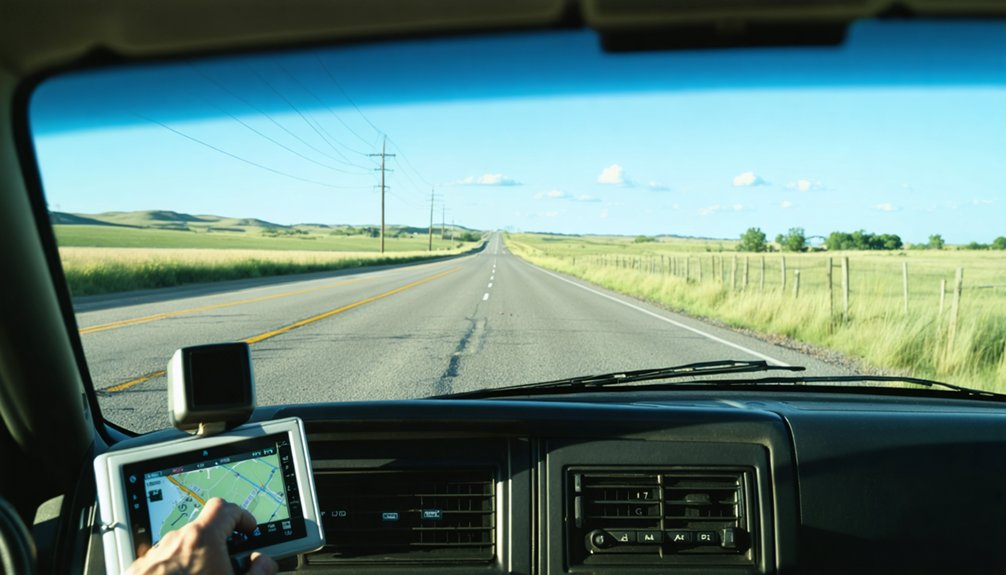
While ghost town enthusiasts typically associate Huntville with rural Oklahoma—a small community southeast of Oklahoma City near Holdenville—travelers seeking the region’s abandoned settlements will find themselves traversing the windswept plains of Hughes County. You’ll reach this forgotten territory by heading 80 miles southeast from Oklahoma City, journeying State Highway 48 and US Route 270 through rolling countryside.
The Canadian River‘s presence shapes your southern approach, creating distinct terrain features that isolated these settlements generations ago. Your transportation options remain straightforward: personal vehicle offers maximum flexibility for exploring unmarked paths and vanished homesteads scattered across the landscape.
GPS coordinates prove essential here—35.083599°N, -96.401627°W marks nearby Holdenville, your gateway to discovering what remains of Huntville’s weathered structures and stories etched in Oklahoma red clay.
Best Seasons to Visit This Abandoned Settlement
Timing transforms your Huntville ghost town experience from memorable to extraordinary. Spring (April-June) delivers perfect conditions—60°F to 80°F temperatures let you explore structures comfortably while blooming landscapes enhance photographer’s perspectives of abandoned settlements.
Fall (September-November) offers vibrant foliage backdrops with fewer crowds disrupting your solitary wanderings.
Winter (December-February) reveals Huntville’s raw character through bare vegetation, allowing unobstructed views of stone ruins against intricate sky patterns. You’ll find peaceful solitude that summer tourists never experience. For ultimate freedom, visit January through April when empty trails create deeper connections with history.
Avoid July-August’s oppressive heat that limits exploration. Monday-Thursday weekday visits during off-peak months guarantee serene visitor experiences, while shoulder seasons provide ideal weather without peak pricing constraints.
What Remains: Buildings and Structures to Explore
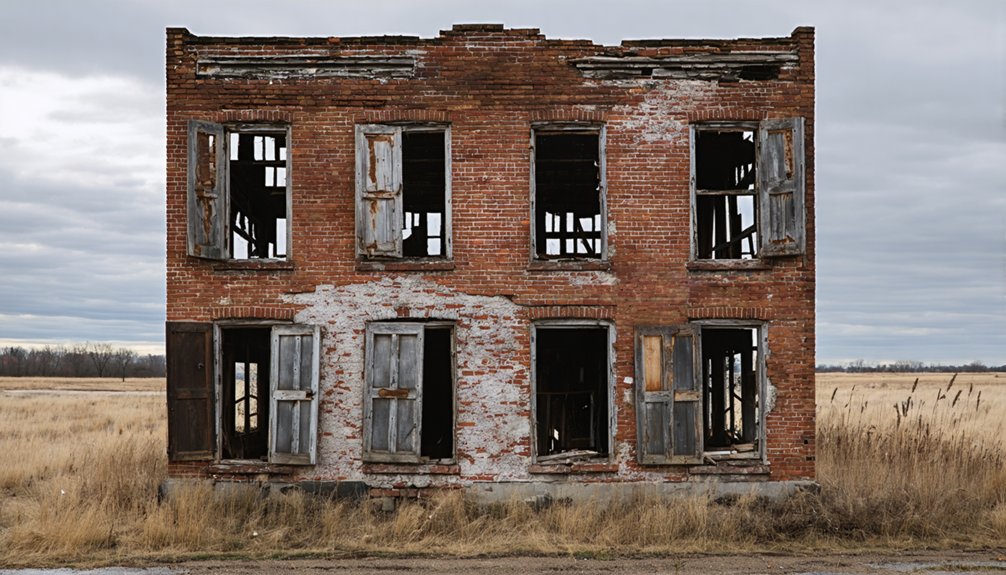
You’ll find Picher’s haunting landscape dominated by three distinct remnants of its mining past. The towering water tower and crumbling brick buildings stand as skeletal witnesses to the town’s collapse, their empty windows and missing walls exposing the destruction wrought by contamination and abandonment.
Scattered among overgrown lots, concrete steps and building foundations lead nowhere, marking the ghostly footprints of 86% of structures that once housed a thriving community before subsidence and toxicity claimed them.
Historic Stone Foundation Ruins
The most enigmatic stone structure in eastern Oklahoma stands ten feet wide and twelve feet high on Poteau Mountain, bearing mysterious carvings that have sparked over a century of debate. You’ll find this vertical sandstone slab protected within Heavener Runestone State Park, displaying characters resembling ancient runic alphabets.
First documented by a Choctaw hunting party in the 1830s, theories on viking origin suggest eleventh-century Norse explorers traveled up the Mississippi and Arkansas rivers. Local legend accounts offer alternative explanations—from La Salle’s 1687 expedition to Swedish colonists. While experts assign only 20% probability to medieval origins, citing modern toolmarks and 19th-century Viking revival influences, the uniform six-to-eight-inch carvings continue intriguing independent researchers. You can’t touch this weathered monument, but you’re free to draw your own conclusions.
Abandoned Schoolhouse Structure
Oklahoma’s oil boom and rural education legacy lives on through five skeletal gymnasiums scattered across forgotten townscapes. You’ll find Ahpeatone’s 1931 brick schoolhouse with its empty gym shell, built when oil money flowed freely.
Eagle City’s 1936 WPA-funded gymnasium stands isolated in buff brick, while Cowden’s 1935 structure persists alone on a dirt road where its district once thrived. Oney’s stone gymnasium from 1939 outlasted its brick classrooms entirely. These architectural features reveal Depression-era craftsmanship and community ambition.
Your condition assessment will vary—some maintain structural integrity, others show advanced deterioration. Each represents autonomous communities that built their own educational infrastructure, only to watch populations vanish. These gymnasiums weren’t just buildings; they embodied self-determination that still resonates today.
Old Cemetery Markers
Weathered headstones and rusted iron fences mark Huntville’s pioneer-era burial grounds, where time has reduced ornate Victorian monuments to fragments scattered among prairie grass. You’ll discover sunken graves and toppled slabs from 1800s burials, their memorial inscriptions barely legible beneath moss and erosion.
Early settlers and Civil War veterans rest here, their stories etched in fading stone. The marker materials—marble and granite—have endured better than wooden crosses, now decayed to stumps among the overgrowth.
Bring flashlights to reveal inscriptions on shaded stones, and wear sturdy boots for uneven terrain. No active restoration means you’re witnessing authentic decay, untouched by modern intervention. These remnants stand as a lasting legacy to Oklahoma’s frontier past, accessible for those willing to venture off beaten paths and explore without restriction.
The History Behind Huntville’s Rise and Fall
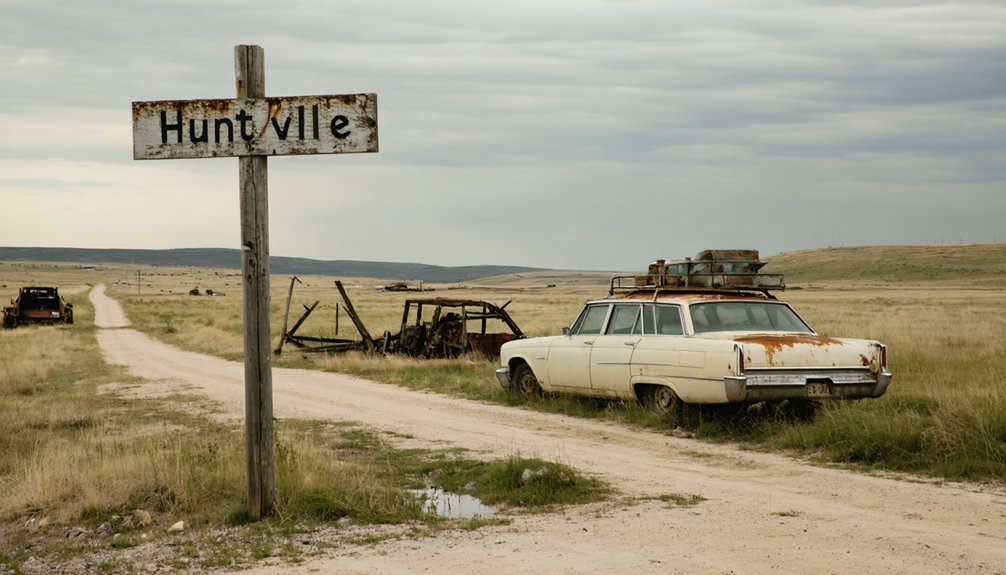
Among Oklahoma’s approximately 2,000 ghost towns, Huntville emerged from the same restless energy that drove settlers across the territory in the late 1800s—a mix of opportunity-seeking, railroad speculation, and the raw ambition of town promoters.
What distinguished Huntville was its prison operations, housing former criminal inhabitants like Tom Hayes, convicted of cattle theft in 1917. The town’s shadowy legacy includes:
- Prison operations that defined the community’s character through the early 1900s
- Tom Hayes’s death in November 1918, one among unreported prisoner deaths
- Economic ties to incarceration rather than oil or agriculture
- Limited infrastructure that failed to sustain growth beyond prison needs
- Natural threats including flooding and the 1918 influenza pandemic
When prison operations wound down post-1918, Huntville’s reason for existence vanished, leaving only cemetery markers and criminal records as evidence.
Photography Tips for Capturing Ghost Town Atmosphere
Capturing Huntville’s desolate essence demands more than simply pointing your camera at crumbling structures. You’ll need atmospheric perspectives that reveal the town’s haunting character through wide-angle shots of abandoned main streets and prime lenses isolating weathered artifacts.
Arrive around 5 a.m. to witness golden hour’s dramatic shadow choreography across the jail, saloon, and church facades. Moody lighting techniques transform ordinary scenes—try 15-second exposures at f/4, ISO 1600, while light painting interiors with handheld flashlights. Your tripod stabilizes long exposures that capture star trails overhead.
Include windows, ornamental details, and silhouettes for depth and mystery. Black-and-white conversions emphasize decay textures beautifully. Keep moving during exposures so you won’t appear in frame, letting Huntville’s ghostly solitude speak for itself.
Safety Precautions for Exploring Abandoned Sites
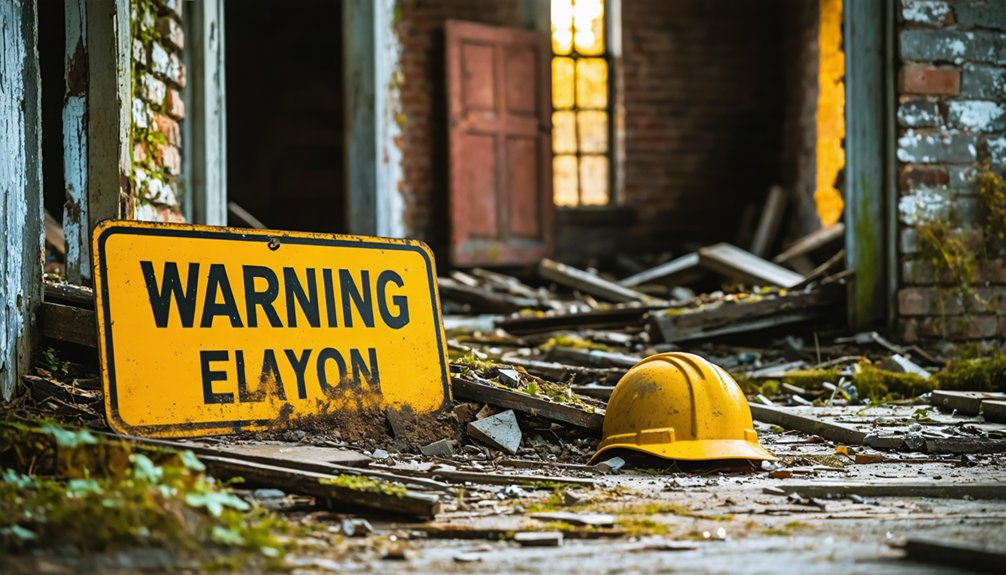
Before you step into Huntville’s crumbling structures, you’ll need to assess what could collapse beneath your feet or fall from above. Rotted floorboards, weakened staircases, and unstable walls present constant dangers that demand your full attention and proper protective equipment.
Your exploration depends on recognizing these threats early and wearing sturdy boots, respirators, and protective clothing that can mean the difference between a memorable adventure and a medical emergency.
Structural Hazards to Avoid
While Huntville’s eerie stillness draws curious explorers, the ghost town conceals deadly hazards beneath its abandoned facades. Unseen underground hazards lurk everywhere—mine shafts and tunnels weakened over decades now threaten sudden collapse, with engineering studies confirming 86% of structures sit atop compromised ground.
Unstable building remains present equally dangerous threats above surface.
Critical hazards demanding your attention:
- Crumbling brick buildings missing structural supports—walls, floors, and roofs can collapse without warning
- Gaping sinkholes opening periodically where underground mining tunnels give way beneath your feet
- Chat pile contamination containing lead and zinc residue that damages neurological function
- Concrete steps leading nowhere, indicating vanished structures and unstable foundations
- Tornado-scattered debris concealing sharp edges and chemical residue near contaminated sites
Your freedom to explore doesn’t include immunity from physics or toxins.
Essential Safety Gear Needed
How do you prepare your body for environments where a single misstep could send you plunging through rotted floorboards or into contaminated mine shafts? Start with sturdy boots featuring thick soles and ankle support, paired with long-sleeved shirts and heavy-duty gloves to shield against sharp debris and unknown substances. Your headlamp keeps both hands free for climbing through Huntville’s crumbling structures, while a dust mask filters decades of accumulated mold and particles.
Pack recommended first aid items—bandages, antiseptic wipes, gauze, and splinting materials—for treating cuts and stabilizing injuries. The importance of communication devices can’t be overstated when exploring remote Oklahoma ghost towns where cell service vanishes. Add emergency blankets, backup lights, and water-resistant gear to your backpack. You’re venturing beyond civilization’s safety net.
Nearby Accommodations and Camping Options
Planning your visit to Huntville requires some foresight, as this remote ghost town doesn’t offer nearby hotels or established campgrounds. You’ll need to venture to surrounding communities for lodging and supplies. The isolation that makes Huntville compelling also means limited infrastructure for visitors.
Consider these accommodation strategies:
- Base yourself in larger towns within 30-50 miles for hotel options and local restaurant options
- Explore seasonal camping availability at state parks or recreation areas in the region
- Pack self-sufficient camping gear if you’re comfortable with primitive sites
- Book accommodations well ahead during peak travel seasons
- Download offline maps since cell service proves unreliable
Your adventure demands preparation, but that independence defines the authentic ghost town experience you’re seeking.
Other Oklahoma Ghost Towns Within Driving Distance
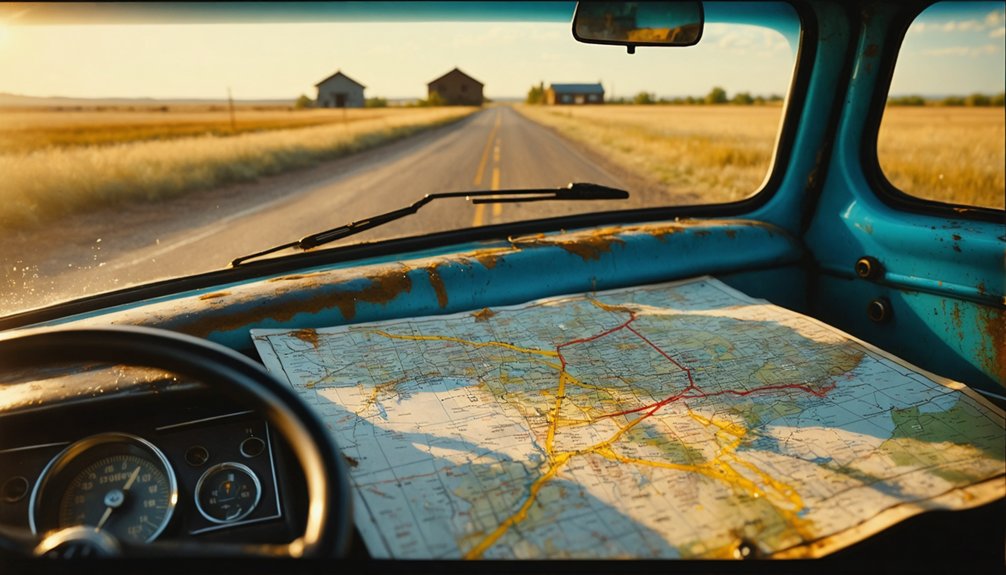
Oklahoma’s landscape harbors dozens of abandoned settlements that tell stories of boom-and-bust cycles, failed dreams, and communities that couldn’t outlast economic shifts. Within striking distance of Huntville, you’ll discover alternative ghost town routes that take you off the beaten path.
Head north to explore Ingalls and Mulhall in Payne County, both remnants of the 1889 land run. Western routes lead to Picher’s eerie mining ruins and fully abandoned Zincville. Southern explorers can trace Route 66 through Texola’s living ghost town or investigate lesser known ghost towns like Navajoe and Yeldell in Jackson County.
Eastern routes reveal Grayson’s standing churches and Hanna’s schools. Each destination offers authentic decay and untamed exploration—no crowds, no restrictions, just raw history waiting.
Essential Supplies to Pack for Your Adventure
Before you venture into Oklahoma’s remote ghost towns, you’ll need supplies that balance urban explorer essentials with backcountry survival gear. Packing light essentials means selecting multi-purpose items while avoiding excessive gear that’ll weigh you down.
Your freedom-focused kit should include:
- First aid supplies and medications – bandages, antibiotic ointment, and personal prescriptions
- Navigation and communication tools – flashlight with extra batteries, whistle, and battery-powered radio
- Weather protection – layered clothing, rain gear, and sturdy shoes for exploring unstable structures
- Hydration and energy – reusable water bottles and high-energy snacks
- Documentation equipment – camera, notebook, and binoculars for capturing forgotten histories
Pack sunscreen, insect repellent, and a daypack for comfortable exploration through Huntville’s weathered remains.
Frequently Asked Questions
Can I Legally Enter and Explore the Abandoned Buildings in Huntville?
No, you can’t legally explore without permission—Oklahoma’s trespass laws protect these ruins despite their ghostly allure. Private property concerns and liability issues create real barriers. You’ll need landowner consent before venturing inside these haunting structures.
Are There Any Known Paranormal Activity Reports or Ghost Sightings in Huntville?
I don’t have documented reports of alleged supernatural occurrences or unexplained phenomena within Huntville specifically. However, abandoned places often attract ghost stories. You’ll need to research local accounts or explore independently to discover any paranormal activity yourself.
Is Cell Phone Service Available in the Huntville Area for Emergencies?
Cell phone coverage availability in Huntville is limited but present. You’ll likely find partial 4G service from major carriers, though network reliability varies considerably. For emergencies, don’t rely solely on cellular—consider satellite options as backup.
What Happened to the Original Residents Who Lived in Huntville?
I cannot provide specific information about Huntville’s original residents’ relocation or community displacement factors, as no historical records are available in the search results. You’ll need to research local archives to discover what truly happened to them.
Are There Guided Tours Available or Must I Explore Independently?
You’ll find absolutely zero commercial guided tours in this forgotten ghost town—it’s pure exploration freedom! Self-guided tours reign supreme here, letting you craft custom tour packages at your own pace, wandering wherever curiosity leads you through abandoned ruins.