You’ll find Independence Flat tucked away in Calaveras County‘s pine-studded hills, accessible via a challenging two-mile drive from Railroad Flat on narrow, rutted gravel roads requiring four-wheel drive. Visit between October and April when temperatures hover in the 60s and 70s, avoiding summer’s brutal 100°F+ heat. Pack at least two liters of water, extra fuel, and sturdy hiking boots to explore the weathered cabins, crumbling foundations, and rusted mining equipment scattered across this remote site where few preservation efforts protect what remains.
Key Takeaways
- Access Independence Flat via Railroad Flat, 2 miles northwest; narrow gravel roads require four-wheel drive and careful navigation.
- Visit October through April when temperatures range from 60s to 80s; avoid summer heat exceeding 100°F with no shade.
- Explore weathered cabins, rusted mining equipment, stamp mill remnants, and stone foundations scattered across the remote site.
- Pack 2+ liters of water, emergency supplies, layered clothing, navigation tools, and extra fuel for self-reliant exploration.
- Camp at Independence Creek or Onion Valley campgrounds, or use dispersed camping on nearby BLM and Forest Service lands.
Getting to Independence Flat: Routes and Road Conditions
Tucked away in the pine-studded hills of Calaveras County, Independence Flat sits at coordinates 38°20′36″N 120°30′44″W—a remote stretch where cell service fades and the Mokelumne River’s whisper becomes your navigation companion.
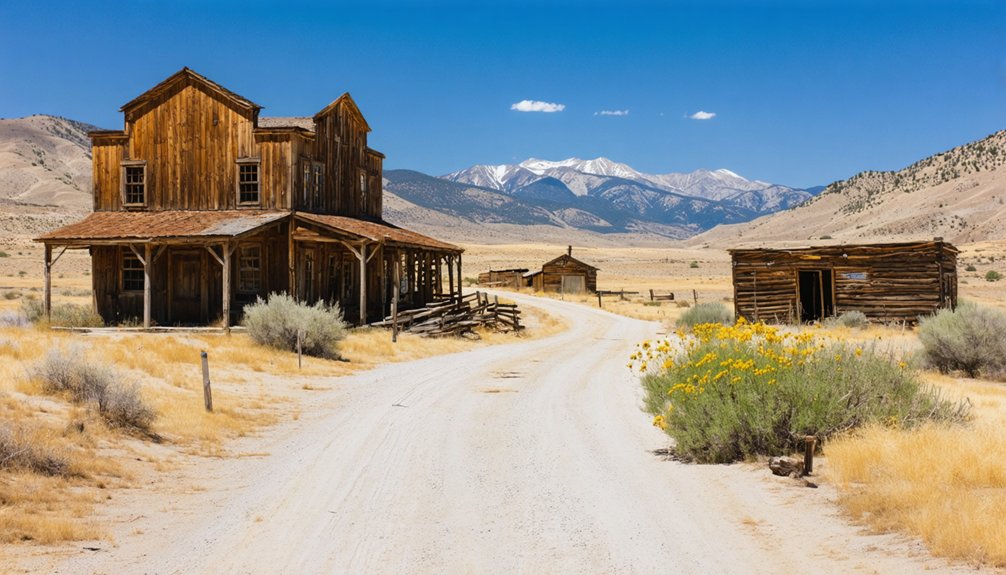
You’ll find vehicle access easiest from Railroad Flat, just 2 miles southeast, though the roads narrow to single-lane gravel as you approach. The ghost town’s 9.2 square miles sprawl across terrain that’ll test your clearance—rutted tracks carved by decades of weather demand patience and four-wheel drive.
Once you’ve parked, a developing trail network offers 4.3-mile and 12-mile loops with modest elevation gains. Former water ditches now serve as pathways, winding through gulches where hydraulic mining once thundered. For precise navigation, the area’s UTM coordinates place you in Zone 10S with an easting of 717853 and northing of 4246406. Pack backup maps; GPS signals here are unreliable as a prospector’s promise. A GPS sports watch can provide reliable tracking and navigation data even when standard GPS signals weaken in these remote canyons.
What Remains: Exploring the Ruins and Structures
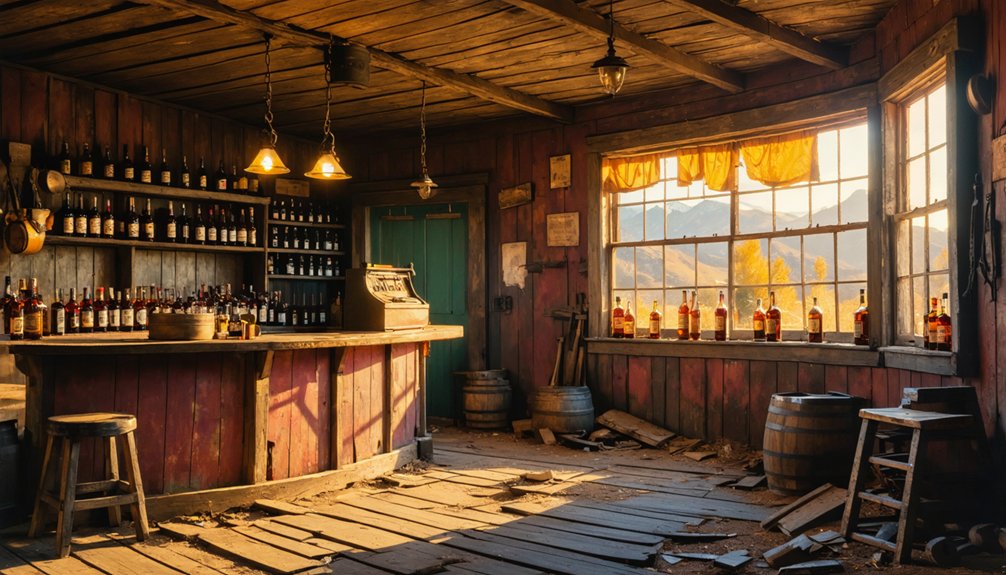
You’ll find Independence Flat frozen in time, where weathered cabins with metal roofs stand beside crumbling stone foundations overgrown with brush.
The mining equipment tells its own story—a rusted iron waterwheel lies in the dry streambed, while scattered iron blocks that once served as stamp mill shoes rest where workers dropped them decades ago. The steep terrain and lack of water made maintaining these remote operations incredibly difficult for the miners who once worked here.
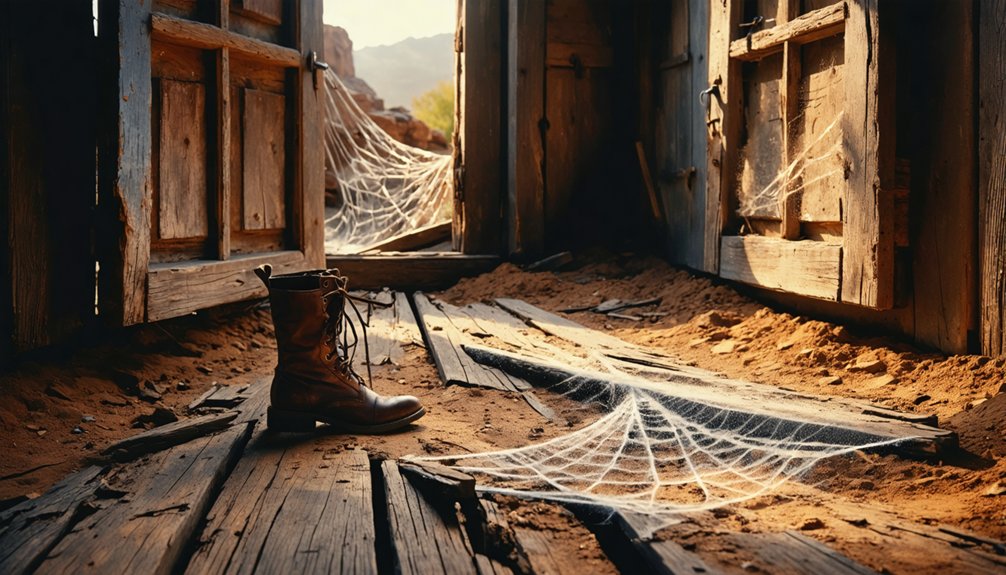
Walking through the scattered ruins, you can still make out the outlines of daily life: collapsed roof beams inside cabins, fragments of ceramic sinks, and the skeletal remains of a 5-stamp mill at the Beveridge site. The construction techniques and equipment scattered around suggest these structures date back to the 1930s, representing the final chapter of mining activity in the area.
Standing Structures and Buildings
Time has stripped away most of Independence Flat‘s physical presence, leaving behind only whispers of its mining camp past. You won’t find notable historical buildings standing proud against the desert sky—nature’s reclaimed what miners once built.
Unlike neighboring ghost towns with documented structures, Independence Flat exists primarily as scattered foundations and weathered debris fields that require keen observation to discover.
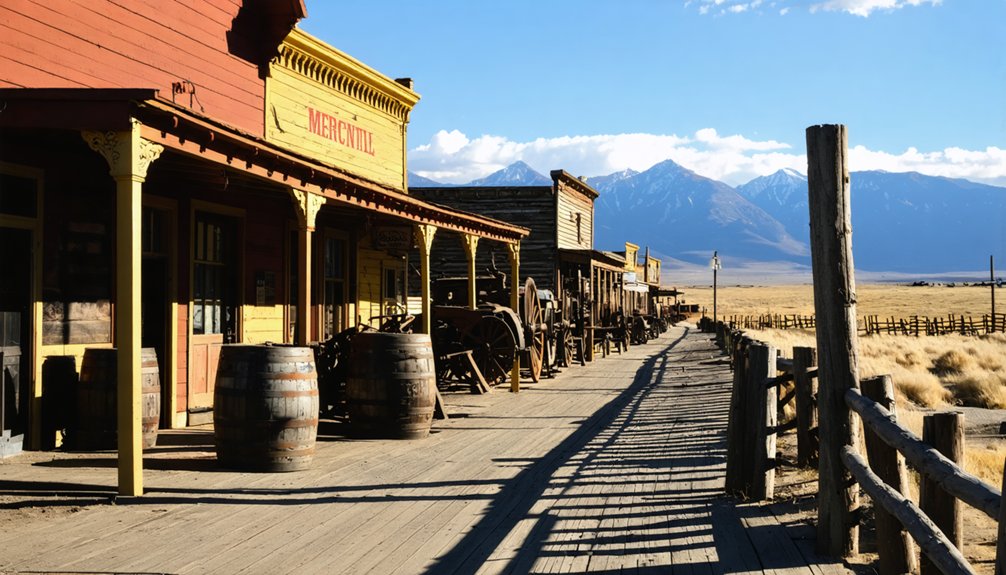
There’s no architectural preservation efforts protecting this remote site, which means you’re exploring raw history without interpretive signs or restored facades. What you’ll encounter are subtle earth depressions where cabins once stood, rusted metal fragments, and perhaps some deteriorating wood remnants. By contrast, some preserved ghost towns feature structures like the Belshaw House, complete with original furnishings dating back to the 1800s. Nearby Cerro Gordo, meaning “fat hill” in Spanish, once boasted permanent structures including the American Hotel completed in 1871, along with general stores, restaurants, and saloons that replaced earlier canvas shacks.
It’s pure, unfiltered exploration—just you, the high desert landscape, and fragmented evidence of 19th-century ambition gradually dissolving into California’s unforgiving terrain.
Mining Equipment and Artifacts
Unlike well-preserved mining sites with rows of rusting machinery, Independence Flat offers little in the way of equipment remnants—a reality that matches its sparse structural footprint. You won’t find antique machinery displays or mining equipment tours here.
What you might discover requires sharp eyes and patience:
- Scattered metal fragments from long-dismantled sluice boxes along seasonal creek beds
- Hand-dug prospect holes marking where individual miners tested their luck with gold pans
- Rock piles indicating where rockers and cradles once processed gravel
- Depressions in hillsides suggesting hydraulic operations washed away decades ago
Most equipment was hauled to more productive claims when Independence Flat played out. What remains tells a story of transience—miners moving on, taking their tools, leaving only earth-scars behind. Early Gold Rush miners in the region relied on simple tools like gold pans, bateas, sluice boxes, and rockers before larger mining companies introduced more sophisticated equipment such as Long Toms and flutter wheels. The camp’s abandonment reflects the pattern of the era, when prospectors averaged earnings 10-15 times the daily wage of an East Coast laborer at productive sites, incentivizing rapid relocation when yields declined.
Best Times to Visit This Remote Desert Location
You’ll want to time your Independence Flat adventure for the cooler months between October and April, when desert temperatures hover in the pleasant 60s and 70s rather than the scorching triple digits of summer. I learned this lesson the hard way during a June visit—by noon, the metal remnants of old mining equipment became too hot to touch, and the exposed desert trail offered zero shade for photographing the ruins.
Spring months bring the added bonus of wildflower blooms painting the surrounding hillsides in gold and purple, transforming the stark ghost town landscape into something unexpectedly vibrant. The milder temperatures of spring also make it ideal for extended exploration of the area’s historic mining structures. October through December offers moderate weather year-round, making these months particularly appealing for ghost town enthusiasts who want comfortable conditions without the extremes of summer heat or winter cold.
Seasonal Weather and Conditions
Perched at 4,229 feet in California’s high desert, Independence Flat experiences dramatic temperature swings that’ll define your entire visit. Average daily sunshine duration dominates most seasons, with typical cloud cover patterns staying minimal—perfect for those seeking endless horizons and star-filled nights.
Seasonal breakdown for planning your escape:
- Winter (Dec-Feb): Expect 50°F highs plummeting to 28°F overnight. Crystal-clear skies offer unmatched stargazing, though you’ll need layers.
- Spring (Mar-May): Temperatures climb to 58°F with stable 30°F lows. Roads become increasingly accessible as daylight lengthens.
- Summer (Jun-Aug): Mild 67°F highs and dry conditions reign. Northwest winds keep humidity low at 39%.
- Fall (Sep-Nov): Variable 54-66°F days shift to cooler evenings, with occasional sprinkles testing your adventure spirit.
Avoiding Extreme Desert Heat
When desert temperatures soar past 100°F, Independence Flat’s abandoned structures offer no shade—just blistering metal and sun-bleached wood that’ll send you scrambling back to your vehicle. You’ll want to plan your visit between October and April when daytime highs hover comfortably between 65°F and 86°F. I learned this the hard way during a July expedition—my camera literally became too hot to hold.
Heat exposure precautions aren’t optional here. Carry twice the water you think you’ll need, start exploring at dawn, and retreat by noon. Dust storm risks peak during transitionary periods, so check forecasts obsessively.
The shoulder seasons—particularly late April through May and September through October—deliver that sweet spot: wildflower-dotted landscapes, clear skies, and temperatures that let you explore freely without constantly calculating your survival margin.
Essential Supplies and Safety Gear for Your Trip
Before you set off into California’s remote backcountry to explore Independence Flat, preparing the right supplies can mean the difference between a memorable adventure and a dangerous situation. Your independence depends on self-reliance out here.
Self-reliance in California’s backcountry transforms preparation from optional to essential—your independence hinges on what you pack before departure.
Pack these essential categories:
- Medical supplies: Band-aids, painkillers, anti-diarrheals, and personal medications. Basic first aid training helps you handle injuries miles from civilization.
- Hydration and food: Two liters of water minimum, trail mix, jerky, and protein bars. Basic camp cooking skills expand your meal options.
- Vehicle safety: Extra fuel, cash for emergencies, cell phone mount for navigation.
- Protection gear: Layered clothing, rain jacket, hiking boots, flashlight, and whistle with signaling mirror.
These fundamentals guarantee you’ll conquer the desert’s challenges confidently.
Nearby Ghost Towns Worth Adding to Your Itinerary
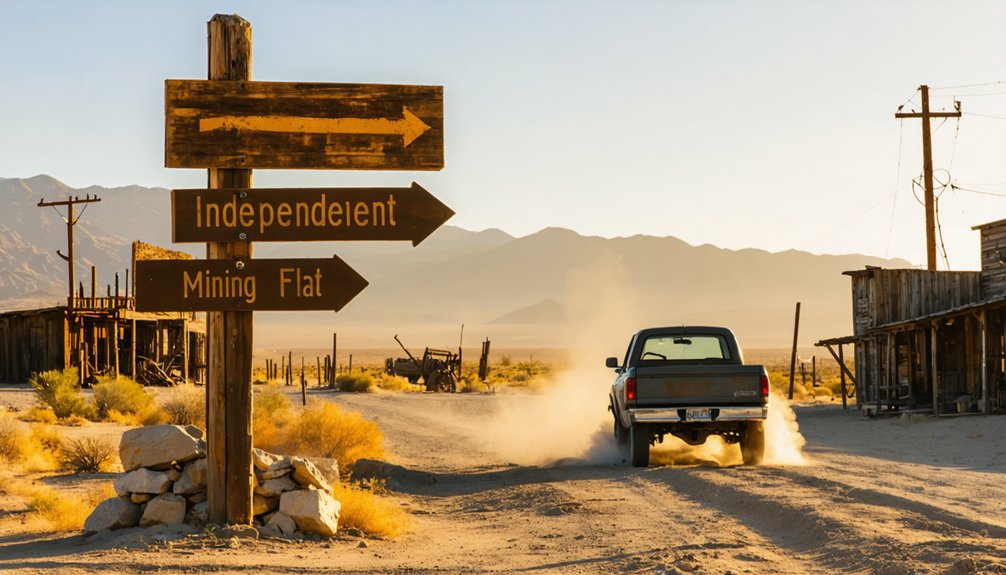
Once you’ve loaded your vehicle with supplies, the real adventure begins—and Independence Flat serves as your perfect base camp for exploring some of California’s most haunting abandoned settlements.
Calaveras County offers additional ghost town clusters like Dogtown Diggings, established in 1857 and barren just two years later. French Flat in neighboring Tuolumne County rewards those seeking remote wilderness settings without the crowds.
As you explore these historic remnants, you’ll find abandoned places for stunning imagery that captivate both photographers and adventurers alike. Each site tells a unique story, offering a glimpse into the past amid the scenic landscapes. Don’t forget to bring your camera to capture the haunting beauty of these forgotten locales.
If you’re craving true isolation, venture into Inyo County where Beveridge‘s crumbling structures tell stories of a gold rush boom that ended when water vanished in the early 1900s. Agueberry Camp‘s historic mining relics scatter across unforgiving terrain, while Cerro Gordo—once home to 1,500 residents—demands a 4WD approach from Keeler. Each site whispers its own forgotten tale.
Photography Tips for Capturing Abandoned Buildings
The weathered wood and peeling paint of Independence Flat’s structures create irresistible subjects for photographers, but capturing their haunting beauty requires more than pointing and shooting. You’ll need perspective driven compositions that transform decay into art.
Essential Techniques for Ghost Town Photography:
- Master Manual Controls – Adjust your aperture and shutter speed precisely in low-light conditions, using a tripod for stability when electricity’s long gone.
- Embrace Dynamic Lighting Approaches – Shoot during golden hour when natural light filters through broken windows, or use your flashlight to highlight forgotten details in shadowy corners.
- Frame Deliberately – Position doorways and windows as natural frames, shooting staircases square-on to capture leading lines.
- Pack Light – Maneuver through narrow entrances with minimal gear while staying alert for structural dangers.
Where to Camp and Stay in the Surrounding Area
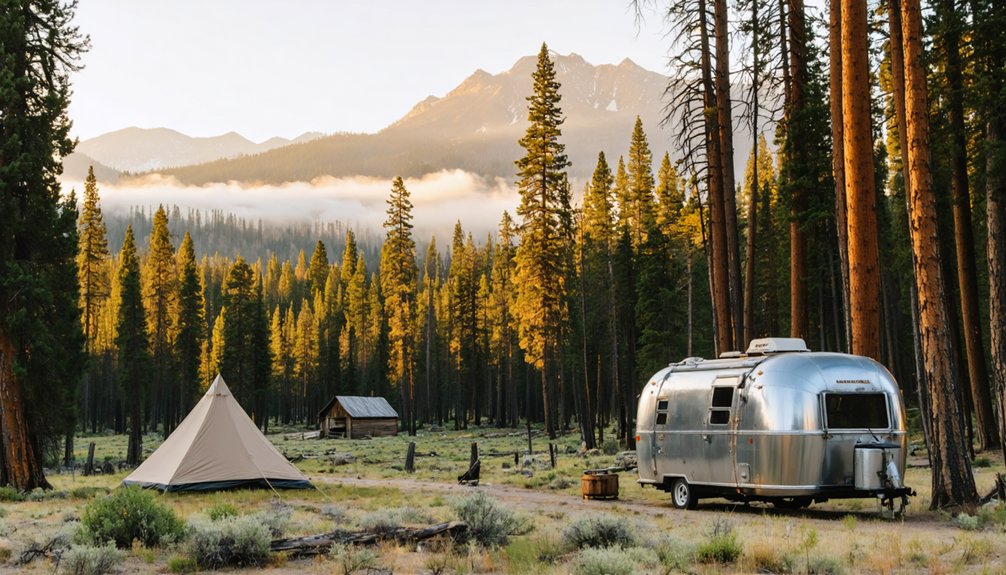
After photographing Independence Flat’s crumbling facades until sunset, you’ll need somewhere to pitch your tent or park your rig for the night. Independence Creek Campground offers 29 primitive sites through Reserve America with essential campground amenities—potable water, vault toilets, fire rings—for $14 per vehicle. They’ll accommodate RVs up to 40 feet without hookups.
For scenic solitude, Onion Valley Campground sits 13 miles west with vault toilets but no water source, presenting accessibility considerations you’ll want to plan around. True freedom seekers can explore dispersed camping on BLM and Forest Service lands mapped through FreeCampsites.net. I’ve found these boondocking spots perfect for escaping crowds while staying close to ghost town routes. Just pack extra water and respect fire restrictions during dry conditions.
Frequently Asked Questions
What Was the Main Industry That Supported Independence Flat During Its Peak?
Gold fever ran through Independence Flat’s veins—you’d find mining operations dominating everything. Miners panned placer deposits and worked the legendary Petticoat Mine, while agricultural production remained virtually nonexistent. This was pure, untamed Gold Rush territory seeking fortune.
Are There Any Entrance Fees or Permits Required to Visit Independence Flat?
You won’t pay entrance fees or need permits at Independence Flat—it’s completely free to explore. Seasonal visitor volume stays low, and on-site amenities availability is minimal (just a rustic outhouse), so you’ll experience pure, unrestricted desert solitude.
Is Cell Phone Service Available Anywhere Near Independence Flat?
You’ll find cell service scarce near Independence Flat—spotty coverage and unreliable connectivity dominate these wild hills. AT&T offers the strongest signal in nearby rural areas, though you shouldn’t depend on constant connection in this remote territory.
What Caused Independence Flat to Become Abandoned and Turn Into a Ghost Town?
Mining operations decline devastated Independence Flat’s economy, forcing freedom-seeking prospectors to abandon their dreams. You’ll discover weathered cabins where economic factors influencing abandonment still echo—empty saloons, rusted equipment, and wind-swept streets tell stories of fortune’s fickle nature.
Can I Take Artifacts or Souvenirs From the Independence Flat Ruins?
No, you can’t legally take artifacts from Independence Flat. Respect archaeological sites by leaving everything untouched—it’s protected under federal law. Avoid disturbing artifacts; instead, capture memories through photos while exploring this weathered Gold Rush landscape freely.
References
- https://www.latimes.com/archives/la-xpm-2004-oct-24-me-then24-story.html
- https://www.altaonline.com/dispatches/a62686535/ghost-towns-california-haunted-places-lauren-markham/
- https://californialocal.com/localnews/statewide/ca/article/show/51711-10-california-ghost-towns-to-see/
- https://www.terrastories.com/downloads/CaliforniaGhostTown.pdf
- https://sgphotos.com/photostories/inyos/
- https://en.wikipedia.org/wiki/List_of_ghost_towns_in_California
- https://en-us.topographic-map.com/map-ktpw57/Independence/
- https://latitude.to/articles-by-country/us/united-states/119309/rail-road-flat-california
- https://en.wikipedia.org/wiki/Rail_Road_Flat
- https://www.mapquest.com/us/california/independence-flat-loop-trail-378636986