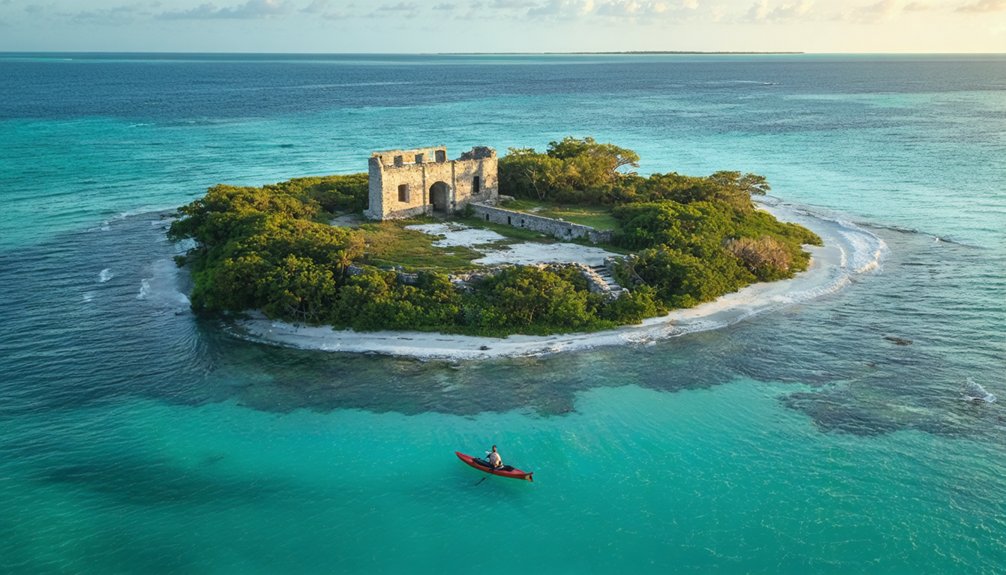
You’ll kayak from Robbie’s Marina at mile marker 77.5 to reach Indian Key’s haunting 11-acre ghost town, where warehouse foundations and cisterns mark Jacob Housman’s 1830s salvage empire. The $2.50 admission grants access to shell mounds, building footprints, and sites where Seminole warriors attacked in 1840, killing up to 18 residents. Visit between November and April when 75°F temperatures make exploring the archaeological remains comfortable. The island’s layered history reveals why this former county seat never recovered from that fateful night.
Key Takeaways
- Indian Key is accessible by kayak from Robbie’s Marina at mile marker 77.5 on US 1, with rentals available on-site.
- The island features ruins of an 1840s trading settlement including warehouse foundations, hotel sites, and carved wharves.
- A devastating Seminole attack in 1840 killed up to 18 people and destroyed the thriving community permanently.
- Ancient shell mounds reveal pre-colonial occupation, with ceremonial sites and burial grounds predating the 19th-century town.
- Visit November through April for ideal 75°F weather and minimal rainfall; admission costs $2.50 per person.
How to Reach This Remote Island Settlement in the Florida Keys
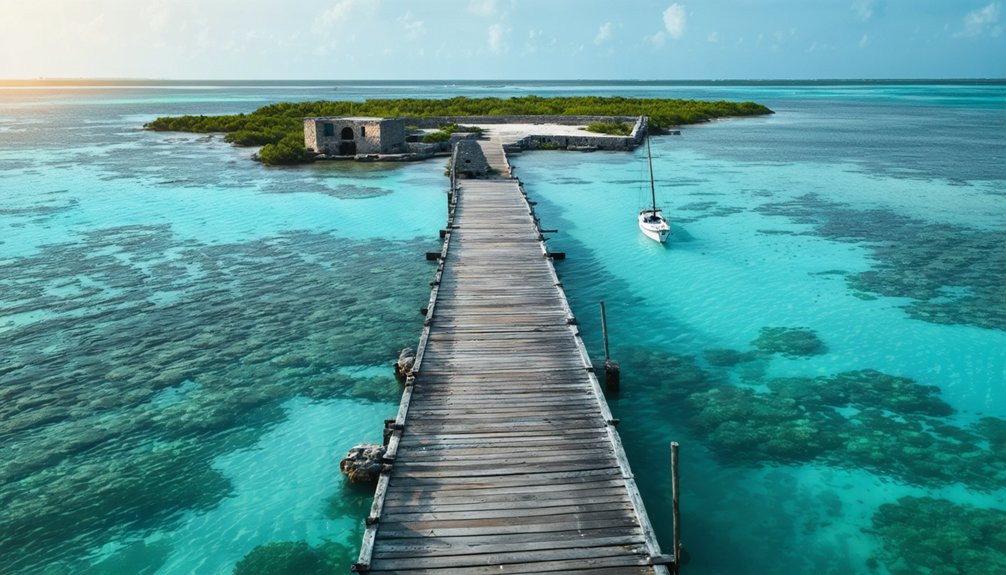
Since Indian Key sits offshore from the populated Florida Keys, you’ll need to cross a half-mile stretch of turquoise water to reach this abandoned island settlement. Your adventure begins at Robbie’s Marina (MM 77.5 on US 1), where parking availability makes launching straightforward.
Indian Key requires a scenic half-mile paddle across turquoise waters, with convenient kayak launching available at Robbie’s Marina on Islamorada.
You can rent kayaks directly from the Kayak Shack—two-seaters run about $55—or bring your own vessel. Backcountry Cowboys offers another rental option at 305-517-4177.
Understanding the access logistics saves frustration: the boat ramp remains closed from storm damage, but the kayak launch operates normally. Paddle toward the dock on the island’s southeast side, traversing through shallow seagrass flats and crystalline waters.
Budget $2.50 per person for admission, payable at the iron ranger near your launch point.
What Remains of the 1830s Trading Post and County Seat
As you step onto the weathered dock at Indian Key Historic State Park, you’re walking into what remains of Florida’s most ambitious 19th-century island settlement—an 11-acre trading hub that once housed 140 residents and served as Dade County’s first seat of government.
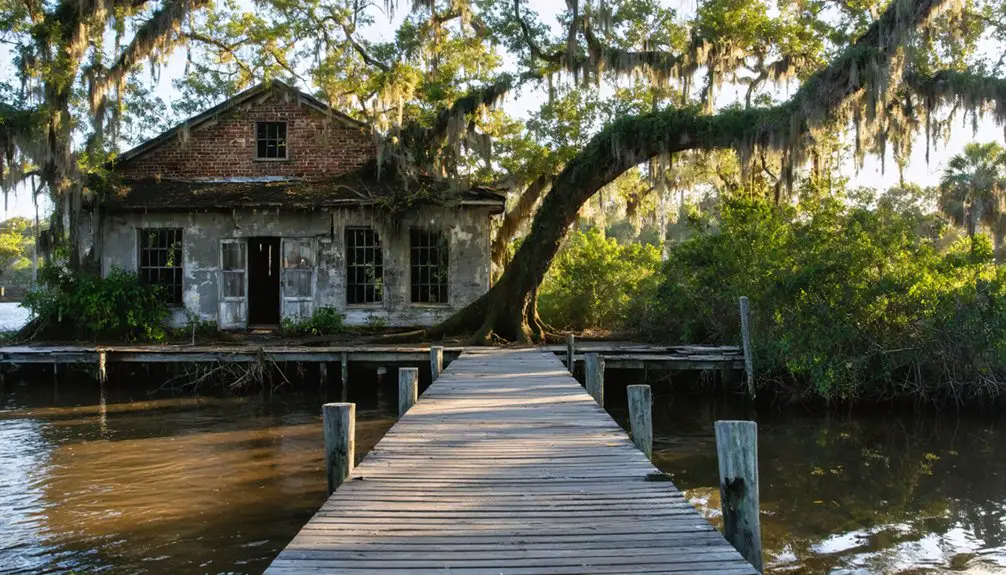
Your exploration reveals foundation outlines where Jacob Housman’s two-story store once commanded the wrecking industry, generating enough wealth to transform this coral outcrop into a customs port candidate. You’ll discover three massive wharves carved into northeastern bedrock, their grooves still visible where dock supports anchored salvage operations.
Evidence of wrecking industry prosperity surrounds you: warehouse foundations, a hotel site, even a bowling alley’s footprint. Analysis of island’s prosperity becomes tangible as you trace Charles Howe’s residence, the blacksmith forge, and storehouses that supplied vessels from Biscayne Bay to Key Vaca.
The 1840 Massacre That Ended a Thriving Community
The prosperity you’ve traced through warehouse foundations and wharves came to a violent end in the predawn hours of August 7, 1840, when between 60 and 130 Seminole warriors under Chief Chekika silently paddled approximately 130 canoes toward the island’s shores.
This devastating assault stemmed from escalating tensions over indigenous land claims and cultural persecution by settlers during the Second Seminole War‘s fifth year. The raiders—knowing military forces had departed westward—torched thirty to forty buildings and seized Jacob Housman’s well-stocked warehouses containing two hundred thousand dollars in goods.
Six to eighteen civilians perished, including Dr. Henry Perrine and the Mott family. Four enslaved people were taken captive. You’ll find no rebuilt settlement here; Indian Key never recovered its population after that violent August dawn forever extinguished its commercial ambitions.
Exploring Archaeological Sites and Historical Markers on the Island
Remnants of three distinct shell mounds rise from Indian Key‘s eleven acres, revealing layers of occupation that predate Housman’s commercial empire by centuries. You’ll traverse trails spanning the island’s width, where interpretive displays decode the shell mounds construction—accumulated seashells, fish bones, and pottery fragments compressed over two millennia.
The largest mound once supported the cacique’s residence, while others served as burial practices and sacred sites for temple ceremonies. Underground excavations expose stratified midden layers, with pottery and lightning whelk shells dating 700-1200 A.D. These thirty-foot elevations transformed a flat oyster bar into a ceremonial powerhouse.
Walking these ridges, you’re treading ground where Calusa chiefs ruled a kingdom stretching from Tampa Bay to Lake Okeechobee—untamed territory long before European contact reshaped Florida’s coastline.
Best Time to Visit and What to Bring for Your Day Trip
Timing your Indian Key expedition between November and April transforms a good adventure into an exceptional one, when the dry season blankets the Florida Keys in sunshine and temperatures hover at a perfect 75°F. Understanding local weather patterns guarantees you’ll experience minimal rainfall—just 1.83 to 3.27 inches monthly—while exploring this abandoned settlement.
Your packing considerations should emphasize freedom of movement: breathable clothing for 69-77°F days, sun protection against that relentless tropical sun, and comfortable walking shoes for traversing overgrown trails. Toss in a waterproof bag despite the dry season’s promise, because island weather shifts quickly.
As April approaches, expect warmer 84°F highs and 16 mph winds sweeping across the ruins. Pack light layers for evenings when temperatures dip to 60°F, keeping you comfortable as sunset paints the ghost town golden.
Frequently Asked Questions
Are There Any Guided Tours Available for Indian Key State Historic Site?
You’ll find ranger-led guided tours exploring the island’s history, plus private charters through KeyZ offering insights into native wildlife and ecology. Local guides like Brad Bertelli provide expert storytelling about this abandoned settlement’s shipwreck-salvaging past.
Can Visitors Camp Overnight on Indian Key or Nearby Islands?
Looking for overnight adventure? You can’t camp on Indian Key itself, but nearby state parks like Bahia Honda offer seasonal camping restrictions. Explore nearby lodging options throughout the Keys for your basecamp while discovering this historic ghost town.
Is There an Admission Fee to Visit Indian Key?
Yes, you’ll pay $2.50 per person as day trip fees at the iron ranger near the kayak launch. Remember to bring cash—there’s no digital payment on-site. Transportation costs depend on your rental choice or personal watercraft.
What Marine Life Can Be Seen While Traveling to the Island?
You’ll witness diverse coral reef ecosystems teeming with colorful fish, sea turtles gliding through crystal waters, and an abundance of sponge species. Dolphins often playfully escort boats while rays dance beneath the surface during your journey.
Are There Restroom Facilities Available on Indian Key?
No restrooms exist on Indian Key—you’ll need complete self-sufficiency. Since there’s no ferry service schedules to rely on and rental boat availability requires planning ahead, prepare thoroughly: pack water, supplies, and plan bathroom stops before launching your adventure.