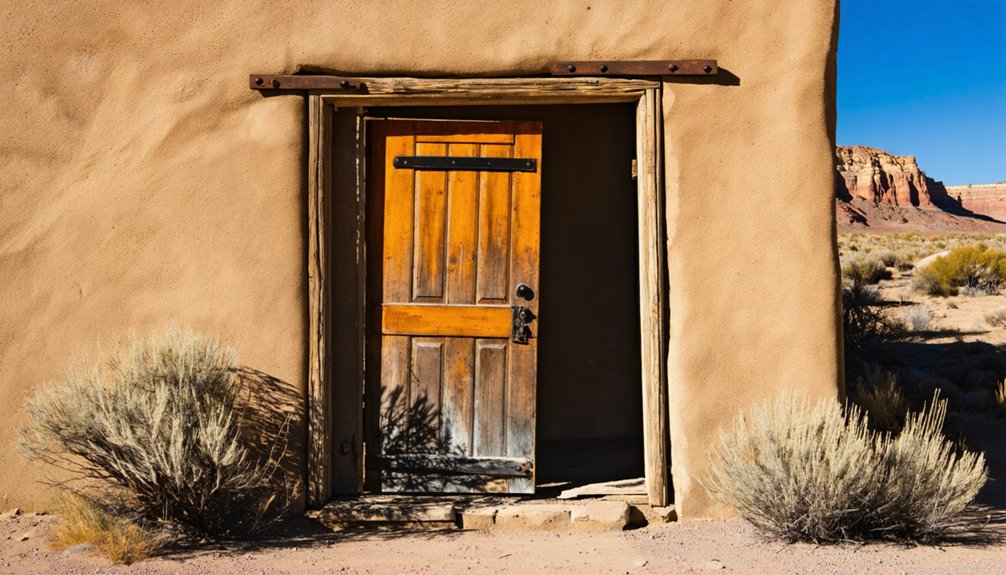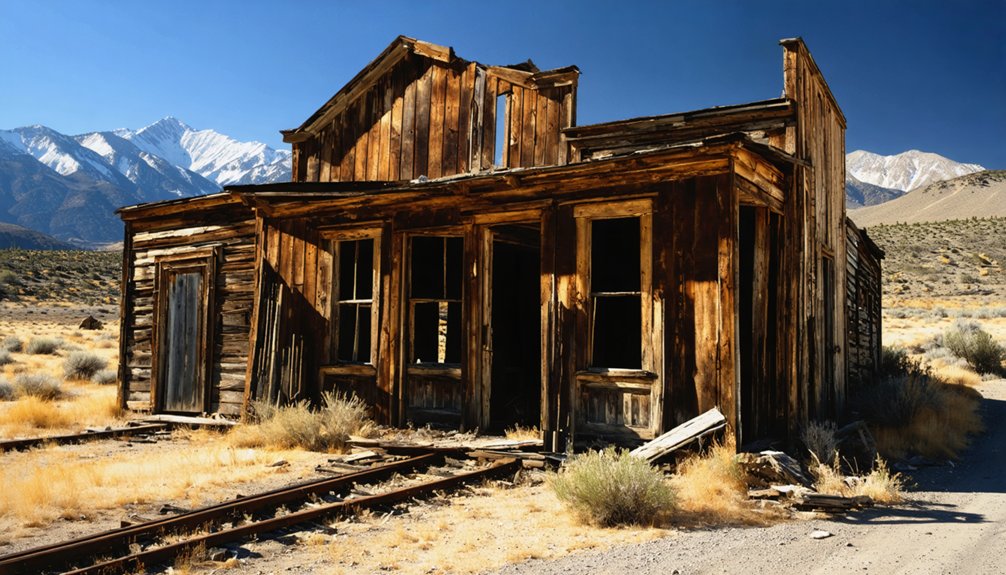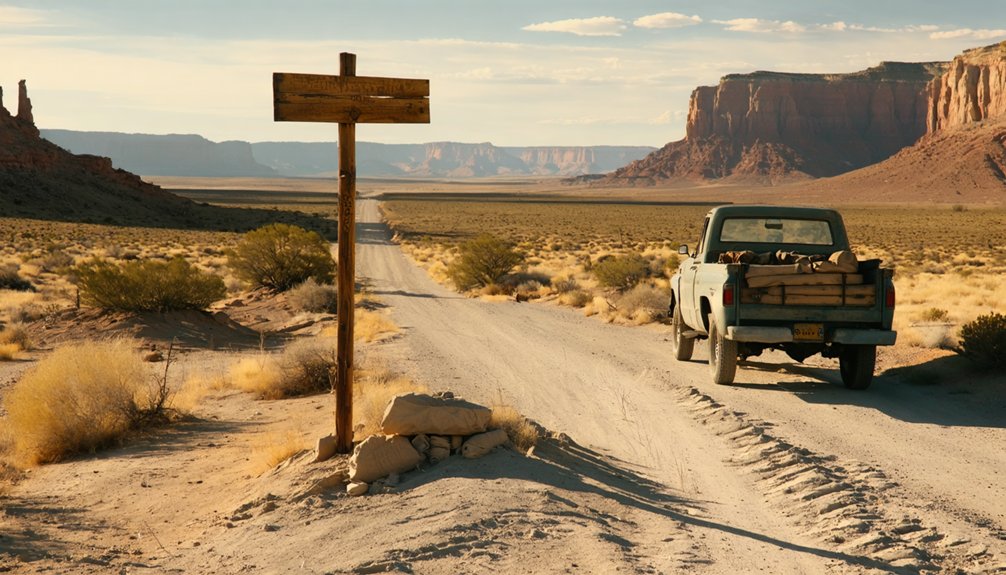
You’ll drive 20-22 miles west from Cedar City on Utah State Route 56, then navigate a well-maintained 5-mile gravel road through Dixie National Forest to reach Old Iron Town‘s haunting ruins. Pack water, sturdy boots, and layered clothing for temperature swings as you explore the standing beehive kiln, towering blast furnace chimney, and scattered foundations from this 1868 iron mining settlement. Spring through fall offers ideal conditions for this free, daylight-accessible site, where detailed insights await about the community that thrived—then vanished—in less than a decade.
Key Takeaways
- From Cedar City, take Utah State Route 56 west for 20-22 miles, then follow 5 miles of gravel Old Iron Town Road.
- Visit year-round during daylight with no entrance fees; fall offers peak conditions with comfortable temperatures and scenic beauty.
- Pack water, sturdy footwear, and layered clothing; a high-clearance vehicle is needed for rugged forest roads.
- Explore the standing beehive kiln, blast furnace chimney, house foundations, and interpretive placards throughout the fenced ruins.
- Respect preservation efforts by staying on paths and avoiding contact with fragile structures from the 1868 mining settlement.
Getting to Old Iron Town: Directions and Road Conditions
From Cedar City, the journey to Old Iron Town unfolds westward along Utah State Route 56, where 20-22 miles of paved highway cut through high desert terrain before you’ll spot the signed turnoff for Old Iron Town Road on your left.
The final five-mile stretch shifts to gravel, though recent reports confirm excellent road maintenance keeps the surface manageable for most vehicles. Trail markers guide you southward through Dixie National Forest territory, leading directly to the fenced ruins on your left-hand side—a total 25-mile adventure from civilization.
The entire route stays open year-round during daylight hours with zero entrance fees, giving you unrestricted access to explore these iron-smelting remnants. High-clearance vehicles handle the gravel confidently, though standard cars navigate successfully when conditions cooperate.
What Remains: Exploring the Historic Structures
The skeletal remains of Old Iron Town stretch across the desert landscape like monuments to industrial ambition, where weathered brick structures and crumbling foundations tell the story of Utah’s 1870s iron rush. You’ll find one beehive-shaped charcoal kiln still standing, its 150-year-old soot-blackened interior inviting you to step inside and feel history.
The blast furnace’s towering chimney dominates the site, while thick brick walls show where iron ore transformed into workable metal. Wander through scattered house foundations, a schoolhouse site, and post office remnants connected by interpretive trails. A grinding machine sits among the ruins, and informative placards guide your exploration.
Though not reconstructed buildings, ongoing historical restoration preserves these structures against weather and time, earning National Register of Historic Places recognition.
The Rise and Fall of Iron County’s Mining Settlement
Standing before the scattered ruins, you’re witnessing the remnants of Utah’s ambitious 1868 iron mining venture that once produced seven tons of pig iron daily and sustained over 100 houses along Pinto Creek.
The settlement thrived for nearly a decade, its furnaces blazing day and night to supply the expanding Utah Western Railroad. Yet by 1876, crushing shipping costs and the devastating Panic of 1873 silenced the machinery forever, leaving this mountainside community to crumble into the ghost town you’re exploring today.
Founding and Early Prosperity
Long before Iron City emerged from the desert floor, Brigham Young recognized that Utah’s isolated Mormon settlements desperately needed their own source of iron—every wagon wheel, plow blade, and dutch oven had to be hauled across hundreds of miles at crushing expense.
His 1850 Iron Mission failed miserably, producing just 400 tons over six years.
But when Peter Shirts discovered rich ore deposits near Iron Mountain in 1868, entrepreneur Ebenezer Hanks saw opportunity. He established the Great Western Iron Company and founded Iron City at the mountain’s southern base, importing skilled laborers who could actually make the operation work.
Economic Collapse and Abandonment
At its 1871 zenith, Iron City’s furnaces roared with possibility—seven tons of molten iron daily poured into molds for railroad components and construction hardware, including decorative elements for the St. George Tabernacle. Yet transportation costs strangled profits despite proximity to raw materials.
The Panic of 1873 delivered the killing blow, triggering a six-year depression that shuttered operations permanently. Labor challenges and economic instability proved insurmountable without government intervention—a resource frontier communities couldn’t count on. By decade’s end, workers abandoned the foundry, blacksmith shops, and boarding houses.
Iron City’s collapse foreshadowed Utah’s vulnerability to national economic cycles, a pattern repeated during 1893’s silver crash and the Great Depression, when federal programs finally provided the support this remote outpost never received.
Best Time to Visit and What to Bring
You’ll find Iron City accessible year-round during daylight hours, though spring through fall offer the most reliable road conditions along the gravel Iron Town Road. Pack plenty of water since no drinking sources exist at this remote Dixie National Forest site, and bring sturdy footwear for exploring the quarter-mile trails around the ruins.
Layer your clothing to handle the high-elevation temperature swings, and don’t forget your camera to capture the haunting iron kiln chimney rising against the Utah wilderness.
Ideal Seasonal Visiting Conditions
The ghost town of Iron City reveals different personalities across Utah’s dramatic seasons, each offering distinct advantages for exploration.
Winter’s off-peak months (November-February) see visitation numbers fluctuations drop to just 9-17% annually, granting you solitude among snow-dusted red rock landscapes.
Spring transforms trails with wildflower blooms and comfortable 40°F-70°F temperatures, though muddy conditions near town demand sturdy boots.
Summer’s 100°F+ heat requires early morning ventures but delivers dramatic desert vistas.
Fall presents peak conditions—September-October’s crisp air and mesmerizing colors draw crowds, necessitating advance planning.
Amenities availability variations mirror these seasonal shifts, with timed-entry requirements enforced April-October at nearby parks.
Choose winter for unrestrained wandering or shoulder seasons for balanced weather and accessibility to historic Silver Reef sites.
Essential Gear and Supplies
Traversing Iron City’s high desert terrain demands thoughtful preparation, starting with your vehicle selection. You’ll need a high-clearance vehicle to navigate the rugged dirt forest roads leading to this remote ghost town.
Once there, the rocky trails winding through pinyon pines and around beehive kilns require proper footwear—sturdy boots that’ll handle both stone-strewn paths and potential mud during wet seasons.
Pack these essentials for your adventure:
- Ample water supply (no on-site sources available; consider water purification for extended trips)
- Flashlight for exploring the atmospheric kiln interiors
- Layered clothing for high desert temperature fluctuations
Don’t forget small bills for the parking donation box. The ¾-mile loop and interpretive trails offer freedom to explore at your pace, but you’re entirely self-sufficient out here.
Photography and Weather Considerations
Timing your Iron City visit requires matching desert rhythms to your photographic ambitions. Spring and fall deliver ideal lighting conditions—mild temperatures let you explore beehive kilns and arrastra foundations during extended golden hours without summer’s brutal 90°F+ heat or winter’s muddy trails. Arrive between 6-8 AM or 5-7 PM when low-angle sun sculpts texture across curved kiln architecture and chimney remnants.
Challenging seasonal patterns demand flexibility. High desert winds peak afternoons, threatening handheld stability near exposed structures. Summer’s harsh midday light washes detail from foundry remains, while winter precipitation transforms Iron Town Road into impassable muck. Pack wide-angle lenses for contextual shots against Dixie National Forest backdrops, and check forecasts religiously—sudden weather shifts impact both access and that perfect shot of spring wildflowers framing century-old ruins.
Walking the Interpretive Trails Through History
- Ruins Trail – Circle past the kiln, furnace foundations, and forge hood while cultural interpretation signs detail Brigham Young’s ambitious ironworks vision
- Nature Trail – Wind behind the beehive oven through high desert landscape dotted with piñon trees and cactus
- Discovery Trail – Examine pioneer cabin remains and home foundations where workers lived during the town’s seven-year operation
These flat, family-friendly paths let you explore freely at your own pace.
Protecting the Site: Preservation and Responsible Tourism
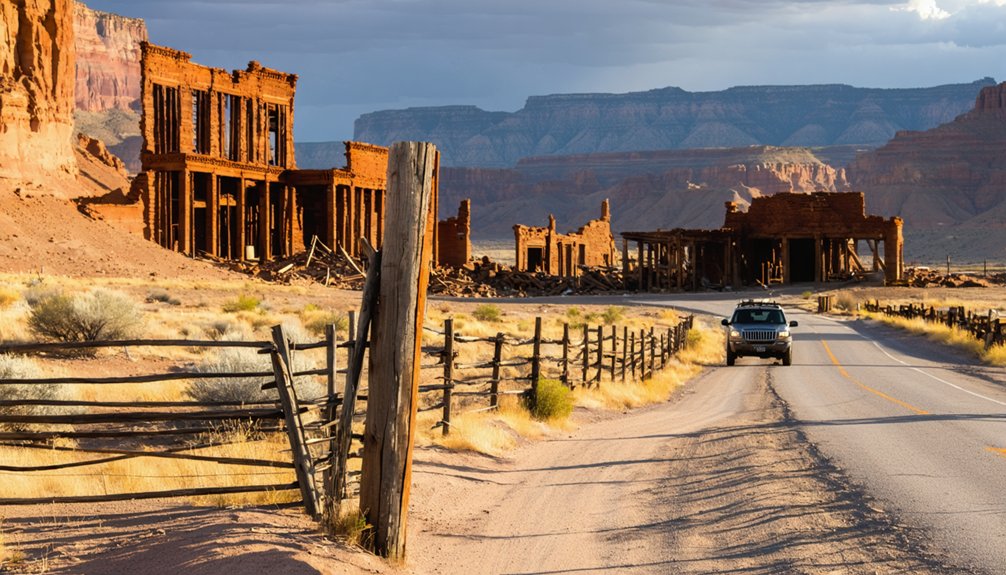
Since earning its place on the National Register of Historic Places in 1971, Old Iron Town has balanced public access with urgent preservation needs. You’ll notice fences protecting fragile structures—not to restrict your exploration, but because visitors once dismantled the furnace stone by stone for backyard fireplaces.
The beehive kiln receives mortar reinforcement every decade, while 2022 brought plaster stabilization to the pioneer cabin’s crumbling walls.
Community outreach efforts educate visitors about treading lightly through these ruins. Tourism infrastructure development remains intentionally minimal—no admission fees or staffed facilities—preserving the authentic ghost town experience.
As Cedar City’s Frontier Homestead State Park provides oversight and Dixie National Forest surrounds the boundaries, your considerate wandering guarantees future generations can walk these same weathered paths through Utah’s iron-smelting history.
Frequently Asked Questions
Are There Nearby Camping Facilities or RV Parks in the Area?
You’ll find excellent nearby accommodation options like Cedar City RV Resort and Iron Springs RV Park, both featuring full hookups and on-site amenities availability including pools, WiFi, and laundry facilities—perfect freedom-seeking basecamp for your ghost town adventures.
Can I Bring My Dog to Explore the Old Iron Town Ruins?
Yes, you can bring your dog to explore the ruins! The pet-friendly walking trails wind through crumbling structures where hidden historic artifacts peek from the earth, offering leashed companions freedom to discover Iron Town’s industrial past alongside you.
Are Restrooms or Drinking Water Available at the Site?
You’ll find decent pit toilets near the parking area—a welcome oasis in this desert ghost town. However, drinking water sources don’t exist here, so pack your own hydration before venturing into Iron City’s historic ruins.
How Much Should I Leave in the Donation Box?
Donation amounts are entirely up to you—there’s no set minimum. Following donation box etiquette, leave whatever feels right for your visit. Every contribution helps preserve this historic ghost town for fellow adventurers seeking freedom to explore.
What Other Ghost Towns Are Located Near Old Iron Town?
You’ll discover Silver Reef’s stone ruins 40 miles northeast, Frisco’s charcoal kilns 100 miles north, and Grafton’s adobe buildings 60 miles east—all historic mining sites connected by abandoned railroads and dusty trails waiting for your exploration.