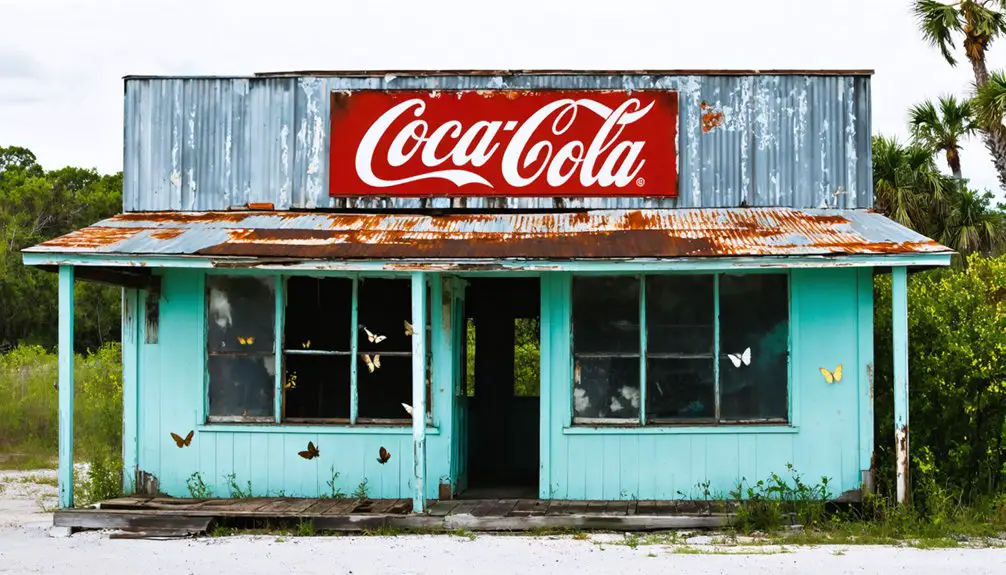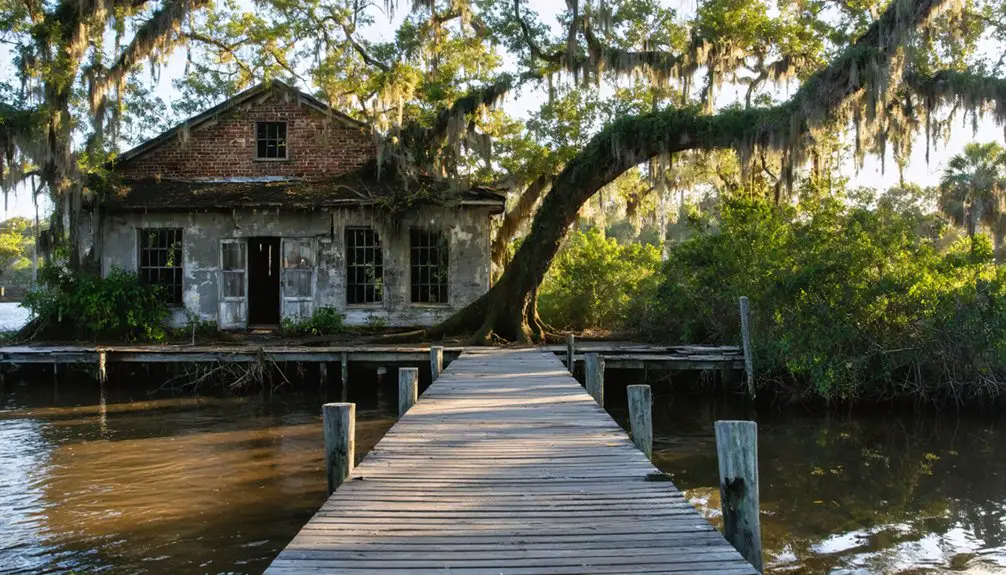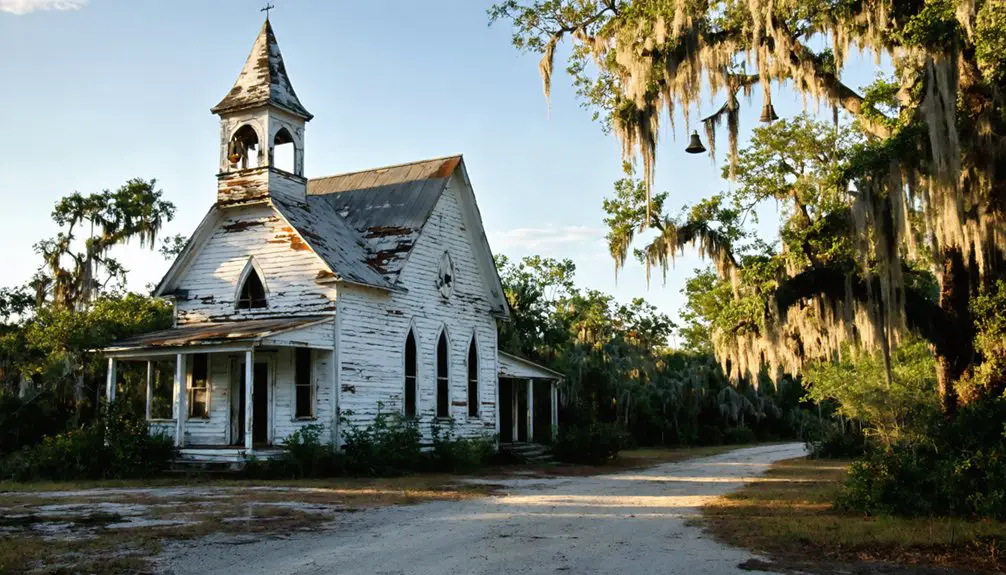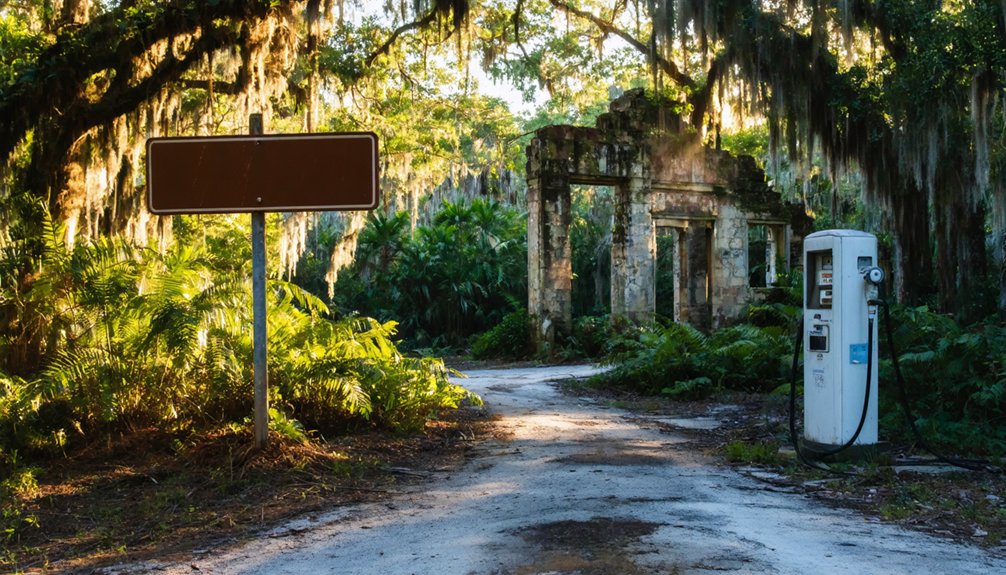
You’ll find Jessamine’s ghost town remnants at the intersection of James Road and Blanton Road in rural Pasco County, where Jessamine Lake marks the heart of what was once a thriving 1880s citrus settlement. Navigate to coordinates 28°24’49″N, 82°16’12″W, where overgrown foundations and shifted roadbeds tell stories of devastating freezes and abandoned dreams. The asphalt gives way to sandy tracks through fragrant orange groves, with no markers or facilities—just raw exploration of Florida’s forgotten botanical past that reveals deeper secrets about why entire communities vanish.
Key Takeaways
- Jessamine is located at coordinates 28°24’49″N, 82°16’12″W in rural Pasco County, accessible via James Road and Blanton Road intersection.
- The ghost town offers overgrown foundations, Jessamine Lake, and traces of the 1888-1919 settlement east of Blanton Road.
- No historical markers, visitor facilities, or cell service exist; respectful reconnaissance required due to private property boundaries.
- Original State Road 41 intersected here before route realignment between 1988 and 2012 bypassed the area entirely.
- Expect sandy two-tracks, seasonal flooding, citrus groves, and raw exploration without signage or modern amenities.
The Rise and Fall of Jessamine Gardens: A 19th Century Settlement
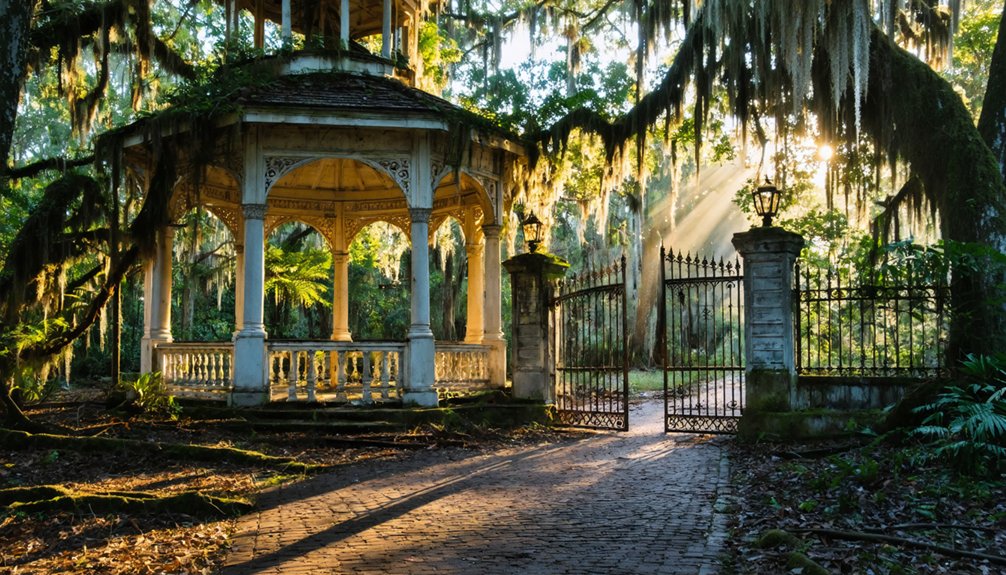
While hacking through dense Florida scrubland in 1887, Walter N. Pike and William J. Ellsworth encountered a wild flowering vine releasing a sweet fragrance that would name their enterprise. They identified it as jessamine—Gelsemium sempervirens—and established Jessamine Gardens five miles southwest of Trilby.
From an old cabin on Jessamine Lake’s edge, they built a thriving seed and plant business that evolved into citrus groves and nursery operations featuring kumquats by 1911. Their botanical garden remnants attracted attention throughout Pasco County, fueling regional agriculture revival.
A post office opened that same year, anchoring the growing community. Yet Florida’s brutal freezes and market collapses eventually strangled their dreams. The once-prosperous settlement faded into ghost town obscurity, leaving only road names echoing its fragrant past.
The original State Road 41 carved a direct line through Jessamine’s heart, intersecting at James Road and Blanton Road where the settlement once clustered along Jessamine Lake’s southern shore. You’ll find preservation efforts minimal here—nature’s reclaimed what infrastructure challenges eventually abandoned.
Between 1988 and 2012, the route shifted north onto Blanton Road, leaving its historic alignment behind. Follow Spring Valley Road eastward through Blanton to trace FL 41’s 1962 path, where topographical maps from historicaerials.com reveal the forgotten roadway’s skeleton.
Today’s Pasco County Route 41 bypasses the ghost town entirely, but you can still navigate James Road to stand where Jessamine Gardens thrived from 1888 until its final newspaper mention in 1919. The old asphalt whispers stories modern highways never could.
What Remains Today: Landmarks and Points of Interest
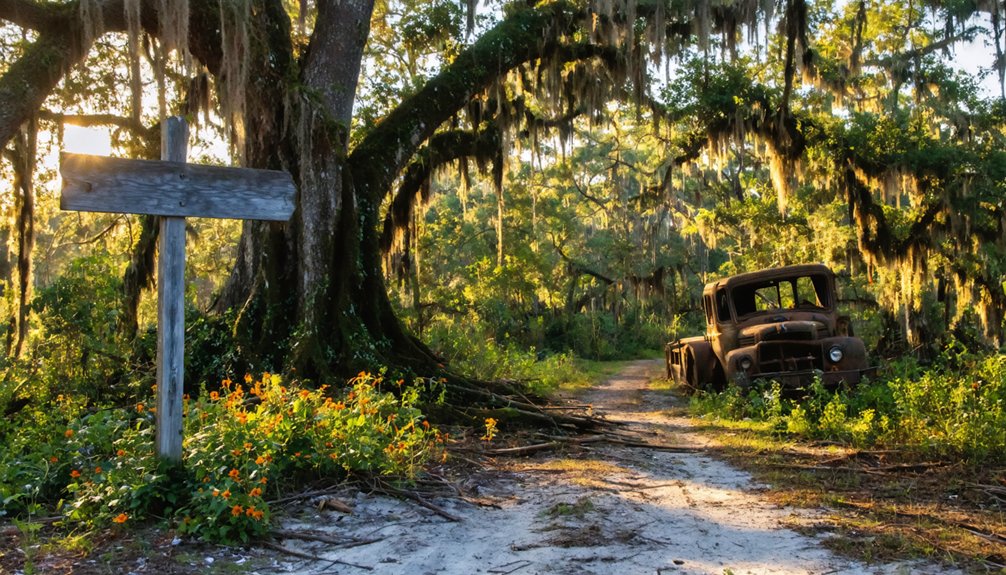
Few traces survive of Jessamine’s brief existence, but what remains tells a poignant story of Florida’s forgotten frontier. You’ll find Jessamine Lake at the intersection of James Road and Blanton Road, where the picturesque lakefront still anchors this vanished community. The atmospheric aesthetics of overgrown foundations and shifted roadbeds reward explorers willing to venture off modern CR 41.
Key landmarks to discover:
- Jessamine Lake’s south shore – original 1888 settlement core near Jessamine Gardens site
- James Road/Blanton Road intersection – marks old FL 41 alignment through town center
- Overgrown settlement traces – visible east of Blanton Road along historic routes
- Shifted highway corridor – demonstrates 1988-2012 route changes that bypassed the area
- Spring Valley Road junction – connects to last documented 1962 alignments through Blanton
These waypoints create your self-guided exploration route.
Understanding the Forces Behind Jessamine’s Abandonment
Like countless agricultural settlements across Florida’s interior, Jessamine succumbed to forces both local and regional that starved it of economic importance. You’ll find the settlement’s fate tied directly to agricultural adaptability—or rather, its absence. When devastating freezes struck Florida in the 1890s, communities dependent on single-crop nurseries couldn’t pivot fast enough. Jessamine Gardens’ specialized seed business offered no flexibility when markets shifted.
The route realignment between 1988 and 2012 merely formalized what’d happened decades earlier: isolation breeds abandonment. You’re witnessing resource overexploitation’s legacy too—timber operations and turpentine camps exhausted surrounding lands, leaving nothing to sustain even modest populations. Without railroad access or diversified industry, Jessamine’s residents drifted toward opportunities elsewhere, transforming this lakeside community into whispers on forgotten maps.
Mapping Your Visit: How to Reach the Jessamine Site
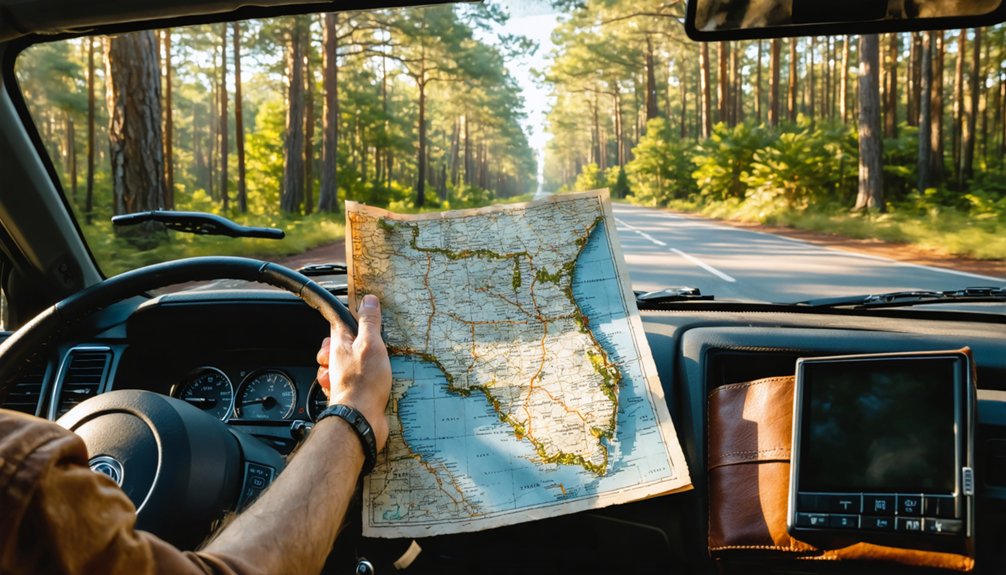
When you punch coordinates 28°24’49″N, 82°16’12″W into your GPS, you’re aiming for a pinpoint in rural Pasco County where asphalt yields to sandy two-tracks and citrus groves frame the horizon. On site visitation logistics demand flexibility—no historical markers guide you here.
From Tampa, barrel north on I-75 toward Dade City exits, then navigate county roads into ZIP 33523’s backcountry near Jessamine Lake.
Accessibility challenges you’ll encounter:
- Unmarked dirt paths replacing formal roadways
- Private property boundaries requiring respectful reconnaissance
- No cell service in deep Pasco wilderness pockets
- Seasonal flooding obscuring vehicle routes
- Absence of visitor facilities or signage
Pack water, download offline maps, and expect to hike final stretches. This isn’t packaged tourism—it’s raw exploration where ghost town remnants hide beneath palmetto thickets.
Frequently Asked Questions
Are There Any Guided Tours Available for Jessamine Ghost Town?
No guided tours are offered for Jessamine ghost town—you’ll explore independently. Nearby St. Augustine features tour company contacts like Ghost Town Trolley if you’re craving narrated experiences, but Jessamine awaits your self-directed adventure through forgotten ruins.
If you’re interested in discovering more hidden gems, there are several other ghost towns to visit in Florida that showcase the state’s intriguing history. From the remnants of once-thriving mining communities to abandoned settlements along the coast, each site tells a unique story. As you traverse these eerie landscapes, you’ll gain insight into Florida’s past and the lives of those who once called these places home.
What Is the Best Time of Year to Visit Jessamine?
You’ll find ideal weather conditions during shoulder season visitation in March or late fall. Escape summer’s oppressive heat and experience comfortable temperatures, fewer crowds, and perfect exploration conditions while you’re wandering through Jessamine’s abandoned streets freely.
Are There Camping Facilities Near the Jessamine Site?
You’ll find excellent overnight accommodations at Jasmine Breeze RV Park, just minutes away. Their campground amenities include full hookups, Wi-Fi, and pet-friendly sites where you can unwind under starlit skies after exploring Jessamine’s abandoned streets.
Is It Legal to Explore the Jessamine Area?
Want to chase Jessamine’s ghostly whispers? You’ll face trespassing concerns since private land ownership controls these forgotten lots. Without permission, exploring risks legal trouble. The platted subdivision’s worthless parcels remain privately held, blocking your freedom to roam.
What Other Ghost Towns Are Nearby Worth Visiting?
You’ll find Centralia’s concrete sawmill ruins in protected wilderness, Freeman near the county line, and Blanton along old FL 41. Remote location access varies, though local preservation efforts protect Centralia’s artifacts from collectors seeking authentic experiences.