To plan your ghost town road trip to Jireh, Wyoming, head to Niobrara County along Highway 20 between Manville and Keeline. Founded in 1908 as a Christian college town, Jireh collapsed by 1920 when dry farming failures drained its economic foundation. You’ll find a cornerstone monument and a five-acre pioneer cemetery at coordinates 42° 45.942′ N, 104° 43.026′ W. Bring water, sturdy shoes, and offline maps — and there’s far more to this forgotten town’s story than the quiet prairie lets on.
Key Takeaways
- Jireh, Wyoming, is a ghost town founded in 1908 along Highway 20 between Manville and Keeline in Niobrara County.
- Key sites include a cornerstone monument marking Wilkinson Hall and a five-acre cemetery donated by Reverend George Dalzell.
- Use coordinates 42° 45.942′ N, 104° 43.026′ W for parking and visit between late spring and early fall.
- No services exist between Manville and Keeline, so bring water, sturdy shoes, sunscreen, and download offline maps.
- The town collapsed by 1920 due to economic hardships from dry farming failures and the resulting closure of its college.
What Made Jireh, Wyoming a Ghost Town?
Once a thriving Christian college town, Jireh, Wyoming, collapsed as quickly as it rose. Reverend George Dalzell founded it in 1908, building a community centered on education and Christian values.
The college’s significance stretched far — it operated as Wyoming’s only college besides the state university, offering high school and two years of higher education.
Yet by 1920, it was gone. The harsh prairie environment, limited resources, and economic pressures proved too much for settlers to overcome.
When the college closed, the town’s entire purpose vanished with it. Residents scattered, buildings deteriorated, and the land returned to open prairie.
Today, Jireh history survives through a single cornerstone monument along Highway 20 — a quiet reminder that even the boldest visions sometimes surrender to unforgiving land.
How the Dry-Farming Community Around Jireh Led to Its Collapse
The college’s collapse didn’t happen in isolation — the struggling dry-farming community surrounding Jireh played a direct role in pulling the town under. The nearby Dieleman Neighborhood relied on dry farming techniques to survive Wyoming’s harsh, rain-scarce landscape.
When those methods couldn’t sustain consistent yields, families faced impossible choices. Without reliable harvests, settlers couldn’t support local businesses, the college, or community sustainability long-term.
You can still feel that tension when you stand at the Highway 20 cornerstone today. The land demanded everything from these people, and eventually, it won.
Farmers who’d sacrificed to build something meaningful simply couldn’t hold on. As families left, Jireh lost its economic foundation entirely. The college followed, the town emptied, and the prairie quietly reclaimed what remained.
How To Get To the Jireh Ghost Town on Highway 20
Finding Jireh takes you straight into Wyoming’s wide-open Niobrara County, where Highway 20 cuts through the prairie between Manville and Keeline.
You’ll spot the cornerstone monument standing along the highway, marking where Wilkinson Hall once anchored this Christian college town built on faith and ambition.
Park near the coordinates 42° 45.942′ N, 104° 43.026′ W to get your bearings.
Drop a pin at 42° 45.942′ N, 104° 43.026′ W and let the coordinates ground you in Jireh’s forgotten landscape.
From there, you can explore ghost town legends tied to the Jireh history that unfolded between 1908 and 1920.
The five-acre cemetery, donated by Reverend Dalzell, sits nearby and holds the stories of early settlers who risked everything on this land.
South of Lost Springs, the surrounding prairie gives you room to breathe, wander, and connect with a community that once dared to build something extraordinary here.
What the Cornerstone Monument Along Highway 20 Actually Tells You
Standing along Highway 20, the cornerstone monument does more than mark a spot on the map — it carries the actual proclamation of Wilkinson Hall, the three-story building that once housed classrooms, a library, a chapel, and the daily lives of students who came here chasing an education rooted in Christian values.
When the college building came down after 1920, locals made sure the cornerstone history survived. They salvaged that stone and positioned it roadside, transforming physical rubble into monument significance.
It tells you exactly what stood here — a 60×40-foot structure with a basement kitchen, dormitory floors, and a community auditorium.
You’re reading the original declaration of a college town that refused complete erasure. Pull over, read the inscription, and let that stone speak for itself.
What’s Left To See at the Jireh Ghost Town Site?
When you pull off Highway 20, the most immediate landmark you’ll spot is the saved cornerstone monument, a quiet survivor of the college building that was otherwise torn down and forgotten.
You can also seek out the five-acre cemetery that Reverend Dalzell donated, where headstones mark the settlers who built their hopes on this Christian community.
Beyond that, the site offers little more than open prairie stretching between Manville and Keeline, letting the landscape itself tell the story of what dry-farming ambition and time can erase.
Cornerstone Monument Along Highway
A cornerstone is all that remains of Jireh’s once-thriving college campus, but it tells the story well. Saved when workers demolished Wilkinson Hall, this modest monument now stands along Highway 20, marking the exact spot where Wyoming’s first private college once shaped lives and futures.
You’ll spot it as you drive between Manville and Keeline, a quiet but powerful reminder of the community legacy these Christian settlers built from scratch. The stone carries real historical significance, representing not just a building, but a bold experiment in faith-driven education that operated a full decade before closing in 1920.
Pull over, step out, and read it. Standing there on open prairie, you’ll feel the weight of what once stood here and what these determined settlers dared to build.
Five-Acre Pioneer Cemetery
Beyond the cornerstone, a five-acre cemetery quietly holds what’s left of Jireh’s human story. Reverend Dalzell himself donated this land, ensuring the settlers who built something remarkable from nothing wouldn’t be forgotten.
Walking through these grounds connects you directly to pioneer stories that textbooks rarely capture — families who traded comfort for conviction, farming dry Wyoming soil and building a college town through sheer determination.
The cemetery significance runs deeper than simple burial records; it’s a tangible record of courage, sacrifice, and community.
You’ll find early settlers resting here, their lives representing the full arc of Jireh’s brief but ambitious existence.
Bring respectful curiosity, read the markers carefully, and let this quiet prairie cemetery remind you what genuine freedom actually cost real people.
Prairie Remnants And Landscape
After leaving the cemetery, you’ll step back into the wide Wyoming prairie that has quietly reclaimed everything Jireh once built. Grasses stretch uninterrupted where classrooms, dormitories, and a Christian community once stood. The land doesn’t announce its history — you have to know where to look.
The cornerstone monument along Highway 20 remains your clearest anchor point, marking where Wilkinson Hall once rose three stories above the plains. Beyond that, prairie ecosystems have erased nearly every structural trace. What you’re witnessing is accidental landscape preservation — nature absorbing a forgotten town without ceremony.
Standing here between Manville and Keeline, you’ll feel the scale of open space that both drew settlers and ultimately defeated them. The prairie offers no apology. It simply continues, indifferent and beautiful.
Who Is Buried in the Jireh Wyoming Cemetery?
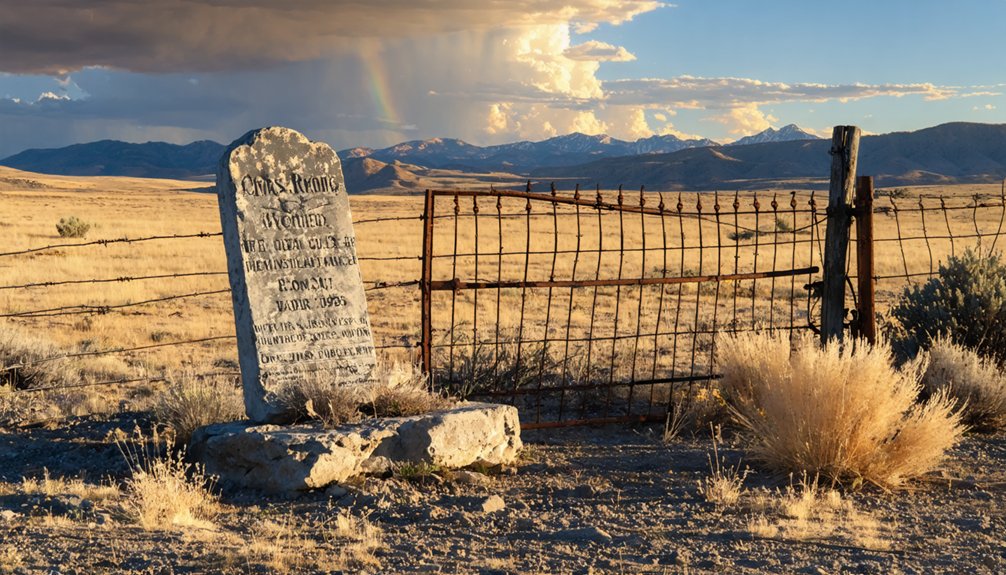
When you visit the Jireh ghost town site, you’ll find a five-acre cemetery that Reverend George Dalzell donated to the community.
Many of the early settlers who built their lives around the college and Christian community are buried there.
It’s a quiet, sobering reminder that real families once staked everything on this now-empty stretch of Wyoming prairie.
Early Settlers Buried There
The five-acre Jireh cemetery, donated by Reverend Dalzell himself, holds the remains of the early settlers who once built their lives around this ambitious Christian college town.
These weren’t nameless pioneers — they were farmers, teachers, and believers who shaped a unique community on Wyoming’s open prairie. Their burial practices reflect the era’s simplicity and deep faith, with modest markers telling settler stories of hardship, hope, and perseverance.
When you visit, you’ll walk among headstones that connect you directly to the people who carved meaning from this rugged landscape.
The cemetery stands as one of the last tangible remnants of Jireh’s brief but remarkable existence, offering you a quiet, powerful window into lives that dared to build something extraordinary from nothing.
Dalzell’s Cemetery Donation
Reverend George Dalzell donated five acres of land to establish the Jireh cemetery, ensuring that the settlers who built their lives around this Christian college town would have a permanent resting place on the very prairie they cultivated.
Dalzell’s vision extended beyond education — he wanted to honor those who sacrificed comfort and security to build something meaningful in Wyoming’s remote Niobrara County.
When you visit today, you’ll walk among headstones marking the lives of early pioneers who farmed dry land, raised families, and shaped this forgotten community.
That cemetery stands as the most tangible community legacy remaining from Jireh’s brief but significant existence. The college is gone, the town is silent, but those buried here remind you that real people once called this windswept prairie home.
When To Visit Jireh and What To Bring for the Drive Out
Late spring through early fall offers the best window for exploring Jireh’s windswept prairie remnants along Highway 20 in Niobrara County.
Summer days stretch long, giving you ample daylight to locate the cornerstone monument, wander the cemetery Reverend Dalzell donated, and absorb the quiet history surrounding this forgotten Christian colony.
Long summer days give you the light you need to find the monument, explore the cemetery, and feel the history.
Avoid winter months when harsh Wyoming weather makes rural roads unpredictable and dangerous.
Among your packing essentials, bring plenty of water since no services exist between Manville and Keeline.
Pack sturdy walking shoes, sunscreen, and a hat for exposed prairie terrain.
Download offline maps before leaving, as cell coverage remains unreliable here.
A camera helps you document the monument’s inscription and the five-acre cemetery.
This remote stretch rewards prepared travelers who embrace Wyoming’s wide-open solitude on their own terms.
Frequently Asked Questions
Was Jireh College Accredited by Any Regional or National Educational Body?
The available records don’t confirm Jireh College’s accreditation history, but you’ll find its educational impact remarkable — it boldly served Wyoming as the state’s first private college, offering four years of high school plus two college years.
Did Any Notable Alumni or Faculty Go on to Achieve Wider Recognition?
The records don’t highlight specific alumni achievements or faculty contributions that gained wider recognition. You’re exploring a pioneering institution that shaped early Wyoming education, but its notable figures remain as quietly forgotten as the ghost town itself.
How Many Residents Lived in Jireh at Its Peak Population?
Unfortunately, Jireh history doesn’t log an exact peak population figure you can Google today. This thriving Christian colony’s peak population remains unrecorded, though its 320 acres, college, and tight-knit community suggest hundreds once called it home.
Are Any Original Buildings or Structures Still Standing Near the Site?
You won’t find standing buildings at Jireh, but you’ll discover the cornerstone monument along Highway 20, a symbol of historic preservation that honors the site’s architectural significance, plus a five-acre cemetery holding early settlers.
Can Visitors Legally Access the Jireh Cemetery and Ghost Town Grounds?
Like pilgrims seeking hallowed ground, you can access Jireh’s cemetery and explore the ghost town history along Highway 20. Respect cemetery regulations, stay mindful of private property boundaries, and you’ll freely uncover Wyoming’s forgotten frontier past.
References
- http://www.wyomingtalesandtrails.com/jireh.html
- https://www.lostcolleges.com/jireh-college
- https://www.hmdb.org/m.asp?m=98302
- https://www.wyomingpublicmedia.org/2024-10-30/around-wyoming-wednesday-october-30
- https://www.youtube.com/watch?v=85n7a7qCQ44
- https://wyomingdigitalcollections.ptfs.com/aw-server/rest/product/purl/WSL/i/174ff535-26e7-40b4-9120-9aa1ec521135
- http://genealogytrails.com/wyo/niobrara/history_jireh.html