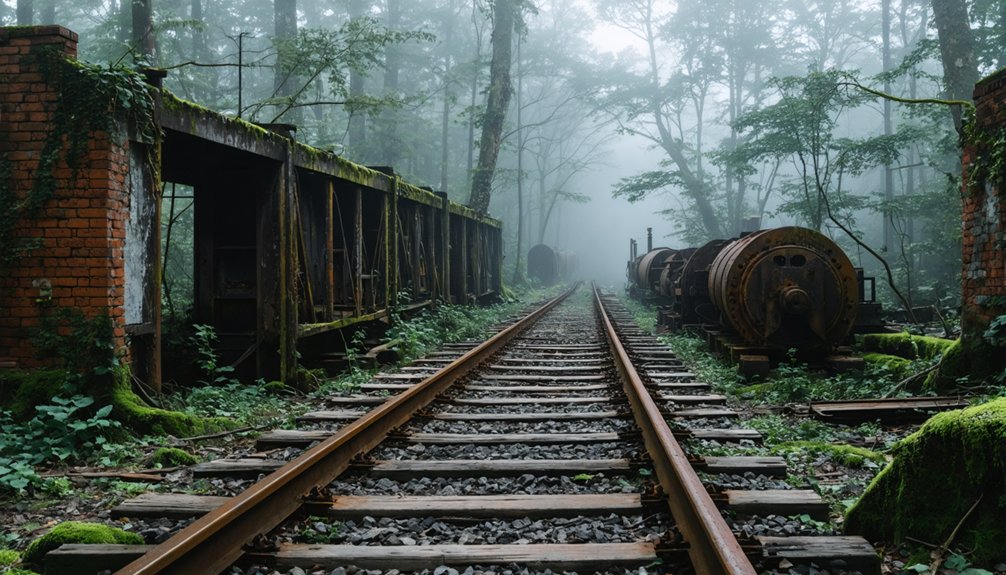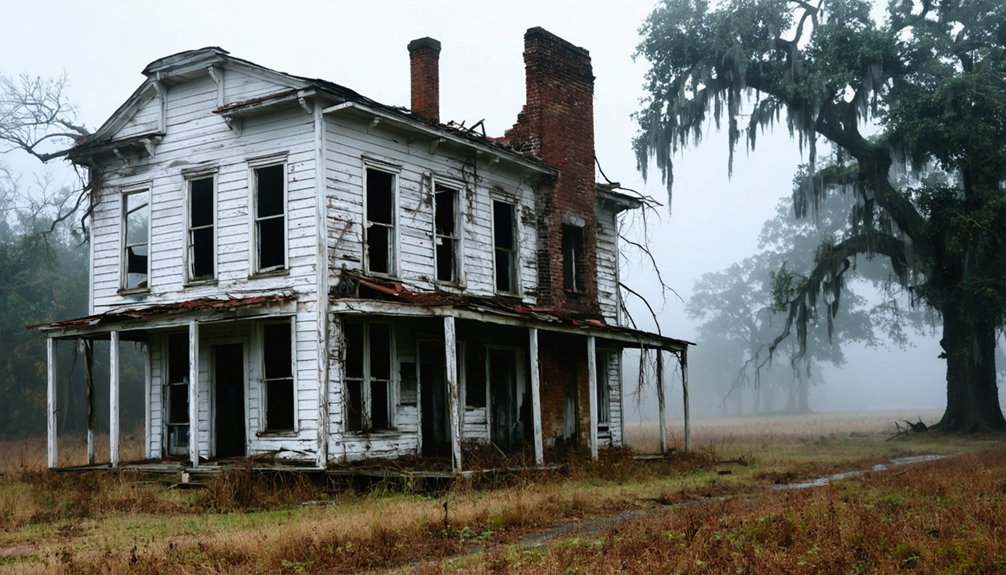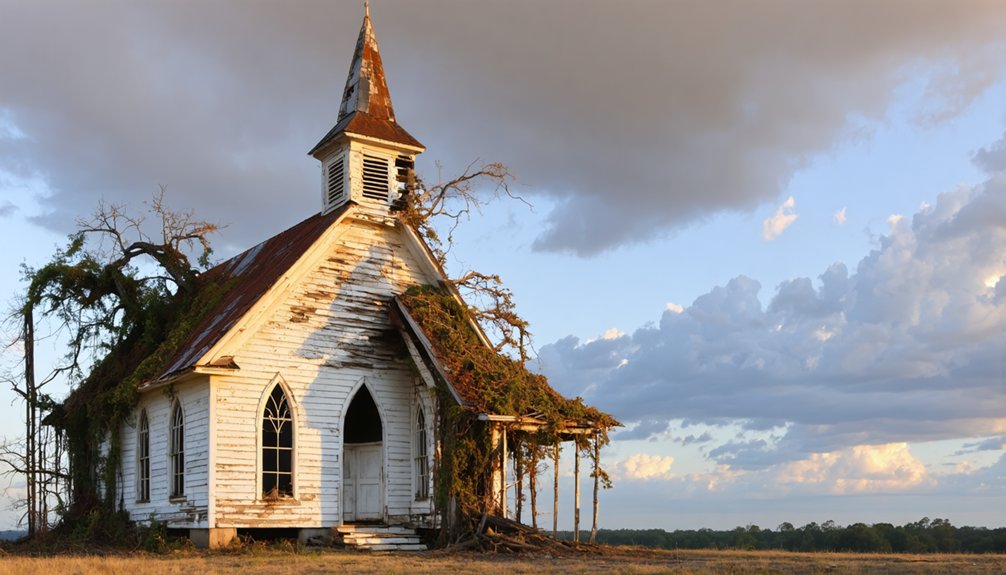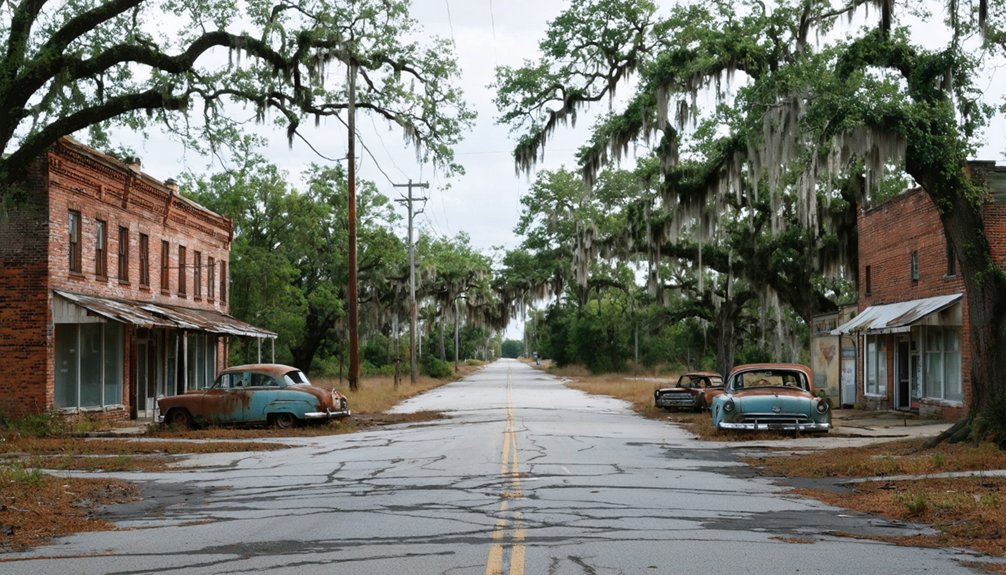
Plan your Juliette ghost town adventure by driving 20 minutes north of Macon or an hour south of Atlanta via U.S. Route 23. You’ll discover the famous Whistle Stop Café serving signature fried green tomatoes Thursday through Monday, 11am-4pm. Arrive before 11:30am to beat the crowds and explore the towering 1927 gristmill, relocated train depot, and artisan markets along McCracken Street. The riverside trail winds past crumbling mill ruins where Hollywood’s magic transformed this abandoned settlement into a living film set that continues attracting visitors worldwide.
Key Takeaways
- Juliette sits 20 minutes north of Macon or one hour south of Atlanta via U.S. Route 23.
- Visit the Whistle Stop Café Thursday through Monday, 11am to 4pm, to experience the famous Fried Green Tomatoes filming location.
- Arrive before 11:30 AM to explore artisan markets at Moonpie’s Collectibles and Honeycomb ahead of peak crowds.
- Tour the towering 1927 Juliette Milling Company gristmill, relocated Train Depot, and other preserved movie set buildings.
- Park near the Whistle Stop Café or use the dirt path off Old River Road near the boat ramp.
From Cotton Mill Boomtown to Abandoned Settlement
Before Juliette became a ghost town frozen in time, it thrived as a bustling industrial hub split between two counties by the Ocmulgee River. You’ll discover how Dr. Glover’s cotton mill sparked the town’s prosperity, later consolidating with Joe Smith’s gristmill into the Juliette Milling Company.
By the 1930s, the four-story concrete mill processed over a million bushels of corn annually, making it the world’s largest stone-ground meal facility. Historic community landmarks like the school and Methodist Church served the booming population.
Post war economic decline hit hard in the 1950s, forcing the mill to cease operations by 1957. The depot was relocated, merchants closed their doors, and the once-thriving settlement emptied—leaving you a perfectly preserved snapshot of industrial Americana.
Hollywood Discovers a Forgotten Georgia Town
You’ll find Juliette’s rebirth began in 1991 when producer Jon Avnet spotted its decaying railroad structures—the perfect match for Fannie Flagg’s fictional Whistle Stop. The production team rebuilt the abandoned storefronts, repositioned the old train depot back onto the tracks, and transformed a former grocery store into the now-famous Whistle Stop Café with its distinctive horseshoe counter.
Those movie sets weren’t dismantled after filming wrapped—they stayed put, turning this ghost town into a living film set that still draws visitors from around the world.
Fried Green Tomatoes Filming
Hollywood’s arrival in 1991 transformed Juliette from a sleepy mill town of 200 residents into the fictional Whistle Stop, Alabama. You’ll discover on location landmarks where cameras captured Idgie and Ruth’s story—the cafe at 443 McCrackin Street, the dam where characters walked above the Ocmulgee River, and the cemetery at 232 J H Aldridge Drive.
Production crews reconstructed existing buildings, leaving behind props relics like the brick bank facade and Buddy’s arm grave marker that you can still photograph today. The crew also filmed at Banning Mills in Whitesburg for poker scenes and Snake Creek for intimate moments. Even Zebulon’s courthouse doubled as Valasta’s judicial chambers. Every corner reveals authentic Depression-era atmosphere that made this adaptation resonate with audiences seeking genuine American storytelling.
Juliette’s Cinematic Transformation
Juliette’s story mirrors countless American mill towns left behind when progress moved elsewhere. After the mill shuttered in 1957 and the train depot fell into decay, merchants abandoned their storefronts one by one. By the 1980s, weathered buildings stood as monuments to forgotten prosperity.
Then Hollywood arrived. Director Jon Avnet’s scout discovered what big-budget set designers couldn’t replicate—authentic Southern decay. The production crew transformed worn structures into a bustling 1920s hamlet, repositioning the depot and adding false-front buildings. Though most changes were temporary, the town’s cinematic resurgence sparked permanent revival.
*Fried Green Tomatoes*’ $120 million box office success brought international visitors streaming into this once-abandoned corner of Georgia. The fake facades remain, the Whistle Stop Café thrives, and Juliette’s continued relevance proves one film can rewrite a town’s destiny.
Must-See Landmarks and Historic Buildings
You’ll find Juliette’s most iconic structures clustered within walking distance of each other, anchored by the famous Whistle Stop Café where movie magic became a thriving business serving those signature fried green tomatoes.
The towering Juliette Milling Company grist mill dominates the riverbank—though it’s now private property, you can’t miss its 1927 water-powered grandeur and faded painted advertisements visible from the road.
Between these landmarks sit weathered movie set facades including the relocated Train Depot, which has moved twice since filming and now rests behind the café alongside the still-active railroad tracks.
The Whistle Stop Café
Standing at 443 McCracken Street since 1927, this modest building served as Edward L. Williams Sr.’s general merchandise store for 45 years before closing in 1972. You’ll find original preservation efforts evident throughout—the antique cash register, butcher block table, wooden heater, and yellow ticket filing system remain exactly where they stood decades ago.
The 1991 film “Fried Green Tomatoes” transformed this space into the iconic Whistle Stop Café, prompting Robert Williams to establish an actual restaurant here. Today’s movie memorabilia collection and horseshoe-shaped counter transport you directly onto the film set. Visit Thursday through Monday, 11 a.m.–4 p.m. (closed Tuesdays and Wednesdays) to taste authentic southern cooking, including their famous fried green tomatoes. No reservations needed—just show up.
Juliette Milling Company Structure
Towering above the west bank of the Ocmulgee River, this four-story concrete fortress has anchored Juliette’s skyline since 1927. You’ll spot the massive concrete mill structure immediately—it replaced earlier wooden mills that succumbed to fire in 1926.
Steel reinforcements bind nearly 20,000 square feet of industrial architecture, designed to harness the powerful Ocmulgee River through an elaborate 1921 concrete dam complex.
During the 1930s, this facility processed over 1 million bushels of corn annually as the world’s largest water-powered gristmill. Though operations ceased in 1957, the building remains standing on private property between the river and old Southern Railway line.
You can’t explore inside, but the exterior tells the story of America’s vanishing mill-town era—raw, authentic, and completely unpretentious.
Historic Train Depot Remnants
- An unusually large freight area reflecting cotton mill commerce that once thrived here
- Weathered wooden planks and vintage signage frozen in early 1900s Southern Railway style
- Views across open fields where trains still whistle through without stopping
- Photographic evidence preserved in Georgia Archives’ Vanishing Georgia collection
You’re witnessing authentic Georgia history without velvet ropes or admission fees.
The Famous Whistle Stop Café Experience
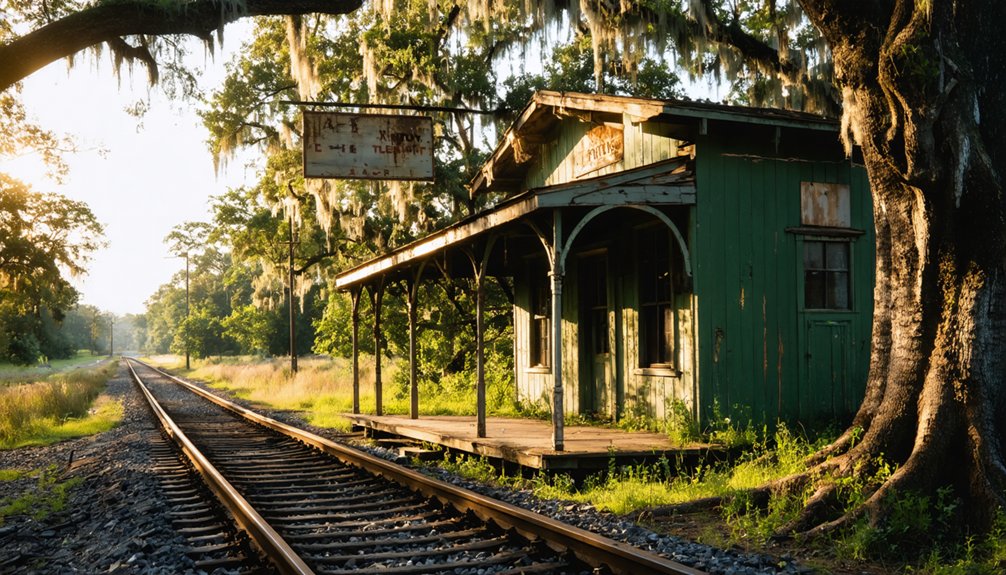
When you step through the doors of the Whistle Stop Café, you’re entering a building that’s lived multiple lives since Edward Williams constructed it in 1927. Originally a general store selling everything from gasoline to cattle feed, it transformed into the iconic filming location for 1991’s *Fried Green Tomatoes*.
Director Jon Avnet’s production team redesigned the interior with that horseshoe-shaped counter you’ll recognize from the film.
Today, the cafe’s nostalgic charm draws visitors to experience the same atmosphere Idgie and Ruth created on screen. You’ll find their seasonally inspired menu features the signature fried green tomatoes—elevated to national delicacy status by the movie—alongside classic Southern staples like fried chicken and barbecue.
Plan your visit Thursday through Monday, 11am to 4pm. No reservations needed.
Annual Green Tomato Festival Celebrations
Each October, Juliette’s population swells from fewer than 100 residents to over 3,000 visitors as the Annual Green Tomato Festival transforms this once-declining mill town into a bustling celebration of Southern culture and cinema history.
A tiny Georgia mill town of fewer than 100 explodes to over 3,000 each October for its beloved film-inspired festival.
You’ll discover authentic experiences across this two-day event:
- Foodie focused activities featuring fried green tomatoes from local vendors alongside Southern delicacies and artisan treats
- Live music performances echoing from the Opry House porch with acts like Calabash and Trey Ombres
- Traditional craft demonstrations including blacksmithing and spinning wheels showcasing old-world techniques
- Family friendly entertainment with children’s rides and over 60 vendor booths offering handcrafted goods
Mark your calendar for October 25-26, 2025. Contact Tommy Moon at 478-992-9996 for details about this celebration honoring the 1991 film that rescued Juliette from ghost town obscurity.
Getting There and When to Visit
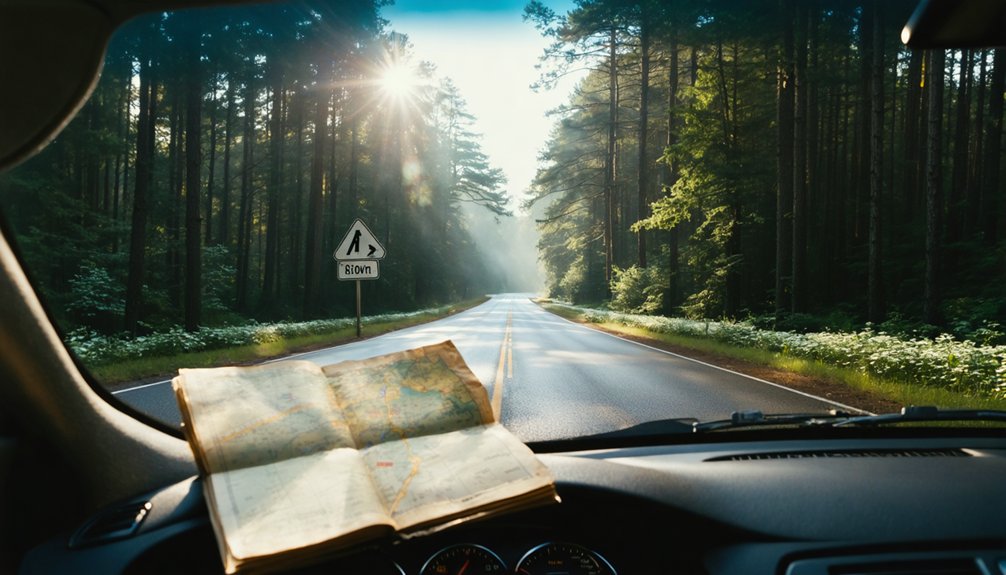
Finding Juliette is easier than you’d expect for a town that nearly vanished into history. U.S. Route 23 cuts through the west side, placing you just 20 minutes north of Macon or an hour south of Atlanta. From Forsyth, Juliette Road winds directly into town, crossing the Ocmulgee River bridge into East Juliette.
Visitor parking options cluster near the Whistle Stop Cafe—arrive outside peak lunch hours to snag spots easily. A dirt path off Old River Road leads to additional parking near the boat ramp, where you’ll access river views and the historic John Birch Dam.
Local transportation connections remain minimal; railroad tracks parallel the main street, with trains rumbling through constantly. Tourism sustains this place year-round, though fresh-air seasons showcase nearby parks best.
Making the Most of Your Day Trip
Once you’ve parked near the Whistle Stop Cafe, you’ll want to tackle the restaurant first—those lunch lines snake around the building by 11:30 AM.
After savoring those famous fried green tomatoes, you’ll have earned a leisurely exploration of the filming locations and quaint downtown shops along McCrackin Street.
Your Essential Juliette Itinerary:
- Morning (9-11 AM): Browse local artisan markets at Moonpie’s Collectibles and Honeycomb before crowds arrive
- Lunch (11 AM): Beat the rush at Whistle Stop Cafe’s horseshoe counter
- Afternoon (1-3 PM): Walk to Idgie & Ruth’s house, Threadgoode house, and hunt for movie easter eggs
- Late Afternoon (3-5 PM): Hike the riverside trail past mill ruins or visit Jarrell Plantation’s 1847 homestead
You’ll cover everything comfortably in five hours.
Frequently Asked Questions
Are There Any Overnight Accommodations Available in Juliette Itself?
You’ll find limited overnight options directly in Juliette, with Millhouse Cottages being your primary choice. For bed and breakfast options and local inn recommendations, you’ll need to explore nearby Forsyth or Macon communities instead.
Is the Old Cotton Mill Open for Public Tours?
You’ll step back in time exploring the 1895 cotton gin during mill operating hours, Thursday through Sunday, 9am-5pm. The historical significance of mill operations comes alive through preserved steam engines, original tools, and ranger-led demonstrations of cotton processing.
Can You Still See Filming Locations From Fried Green Tomatoes?
You’ll discover multiple filming locations throughout Juliette, including the operational Whistle Stop Cafe serving authentic Southern cuisine. The dam, cemetery, and bank facade remain accessible, while local shops offer vintage movie memorabilia celebrating the local eatery nostalgia.
Are There Restrooms and Parking Facilities Near the Main Attractions?
You’ll find designated parking areas along McCrackin Street for exploring downtown shops and the Whistle Stop Cafe. However, public restrooms availability isn’t specifically detailed at attractions, so plan accordingly before venturing through this charming ghost town.
In addition to its quaint cafes and shops, the area is known for its unique ghost town attractions in Tennessee that showcase the rich history of the region. Visitors can wander through well-preserved buildings and learn about the stories that shaped this once-thriving community. Be sure to check local guides for information on seasonal events and tours that bring the past to life.
Is Juliette Wheelchair Accessible for Visitors With Mobility Issues?
Juliette offers limited handicapped accessibility options due to its historic nature and rural setting. You’ll find basic accommodations like ramps at main buildings, but public transportation availability is virtually nonexistent, so you’ll need your own vehicle.