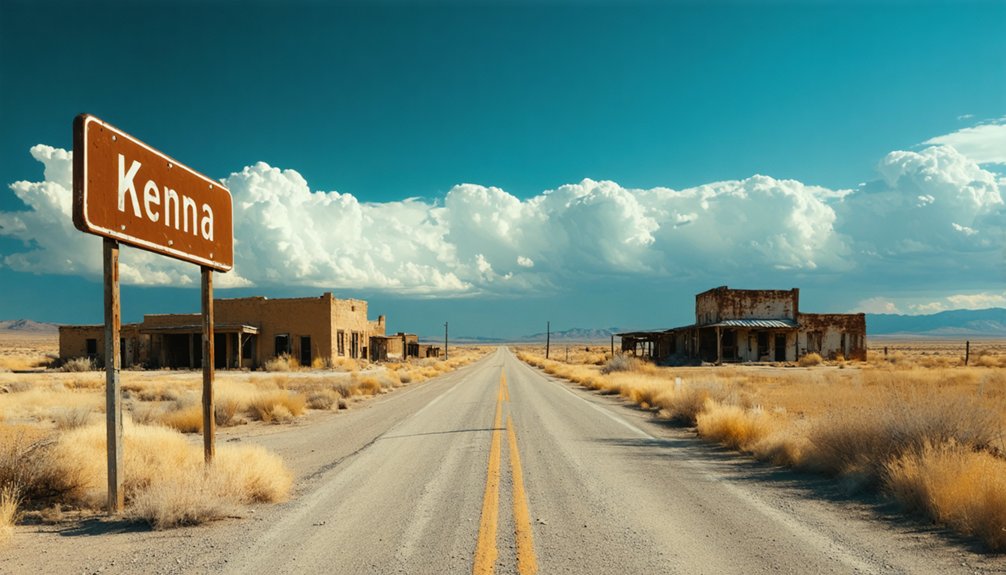
You’ll find Kenna 100 miles west of Roswell along US Highway 70, a windswept cattle town that once housed over 200 residents before drought and dust storms drove most away. Pack at least one gallon of water per person, fuel up beforehand, and bring a high-clearance vehicle for exploring nearby ghost towns like Acme, Boaz, and Elida. Visit during spring or fall when temperatures stay comfortable, and you’ll discover weathered structures including the National Register-listed Kenna Store, a converted railroad depot, and abandoned feed yards that tell stories of frontier resilience and railroad power.
Key Takeaways
- Kenna is 100 miles west of Roswell on US Highway 70, or 30 miles southwest of Portales.
- Visit May-June or September-November for mild weather; summer temperatures exceed 100°F with intense heat and thunderstorms.
- Bring one gallon of water per person daily, offline maps, emergency gear, and a high-clearance 4WD vehicle.
- Explore historic structures including the National Register-listed Kenna Store, church, and converted railroad depot residence.
- Combine your trip with nearby ghost towns: Acme, Frazier School House, Boaz, and Elida’s abandoned storefronts.
From Urton to Kenna: The Story Behind the Name Change
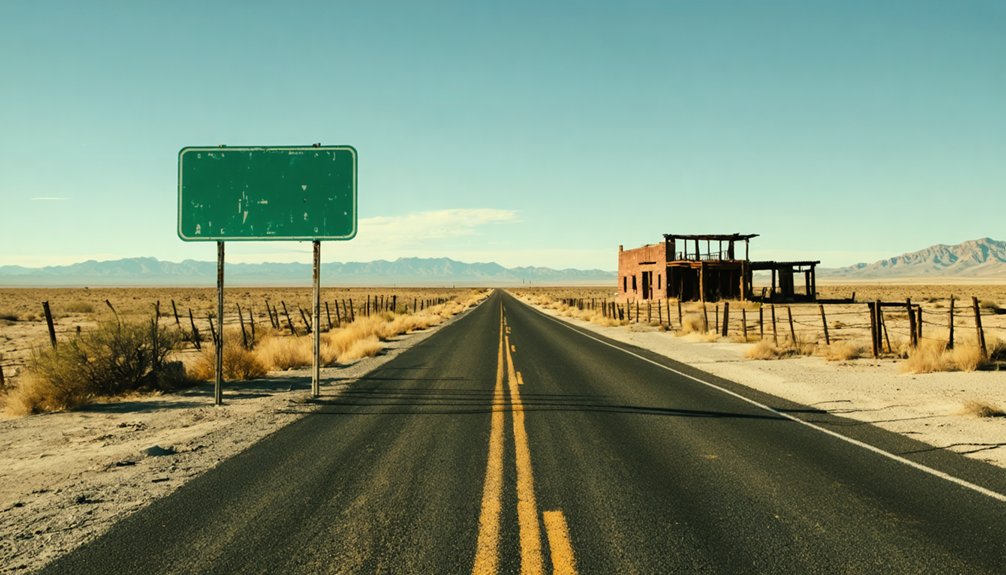
When the Urton brothers rode into New Mexico Territory from Missouri in 1884, they couldn’t have imagined their namesake settlement would eventually surrender to a railroad contractor’s legacy. The settling of the area by the Urton brothers established them as ranching pioneers, managing the Bar H Ranch‘s 30,000 head of cattle across open territory. Their influence seemed permanent when the post office officially opened as “Urton” in 1902.
Yet the railroad contractor’s role in popularizing the “Kenna” name proved unstoppable. When the contractor named Kenna camped here during the 1899 Atchison, Topeka and Santa Fe Railway construction, his name stuck. By 1906, the town officially became Kenna—likely influenced by railroad vice president E.D. Kenna. The Urton brothers’ frontier claim yielded to railroad power and eastern capital.
The Golden Era When 2,000 Residents Called Kenna Home
The promise of prosperity transformed empty rangeland into a bustling frontier town almost overnight. You’ll find it hard to imagine that Kenna’s population exploded from zero to over 200 residents within a year of its 1909 platting, drawing settlers primarily from Southern states seeking their own stake in New Mexico Territory.
By 1910, the town supported a thriving mercantile store, drugstore, and businesses clustered near the railroad depot. The post office became the heartbeat of community life, hosting social gatherings from Bible study classes to town meetings.
Local resilience shone brightest during the Depression, when U.S. 70’s upgrade in the mid-1930s brought renewed commerce. While Roosevelt County’s population plummeted from 12,064 to 6,548 between 1910-1920, Kenna’s determined residents refused to abandon their desert homesteads.
What Caused This Thriving Cattle Town to Fade Away
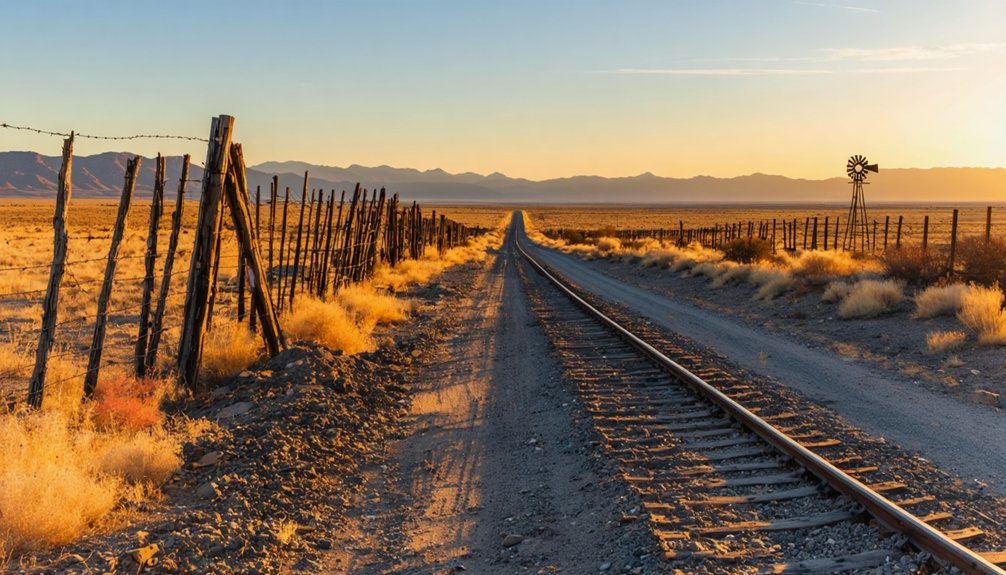
- Relentless droughts transformed productive grazing lands into barren, erodible wastelands
- Wildlife fled the degraded habitat, leaving ghostly silence across former rangeland
- Agricultural operations withered as topsoil vanished in dust-choked winds
- Acme ghost town emerges first, a weathered cattle-shipping remnant
- Frazier School House stands sentinel over empty prairie
- Boaz ghost town signals you’re nearing journey’s end
- Primary site: 33.82879, -103.77145 marks the main cemetery location
- Historic grounds: Five memorials stand at Old Kenna’s south roadside plot
- Preservation legacy: Joyce Gore Locke’s 2007 donation safeguards burial documentation
- Isolated afternoon thunderstorms rolling across vast desert horizons
- Brief morning showers creating dramatic cloud formations over weathered structures
- Mostly sunny stretches ideal for photography and wandering dusty streets
- Your truck’s metal surfaces become hot enough to brand skin within minutes
- Afternoon thunderstorms can strand you on unpaved roads transformed into impassable mud
- Heat radiating from bare ground creates shimmering mirages across the desert landscape
You’ll find these pressures mirrored throughout rural New Mexico, where demographic shifts turned net migration negative. Deaths outpaced births, federal policies tightened, and younger residents sought opportunities beyond state lines—leaving Kenna’s streets progressively emptier.
Historic Buildings and Structures You Can Still Visit Today
Despite Kenna’s decline, remarkable structures from its cattle-shipping heyday still punctuate the dusty valley floor. You’ll find the preserved historic structures clustered along Main Street, where the Kenna Store—originally Midway Service Station—stands beneath its distinctive brick awning. This National Register building once served ranchers and travelers alike.
Explore remnants of commercial past at John Denton’s Drug Store, operational when 2,000 residents called Kenna home in 1909. Across the tracks, Ed Denton’s feed yards persist in ruins, still evoking that unmistakable cow country character. The converted railroad depot, now a residence, marks where cattle shipments once departed.
You’ll discover Papa Good’s Community Church and early settler homes, including Joe Wilcox’s original ranch house. These accessible structures offer authentic glimpses into frontier ranching life without sanitized tourist trappings.
Getting to Kenna: Routes and Nearby Ghost Town Stops
Reaching Kenna requires a scenic 100-mile westward journey from Roswell along US Highway 70, where you’ll thread through a constellation of forgotten settlements that tell New Mexico’s cattle-shipping story. The divided highway cuts through Llano Estacado’s edge, where light traffic lets you absorb local geography features at your own pace.
A hundred miles of open highway threading through ghost towns where New Mexico’s cattle-shipping past whispers from the prairie.
Your route discloses authentic roadside discoveries:
From Portales, you’ll find Kenna just 30 miles southwest. Continue east another 10 miles to explore Elida’s abandoned storefronts. These nearby communities form a perfect loop for freedom-seekers wanting multiple ghost town stops in one unforgettable day.
What to Expect When You Arrive in Modern-Day Kenna
When you pull off Highway 70 into present-day Kenna, you’ll encounter what remains: a scattering of weathered structures and wind-swept prairie where New Mexico’s once-greatest cattle shipping empire stood. The modern population trends tell a stark story—this unincorporated community maintains no official count, reflecting its transformation from bustling railroad hub to near-abandonment. You won’t find homes listed in the residential real estate market here; ZIP code 88122 shows zero properties for sale, confirming Kenna’s ghost town status.
What you’ll discover is authentic solitude at 4,462 feet elevation on the Llano Estacado. Bring water, fuel up beforehand, and prepare for exposure to high winds averaging 24 km/h. The sparse remnants speak louder than any preserved tourist attraction could.
The Kenna Cemetery and Letterbox Hunting Adventure
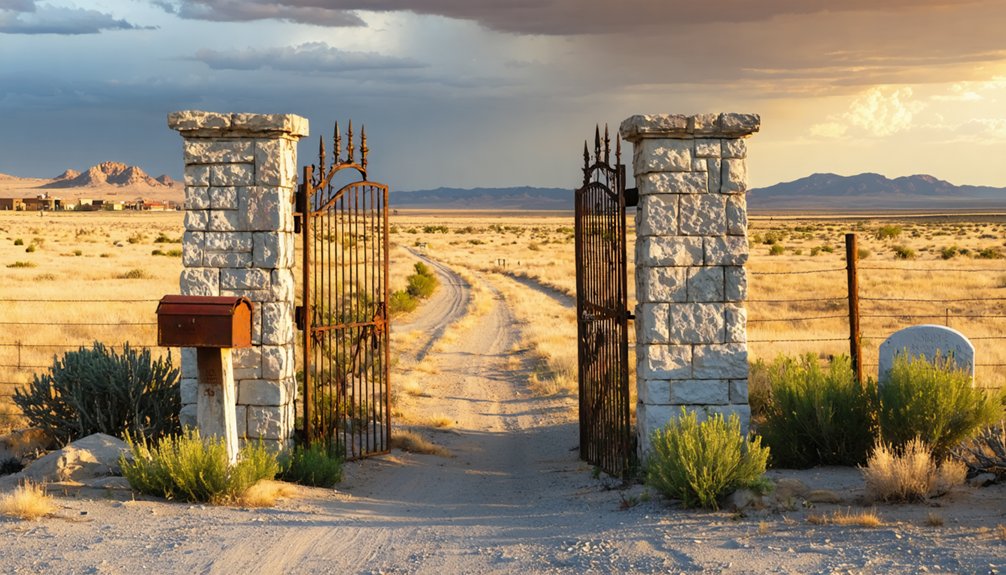
To reach Kenna Cemetery, drive a quarter mile south from the Kenna store, then head east for one mile along county road RR29S—you’ll spot it on the south side.
The weathered grounds hold 287 documented memorials dating back to the early 1900s, their simple markers telling stories of pioneer families who settled this unforgiving land.
If you’re letterbox hunting, scan the terrain carefully around historical graves and fencelines where adventurers hide clues among the sagebrush and time-worn stones.
Finding the Cemetery Grounds
The cemetery grounds lie tucked into Roosevelt County’s austere landscape, where windswept plains meet gravel roads that seem to stretch toward infinity. You’ll find Kenna Cemetery holding 287 memorial records at 2763 Railroad Mountain Road, while Old Kenna Cemetery rests a quarter-mile south of the old store, then one mile east on county road RR29S.
Navigate these coordinates to discover your destination:
Cemetery preservation efforts protect these unmarked graves from vanishing into history. The stark beauty and isolation create an authentic ghost-town experience where you’re free to explore New Mexico’s frontier past.
As you wander through the area, you’ll discover various ghost town attractions in Clarkville that offer glimpses into a bygone era. Each site tells a story of the individuals who once called this place home, with remnants of structures that hint at their everyday lives. The combination of history and haunting beauty makes each visit a captivating journey into the past.
Exploring the history of Sumpter reveals a rich tapestry of human experience and resilience in the face of adversity. As you delve deeper, you’ll find remnants of early mining operations and stories of the people who shaped the town’s legacy. Each step invites reflection on the challenges and triumphs that have defined this unique part of our nation’s past.
Letterbox Clues and Locations
Hidden among Kenna Cemetery’s weathered headstones and prairie grass, letterboxers have transformed this ghost town graveyard into an unlikely treasure hunt destination. You’ll find clues referencing the iron gate’s rust patterns, specific grave counts in weathered rows, and compass bearings from the largest wooden cross.
Nearby letterbox locations cluster around Chaves County’s abandoned homesteads and state trust lands, where orange boundary markers guide your search through sagebrush flats.
The cemetery’s minimal maintenance creates potential new hide spots beneath fence posts and rock piles that blend seamlessly with the landscape. Multi-stage hunts might direct you twenty paces bearing 240° from pioneer graves, solving riddles that disclose coordinates.
This remote setting mirrors New Mexico’s southwestern letterbox tradition—where historical ruins and ghost towns become puzzle pieces in your off-grid adventure.
Best Time of Year to Visit This Remote New Mexico Location
Your road trip to Kenna requires strategic timing to maximize comfort in this semi-arid landscape where temperatures swing from frigid January lows of 18.5°F to sweltering July peaks above 90°F.
Spring’s mild 67°F afternoons and fall’s comfortable 70-85°F ranges create ideal conditions for exploring abandoned buildings and wandering the cemetery without battling extreme weather.
Plan your visit for May, June, or September when you’ll enjoy pleasant temperatures, clear skies, and extended daylight hours—though current March forecasts show unusually warm conditions running 14°F above normal if you’re enthusiastic to venture out earlier.
Mild Spring Weather Conditions
When planning your ghost town adventure to Kenna, spring emerges as the ideal season, offering comfortable daytime temperatures that hover between 86°F and 92°F. You’ll experience pleasant evenings cooling to the low 60s, perfect for stargazing among abandoned buildings.
Moderate winds from the southeast at 10-15 mph keep conditions comfortable during exploration. However, fluctuating precipitation patterns mean you’ll want to prepare for:
The season sits 14°F above historical averages, providing warm, accessible conditions for discovering Kenna’s forgotten stories. Pack layers for temperature shifts and rain gear for occasional storms while maintaining flexibility in your exploration schedule.
Fall’s Comfortable Temperatures
Fall transforms Kenna into an explorer’s paradise, where September through November delivers the sweet spot between scorching summer heat and winter’s bite. You’ll experience daytime highs ranging from 84°F in September to 62°F in November, while nights cool to a crisp 41–63°F. This temperature range creates a relaxing ambiance perfect for photographing crumbling structures and investigating abandoned buildings without heat exhaustion limiting your adventures.
The gradual cooling pattern means you’ll pack light—just layered clothing for evening campfires. October’s 74°F highs offer ideal conditions for all-day exploration, while minimal precipitation keeps trails accessible. You’ll enjoy reduced travel hassles since moderate temperatures eliminate vehicle overheating and accommodation cooling needs.
Clear fall skies enhance your photography, and comfortable thermal conditions let you spontaneously adjust routes without weather constraints dictating your freedom.
Avoiding Summer Heat Extremes
Visiting Kenna between June and August means confronting brutal desert conditions that’ll test your endurance and equipment. Smart weather planning considerations demand you understand what you’re facing in this remote ghost town where temperatures routinely exceed 100°F and shade doesn’t exist.
Summer heat avoidance becomes critical when you’re exploring abandoned structures under relentless sun:
The 25-35°F temperature drop after sunset offers little consolation when daytime highs reach dangerous levels. At 5,000 feet elevation, Kenna’s July averages of 92°F with intense solar radiation create conditions that’ll quickly deplete your water supplies and energy reserves.
Essential Supplies and Tips for Your Desert Ghost Town Journey
Venturing into the remote desert expanses surrounding Kenna demands thorough preparation—this isn’t a destination where you’ll find convenience stores or roadside assistance around every bend. Pack at least one gallon of water per person daily, stored in insulated containers, and grab electrolyte packets for the scorching heat.
Your high-clearance 4WD needs off-road tires, a full gas tank, and emergency gear like tow straps and shovels for sand entrapment. Download offline maps since cell service vanishes along US-70, and carry a satellite communicator for emergencies.
Wildlife encounters require snakebite treatment in your first aid kit, while exploring cultural relics means bringing gloves for rusted structures. Layer breathable clothing, pack SPF 50+ sunscreen, and don’t forget sturdy boots—the unforgiving terrain rewards those who respect its demands.
Frequently Asked Questions
Are There Any Restaurants or Dining Options Available in Kenna?
No restaurants operate in Kenna, but don’t let that stop your adventure. You’ll find limited dining options and availability of basic supplies at the Midway Service Station, where locals gather for homemade cake and cold drinks.
Can Visitors Explore Inside the Remaining Historic Buildings?
You shouldn’t explore historic structures interiors due to dangerous conditions—crumbling walls, rotting floors, and potential hazards make entry risky. Instead, document architectural features from outside, respecting private property boundaries while capturing Kenna’s haunting beauty safely.
Is Overnight Camping or Lodging Available Near Kenna?
While Kenna itself is a ghost town without amenities, you’ll find camping options at nearby Nevermore Ranch in Prewitt, offering scenic vistas, wildlife sightings, and that untethered freedom you crave under New Mexico’s star-studded skies.
Do I Need Permission to Visit Private Property or Structures?
Yes, you’ll need to obtain landowner consent before exploring Kenna’s structures. Though it feels like open frontier, avoid trespassing on private land—those crumbling buildings and dusty lots still belong to someone who deserves respect for their property rights.
Are There Guided Tours Available for Kenna’s Historic Sites?
You’ll find Kenna’s a blank canvas without guided tours offered by local residents or seasonal ghost town festivals. Instead, you’re free to explore independently, driving through railroad remnants and valley landscapes at your own adventurous pace.