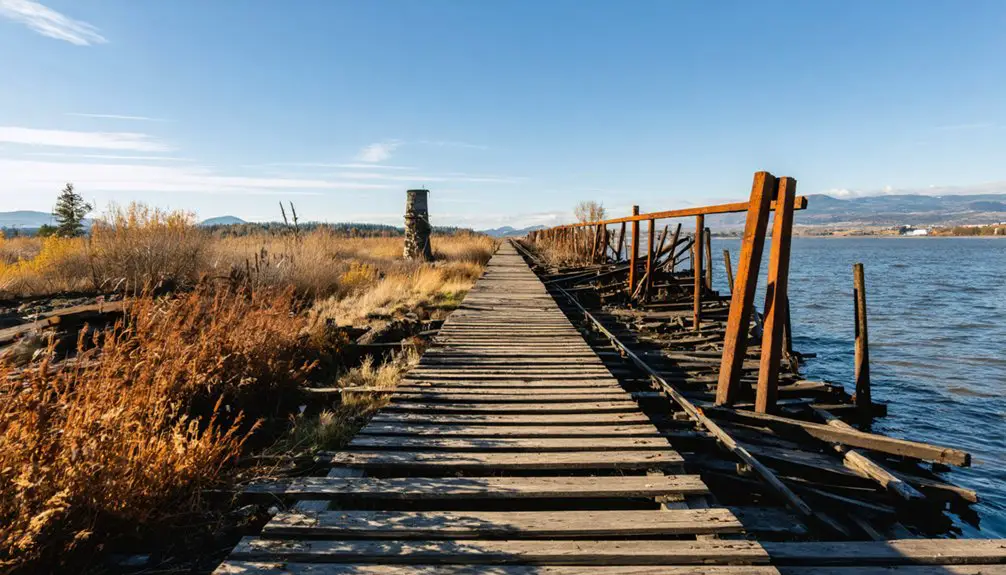
You’ll find Kennedy’s ghost town site near GPS coordinates 46.55°N 122.75°W in Lewis County, though nothing remains of the 320-person sawmill community that thrived until 1932. Plan your visit for September-October when conditions are ideal, and bring a high-clearance 4WD vehicle for unmarked gravel backroads. Historical plats from 1892-1916 help navigate the wheat-covered landscape where profound emptiness now replaces former streets. Cluster Kennedy with nearby Highway 2 ghost towns like Govan and Sherman to maximize your Eastern Washington exploration adventure.
Key Takeaways
- Kennedy is located near GPS coordinates 46.55°N 122.75°W in Lewis County, accessible via unmarked backroads requiring four-wheel drive vehicles.
- No original structures remain at the abandoned 1901 sawmill townsite, now covered by wheat fields and native grasses with scattered artifacts.
- Visit during spring, summer, or September-October for optimal access; winter conditions bring treacherous ice and snow on rural roads.
- Historical plats from 1892-1916 are essential for navigation due to limited public access and mysterious land ownership restrictions.
- Combine Kennedy with nearby Highway 2 ghost towns like Govan and Sherman for an efficient multi-site Eastern Washington exploration.
Discovering the History of Kennedy Valley’s Abandoned Settlement
The dense forests of Washington’s Kennedy Valley once echoed with the rhythmic screech of sawmill blades and the shouts of lumber workers building their dreams in the wilderness.
You’ll find this ghost town’s story rooted in 1901, when the Northern Pacific Railroad carved passages through towering timber stands along the Stillaguamish River. The settlement exploded to 320 souls by 1926, with railroad logging operations feeding a bustling sawmill community complete with saloons, bunkhouses, and a company store.
Today, you can trace abandoned infrastructure remnants along the Whitehorse Trail, which follows the old railroad bed where steam locomotives once hauled virgin timber. A devastating 1932 storm and the Great Depression sealed Kennedy’s fate, leaving behind weathered foundations as monuments to frontier resilience and timber industry boom-bust cycles.
Finding Kennedy Among Washington’s Remote Ghost Towns
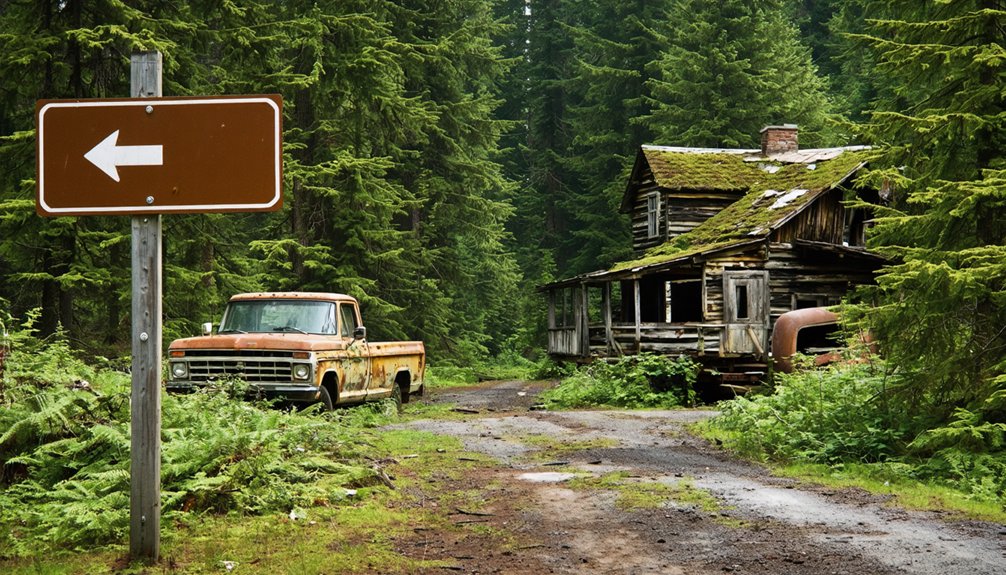
Locating Kennedy requires traversing a labyrinth of unmarked Lewis County backroads where civilization fades into dense Pacific Northwest timber. You’ll navigate logging roads that twist through the upper Chehalis River valley, relying on GPS coordinates near 46.55°N 122.75°W since signage vanished decades ago.
The challenge intensifies with limited public access—mysterious land ownership surrounds the townsite, forcing you to thread between private parcels. Historical plats from 1892-1916 become essential navigation tools, revealing where schools and stores once stood beneath today’s overgrown pastures. LiDAR imagery exposes hidden railroad grades cutting through the forest.
Your best approach runs through Centralia on US 12, then southeast toward Pe Ell before branching onto county roads. Four-wheel drive proves invaluable on final gravel approaches to this vanished settlement.
What Remains at the Kennedy Townsite Today
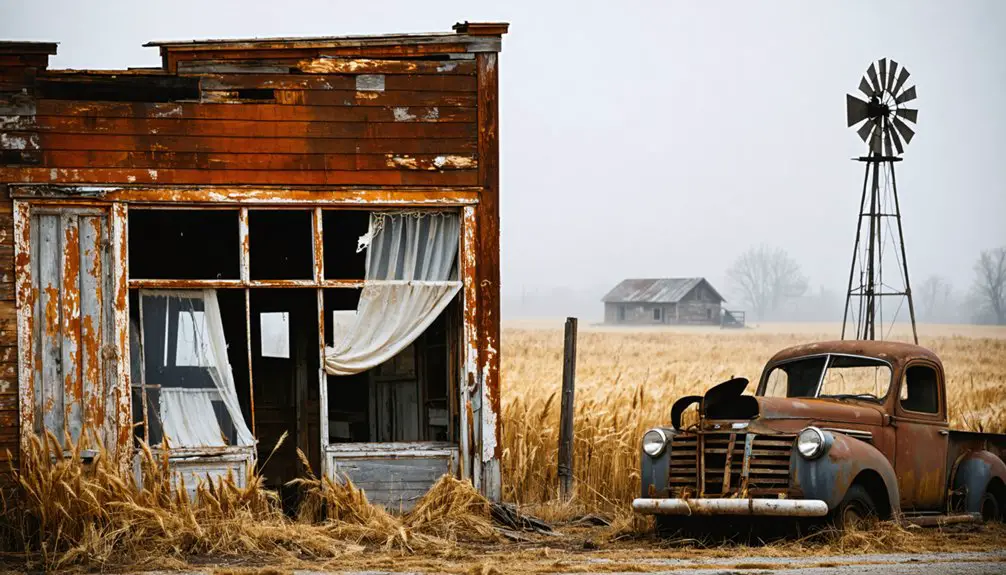
Virtually nothing survives at Kennedy’s desolate townsite, where Whitman County’s rolling Palouse hills have reclaimed what little the settlement left behind. You won’t find remnants of abandoned structures here—no weathered storefronts or collapsing homesteads pierce the landscape. The site’s barren classification proves accurate as wheat fields and native grasses erase all traces of human occupation.
If you’re hunting for artifacts and relics from town, you’ll likely leave empty-handed. Decades of plowing and natural erosion have scattered or buried whatever foundation stones, glass shards, or rusted implements once marked Kennedy’s existence. Even cemetery markers may have vanished, relocated to more accessible grounds. What you’ll discover instead is profound emptiness—a landscape where freedom means solitude, and absence tells the only story worth hearing.
Mapping Your Eastern Washington Ghost Town Route
Highway 2 cuts straight through Eastern Washington’s flatlands, connecting Govan’s weathered railway buildings with Sherman’s lonely church in a 15-minute drive through open wheat country. You’ll trace abandoned rail lines and homesteading routes where towns rose and fell with the promise of grain shipments and Spokane-bound commerce.
This route delivers multiple ghost towns in a single afternoon, revealing how the railroad’s arrival in 1889 sparked brief prosperity before paved highways redirected the region’s lifeblood elsewhere.
Best Highway Routes East
Continue northeast fifteen minutes to Sherman, another victim of highway rerouting. When new roads channeled traffic toward Spokane, these communities withered.
You’ll find weathered buildings standing against endless horizons, telling stories of pioneers who bet everything on rail connections that ultimately passed them by.
Combining Multiple Ghost Towns
Maximizing your ghost town adventure means clustering several sites into a single day trip rather than exhausting yourself with endless backtracking across the Columbia Basin. The Govan-Sherman pairing offers an ideal starting point, with both ghost town locations positioned just 15 minutes apart off Highway 2. You’ll discover unique architectural remains including Sherman’s weathered church and schoolhouse against the windswept prairie.
Exploring the history of Herman, Idaho ghost town adds an intriguing layer to your journey, showcasing the tales of its early settlers and the ghostly echoes of its past. As you wander through the remnants, you’ll encounter artifacts that tell stories long forgotten, enriching your adventure through this desolate landscape. Don’t forget to capture the haunting beauty of the surrounding hills, which stand as silent witnesses to the town’s once vibrant life.
Strategic routing suggestions:
- Lincoln County Loop: Combine Govan, Sherman, and Bluestem for a concentrated exploration south toward Davenport
- Highway 2 Corridor: Link multiple abandoned settlements along this historic transportation route
- Douglas County Extension: Add Sanderson to your northern swing for maximum coverage
This approach liberates you from rigid schedules while covering significant ground through Washington’s forgotten landscapes.
Best Seasons and Road Conditions for Visiting
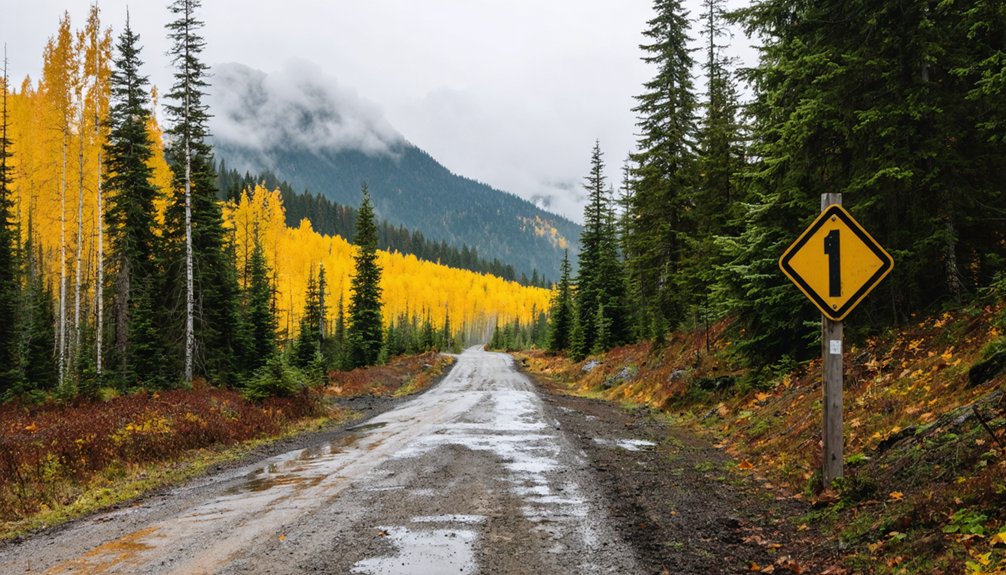
You’ll find spring and summer offer the clearest paths to Kennedy’s remnants, when wildflowers bloom across arid flats and dirt roads firm under long daylight hours.
Winter transforms eastern Washington routes into unpredictable gauntlets of slush and ice, while fall delivers crisp skies perfect for photography but shorter exploration windows.
Check WSDOT’s real-time closure maps before departing—spring floods can strand you with hour-long detours, and mountain passes seal without warning when storms roll through.
Optimal Visiting Months
When planning your ghost town road trip to Kennedy, Washington, timing can make the difference between a muddy slog through abandoned ruins and an unforgettable exploration under clear blue skies. Your ideal visitation periods fall during September and October, when seasonal travel considerations align perfectly for adventure.
Optimal months for Kennedy exploration:
- September – Warm temperatures, dramatically reduced crowds after Labor Day, and excellent road conditions create perfect conditions for wandering through historic structures
- October – Shoulder season offers peaceful solitude with intensifying fall colors framing the abandoned buildings
- Late Spring (May-June) – Moderate temperatures and accessible roads, though you’ll encounter occasional rainfall
Winter’s heavy precipitation renders many back roads treacherous, while summer’s peak crowds diminish the authentic ghost town atmosphere you’re seeking.
Rural Road Challenges
Choosing the right season matters little if your sedan bottoms out on a rutted forest road three miles from Kennedy’s weathered structures. You’ll need high-clearance 4WD to navigate gravel paths chewed up by logging trucks, where sharp rocks threaten punctures and undercarriage damage.
Bridge safety considerations include the Kennedy Creek crossing—rated fair but inspected only every 24 months—demanding cautious speeds. Pothole mitigation strategies start with scanning ahead through fog-thick valleys where visibility drops without warning.
Pack spare tires and tools; fuel stations vanish beyond US 101. Dawn and dusk bring deer leaping across narrow lanes edged by drop-offs. These unmarked routes reward the prepared explorer, punishing overconfidence with stuck axles and shredded oil pans miles from cell service.
Weather-Related Access Restrictions
Summer’s golden window between June and September transforms Kennedy’s muddy arteries into navigable routes, where highs hovering around 75-79°F bake the gravel firm and skies dump less than 2% of their moisture capacity.
Winter paints a different portrait—snow accumulation risks climb to 80%, and freeze over road conditions trap even seasoned explorers when wind chills plummet to 14°F.
Avoid These Hazardous Conditions:
- January-March storms dropping 8 inches, creating impassable drifts on mountain approaches
- Overnight lows of 44-50°F icing gravel surfaces before dawn patrols clear them
- 20 mph gusts whipping through canyons, reducing visibility to dangerous levels
September offers sweet compromise—62°F clarity without summer crowds. Check Kennedy Lake forecasts obsessively; temperatures below 39°F signal retreat.
Exploring Responsibly and Preserving Heritage Sites
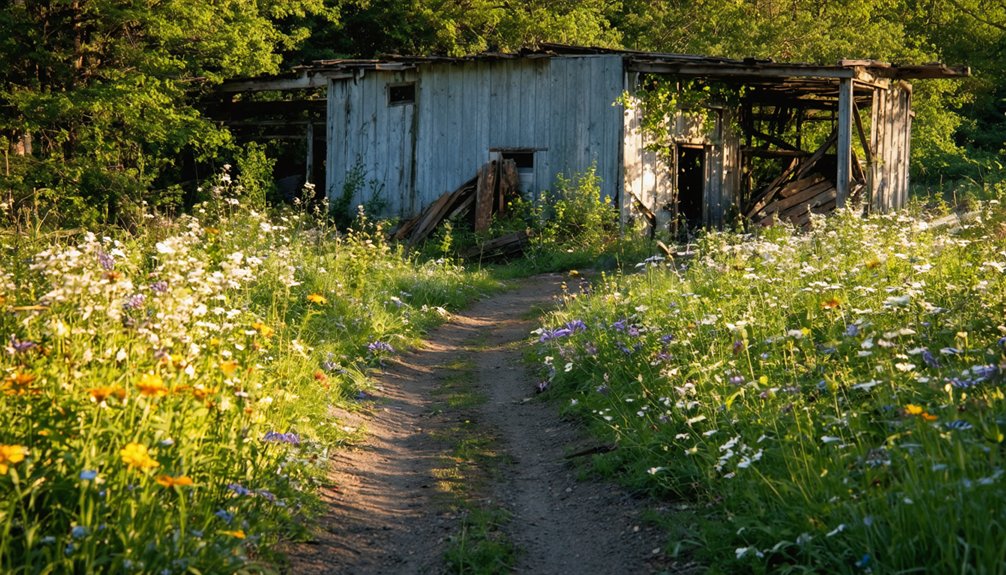
Visiting Washington’s ghost towns means stepping into fragile time capsules where wooden walls lean against centuries of weather and rusted mining equipment tells stories of desperate labor. You’ll find these sites maintained by dedicated volunteers who’ve spent over 40 years preserving places like Black Diamond Depot’s museum.
Supporting sustainable tourism practices means respecting original windows, log cabins, and interpretive signs that educate without destroying. Contribute to volunteer preservation programs through donations or joining local historical societies that earned recognition like the John D. Spellman Award.
Read informational displays at visitor kiosks, photograph responsibly without touching structures, and remember that 1,100 miners died underground here. Your footsteps honor their legacy when you tread carefully through these authentic remnants of Washington’s mining past.
Frequently Asked Questions
Are There Any Nearby Accommodations or Camping Options for Overnight Stays?
You’ll find cozy bed and breakfasts and well-equipped RV campgrounds scattered throughout the region. Winchester RV Resort offers blacktopped sites with hotel-like amenities, while Eden Valley Guest Ranch provides rustic cabins perfect for your independent adventure.
What Safety Precautions Should Visitors Take When Exploring Kennedy’s Ruins?
Like a time traveler stepping through history’s doorway, you’ll need sturdy footwear to navigate Kennedy’s crumbling past. Exercise caution on unstable structures, avoid contaminated areas, and always travel with companions—freedom requires wisdom, not recklessness.
Can I Bring My Dog to Kennedy Ghost Town?
Yes, you can bring your dog to Kennedy Ghost Town. While pet-friendly policies allow leashed dogs, don’t expect on-site pet amenities—pack water, waste bags, and supplies for your adventure companion exploring these weathered ruins together.
Are There Restroom Facilities or Services Available at the Site?
No modern conveniences exist at Kennedy’s crumbling ruins—you’ll need to plan accordingly. The remote ghost town lacks wheelchair accessibility and guided walking tours, offering only untamed exploration. Bring supplies and embrace the wild, self-reliant spirit of adventure.
Do I Need a Four-Wheel Drive Vehicle to Reach Kennedy?
I don’t have specific information about Kennedy, Washington’s road conditions or vehicle capabilities needed to reach it. You’ll want to check current trail reports and local resources before heading out to guarantee you’re properly equipped for your adventure.