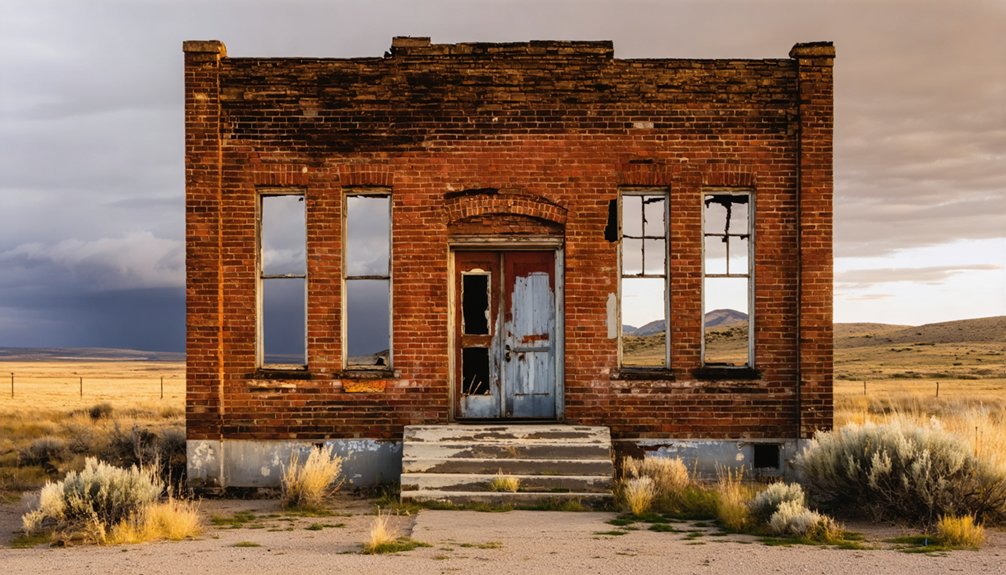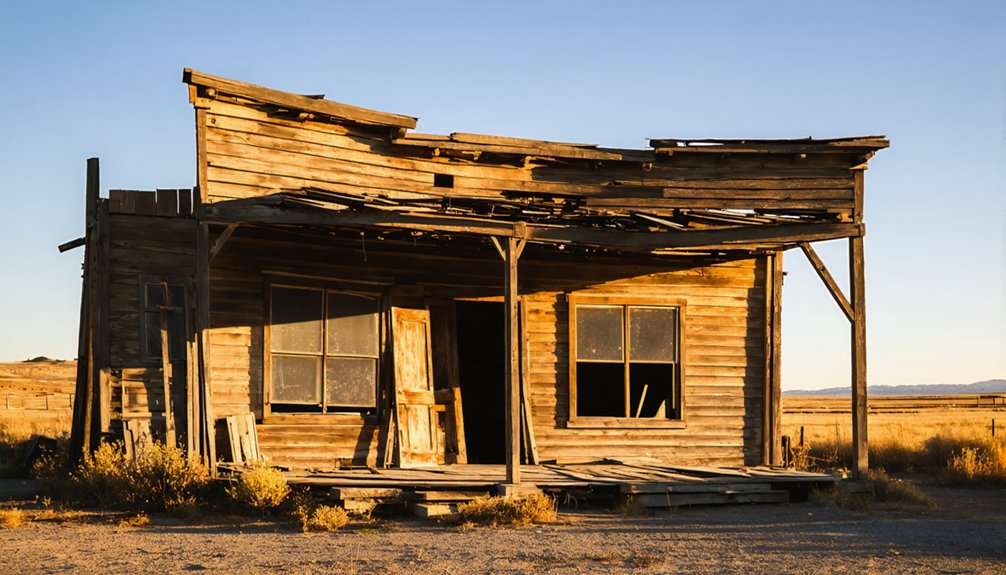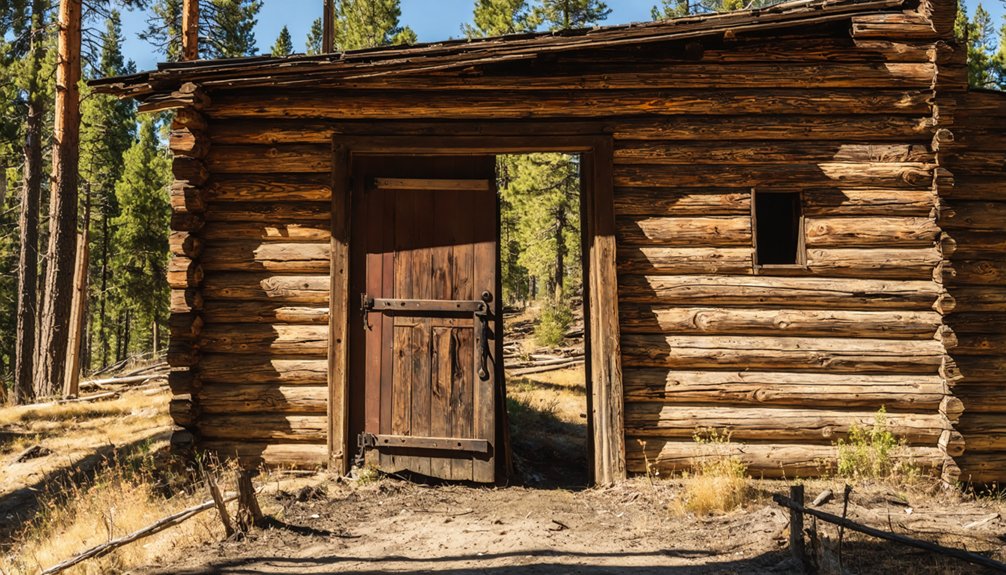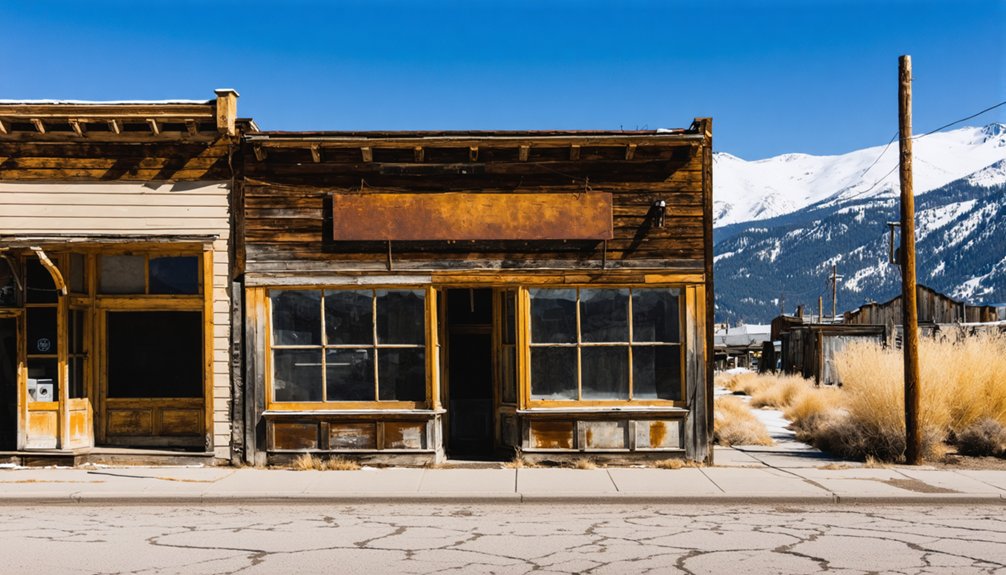
Start your ghost town road trip in Ketchum, Idaho — a well-equipped base with easy access to Boulder Basin, Bonanza, and Custer. Follow the Salmon River Scenic Byway through dramatic peaks and dense forests to reach these preserved mining sites. September’s cooler temperatures and thinner crowds make it the ideal time to visit. Grab your permits, pack sturdy boots, and download your topo maps before you go — there’s much more to uncover ahead.
Key Takeaways
- Ketchum serves as an ideal base for exploring Central Idaho’s ghost towns, offering paved roads, solid amenities, and easy regional access.
- Nearby ghost towns Bonanza, Custer, and Boulder Basin each offer unique perspectives on Idaho’s rich mining history.
- The Salmon River Scenic Byway follows historic gold seeker routes, providing stunning photography opportunities alongside jagged peaks and dense forests.
- September is the optimal visiting month, offering cooler temperatures, clearer skies, fewer crowds, and shorter wait times for guided tours.
- Bring sturdy boots, two liters of water, layered clothing, a first aid kit, and printed maps for safe exploration.
Why Ketchum Is the Right Starting Point for These Ghost Towns
Ketchum sits at the heart of central Idaho’s mining history, making it the ideal launching pad for exploring the region’s ghost towns. Once known as Leadville, Ketchum’s history runs deep, having supported over 100 businesses, a newspaper, and a bustling post office during its mining heyday.
Once called Leadville, Ketchum powered over 100 businesses at the height of Idaho’s mining boom.
Today, it serves as the modern base for the Sun Valley resort area, blending local attractions with rugged frontier character.
From here, you can head north into the Boulder Mountains to discover abandoned mining camps, then extend your journey toward Bonanza and Custer along the Salmon River Scenic Byway.
Ketchum gives you paved roads, solid amenities, and easy access to some of Idaho’s most compelling ghost towns, letting you explore on your own terms without sacrificing comfort.
The Ghost Towns Within Reach: Boulder Basin, Bonanza, and Custer
Three ghost towns sit within striking distance of Ketchum, each with its own personality and level of preservation.
Head north into the Boulder Mountains, and you’ll find Boulder Basin, a remote camp scattered with mining artifacts, collapsed shafts, and raw mountain silence. It’s unpolished and largely untouched, exactly the kind of place that rewards curious explorers.
Further east, Bonanza history stretches back to 1877, when gold fever pulled hundreds into the Yankee Fork valley. The town once hummed with saloons, newspapers, and ambition.
Nearby Custer rose shortly after and outlasted its neighbor through fires and fortune. Today, Custer tours run during summer months, offering guided access to remarkably preserved structures.
Together, these three sites deliver a complete picture of Idaho’s mining past.
The Salmon River Scenic Byway: Your Road Into Yankee Fork Country
To reach Bonanza and Custer, you’ll follow the Salmon River Scenic Byway east from Stanley, a route that carves through central Idaho’s rugged mountain terrain alongside the rushing Salmon River.
Follow the Salmon River Scenic Byway east from Stanley, where rugged mountain terrain meets the rushing Salmon River.
This byway delivers more than just access — it’s a journey rich with scenic photography opportunities, where jagged peaks, dense forests, and rushing water frame every mile.
As you turn onto the Yankee Fork Road, you’re tracing the same path that gold seekers traveled in the 1870s.
The historical significance of this corridor runs deep, connecting modern adventurers to a vanished era of booming mining settlements.
You’re not just driving through mountains; you’re entering living history.
Keep your camera ready and your pace unhurried — this landscape rewards those who take their time.
Mining Shafts, Structures, and Artifacts Still Standing at Boulder Basin
Tucked north of Ketchum in the Boulder Mountains, Boulder Basin feels like a place time forgot.
You’ll discover a ghost camp where mining shafts cut deep into the hillsides, weathered structures still stand against the mountain backdrop, and artifacts lie scattered across the landscape like pages from a forgotten chapter of mining history. It’s raw, unfiltered, and completely worth exploring.
As you move through the site, artifact preservation matters.
Don’t touch or remove anything you find — these remnants belong to the story, not your pocket. Historical postcards once published in Ketchum documented this very camp, proving its significance long before modern visitors arrived.
Coordinates 43.843507, -114.509968 will guide you directly there, so you can roam freely and experience Idaho’s rugged past firsthand.
Inside Bonanza: Idaho’s Forgotten Gold Rush Town
Deep in the Sawtooth National Recreation Area of Custer County, Bonanza tells the story of Idaho’s gold rush era with striking clarity. Founded in 1877 after gold was discovered on the Yankee Fork, this town’s Bonanza history unfolded fast and furiously at 6,375 feet elevation.
When you explore the site, you’ll encounter:
- A peak population that surpassed 600 residents
- Saloons, hotels, and general stores that fueled daily frontier life
- The *Yankee Fork Herald*, the town’s own newspaper
- Sunbeam Dam, built specifically to power silver mining techniques
Bonanza remains unrestored, giving you raw, unfiltered access to its past.
Bonanza stands untouched, unpolished, and unapologetically real—history preserved exactly as abandonment left it.
You’re walking through history exactly as it settled—abandoned, authentic, and unapologetically wild.
Stick to marked paths to protect what’s left standing.
What Custer Ghost Town Looks Like After 140 Years of Mountain Winters
Just a few miles from Bonanza, Custer ghost town has weathered 140 years of brutal mountain winters and still stands with remarkable clarity. Established in 1879 near the General Custer Mine, this site shifted population away from Bonanza after devastating fires reshaped the region’s mining economy.
Custer Preservation efforts have kept the schoolhouse, jail, saloons, and post office surprisingly intact. When you walk through, you’re stepping directly into Ghost Town History — not reconstructed fantasy, but authentic frontier survival.
Summer guided tours give you structured access to restored structures, while the rugged mountain setting delivers raw, unfiltered atmosphere.
Stick to marked paths to protect fragile surfaces, and resist touching artifacts. Custer rewards the historically curious traveler with something increasingly rare — genuine, preserved silence from another era.
When September Gives You the Quietest Access to These Sites
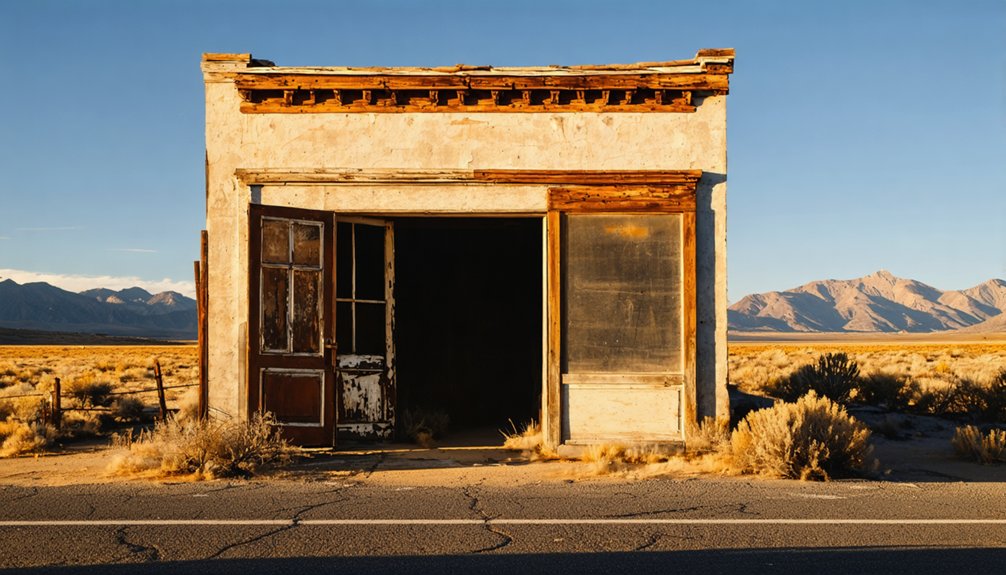
When you visit in September, you’ll find these ghost towns stripped of summer’s crowds, leaving you with a rare stillness that makes every rusted artifact and weathered timber feel truly yours to discover.
The cooler mountain air softens the trails, and the season’s clearer skies sharpen the surrounding Boulder Mountains into something almost cinematic.
Pack layers, start early, and give yourself enough time to wander Custer’s restored structures and Bonanza’s raw, unguided grounds without rushing the experience.
September’s Quieter Crowd Benefits
September quietly hands you something most summer visitors never get: near-empty trails, unobstructed views of crumbling mine shafts, and the kind of stillness that makes ghost towns actually feel haunted.
That September serenity transforms every site into a space built for peaceful exploration.
Here’s what changes when the crowds leave:
- Boulder Basin reveals its mining artifacts without strangers crowding your frame.
- Custer’s guided tours run shorter wait times, letting you linger inside restored structures.
- Bonanza’s graves, dating from 1855 to 1929, feel profoundly personal without summer foot traffic.
- Trails stay intact because fewer boots mean less erosion across these fragile sites.
You move at your own pace, read every weathered plank, and actually hear the silence these forgotten towns have kept for over a century.
Cooler Trails, Clearer Views
As the summer heat fades, September drops temperatures across the Boulder Mountains and Sawtooth ranges just enough to make trail conditions genuinely comfortable for hiking to sites like Boulder Basin.
You’ll notice the air carries a crispness that sharpens everything around you — the ridgelines, the canyon walls, the old mining structures emerging from the landscape like hidden gems waiting for unhurried eyes.
Summer haze typically softens distant peaks, but September’s cooler, drier air opens up scenic vistas you simply won’t get in July or August.
You can actually stop, breathe, and take in the rugged terrain without fighting heat exhaustion or trail congestion.
Clearer skies also mean better photography conditions, letting you capture Ketchum’s surrounding wilderness exactly as it deserves to be seen.
Best September Visiting Tips
Those cooler trails and sharper views mean very little if you show up unprepared for what September in central Idaho actually demands. Smart planning keeps your mining history exploration meaningful and protects ghost town preservation for everyone who follows.
- Arrive early — morning light hits the structures beautifully, and crowds haven’t gathered yet.
- Pack layers — September temperatures swing dramatically between dawn and midday.
- Stick to marked paths — fragile sites erode quickly under careless feet.
- Leave artifacts untouched — removing anything destroys irreplaceable historical context permanently.
You’re stepping into spaces where people actually lived, worked, and died. Treat that seriously.
September hands you quieter access and better conditions than any other month — don’t waste that advantage by arriving unprepared.
Gear, Maps, and Permits You’ll Need for These Remote Sites
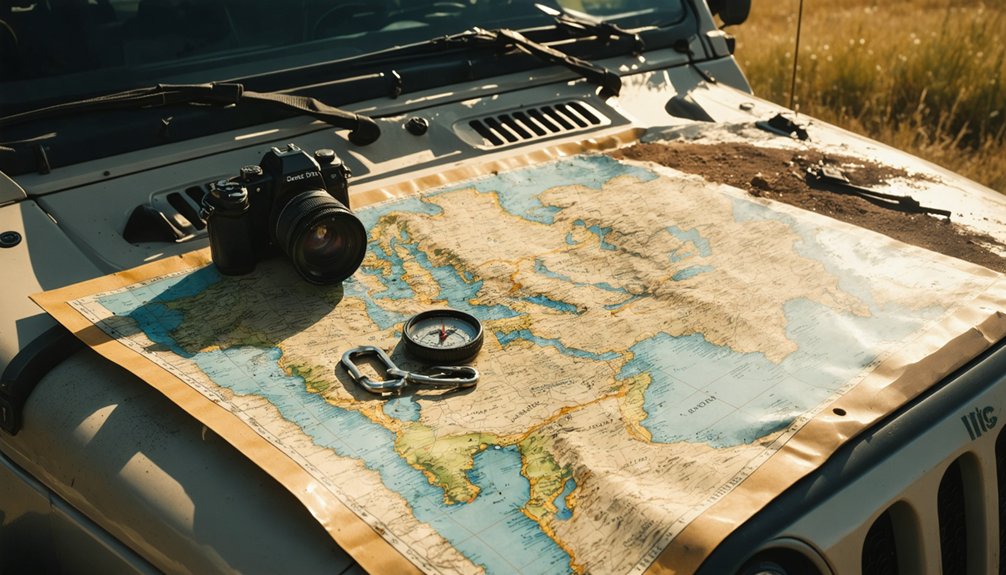
Before you hit the dirt roads leading to Boulder Basin, Bonanza, and Custer, you’ll want sturdy boots, plenty of water, a first-aid kit, and layers for unpredictable mountain weather.
Swap your phone’s GPS for a reliable topographic map or a dedicated GPS device, since cell service vanishes fast in central Idaho’s rugged terrain.
Most of these sites fall within the Sawtooth National Recreation Area, so grab your America the Beautiful Pass or pay the required day-use fee before you roll in.
Essential Gear Packing List
Exploring remote ghost towns like Boulder Basin, Bonanza, and Custer means venturing into rugged Idaho terrain where cell service is sparse and help isn’t close by, so packing smart isn’t optional—it’s essential.
These packing essentials keep you safe, prepared, and free to roam confidently:
- Navigation tools – Carry printed topographic maps and a compass since GPS signals drop in mountain canyons.
- Water and filtration – Pack at least two liters plus a portable filter for stream sources.
- First aid kit – Include blister care, wound closures, and any personal medications.
- Layered clothing – Central Idaho temperatures shift dramatically; breathable layers handle both heat and sudden mountain cold.
Your essential gear determines whether this adventure stays exhilarating or turns dangerous.
Packing the right gear gets you to the trailhead, but knowing exactly where you’re going keeps you from getting stranded in Idaho’s unforgiving backcountry.
Download USGS topo maps before leaving cell range — Boulder Basin sits at latitude 43.843507, longitude -114.509968, and you’ll want that pinned offline.
Map app integration through platforms like Gaia GPS lets you overlay satellite imagery with trail data, giving you real-time positioning even without a signal.
For historical navigation, cross-reference modern routes with archival maps showing original mining roads connecting Ketchum to the Boulder Mountains.
The Salmon River Scenic Byway guides you toward Bonanza and Custer via Stanley, but side roads demand paper backup.
Always carry a compass. Remote terrain punishes overconfidence, and accurate navigation transforms a potential emergency into a confident, purposeful adventure.
Required Permits And Passes
Traversing Idaho’s ghost towns without the right permits can turn an epic road trip into a costly headache. Before hitting the trail, understand the access regulations governing these remote sites:
- Sawtooth National Recreation Area Pass – Required for accessing Bonanza and Custer ghost towns; purchase online or at ranger stations.
- Dispersed Camping Permits – Needed if you’re overnight camping near Boulder Basin or Yankee Fork areas.
- Idaho State Vehicle Registration – Keep it current; remote checkpoints occasionally verify documentation.
- Free America the Beautiful Pass – Covers federal recreation fees across multiple sites, saving you money on required permits throughout the trip.
Grab these before departing Ketchum — ranger stations along the Salmon River Scenic Byway won’t always have supplies stocked.
Don’t Touch That: How to Explore These Sites Without Damaging Them
These ghost towns have survived over a century of Idaho winters, but they’re far more fragile than they look. Sensitive exploration means keeping your hands off artifacts, structures, and grave markers you’ll encounter across Boulder Basin, Bonanza, and Custer.
That rusted mining tool or weathered timber might crumble the moment you touch it. Stick strictly to established paths to prevent erosion around these delicate sites.
Preservation techniques like staying on marked trails actively protect the landscape for future visitors who want the same raw, unfiltered experience you’re enjoying now.
Don’t pocket souvenirs — removing artifacts is illegal and robs the site of its history. Photograph everything, take nothing.
Your restraint keeps these remarkable places standing for the next adventurer rolling through central Idaho.
Frequently Asked Questions
Are There Any Entrance Fees to Visit Bonanza or Custer Ghost Towns?
You’ll explore Bonanza’s ghost town history and local legends for free, as it’s unrestored and open access. Custer offers guided summer tours, so check ahead for any associated fees before you roam freely!
Can You Camp Overnight Near Boulder Basin or the Yankee Fork Sites?
You’ll find camping regulations allow overnight stays near both sites! Pitch your tent close to Boulder Basin or Yankee Fork’s nearby attractions, embracing Idaho’s rugged freedom while exploring stunning mountain landscapes and rich mining history.
Is Cell Service Available Along the Salmon River Scenic Byway Route?
Cell coverage along the Salmon River Scenic Byway is spotty at best. You’ll find signal strength drops considerably through remote canyon stretches, so download offline maps before you head out and embrace the liberating digital disconnect!
Are These Ghost Town Sites Accessible for Visitors With Mobility Limitations?
If you use a wheelchair, Custer’s restored site offers more accessible pathways than rugged Bonanza. You’ll find limited visitor amenities overall, so plan accordingly — rugged terrain dominates these historic landscapes, challenging mobility-limited explorers seeking adventure.
What Wildlife Should Visitors Watch for Near These Central Idaho Ghost Towns?
You’ll encounter diverse wildlife sightings in central Idaho’s mountains! Watch for elk, mule deer, and black bears. Understanding animal behavior keeps you safe—observe quietly from a distance and you’ll enjoy nature’s freedom alongside history’s fascinating remnants.
References
- https://idaho-forged.com/idahos-ghost-towns-eerie-yet-approachable/
- https://www.lib.uidaho.edu/digital/postcards/items/nwpostcards1182.html
- https://www.tripadvisor.com/Attraction_Review-g28933-d1775240-Reviews-Bonanza_and_Custer_Ghost_Town-Idaho.html
- https://www.youtube.com/watch?v=P2JgcghKPKQ
- https://minespotter.com/boulder-city-ghost-town-ketchum-id/
- https://pinintheatlas.com/travel-blogs/lake-valley-ghost-town/
- https://visitidaho.org/things-to-do/ghost-towns-mining-history/
- https://www.ghosttowns.com/states/id/ketchum.html