La Belle, New Mexico sits eight miles northeast of Red River, deep in Taos County’s rugged backcountry. Once a gold rush boomtown with 700 residents, it collapsed by 1910 when low-grade ore made mining unprofitable. Today, you’ll find collapsed foundations, mining excavations, and haunting silence where saloons once roared. Summer offers the best road conditions for your off-road adventure. Pack recovery gear, extra fuel, and plenty of water — and there’s much more to this outlaw-touched ghost town than first meets the eye.
Key Takeaways
- La Belle, a gold rush ghost town in Taos County, is accessible via an eight-mile drive northeast of Red River using GPS coordinates 36°45′46″N 105°18′02″W.
- Visit during summer months (June–September) for the best road conditions, as spring mud and winter snow can make access difficult or impossible.
- Pack off-road essentials including a spare tire, recovery boards, extra fuel, food, water, and layers for unpredictable temperature changes.
- Camping options include dispersed wilderness sites in Valle Vidal, developed Red River Campground, or lodging at the historically significant La Belle Lodge.
- Remnants of the boomtown include collapsed foundations and visible mining excavations, while the nearby Valle Vidal offers stunning elk meadows and ponderosa pine scenery.
What Made La Belle, New Mexico a Ghost Town?
When gold fever swept through northern New Mexico in 1894, La Belle erupted almost overnight into a bustling boomtown of 700 residents and 80 buildings — but the excitement didn’t last.
Miners poured in, drawn by promises of rich deposits along Gold Creek, bringing with them a vibrant town culture complete with six saloons, three hotels, and even a red-light district.
But the mining techniques of the era couldn’t overcome one brutal truth: the ore was low-grade and largely unprofitable.
Despite drilling a 100-foot shaft and a 180-foot adit on the Aztec gold prospect, miners extracted little of value.
By 1910, fewer than a dozen residents remained.
What ambition built in months, disappointment dismantled in years, leaving behind little more than silence and scattered ruins.
Who Was Black Jack Ketchum and Why Did He Come to La Belle?
Among the outlaws who drifted through La Belle’s rowdy streets, few carried a reputation as dark as Thomas “Black Jack” Ketchum’s. Ketchum’s background reads like a classic Western tale — train robberies, gunfights, and a life permanently outside the law.
Yet even outlaws needed to unwind. La Belle’s culture of saloons, dances, and red-light districts made it irresistible.
Even outlaws needed to unwind — and La Belle’s saloons, dances, and red-light districts made it impossible to resist.
Picture yourself watching:
- Ketchum two-stepping across a crowded dance hall floor
- Cowboys and miners raising glasses in dimly lit saloons
- Fiddle music cutting through the smoky mountain air
Ketchum’s nearby ranch kept him close to La Belle until his capture in 1899. He was hanged in 1901.
Legend says he left buried treasure somewhere in those rugged northern New Mexico hills — waiting for you to find it.
How to Get to La Belle From Red River
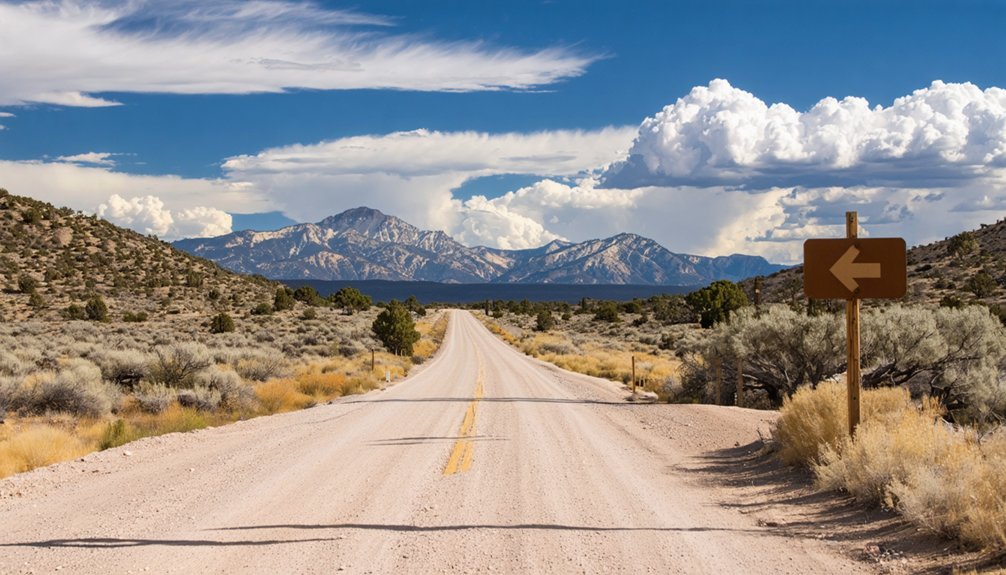
Getting to La Belle requires a short but adventurous eight-mile drive northeast of Red River, winding through the rugged mountain terrain of Taos County.
You’ll follow roads near Red River into the mountainous Valle Vidal region, tracing the north side of the south fork of Gold Creek.
Don’t expect modern maps or Forest Service signs pointing the way — this ghost town exploration demands self-reliance and a spirit of discovery.
The historical significance of La Belle makes every rough mile worthwhile.
A GPS with the coordinates 36°45′46″N 105°18′02″W keeps you on track.
If you’re coming from Colorado, La Belle sits roughly 100 driving miles southwest of Trinidad.
Prepare your vehicle for mountain terrain, pack supplies, and embrace the freedom of chasing history off the beaten path.
What’s Left to See at the La Belle Town Site?
When you arrive at the La Belle town site, you’ll find almost nothing left of the once-bustling boomtown that packed 700 residents and 80 buildings into its peak.
The decades have reclaimed the land, leaving little trace of the six saloons, three hotels, and the grand four-story Southern Hotel that once defined this mountain settlement.
What you’ll find, however, is the La Belle Lodge, a modern establishment operating near the original town site that keeps the name alive even as the ghost town itself has all but vanished.
Remaining Physical Remnants
Though La Belle once bustled with 80 buildings, six saloons, and a four-story hotel, you’ll find almost nothing standing at the town site today. The abandoned structures have long since crumbled, reclaimed by New Mexico’s rugged mountain terrain.
Still, the landscape itself tells a compelling story.
Look for these remaining physical remnants:
- Collapsed building foundations — Stone outlines barely visible beneath decades of overgrowth mark where businesses and homes once stood.
- Mining excavations — The Aztec prospect’s 100-foot shaft and 180-foot adit remain as raw, weathered scars cutting into the hillside.
- Historical artifacts — Scattered debris, including rusted metal fragments, hints at the town’s surprisingly sophisticated past.
The La Belle Lodge now occupies the old town site, standing as the only modern landmark amid this forgotten freedom-seeker’s paradise.
La Belle Lodge Today
Standing at the edge of what was once La Belle’s bustling core, you’ll notice one structure that breaks the silence of crumbling foundations and overgrown mine shafts — the La Belle Lodge.
Built on the original townsite, it’s your anchor point for exploring La Belle’s history firsthand.
The lodge doesn’t just occupy the land — it *connects* you to it. Ghost town legends surrounding Black Jack Ketchum’s visits, buried treasure, and La Belle’s explosive 1894 boom feel tangible when you’re standing where the Southern Hotel once towered four stories high.
You won’t find a museum or guided tour waiting for you here. What you’ll find is raw, unfiltered history beneath your boots — and that’s exactly the kind of freedom serious ghost town explorers come looking for.
When Are La Belle’s Mountain Roads Actually Passable?
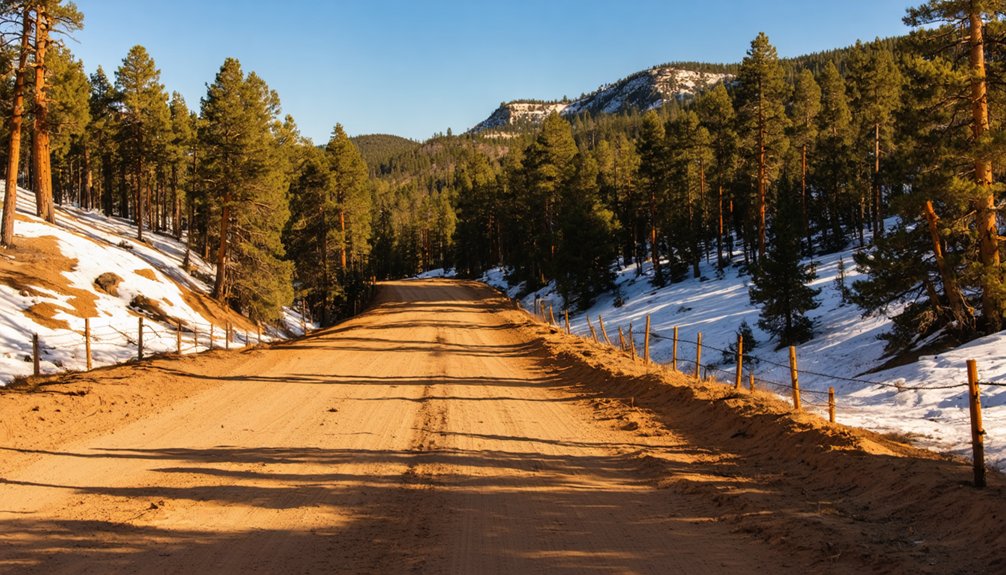
Getting to La Belle isn’t just about finding the right turn-off near Red River — it’s about timing your visit so the mountain roads don’t turn your road trip into a recovery mission.
Mountain conditions in the Valle Vidal region shift fast, and seasonal access is never guaranteed.
Plan around these realities:
- Summer (June–September): Your best window — dry roads, passable terrain, and the ghost town’s forested surroundings are fully alive.
- Spring (April–May): Snowmelt creates muddy, rutted tracks that’ll swallow low-clearance vehicles without mercy.
- Winter (November–March): Snow and ice seal these roads completely — beautiful from a distance, impassable in practice.
No Forest Service signs mark your route, so arrive prepared with offline maps, a high-clearance vehicle, and flexible timing.
What to Bring for La Belle’s High-Altitude, Off-Road Terrain
Once you’ve sorted out your timing, packing the right gear makes the difference between a smooth high-altitude adventure and a stranded afternoon on a forgotten mountain track.
The right gear separates a triumphant mountain run from a miserable, stranded mess on a forgotten track.
La Belle sits in rugged northern New Mexico terrain, so your high altitude gear should include layers for sudden temperature swings, sun protection, and a quality first-aid kit.
For off road essentials, load your vehicle with a spare tire, tow strap, shovel, and recovery boards. Carry extra fuel since gas stations don’t appear on these remote roads.
Bring enough water and food for an unplanned overnight stay. A paper map beats a dead phone battery every time. GPS with offline maps adds backup confidence.
Pack light but smart, and you’ll move freely through this wild, forgotten country.
Elizabethtown, Cimarron, and Other Ghost Towns on the Northern New Mexico Loop
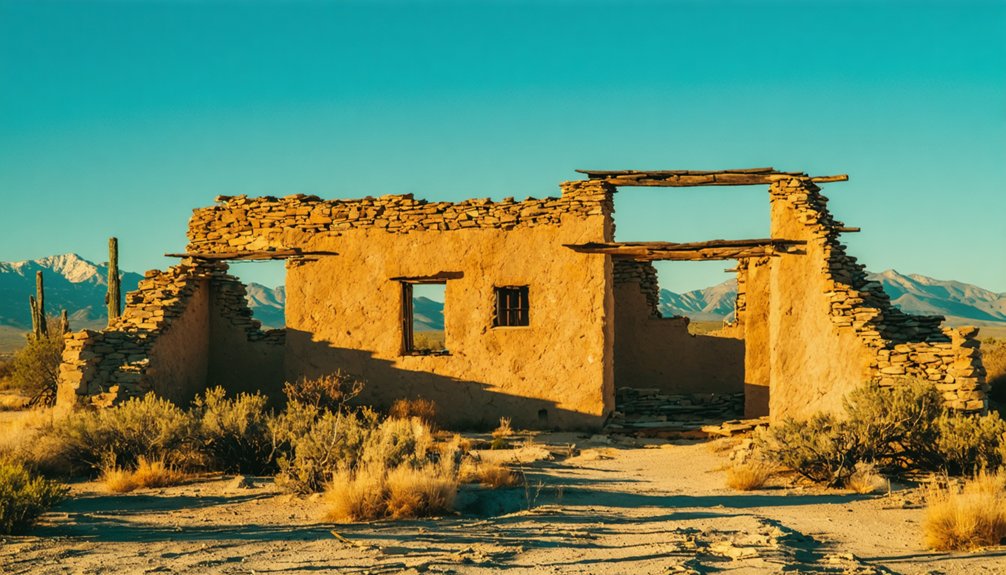
La Belle pairs naturally with several other ghost towns scattered across northern New Mexico, making it easy to build a full loop worth the drive.
You’ll move through landscapes that once roared with ambition and now sit quietly under open skies.
- Elizabethtown – Elizabethtown history runs deep with 1860s gold fever, crumbling adobe walls, and a cemetery that tells hard stories.
- Cimarron – Cimarron legends cling to the St. James Hotel, where bullet holes still mark the ceiling from gunfighters who didn’t leave peacefully.
- Rayado – Kit Carson’s restored homestead offers a rare glimpse into frontier life before the boomtowns arrived.
String these stops together, and you’ve got a raw, unhurried route through New Mexico’s forgotten past.
Where to Camp and Stay While Exploring La Belle Country
If you’re planning to explore La Belle country, you’ve got solid options ranging from dispersed wilderness camping in the Valle Vidal to rustic lodges near the old townsite.
The La Belle Lodge sits practically on the ghost town‘s original footprint, putting you steps from history when you wake up each morning.
You’ll also find developed campgrounds near Red River, giving you a comfortable basecamp while you chase down the boomtown’s fading traces.
Nearby Campgrounds And Sites
Nestled in the mountainous Valle Vidal region, La Belle country offers surprisingly rich camping options for the ghost town explorer willing to rough it a bit.
Follow these camping tips to maximize your outdoor activities near this forgotten boomtown:
- Cimarron Canyon State Park – Towering palisades frame this stunning canyon campground, just a scenic drive from La Belle’s remnants.
- Carson National Forest Dispersed Sites – Pitch your tent freely among ponderosa pines near Gold Creek’s north fork, steps from where miners once dreamed.
- Red River Campground – Eight miles southwest, this basecamp offers hookups, hot showers, and trail access into the surrounding high country.
You’ll wake refreshed, ready to chase history across these wild northern New Mexico mountains.
Local Lodging Options
Whether you’re chasing ghost town history or simply craving a mountain escape, La Belle country delivers solid lodging choices for every comfort level.
The La Belle Lodge sits directly on the old townsite, connecting you to the area’s historical significance while keeping you comfortable.
Red River, just eight miles southwest, offers motels, cabins, and vacation rentals that put you close to local attractions like hiking trails, scenic overlooks, and surrounding ghost town ruins.
Angel Fire and Taos provide additional options for those wanting more amenities without sacrificing mountain character.
Book early during summer months, as this region draws serious adventurers.
Whatever you choose, your base camp becomes the launching point for exploring one of northern New Mexico’s most fascinating and forgotten frontiers.
Valle Vidal Wilderness Camping
Adventurers who want a rawer connection to La Belle country should consider skipping the lodge and pitching a tent in the Valle Vidal unit of Carson National Forest, which surrounds the ghost town‘s mountainous terrain.
You’ll find solitude among ponderosa pines, elk meadows, and creek bottoms that haven’t changed much since prospectors roamed here in 1894.
Pack your camping gear thoughtfully for high-altitude nights:
- Layered sleeping systems for temperatures that drop sharply after sunset
- Bear canisters for food storage in active wildlife corridors
- Topographic maps, since no Forest Service signs mark these backcountry routes
Wilderness safety demands preparation here.
Cell service disappears fast, trails aren’t always marked, and afternoon thunderstorms build quickly.
Respect the land, and La Belle country rewards you with unforgettable freedom.
Frequently Asked Questions
Was La Belle, New Mexico Ever Featured in Any Films or TV Shows?
La Belle’s real ghost town sits forgotten, yet its cinematic history lives on — Netflix’s *Godless* fictionalized it! Though film locations shifted elsewhere for filming, you’ll still feel its wild, untamed spirit calling you to explore freely.
Who Was Mrs. Belle Dixon, and What Was Her Connection to La Belle?
You’ll discover that Mrs. Belle Dixon was the founder’s wife, and her name shaped La Belle history forever. Belle Dixon’s legacy lives on through this gold rush ghost town, named in her honor during 1894’s exciting boom.
Is There Really Buried Treasure Near the Old La Belle Town Site?
Tantalizing tales tempt treasure myths around La Belle! Black Jack Ketchum’s nearby ranch fuels legends of buried riches, but you’ll find no confirmed historic artifacts. Still, you’re free to explore and let your imagination roam wild!
What Was the Most Expensive Building Ever Constructed in La Belle?
You’ll find the Southern Hotel was La Belle’s most expensive building, boasting remarkable architectural details across four stories and 80 rooms. Its historical significance shines through its staggering $30,000 construction cost, making it an unforgettable symbol of boomtown ambition.
Did La Belle’s Post Office Ever Reopen After Its Initial Closure?
No, the post office history shows it never reopened after its 1901 closure. You’d feel the community impact as La Belle’s decline accelerated, leaving this once-vibrant boomtown to fade into ghostly, untamed silence forever.
References
- https://www.refinery29.com/en-us/2017/11/182115/netflix-godless-true-story-la-belle-real-place-wyoming
- https://en.wikipedia.org/wiki/La_Belle
- https://westernmininghistory.com/towns/new-mexico/la-belle/
- https://www.ghosttowns.com/states/nm/labelle.html
- https://www.restlessgeographer.com/n-amer42
- http://ghosttowns.placesandpics.com/new-mexico/labelle-nm/
- https://www.newmexico.org/places-to-visit/ghost-towns/
- https://www.youtube.com/shorts/Fix9uzJoFa8