You’ll find Leesburg ghost town tucked at 6,653 feet in Idaho’s Lemhi Mountains, accessible only via Forest Road 061 from late spring through early fall when snow clears. Plan your visit between June and October, bringing detailed forest service maps, high-clearance vehicle, and backcountry supplies for the remote journey. Once there, you’ll explore seventeen marked graves, weathered log cabins, and mining remnants scattered across the 160-acre Historic District where thousands once sought fortune during the 1866 gold rush, and there’s much more to discover about this authentic frontier settlement.
Key Takeaways
- Leesburg sits at 6,653 feet in Idaho’s Lemhi Mountains, accessible via Forest Road 061 through dense pines along Napias Creek.
- Visit only during summer and early fall when dirt roads remain passable; deep snow closes access late fall through late spring.
- Standard vehicles can handle summer dirt roads, but bring detailed forest service maps to navigate the backcountry route network.
- The 160-acre National Register site preserves weathered cabins, mining equipment, and seventeen marked graves from the 1866 gold rush.
- Extend your trip to nearby ghost towns like Gilmore, Blackbird, Cobalt, or Burgdorf’s rustic hot springs in Salmon-Challis National Forest.
The Discovery That Started It All: Gold Rush of 1866
On July 16, 1866, F. B. Sharkey guided four prospectors from Deer Lodge, Montana, through forested valleys until they struck pay dirt on Napias Creek—a Shoshoni word meaning money. At Discovery Bar, they found what every free-spirited fortune seeker dreams of: coarse gold assaying at $18.40 per unit.
These initial gold discoveries sparked immediate action. One miner raced back to Deer Lodge for supplies while others staked claims along Salmon River’s tributaries.
Within a month, Montana’s capital stood nearly deserted as hundreds stampeded toward this high quality ore. Shallow placers yielded seven to thirty cents per pan on bedrock—enough to draw 500-600 miners by fall.
You’re standing where desperate men carved fortunes from creek beds, their ambition transforming wilderness into opportunity.
From Boom to Ghost: The Rise and Fall of a Mining Camp
- Peak prosperity brought 100 businesses, five stores, and three butcher shops by late 1866
- Harsh reality hit when deep snow trapped 500 miners that first winter, requiring desperate supply missions
- Swift decline followed as placers exhausted by 1870, dropping population to just 180 souls
What You’ll See: Remnants of a Frontier Settlement
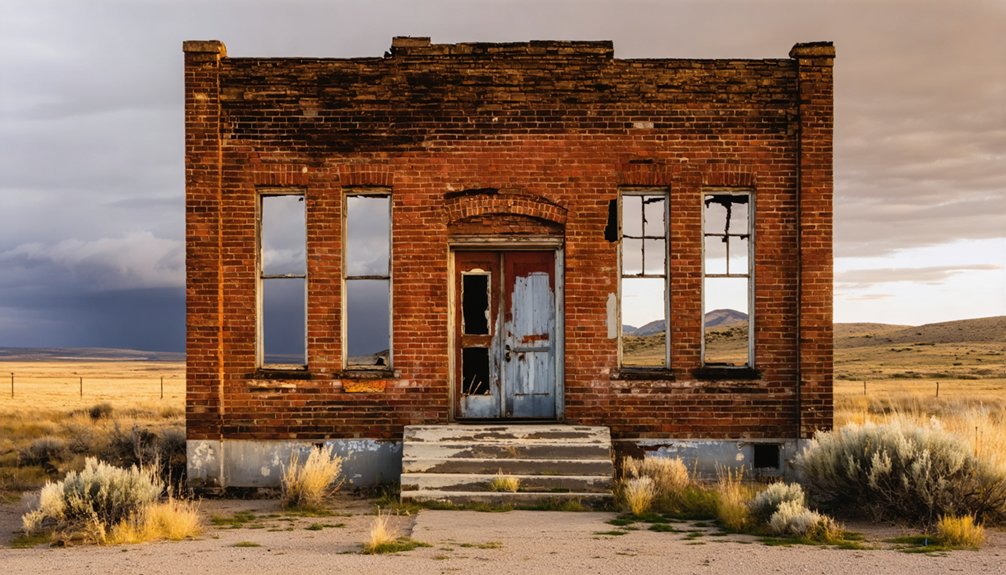
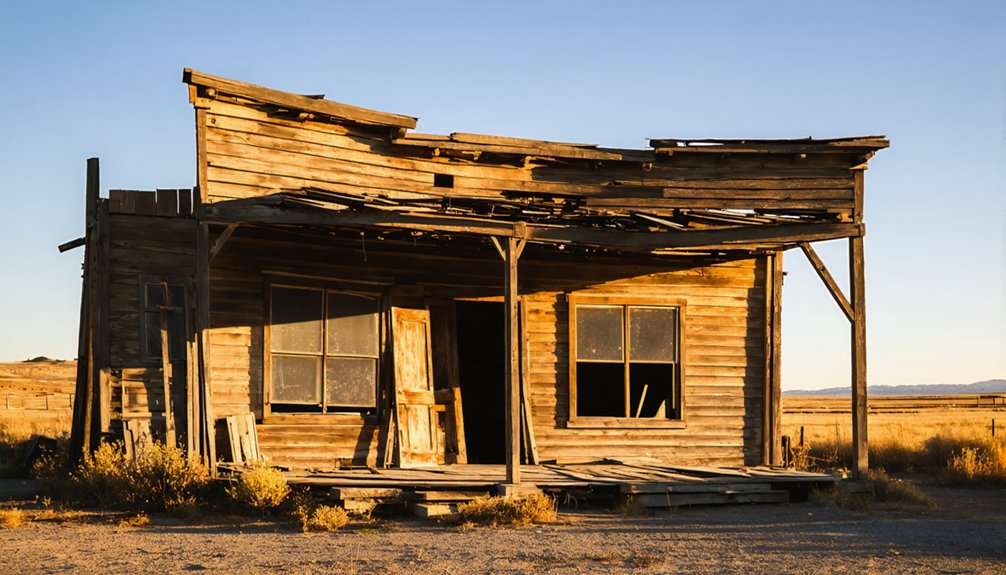
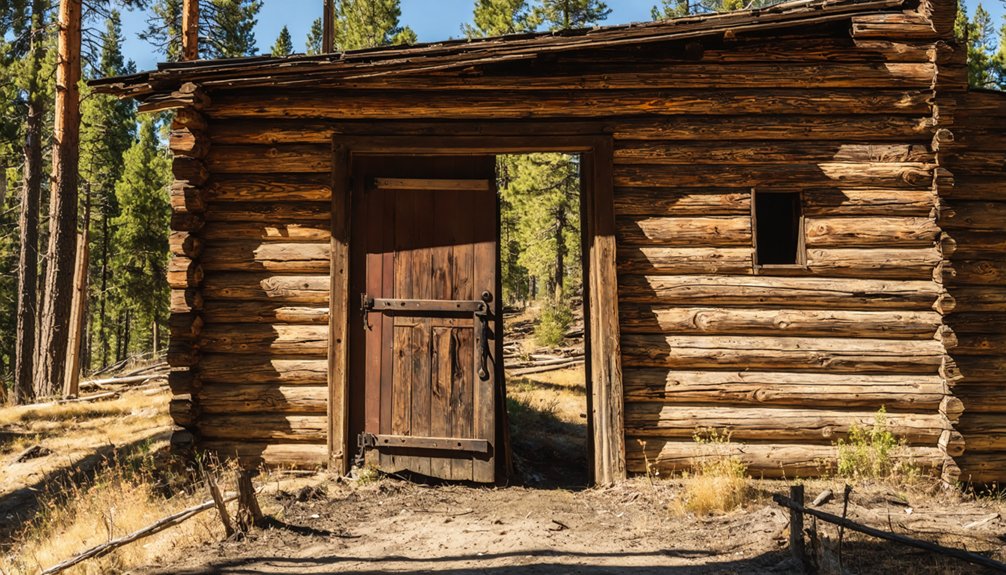
Today’s Leesburg reveals itself slowly as you wander through the pine-studded basin, where weathered log cabins emerge from the forest like forgotten sentinels of the 1860s gold rush. You’ll discover scattered mining equipment—hand tools and water cannons left by Chinese miners, dragline remnants from 1939-1942 operations, and stamp mill foundations that once thundered through the canyon.
The architectural evolution is stark: over 100 buildings hastily constructed within months now reduced to a handful of recognizable structures. Seventeen marked graves tell partial stories of Leesburg’s forgotten inhabitants, though Chinese remains were long ago exhumed and returned home.
Listed on the National Register since 1975, this high-elevation site along Napias Creek preserves tangible fragments of Idaho’s earliest gold district, where history quietly surrenders to encroaching wilderness.
Getting There: Location and Road Conditions
Tucked deep in Idaho’s Lemhi Mountains at 6,653 feet, Leesburg sits approximately 15 airline miles west of Salmon, though the winding mountain route stretches considerably longer. The remoteness challenges you’ll face are part of the adventure.
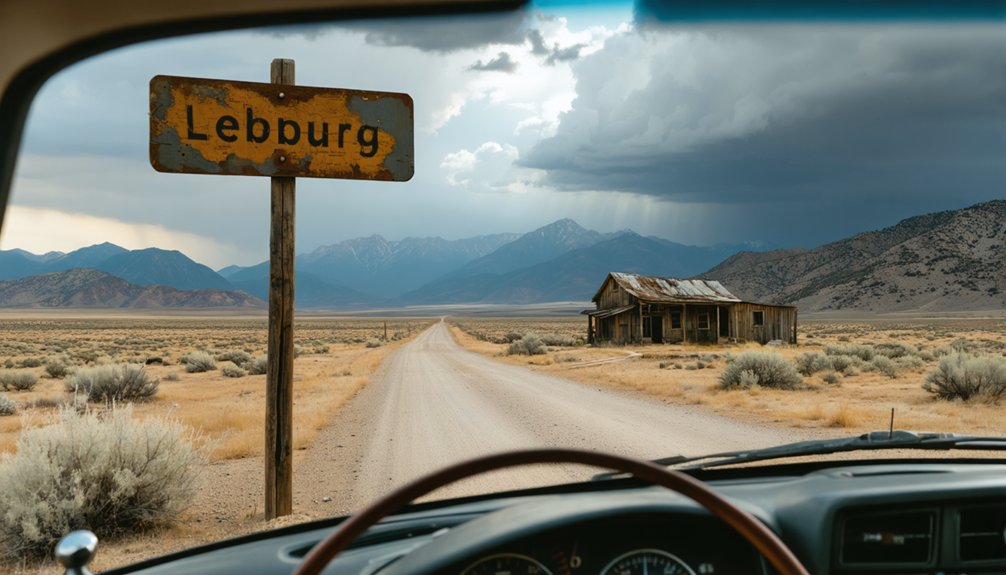
Forest Road 061 serves as your primary artery, carving roughly 10 miles through dense pines along Napias Creek in the Salmon-Challis National Forest.
Transportation logistics worth noting:
- Road conditions: Dirt roads handle standard vehicles during summer, but elevation and weather dictate accessibility
- Wayfinding requirements: Detailed forest service maps are essential for traversing the network of turns and curves
- Seasonal access: Plan your visit between late spring and early fall when mountain passes remain clear
You’re venturing into genuine backcountry—prepare accordingly for this 160-acre Historic District expedition.
Best Time to Visit: Seasonal Access Considerations
You’ll find Leesburg accessible only during summer and early fall when dirt roads stay passable for most vehicles.
Snow piles high from late fall through late spring, completely blocking access and requiring snow machines for winter entry—just as deep drifts trapped early miners who nearly ran out of supplies by February.
Plan your visit between June and September to explore wildflower meadows and ghost town remnants under cool mountain temperatures before October snows seal the high country again.
Summer-Only Road Accessibility
When planning your journey to Leesburg, timing matters more than anything else on your checklist. Summer’s warm months liberate these forested national forest roads northwest of Salmon, transforming what’s impassable snowpack into your personal adventure route. Timed travel conditions determine whether you’ll cruise through or turn back disappointed.
Navigating gravel surfaces requires patience, but maintained roads welcome most vehicles without demanding technical skills:
- Storm awareness: Summer downpours quickly turn dirt roads messy—check forecasts before departing
- Vehicle capability: High clearance handles rough patches from past wildfires on Forest Road 061
- Daylight planning: Early evening shadows enhance the ghost town’s eerie beauty while providing ample navigation time
Once rain shifts to snow, you’re done until next year. Make your move while freedom’s window stays open.
Weather and Snow Considerations
Leesburg’s brutal winters haven’t mellowed since miners first battled waist-deep snowdrifts in the 1860s. You’ll face the same harsh winters that once trapped prospectors until mid-March, their food supplies dwindling as twelve men shoveled relentlessly to clear trails.
Modern forecasts show RealFeel temperatures plunging to 11°F with persistent snow accumulation into spring.
Plan your escape between June and September when dirt roads become passable and supply chain challenges vanish. Historical records confirm snow lingered until nearly June during peak mining years, making serious exploration impossible.
Today’s elevation at 45.23N still guarantees prolonged winter conditions that’ll strand you without proper planning. Summer’s your window—warm months transform these inhospitable mountain forests into accessible territory where your vehicle won’t become another relic buried in snowdrifts.
The Chinese Mining Legacy at Leesburg
As you explore Leesburg’s weathered landscape, you’ll discover that Chinese miners became the town’s backbone after 1870, when the original prospectors abandoned claims they deemed unprofitable. These resilient workers transformed “worthless” low-grade placers into productive operations, sustaining the basin’s mining economy for three decades while facing severe discrimination and restrictive federal laws.
You’ll find evidence of their ingenuity in the hillsides where they methodically worked through gravel deposits using hand tools and sluice boxes, ultimately recovering millions in gold from ground others had written off.
Transition to Chinese Workforce
By 1870, Leesburg’s gold rush glory had faded dramatically, leaving behind a skeletal population of just 180 souls—most of them Chinese miners who saw opportunity where white prospectors saw only exhaustion.
While white miners chased richer strikes elsewhere, Chinese workers transformed abandoned claims into profitable ventures through:
- Reworking tailings and “played-out” ground using patient, meticulous techniques that extracted gold others had missed
- Establishing their own Chinatown with over 100 buildings, creating a self-sufficient community despite widespread prejudice
- Adapting mining techniques evolution from simple placer work to hydraulic operations, eventually recovering over $6 million from supposedly worthless ground
These miners didn’t just survive Leesburg’s decline; they extended its productive life for decades.
You’ll find 17 burial sites today—silent witnesses to chinese labor exploitation and resilience.
Mining Techniques and Tools
How did Chinese miners extract millions from ground that white prospectors had abandoned as worthless? You’ll discover they mastered patient, methodical techniques that transformed “exhausted” claims into profitable ventures.
While earlier prospectors chased visible gold, Chinese crews worked systematically through low-grade gravels yielding just 7-30 cents per pan—adding up to over $6,000,000 through sheer persistence.
Historic Significance and Preservation Efforts
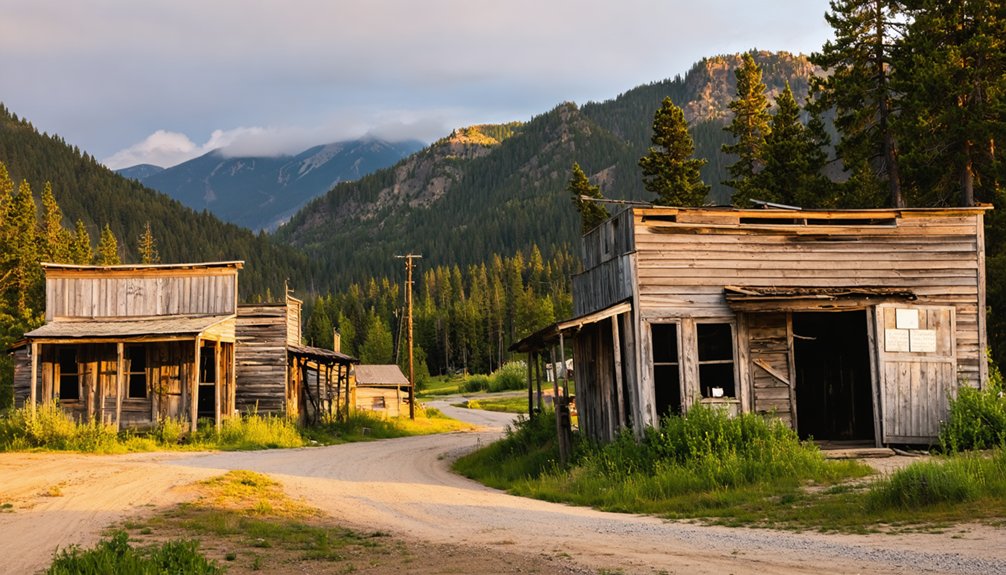
Walking through Leesburg today, you’re treading on ground that’s been federally recognized for its historical importance since 1975, when the Leesburg Historic District earned its place on the National Register of Historic Places. This 160-acre designation protects an authentic 19th-century mining camp, complete with 79 documented features including structures, charcoal pits, and a frontier cemetery.
What You’ll Find Protected Here:
- Standing and collapsed buildings that comprise over half the mapped features within 200 yards of the townsite
- Archaeological research opportunities throughout the district, with extensive potential for historical excavation
- National register benefits that provide legal framework against ongoing threats like vandalism and unauthorized artifact removal
Unfortunately, bottle collectors and wood scavengers have already impacted the site’s integrity, making preservation efforts increasingly critical for future explorers.
Nearby Attractions and Extended Trip Ideas
Once you’ve explored Leesburg’s weathered cabins and windswept cemetery, the surrounding Salmon River country reveals a treasure trove of abandoned mining camps within a day’s drive.
Scenic drives along Highway 28 lead to Gilmore’s forty remaining structures, where the infamous “Get Off and Push” railroad once hauled silver to Montana smelters.
Northwest of Salmon, dirt roads wind through Salmon-Challis National Forest‘s pine-covered slopes to Blackbird, Cobalt, and Yellowjacket—each offering solitary exploration.
For regional exploration, combine your trip with Bonanza Ghost Town near Custer, where tilted cemetery headstones dot the hillside and cottonwoods whisper through abandoned streets.
Additionally, the history of garnet town in Idaho offers a glimpse into Idaho’s mining past, with remnants of old structures revealing stories of ambition and hardship. Visitors can wander through the ruins and imagine the bustling life that once thrived in this remote location. Exploring this area allows for a unique understanding of how the lure of precious gems shaped communities in the American West.
River of No Return outfitters run gold mine tours through canyon country, while Burgdorf’s hot springs provide rustic lodging among log cabins and woodsmoke.
Frequently Asked Questions
Are There Restroom Facilities or Amenities Available at the Leesburg Ghost Town Site?
No restroom facilities exist at Leesburg ghost town. You’ll find zero portable restroom availability or on-site waste disposal. Pack your own supplies and practice leave-no-trace principles—this remote location demands complete self-sufficiency for your backcountry adventure.
Is Camping Permitted Near Leesburg and Are There Designated Campground Areas?
Yes, you’ll find dispersed camping areas near Leesburg along forest roads. Seasonal accessibility runs summer through early fall when snow melts. Nearby hiking trails offer exploration opportunities, but you’ll need to bring all supplies since there aren’t developed facilities.
Are Guided Tours Available or Is Leesburg a Self-Guided Exploration Site?
You’ll blaze your own trail here—Leesburg offers no guided tours, just pure self-guided walking tours through haunting ruins. Curated interpretive signage dots the landscape, letting you explore freely among weathered cabins and mining relics at your own pace.
What Safety Precautions Should Visitors Take When Exploring the Old Buildings?
Wear protective gear like masks and gloves when exploring unstable structures. You’ll need to beware of wildlife hiding in abandoned buildings. Stay alert for decayed beams, collapsing tunnels, and contaminated soil. Always wash thoroughly before eating or leaving.
Is There a Visitor Center or Place to Get Maps Before Heading to Leesburg?
There’s no historic visitor center at Leesburg itself, but you’ll find maps and essential information at Salmon’s local tourism office, VisitSalmonValley.com, and the Lemhi County Historical Museum before hitting those rugged forest roads to freedom.