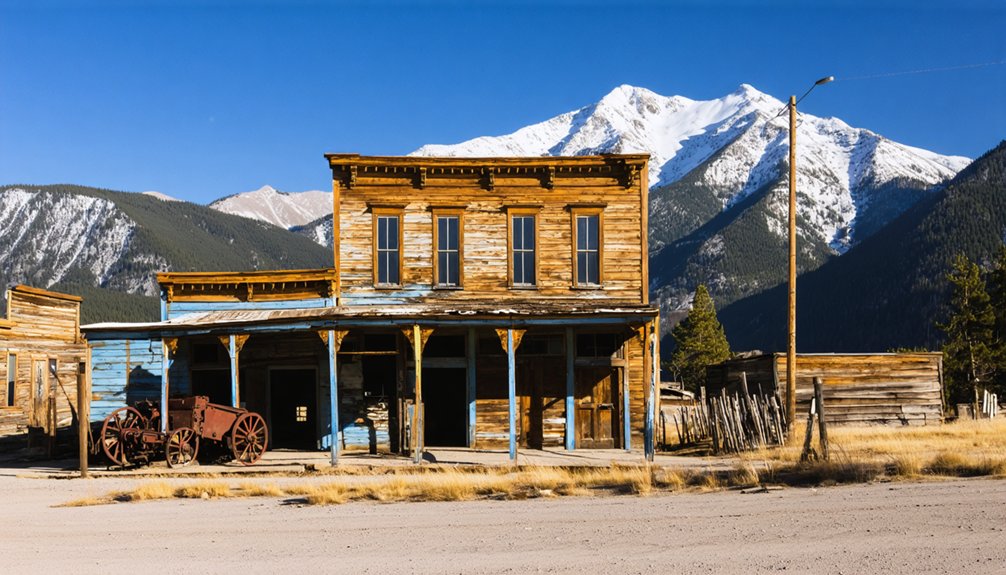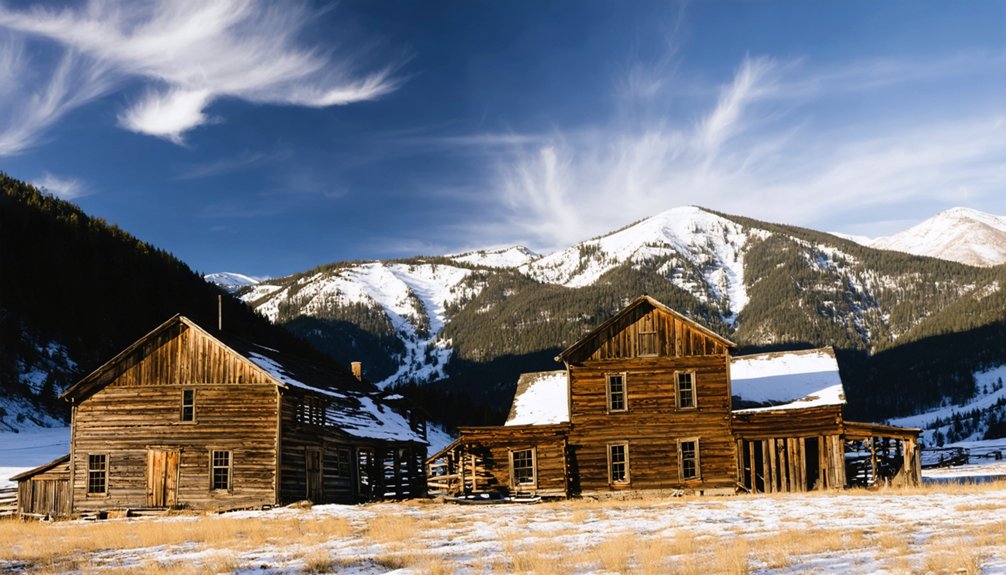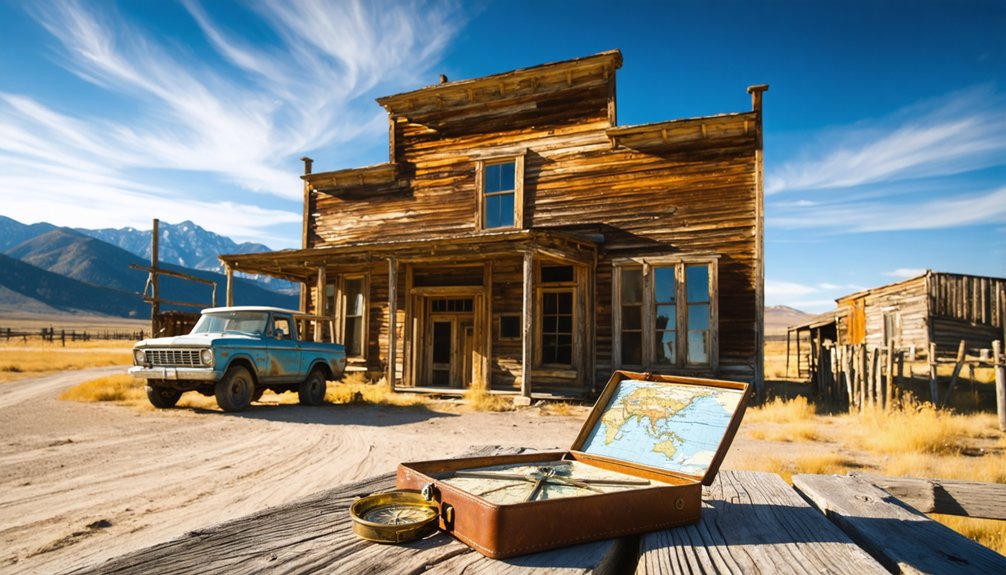
Planning your Liberty, Colorado ghost town road trip requires a high-clearance 4WD vehicle and landowner permission, as this vanished mining settlement sits on private property near the Great Sand Dunes. You’ll navigate unmarked terrain using historical maps along the old Alamosa stagecoach route, where time has erased nearly all structures. Combine your adventure with nearby attractions like Crestone’s spiritual sites and Medano Pass’s backcountry road. Essential preparation, understanding access restrictions, and knowing the best seasons will transform your exploration into an unforgettable high desert journey.
Key Takeaways
- Liberty’s Colorado townsite has vanished into high desert with no artifacts or structures, only unmarked terrain to explore.
- Requires high-clearance, four-wheel-drive vehicle and landowner permission, as the site sits on private property with enforced trespassing laws.
- Interactive map traces the 75-mile historic stagecoach route from Salida to Leadville, marking Liberty’s location and waypoints.
- Great Sand Dunes National Park sits 35 miles away, offering North America’s tallest dunes and backcountry camping opportunities.
- Nearby Crestone features Buddhist stupas, Hindu temples, and the challenging 22-mile Medano Pass Primitive Road for backcountry driving.
The History Behind Liberty and Duncan’s Rise and Fall
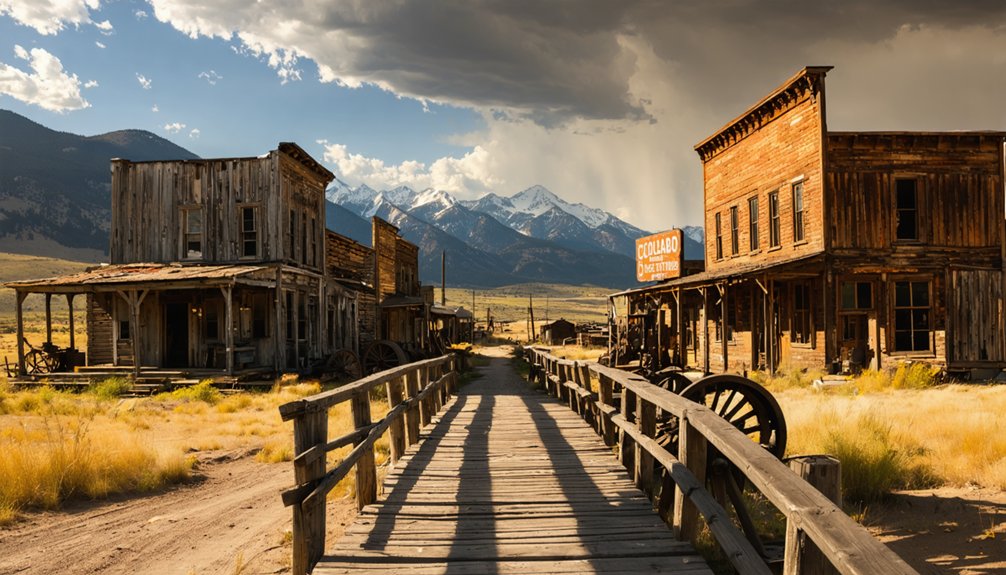
When gold glittered in the waters of Swot Creek in 1873, prospectors flooded into Washington State’s Kittitas County, transforming wilderness into opportunity overnight. Thomas Meager carved out Liberty just north of Cle Elum, where economic opportunities sparked a decade-long boom complete with stagecoach service, hotels, and schools.
Meanwhile, Duncan emerged as a frontier settlement on the Baca property before 1900, its structures rising to house miners chasing precious metal dreams. But when those dreams turned to dust, Duncan’s story took a darker turn. By 1900’s end, residents dismantled their homes and vanished. Some relocated south to a new Liberty near Colorado’s Great Sand Dunes, seeking the freedom their town’s name promised.
Both settlements eventually faded, leaving only whispers of gold-fueled ambition behind.
What Remains at the Liberty Townsite Today
Despite the ambitious dreams that once fueled its establishment, Liberty’s Colorado townsite has largely vanished into the high desert landscape near the Great Sand Dunes. You’ll find no historical artifacts found at the site—time and the elements have reclaimed what settlers left behind.
The lack of visitor infrastructure means you’re truly on your own here, exploring raw, unmarked terrain without guided trails or interpretive signs. What remains is fundamentally an empty expanse where a community once thrived. You’ll need to rely on historical maps and your own sense of adventure to locate where buildings once stood.
This absence of physical remnants makes Liberty a ghost town in the truest sense—a place where history whispers through sagebrush rather than through preserved structures.
Getting to Liberty: Access Routes and Vehicle Requirements
The journey to Liberty follows traces of the historic stagecoach route that once connected this mining camp to Alamosa, though today’s path demands careful navigation through private ranch lands and rough county roads.
You’ll need a high-clearance, four-wheel-drive vehicle to handle the unpaved terrain and steep mountain grades that challenge modern explorers just as they did nineteenth-century prospectors.
Before you set out, obtaining permission from landowners is essential—the townsite sits on private property where trespassing laws are enforced, and respecting these boundaries guarantees continued access for future ghost town enthusiasts.
Historic Stagecoach Route Today
Travelers seeking Liberty, Colorado today will find their journey begins with careful route planning, as modern access follows much the same challenging terrain that stagecoach drivers navigated over a century ago. An interactive map traces the 75-mile historic route from Salida to Leadville, marking Liberty’s location along these weathered paths. Your smartphone becomes your guide, with detailed access points for driving, biking, or hiking where wagon wheels once rolled.
Route accessibility varies greatly—private land parcels intersect historic trails visible on Google Earth, while State Trust Land tracts offer passage through less distinct paths. Safety messages and pre-trip planning tools prove essential for ghost town exploration. Unlike those overnight stagecoach passengers who slept bouncing through darkness, you’ll navigate with real-time positioning and links to scenic waypoints along this storied corridor.
Four-Wheel Drive Essential
Modern GPS coordinates will guide you to Liberty’s general vicinity, but reaching this remote ghost town demands more than digital traversal—you’ll need serious four-wheel-drive capability and off-road experience. The unimproved roads accessing Liberty aren’t casual Sunday drives. Skilled driver requirements include reading terrain, picking clean lines through rocky sections, and handling steep elevation changes exceeding 1,000 feet. Your rig’s equipment capabilities matter too—low-range transfer cases, adequate ground clearance, and reliable traction control prove essential when maneuvering washes and boulder-strewn paths.
Snow blocks upper sections well into summer, while afternoon thunderstorms transform passable routes into impassable quagmires. Study onX Offroad maps beforehand to understand trail difficulty ratings. You’re venturing into genuine backcountry where self-reliance isn’t optional—it’s survival.
Respecting property lines separates responsible explorers from trespassers in Liberty, where remnants of frontier life coexist with contemporary homesteads. You’ll find residents still living among the historic structures, making unauthorized access a real concern. Stick to Liberty Road and designated viewing areas where interpretive signs guide your exploration without legal considerations complicating your adventure.
The town’s 1974 National Register listing protects these weathered buildings, but photographing from roadside perspectives keeps you clear of private boundaries. Navigate the open landscape freely where permitted, but remember that residential activity centers near Thomas Meagher’s original store and cabin area. This ghost town isn’t abandoned—it’s inhabited history. Your freedom to explore depends entirely on respecting those who’ve chosen this rugged, isolated existence as their home.
Nearby Attractions to Combine With Your Visit
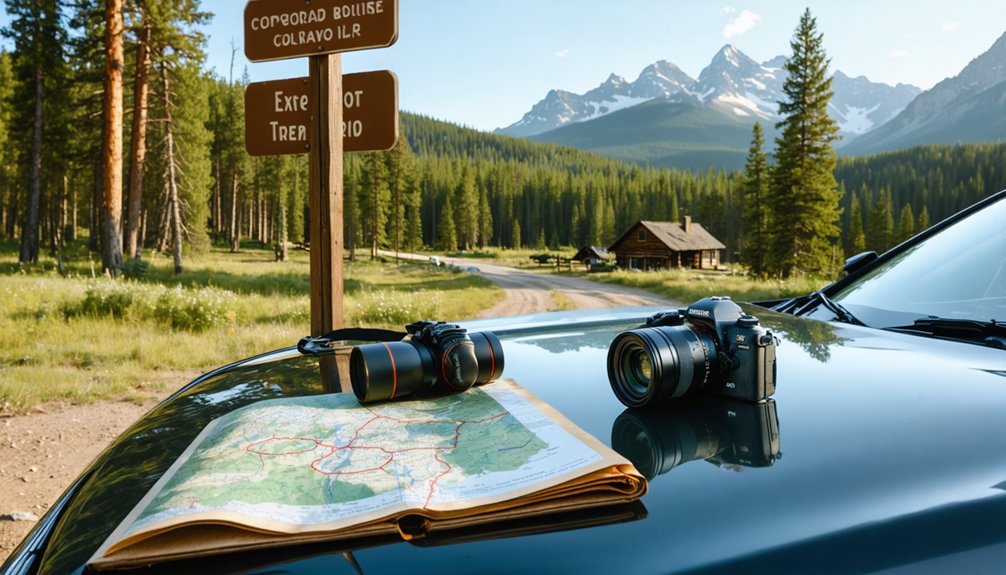
Your journey to Liberty opens doors to some of southern Colorado’s most spectacular destinations within easy driving distance. The towering dunes of Great Sand Dunes National Park rise just an hour away, while the artistic mountain community of Crestone offers galleries, cafes, and spiritual retreat centers that contrast sharply with Liberty’s abandoned structures.
For another scenic adventure, the Medano Pass Primitive Road connects these attractions through alpine meadows and aspen groves, creating a full day of exploration that pairs ghost town history with natural wonders.
Great Sand Dunes National Park
Just 35 miles from Liberty’s crumbling remains, the otherworldly expanse of Great Sand Dunes National Park offers one of Colorado’s most surreal landscapes—a 30-square-mile sea of sand dunes rising dramatically against the Sangre de Cristo Mountains. You’ll find North America’s tallest dune towering 750 feet above the valley floor, containing over 5 billion cubic meters of wind-sculpted sand.
The park welcomes adventurers 24/7 year-round ($25 per vehicle). Bring your board for sand sledding down massive ridges, or secure a free backcountry camping permit to pitch your tent beyond the day-use area—just be prepared for a minimum 1.5-mile hike over the dunes. Sand temperatures hit 150°F in summer, so pack water and closed-toe shoes. After dark, you’ll witness some of America’s finest stargazing.
Historic Crestone Town
Today you’ll discover an eclectic mix alongside original 1880s structures:
- Buddhist stupas and Tibetan monasteries nestled against Sangre de Cristo peaks
- Hindu temples sharing Main Street with century-old mining-era buildings
- Carmelite monastery and Zen centers creating an interfaith sanctuary
The town’s remoteness and dramatic mountain backdrop attract seekers, artists, and adventurers who’ve rejected conventional paths—making Crestone perfect for exploring alternative perspectives.
Medano Pass Scenic Route
While most visitors snap photos from the paved parking lot at Great Sand Dunes National Park, adventurers with capable vehicles can tackle the legendary Medano Pass Primitive Road—a 22-mile backcountry route that’ll test your driving skills and reward you with solitude among North America’s tallest dunes.
You’ll need high-clearance 4WD to navigate nine creek crossings and deep sand sections at high elevation, reaching 10,040 feet at Medano Pass summit. Air down to 20 PSI for the soft stuff, and budget three hours to traverse narrow rocky sections and steep inclines.
Choose your season wisely—spring runoff deepens creek crossings dangerously, while winter brings snow closure. Fall delivers golden aspens and twenty-one primitive campsites with bighorn sheep roaming freely throughout.
Understanding Private Property Boundaries and Restrictions
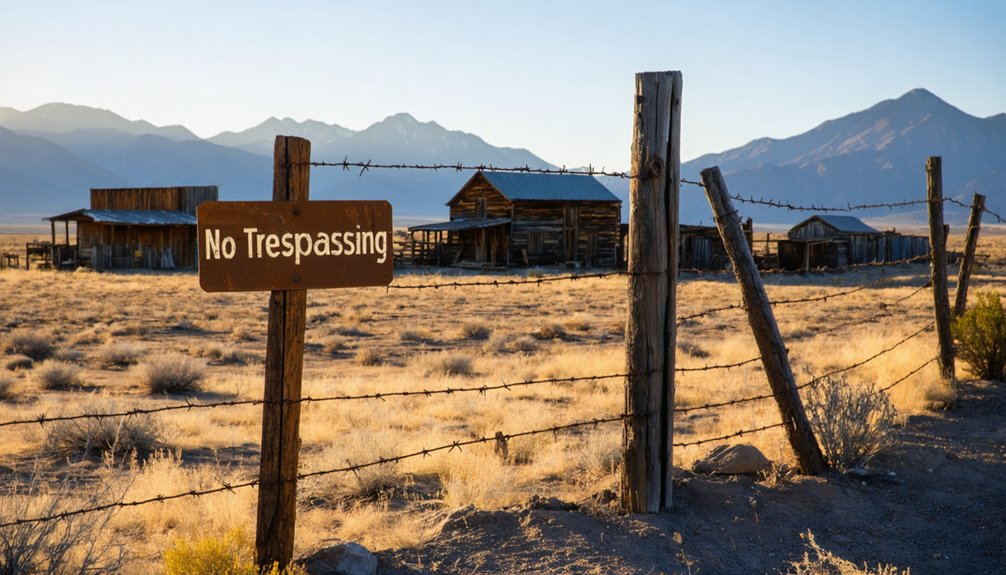
The weathered “No Trespassing” signs nailed to fence posts aren’t mere suggestions—they’re legal boundaries backed by Colorado law. Liberty’s townsite remains privately owned, and venturing past these markers triggers trespassing statutes that carry real consequences.
Before you explore, you’ll need to navigate landowner notification requirements and understand the liability concerns for visitors who ignore posted warnings.
Critical steps for responsible exploration:
- Research current property ownership through Eagle County land records
- Contact landowners directly to request written permission before visiting
- Document all correspondence and carry authorization proof while on-site
Even properties listed on historic registers don’t guarantee public access. The freedom to explore Colorado’s past requires respecting present-day property rights—your adventure depends on proper authorization, not assumption.
Best Time to Explore the Western Sangre De Cristo Foothills
Once you’ve secured permission to visit Liberty’s ghost town remnants, timing your expedition properly transforms a dusty roadside stop into an unforgettable journey through high-desert history. Late September through October delivers ideal hiking conditions—temperatures hover in the comfortable 60s while seasonal precipitation patterns shift from summer thunderstorms to scattered showers.
You’ll navigate the foothills’ unglaciated terrain without wrestling deep snowpack or dodging afternoon lightning strikes. Spring’s April-May window works too, warming from the 50s to 60s, though increased rainfall muddies backcountry roads.
Avoid December through February’s below-zero mornings and oppressive snowfall that buries access routes. Summer’s 80-degree highs seem inviting, but afternoon thunderstorms threaten exposed ridgelines where Liberty’s crumbling structures stand. Autumn rewards your patience with crystal-clear visibility stretching miles across the San Luis Valley floor.
Essential Supplies and Planning Tips for Remote Exploration
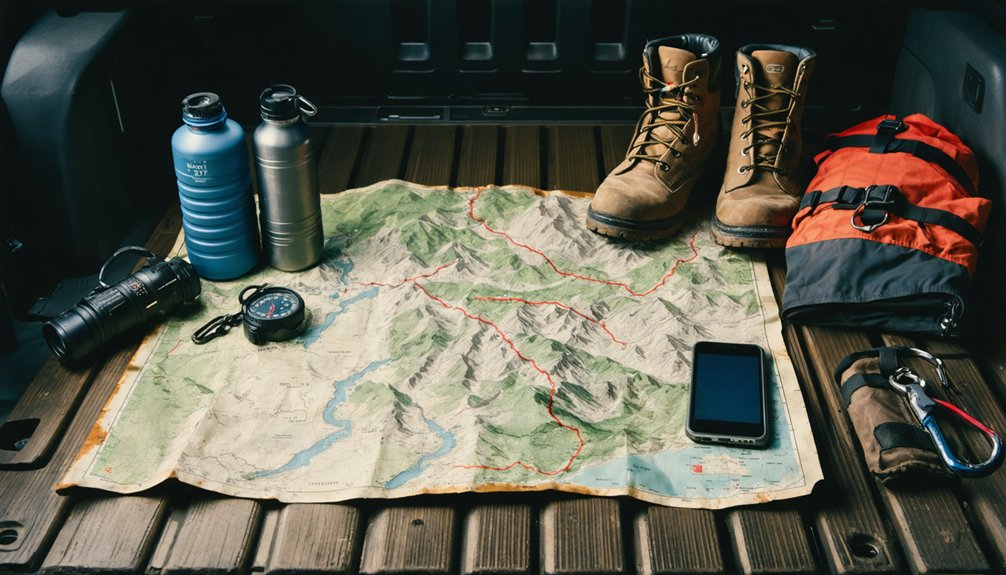
Experienced ghost town explorers rarely venture into Liberty’s isolated ruins without triple-checking their gear against Colorado’s unforgiving backcountry realities. Your equipment recommendations should prioritize navigation tools—pack offline GPS maps, a battery-free compass, and physical route markers since cell service vanishes beyond the foothills.
Health and safety precautions demand protective layers: sturdy boots guard against rusted nails, while respirator masks shield you from toxic mold spores haunting collapsed structures.
Essential gear includes:
- Redundant lighting systems – headlamp, Maglite flashlight, and backup torches with spare batteries
- First-aid supplies – bandages, antiseptics, pain relievers, and personal medications
- Emergency sustenance – water purification tablets, protein bars, and space blankets
Heavy-duty gloves protect hands during climbs through unstable frameworks, and your whistle signals rescue teams if Liberty’s crumbling buildings trap you unexpectedly.
Frequently Asked Questions
Were There Any Notable Outlaws or Lawmen Associated With Liberty’s History?
Liberty’s records don’t reveal infamous outlaws who roamed the area or local lawmen who maintained order. You’ll find the town’s history focuses more on mining ventures than gunfights, leaving its law enforcement legacy largely undocumented in available sources.
Can You Camp Overnight Near the Liberty Ghost Town Site?
Yes, you’ll find camping right at Liberty Recreation Site with 15 designated spots. Nearby campgrounds like Jamail Ranch offer additional freedom. Local history enthusiasts often camp here to explore the ghost town and surrounding coal mine ruins at their own pace.
Are There Any Guided Tours Available for Liberty and Duncan Townsites?
No guided hikes available exist for Liberty and Duncan townsites—they’re abandoned, with no self-guided audio tours either. You’re free to explore independently, discovering these remote ghost towns at your own pace through self-exploration and adventure.
What Wildlife Might I Encounter While Exploring the Liberty Area?
You’ll likely spot mule deer wandering through abandoned structures and alpine meadows. Watch for potential encounters with bears near forest edges, plus marmots, elk, and various raptors soaring overhead. Stay alert and maintain safe distances from all wildlife.
Did Any Famous People Ever Visit or Live in Liberty?
While records of prominent residents of Liberty remain scarce, you’ll discover that most mining camps attracted colorful characters rather than celebrities. Notable events in Liberty’s history centered around hardworking prospectors chasing silver dreams, not famous visitors.