To plan your ghost town road trip to Loveland, Oklahoma, start in Frederick, fill your tank, and head into Tillman County’s rural grid roads. You’ll find a weathered water tower, roofless buildings, and crumbling foundations marking where a once-thriving oil boom town stood. Don’t miss the historic Loveland Cemetery, where founder James Lovell is buried. There’s no cell service out here, so come prepared — and there’s far more to this hauntingly beautiful route than meets the eye.
Key Takeaways
- Start your road trip in Frederick, the county seat of Tillman County, where you can fuel up and download offline maps.
- Loveland was originally called Harriston before being renamed in 1908 following the arrival of the railroad.
- Key sites include a weathered water tower, roofless buildings, crumbling foundations, and the well-preserved Loveland Cemetery.
- Rural grid roads can be challenging after rain; high-clearance vehicles are recommended for navigating Tillman County’s roads.
- There are no gas stations or cell service near Loveland, so prepare all supplies before leaving Frederick.
The Rise and Fall of Loveland, Oklahoma
When the Rock Island Townsite and Realty Company first staked out this corner of Tillman County in the late 1800s, they called it Harriston — a modest prairie settlement with big ambitions.
The railroad impact transformed everything when the tracks arrived in 1908, prompting a rename to Loveland and launching genuine town life almost overnight.
The railroad’s 1908 arrival didn’t just bring tracks — it brought a new name, a new identity, and a town born overnight.
You can credit James Lovell, an early 1890s settler who championed the railroad’s arrival and earned his place as the town’s founder.
A nearby oil boom pushed the population past 1,000 residents, making Loveland feel unstoppable.
But fires, tornadoes, rival towns, and an oil bust chipped away at that momentum.
What’s Left of Loveland Today?
When you visit Loveland today, you’ll find a hauntingly sparse collection of crumbling structures, including a weathered water tower that still stands as the town’s most recognizable landmark.
You can wander through roofless buildings and scattered foundations, though you’ll want to tread carefully given the site’s serious deterioration.
Don’t miss the Loveland Cemetery, where you can pay your respects to founder James Lovell and his wife, two of the earliest souls who shaped this now-forgotten community.
Remaining Structures And Ruins
Once a thriving prairie town of over 1,000 residents, Loveland today is little more than a scattering of crumbling ruins and weathered remnants swallowed by the southwestern Oklahoma landscape.
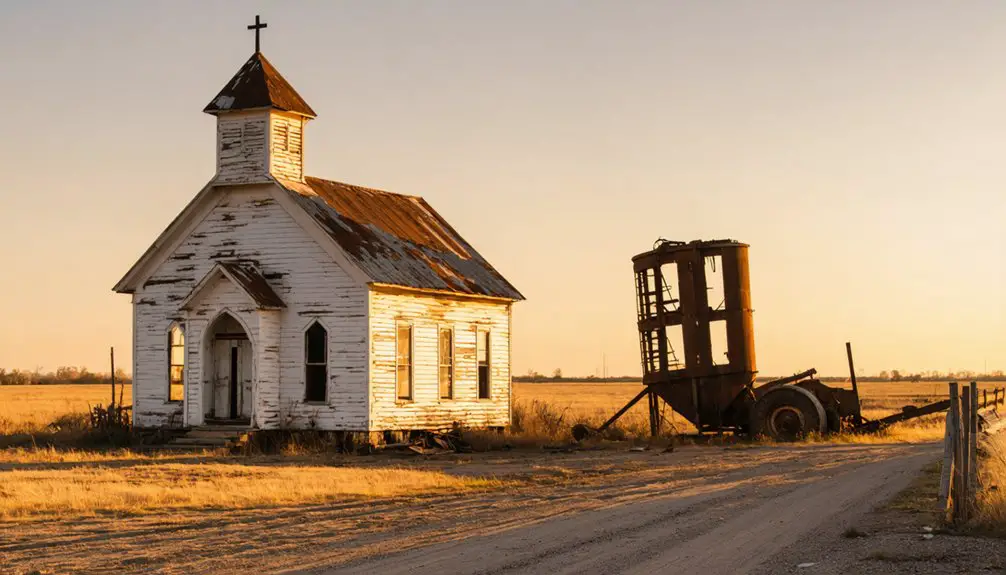
You’ll find the iconic water tower standing as the most recognizable piece of abandoned architecture, rising against the open sky like a stubborn sentinel. Roofless buildings and collapsed walls dot the surrounding area, offering raw historical remnants of what daily life once looked like here.
The Loveland Cemetery remains one of the most intact features, where founder James Lovell and his wife are buried. Scattered foundations push through the prairie grass, quietly marking where homes and businesses once stood.
Explore carefully — deterioration is significant, and the isolation makes self-reliance essential during your visit.
Loveland Cemetery Today
Among the crumbling structures and collapsed walls, the Loveland Cemetery stands out as the site’s most preserved and historically significant feature. Here, you’ll find the graves of James Lovell and his wife, connecting you directly to the town’s earliest chapter.
Lovell’s cemetery significance goes beyond genealogy — it anchors the entire settlement’s identity in one accessible, open-air space.
Unlike the roofless buildings slowly surrendering to weather and time, the cemetery maintains a quiet dignity that rewards careful exploration.
Historical preservation efforts, however modest, have kept this small burial ground recognizable and navigable. You can walk among the headstones, read the names, and piece together the human story behind Loveland’s rise and fall.
It’s raw, unfiltered history standing firmly on the Oklahoma prairie.
Loveland Cemetery and the Story of James Lovell
Tucked into the rural prairie just outside Loveland’s crumbling remains, the Loveland Cemetery holds the quiet story of the man who built this town from nothing.
James Lovell arrived in the early 1890s, brought the railroad in, and earned his place as the town’s founder. His Lovell legacy lives on through the cemetery’s significance as the town’s most personal landmark.
When you visit, take a moment to explore:
- James Lovell’s grave and his wife’s resting place beside him
- Weathered headstones marking early settlers
- The cemetery’s connection to Loveland’s railroad-driven founding
- Quiet surroundings offering unfiltered prairie solitude
- A rare, tangible link to a vanished community’s human story
This small plot carries more history than its size suggests.
How to Drive the Frederick to Loveland Ghost Town Route
You’ll kick off your ghost town adventure in Frederick, a small city in southwestern Oklahoma that serves as the perfect launching pad for this scenic route.
From there, you’ll wind through Marshall, a tiny community of just 210 residents where weathered main street buildings hint at a more prosperous past.
Keep your eyes open as you push deeper into Tillman County, since each stop brings you closer to the crumbling water tower and quiet cemetery waiting for you in Loveland.
Starting Point: Frederick
Frederick, the county seat of Tillman County, serves as your launching pad for this ghost town adventure into southwestern Oklahoma’s forgotten past.
You’ll find this small city perfectly positioned for chasing Prairie Ghosts and uncovering Loveland Legends across the region’s windswept plains.
Before hitting the open road, make sure you’ve covered these essentials:
- Fill your gas tank — services become scarce quickly outside Frederick
- Download offline maps — cell coverage drops in rural Tillman County
- Pack water and snacks — isolated stops offer zero amenities
- Charge your camera — crumbling structures and vast prairie landscapes reward photographers
- Check weather forecasts — southwestern Oklahoma’s tornado season demands respect
Frederick’s historic downtown gives you one last taste of civilization before the abandoned frontier swallows you whole.
Key Stops Along Route
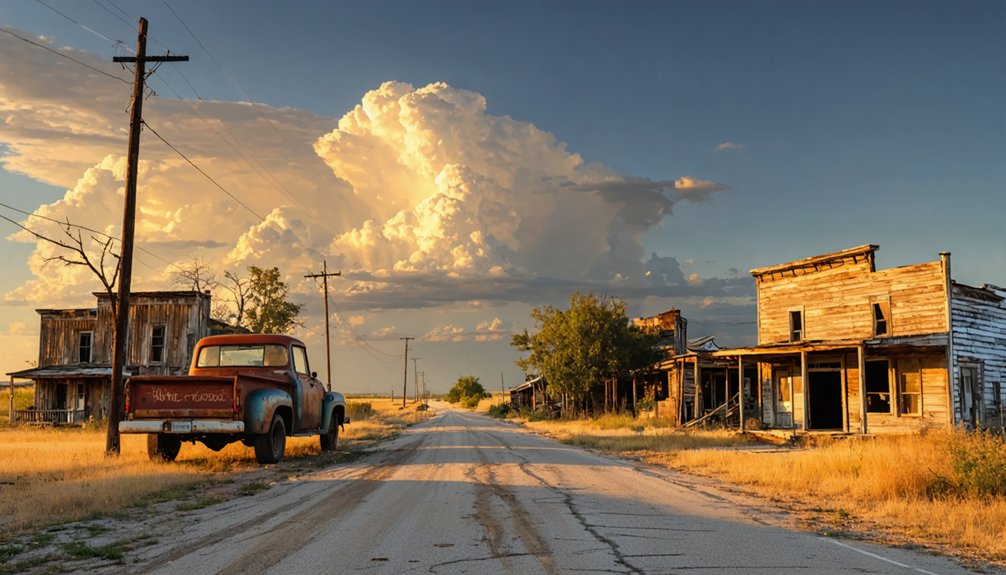
Leaving Frederick’s historic downtown behind, you’ll head northwest along Oklahoma’s back roads toward a string of forgotten settlements that once buzzed with oil money and railroad ambition.
Your first meaningful stop is Marshall, where a population of roughly 210 residents still surrounds weathered main street buildings worth capturing for ghost town photography.
Push onward to Lovell, which offers surprisingly extensive historical preservation displays documenting the region’s rise and fall.
From there, Roxana provides a raw, unfiltered example of oil boom-bust cycles written in crumbling foundations.
Finally, Loveland itself rewards patient explorers with a deteriorating water tower, abandoned structures, and the cemetery where founder James Lovell rests.
Each stop adds another layer to southwestern Oklahoma’s forgotten story, making the drive feel less like tourism and more like genuine discovery.
Six Sites to Visit Along the Way
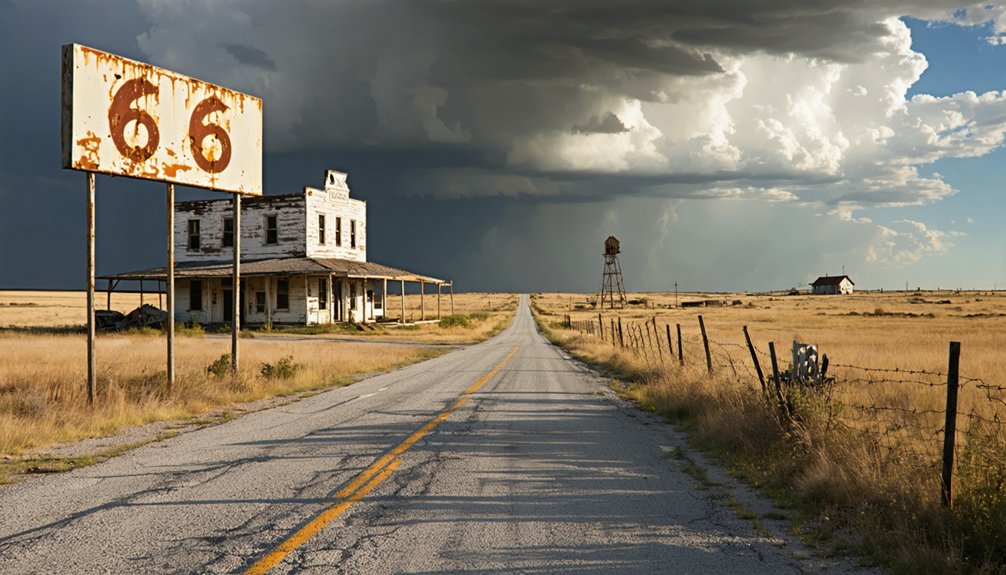
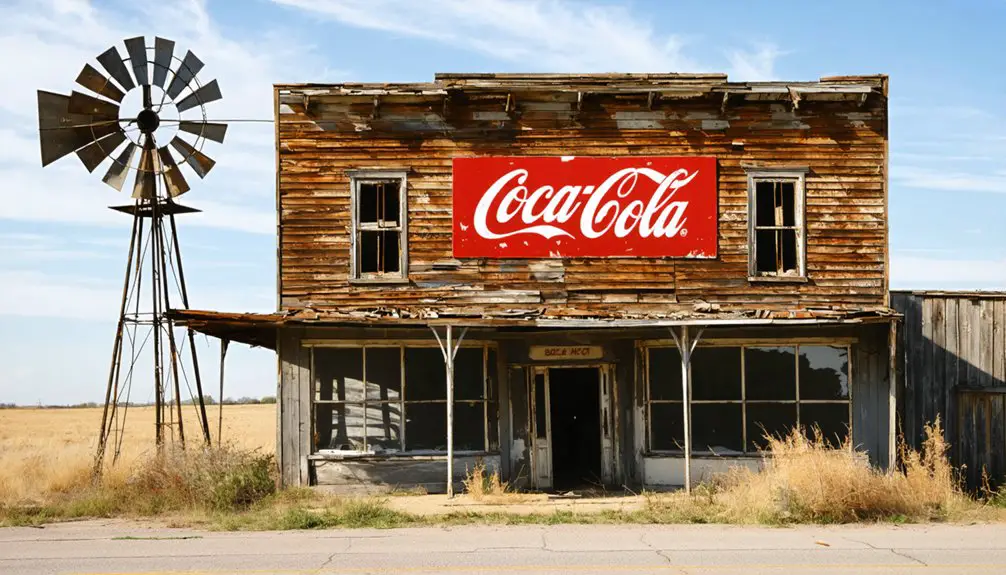
Starting your road trip in Frederick, you’ll head northwest and pass through Marshall, a small town of about 210 people that still has a handful of old main street buildings worth a slow drive-through.
Each stop carries its own historical significance and local legends worth exploring:
- Lovell – extensive history displays covering settlement and growth
- Roxana – a classic oil boom-bust story frozen in time
- Loveland – crumbling water tower, abandoned structures, and the cemetery where founder James Lovell is buried
- Perth area – scattered foundations marking where community once thrived
- Marena and Pleasant Valley – neighboring ghost towns rounding out your exploration
You’re free to roam these sites at your own pace, though deterioration and isolation mean you’ll want to stay alert throughout.
What the Loveland Ruins Actually Look Like Up Close
Once you arrive at Loveland, the first thing that commands your attention is the crumbling water tower — weathered, listing, and impossible to miss against the flat Oklahoma prairie.
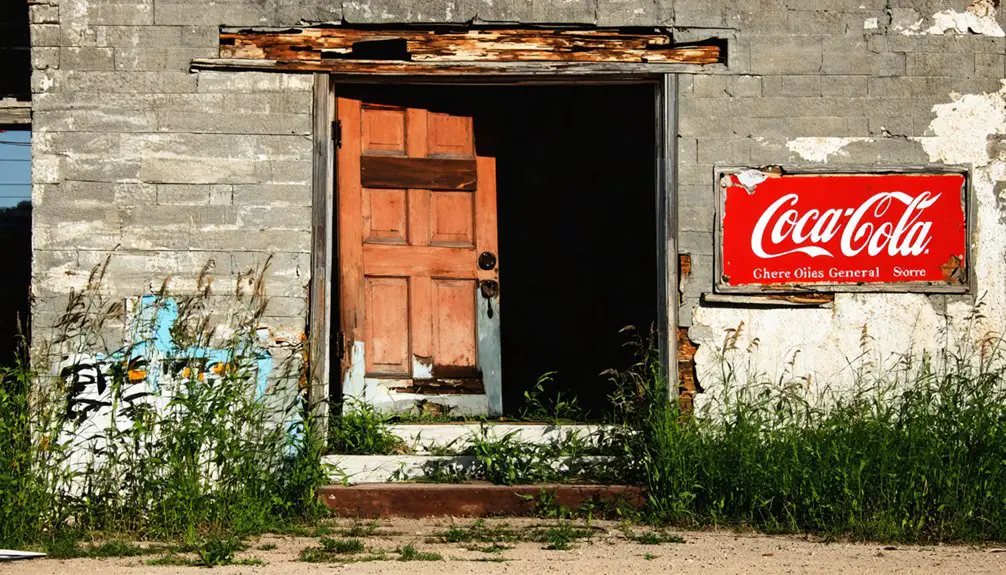
Beyond it, you’ll find roofless buildings, scattered foundations, and piles of rubble that speak quietly to the town’s historical significance. Walls lean at precarious angles, and doorways open into nothing but sky.
It’s raw, unpolished ruins exploration — no guided tours, no guardrails, just you and what remains of a community that once housed over a thousand people.
The Loveland Cemetery sits nearby, where founder James Lovell and his wife are buried, grounding the site in human story.
Tucked beside the ruins, the Loveland Cemetery anchors this forgotten place to the people who once called it home.
Everything here is deteriorating, so move carefully, stay alert, and soak in the haunting freedom of a place reclaimed by prairie silence.
Ghost Towns Near Loveland Worth Adding to Your Route
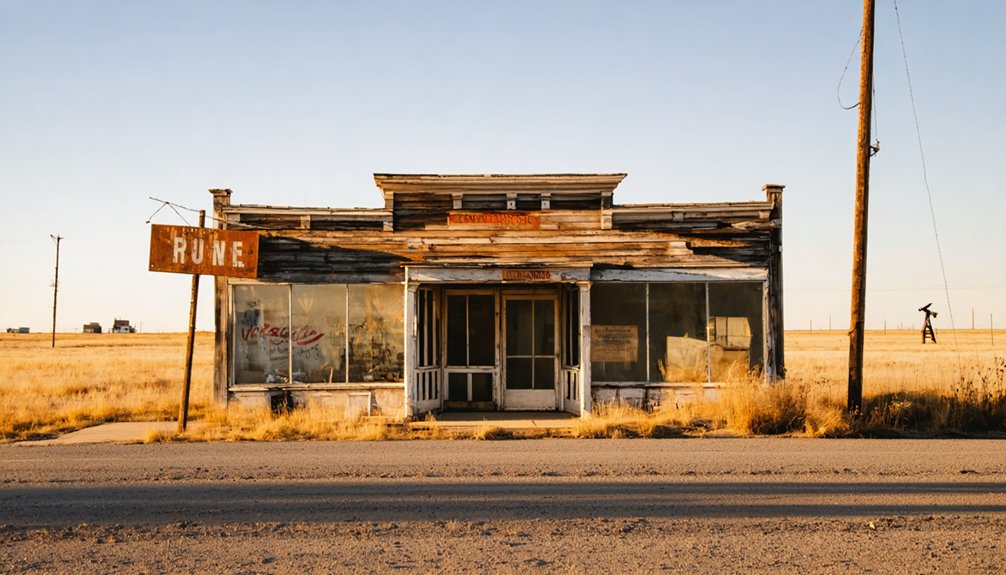
Loveland doesn’t have to be where the adventure ends. Southwest Oklahoma’s wide-open roads connect you to several ghost towns worth weaving into your rural exploration route. Each site adds another layer to the region’s rich ghost town history.
Pack your curiosity and hit these nearby stops:
- Marshall – Population 210, with weathered main street buildings still standing
- Roxana – A classic oil boom-bust story frozen in time
- Marena – Quiet foundations scattered across open prairie
- Pleasant Valley – A vanished community with lingering traces
- Lawrie – Remote and raw, perfect for off-the-beaten-path wandering
You’re already out here, so stretch the trip. Each stop rewards you with something different — crumbling walls, forgotten stories, and the rare freedom of wide-open, untouched Oklahoma landscape.
Roads, Access, and Conditions to Know Before You Go
Before you load up the car, know that getting to Loveland means traversing the rural grid roads of Tillman County in southwestern Oklahoma — and the conditions out here don’t always cooperate.
Access routes consist mostly of unpaved county roads that turn muddy and impassable after rain. Check the forecast before heading out.
A high-clearance vehicle isn’t required, but it helps. You won’t find gas stations or cell service nearby, so fuel up in Frederick and download offline maps beforehand.
The site itself is semi-abandoned and openly accessible — no gates, no fees, no guided tours.
Watch for soft shoulders, loose gravel, and unmarked intersections along your route.
Road conditions shift seasonally, so spring visits can be especially tricky. Come prepared, stay alert, and you’ll navigate it fine.
Frequently Asked Questions
Was Loveland, Oklahoma Ever Known by a Different Name Before 1908?
Yes, you’ll find Loveland’s name origins rooted in its earlier identity as Harriston, a historically significant settlement in Tillman County. The Rock Island Townsite and Realty Company promoted it before the 1908 railroad arrival transformed everything.
What Time of Year Is Best for Visiting Loveland Ghost Town?
Like golden leaves carpeting forgotten roads, you’ll want to visit Loveland during fall’s mild seasonal weather. It’s ideal for exploring historic events without summer’s scorching heat or winter’s harsh conditions crowding your adventurous spirit.
Are There Any Guided Tours Available for the Loveland Ghost Town?
No guided tours exist for Loveland, so you’ll explore its historical significance independently! You’re free to wander crumbling structures, uncover ghost stories, and discover the cemetery at your own adventurous pace—embracing true frontier freedom.
Can Visitors Legally Enter and Explore the Loveland Ruins Safely?
Like a pioneer blazing new trails, you can explore Loveland’s ruins, but mind ghost town regulations and take safety precautions — you’re venturing into crumbling, deteriorating structures at your own risk in this isolated, semi-abandoned site.
Is the Loveland Post Office Valentine’s Day Postmark Tradition Still Active?
Unfortunately, the Loveland post office’s Valentine’s history has ended — it’s closed now. You’ve missed your chance to experience that postmark significance, but you can still explore the abandoned site’s romantic, freedom-evoking ruins firsthand!
References
- https://www.youtube.com/watch?v=8o4cJVEXlOo
- https://thesocialokie.com/oklahoma-ghost-towns/
- https://en.wikipedia.org/wiki/List_of_ghost_towns_in_Oklahoma
- https://kids.kiddle.co/List_of_ghost_towns_in_Oklahoma
- https://www.tillmanokhistory.org/pages/history/1916tillman-county-history.html