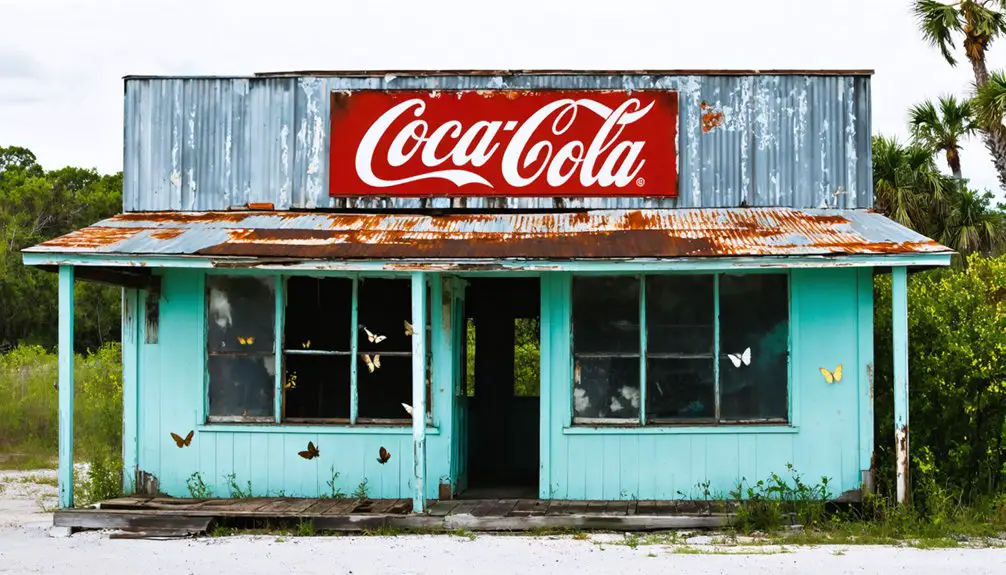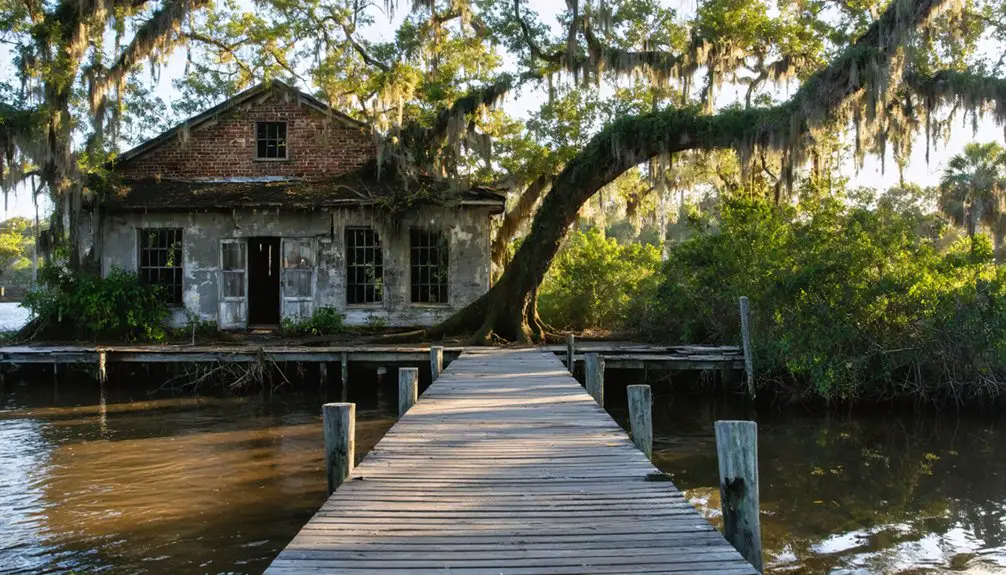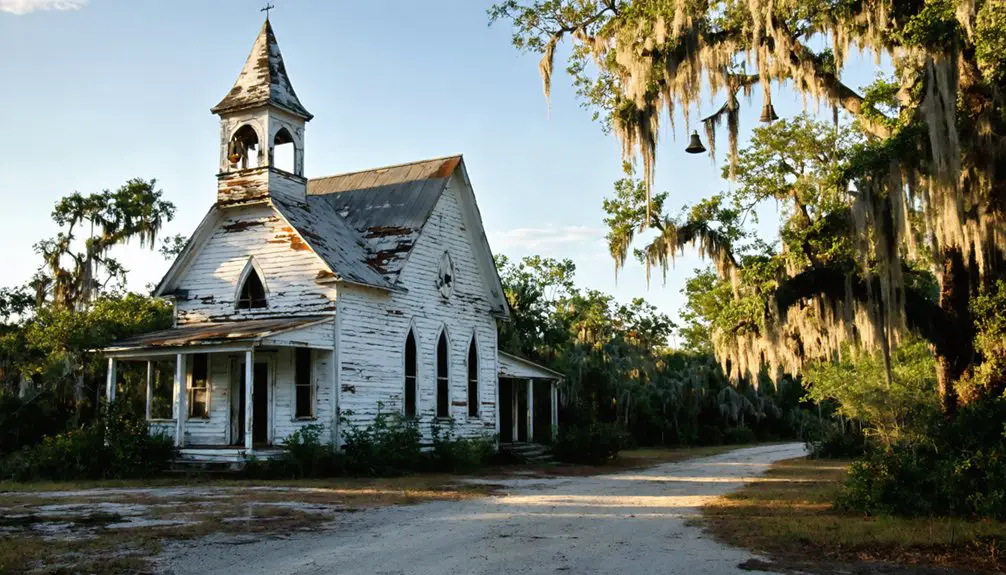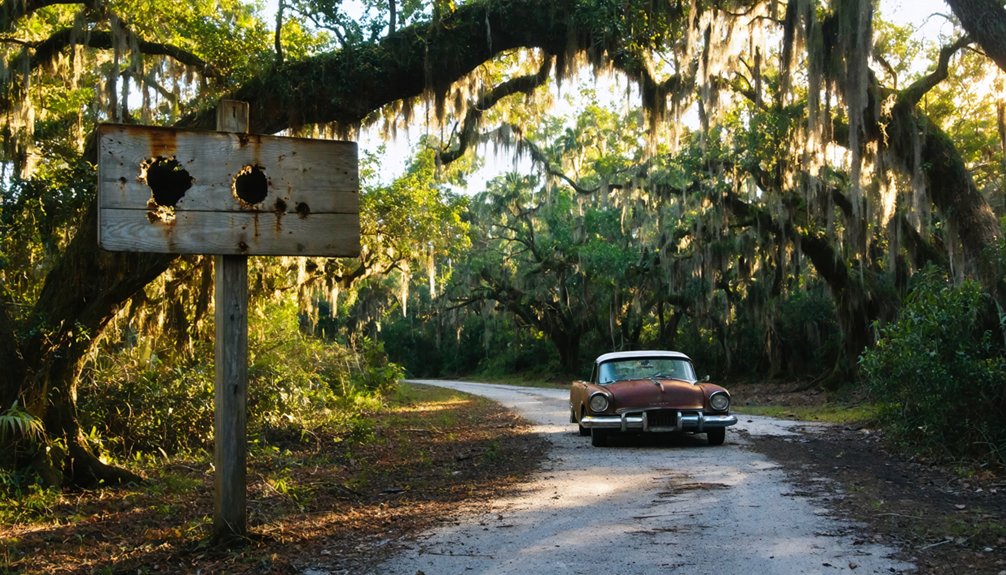
You’ll find Lulu’s ghost town remnants at coordinates 30.10746° N, 82.49123° W in Columbia County, accessible via rural roads near Olustee and Watertown. This 1891 railroad community disappeared after passenger service ended in 1932, leaving crumbling cracker homes and store ruins you can explore. Spring offers the best visiting conditions with mild weather framing the abandoned structures. Don’t miss the Gillen Family Cemetery and nearby Slave Cemetery, which preserve Lulu’s most tangible connections to its vanished past and reveal the full story of this forgotten settlement.
Key Takeaways
- Lulu is located at coordinates 30.10746° N, 82.49123° W in Columbia County, accessible via routes near Olustee and Watertown.
- Spring offers the best visiting conditions with mild temperatures and blooming landscapes framing the abandoned structures.
- Download offline maps before traveling as cell coverage weakens considerably in this remote, sparsely populated backcountry area.
- Key sites include the Gillen Family Cemetery and Slave Cemetery, plus scattered cracker homes and general store ruins.
- No services exist in Lulu, so bring all supplies; simple grid layout and 2WD roads enable easy navigation.
The Rise and Fall of a Florida Railroad Community
In 1891, a small railroad community took root along the dusty trails of Columbia County, Florida, bearing the romantic name of its first postmaster’s sweetheart—Lulu. You’ll find this settlement ten miles east of Lake City, where the Georgia Southern and Florida Railway once thundered past, hauling lumber, livestock feed, and mail through north-central Florida’s expanding network.
The community thrived as a crucial stop connecting regional lines, with the Southern Express Company serving locals who depended on rail accessibility for commerce and survival. But by 1932, passenger trains vanished, and tracks began disappearing. When Lulu’s post office closed in 1976, economic challenges in the post railroad era sealed its fate, transforming this once-bustling depot into the ghost town you’re about to explore.
Getting to Lulu: Routes and Access Points
Traversing to Lulu’s weathered remnants requires plotting your course to coordinates 30.10746° N, 82.49123° W, where this unincorporated community sits at 154 feet elevation in Columbia County’s rural expanse. You’ll navigate state roads that’ve served this territory since they appeared on 1936 maps, with Lake City offering your nearest major access point.
The 32061 ZIP code area operates in the 386 zone, maintaining UTC-5 time. Rural transportation options here reflect regional development patterns that favored rail over highways, leaving Lulu isolated when trains stopped running.
Download offline maps before departing—Apple Maps and Google Maps provide reliable routing, though cell coverage weakens considerably. Olustee and Watertown mark your nearby reference points for orientation through this sparsely populated backcountry.
Historical Sites and Landmarks Worth Exploring
Your journey to Lulu’s ghost town remnants places you within striking distance of Florida’s most significant historical landmarks, where centuries of settlement patterns reveal why some communities thrived while others faded into obscurity. You’ll discover St. Augustine’s Spanish colonial architecture and the formidable Castillo de San Marcos, showcasing survival strategies that eluded places like Lulu.
Venture to Mound Key Archaeological State Park to explore pre Columbian Calusa culture—their shell-mound capital endured 2,000 years before European contact. The Tocobaga burial mounds near Safety Harbor demonstrate indigenous resilience predating colonization. Fort Caroline’s French settlement attempt illustrates the precarious nature of early colonization. These sites contextualize Lulu’s disappearance within Florida’s broader narrative of impermanent settlements and competing cultures struggling for dominance across hostile terrain.
Gillen Family Cemetery and the Slave Cemetery
Just beyond Lulu’s vanished storefronts and silent railroad tracks, two cemeteries stand as the community’s most tangible connection to its vanished past. You’ll find the Gillen Family Cemetery at 160 SE Gillen Terrace (coordinates 30.10660, -82.49436), where generations of the town’s founding family rest, including Carl E. Gillen of the 168th Infantry Regiment.
A quarter-mile east on Highway 100, the Slave Cemetery tells a different story—one of enslaved people and their descendants. Remarkably, it received its last burial just three years ago, with mourners carrying the casket four miles through community streets. These cemetery preservation efforts exemplify genuine community engagement in maintenance, sustained through economic collapse and population decline as Lulu’s ultimate labor of love.
Best Time to Visit and What to Expect
Timing your visit to Lulu matters more than you might expect for an abandoned town. Northern Florida’s subtropical climate brings weather fluctuations that’ll directly impact your exploration comfort. Spring offers ideal conditions—mild temperatures and blooming landscapes frame the crumbling structures beautifully. Summer’s intense heat and humidity can make outdoor wandering exhausting, though early mornings work well.
Spring’s mild weather and blooming scenery create perfect conditions for exploring Lulu’s weathered ruins and forgotten structures.
What to expect during your visit:
- Abandoned cracker homes and general store ruins scattered along accessible 2WD roads
- Minimal services in Lulu itself—plan accordingly
- Quiet rural atmosphere with few interruptions
- Easy navigation thanks to the area’s simple grid layout
Since Lulu lacks lodging accommodations, you’ll base yourself in nearby Gainesville or Lake City. Pack water, wear sturdy shoes, and avoid winter’s uncomfortable cold snaps for the best ghost town experience.
Combining Lulu With Nearby Attractions
You’ll maximize your ghost town adventure by planning a strategic route through Columbia County that connects Lulu with Lake City’s historical museum just 10.5 miles away on State Road 100. The county’s compact layout makes it easy to explore multiple attractions in a single day, from O’Leno State Park‘s natural beauty to Webb’s Antique Mall’s vintage treasures.
For a fuller cultural experience, you can extend your trip south to Gainesville or add stops at local farms and breweries that showcase the region’s evolving character beyond its abandoned settlements.
Gainesville Cultural Day Trips
While Lulu’s abandoned structures and historic cemeteries offer a haunting glimpse into Old Florida’s past, the ghost town’s proximity to Gainesville transforms a solo visit into a full day of cultural exploration. You’ll find exceptional breweries, state parks, and unique experiences within easy driving distance.
Consider these Gainesville attractions to complement your ghost town adventure:
- O’Leno State Park – Natural Florida at its finest with hiking trails and river features
- Halpatter Brewing Company – Locally-crafted beers in a relaxed atmosphere
- Webb’s Antique Mall – Treasure hunting through Florida’s past
- Deep Spring Farm – Authentic farm experiences
Between stops, explore quaint local eateries serving Southern comfort food and picturesque farmer’s markets showcasing regional produce. This combination creates an unforgettable journey through both forgotten and thriving Florida communities.
Lake City Historic Sites
Just fifteen miles northwest of Lulu’s weathered remnants, Lake City beckons with a treasure trove of preserved history that brings context to the ghost town’s decline.
The 1902 Blanche Hotel stands as Florida’s first elevator-equipped building, showcasing Gilded Age architecture that once attracted guests like Johnny Cash and Al Capone. You’ll discover the region’s Civil War legacy at Olustee Battlefield Historic State Park, where interpretive trails reveal Florida’s largest Confederate-era conflict.
Downtown’s historic district displays artifacts from Lake City’s railroad restoration projects at Marion Street Deli and Pub, while the Lake City-Columbia County Historical Museum offers Native American relics and Civil War memorabilia. St. James Episcopal Church anchors the architectural landscape, representing the prosperity that bypassed isolated settlements like Lulu when rail lines determined survival.
Columbia County Route Planning
Starting from Lulu’s coordinates at 30°06′27″N 82°29′28″W on State Road 100, you can craft a compelling day trip that weaves ghost town exploration with Columbia County’s diverse attractions. You’ll discover rural housing features like historic cracker homes alongside the slave cemetery, revealing layers of agricultural heritage that shaped this settlement.
Your self-guided adventure can flow naturally:
- Morning: Explore Lulu’s remnants and cemetery along Highway 100
- Midday: Head to O’Leno State Park via SR 100 eastbound for hiking
- Afternoon: Browse Webb’s Antique Mall on local roads
- Evening: Visit Deep Spring Farm or Halpatter Brewing Company
Spring and summer offer ideal conditions for traversing these 2WD-accessible routes. The combination creates an authentic backroads experience, connecting forgotten communities with thriving local businesses.
Frequently Asked Questions
Are There Any Restaurants or Food Options Available in Lulu?
You’ll discover LuLu’s waterfront restaurant serving fresh Gulf seafood and American classics. Like travelers finding hidden coastal gems, you can explore their local cuisine offerings including grilled mahi-mahi, shrimp tacos, and Key West bowls, though food truck availability isn’t mentioned.
Is It Safe to Explore the Abandoned Buildings Without Permission?
No, exploring abandoned buildings without permission isn’t safe or advisable. You’ll face serious trespassing risks and legal implications, including potential arrest or fines. Always seek property owner consent before entering any structure to protect yourself legally and physically.
What Photography Equipment Works Best for Capturing Ghost Town Structures?
You’ll capture impossibly stunning ghost town shots with a mirrorless camera paired with wide-angle lenses. Master tripod usage for long exposures in dim structures, while carefully balancing lighting considerations—pack powerful flashlights and headlamps to illuminate those hauntingly dark, forgotten spaces.
Are There Overnight Accommodations or Camping Facilities Near Lulu?
You’ll find camping at nearby O’Leno State Park, plus hotels in Lake City nine miles away. While exploring Lulu’s ghost town preservation efforts, always respect private property rights—many historic structures remain on privately-owned land requiring permission.
Do Residents Mind Tourists Visiting and Photographing Their Community?
Based on available evidence, residents show no documented opposition to visitors. Community sentiment appears accepting of tourism impact, with historic sites remaining openly accessible for photography. You’ll find locals coexist peacefully with those exploring Lulu’s preserved ghost town heritage.