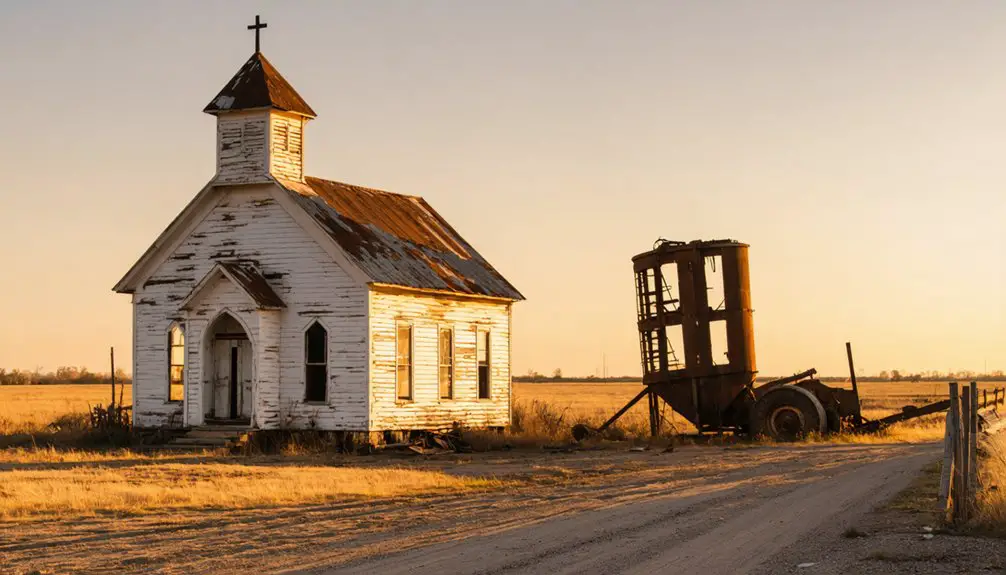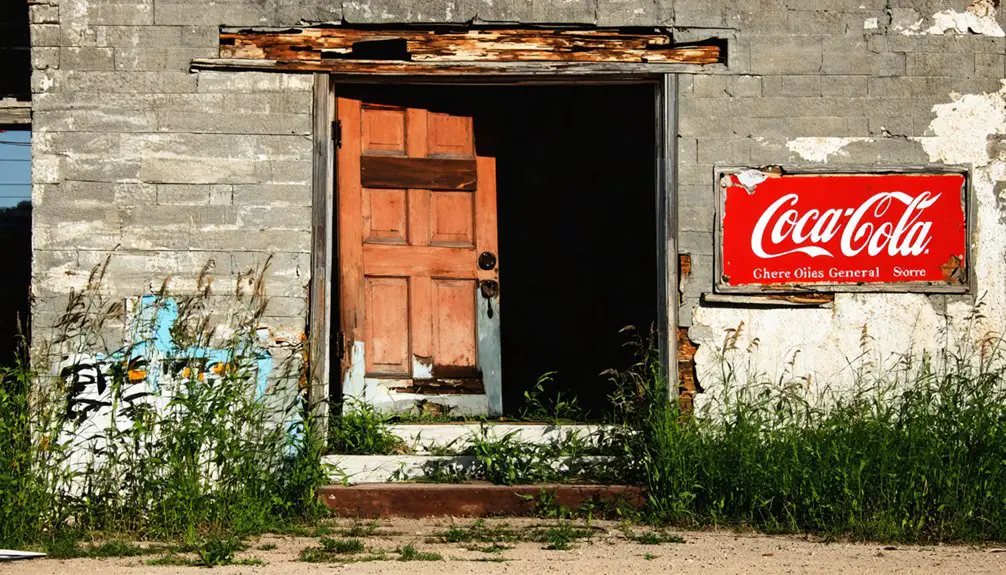
You’ll find Lyman’s abandoned ruins scattered across Osage County, accessible via routes from Ponca City or Shidler—though seasonal rains can soften unpaved sections. Pack N95 respirators for safety, topographic maps since cell service dies here, and prepare to explore crumbling foundations where wildcatters once struck 50-barrel-daily wells in 1897. The 2008 tornado left personal items tangled in weeds among massive chat piles and 14,000 abandoned mine shafts. Nearby ghost towns like Picher, Texola, and Ingersoll each offer unique photographic opportunities that’ll transform your Oklahoma exploration into something unforgettable.
Key Takeaways
- Access Lyman from Ponca City or Shidler; pack topographic maps as cell service weakens in remote areas.
- Essential safety gear includes N95 respirator, headlamp with backup batteries, and first-aid kit for exploring abandoned sites.
- Explore scattered ruins, crumbling foundations, and massive chat piles while avoiding 14,000 abandoned mine shafts and sinkholes.
- Test floors before stepping, stick to walls for stability, and research property ownership to avoid trespassing charges.
- Extend your trip to nearby ghost towns: Picher for mining structures, Texola for Route 66 history, or Ingersoll.
The Rise and Fall of Lyman’s Oil Boom Era
Long before Lyman became a whisper on Oklahoma’s ghost town map, the Nellie Johnstone Number One changed everything for this corner of Indian Territory. That April 1897 strike pumped 50 barrels daily, but transport issues capped the well until rail arrived in 1899. Then wildcatters flooded in.
Fifty barrels daily flowed from Nellie Johnstone Number One in 1897, but wildcatters waited until rails arrived to stake their claims.
The town thrived during the state’s first major drilling surge from 1907 to 1930, when neighboring fields like Burbank and Seminole made millionaires overnight. But factors impacting production decline hit hard—wells ran dry, the Depression crushed prices, and Governor Murray’s martial law froze operations until oil reached $1 per barrel.
The economic impact of boom and bust was brutal. Lyman’s school shuttered in 1929, and residents scattered when the money dried up.
You’ll find Lyman’s story mirrors Oklahoma’s classic boom-bust cycle.
Getting to Lyman: Routes and Road Conditions
Start from Ponca City or approach from Shidler, six miles southeast of the abandoned site. Transportation logistics prove straightforward: no current road closures block your path, though seasonal rains can soften unpaved sections near the townsite.
Pack topographic maps as backup—cell service weakens in these forgotten corners. The former Osage Railway‘s ghost tracks from Webb City offer historical context for your journey into Oklahoma’s lost oil territory.
What Remains: Exploring the Ruins and Relics
How does a town simply vanish, leaving only scars? You’ll find Lyman’s remains scattered like puzzle pieces—faded street signs, crumbling foundations, and boarded-up shells where families once thrived. The 2008 tornado finished what the mines started, leaving personal photographs and toys tangled in weeds.
Those massive chat piles? They’re still there, towering monuments to greed that poisoned Tar Creek blood-red. Watch your step around the 14,000 abandoned mine shafts; sinkholes open without warning. Despite environmental remediation efforts, orange-stained water still seeps from old tunnels.
You’ll walk past the arson-gutted museum, decaying structures reclaimed by prairie grass, and gravestones in forgotten cemeteries. This isn’t sanitized history—it’s raw, toxic, and haunting. Freedom means confronting these truths head-on.
Essential Tips for Visiting Abandoned Sites
Before you set foot in Lyman’s toxic landscape, you need to gear up like you’re entering a hazmat zone—because you basically are. Pack your N95 respirator, headlamp with backup batteries, and first-aid kit. Site safety precautions aren’t optional here—test every floor before committing your weight, stick to walls where structures hold strongest, and bring a buddy who’ll actually call for help if things go sideways.
Research ownership beforehand. Trespassing charges kill the adventure fast. Download offline maps since cell service dies in these dead towns. Historical preservation ethics matter: leave artifacts untouched, create zero new trails, disturb nothing. You’re documenting history, not destroying it. Trust your gut—if something feels wrong, it probably is. Exit immediately.
Expanding Your Journey: Ghost Towns Near Lyman
Once you’ve explored Lyman’s desolate streets, Oklahoma’s ghost town circuit beckons with dozens more abandoned settlements within a two-hour radius. Head northeast to Picher, where notable mining structures pierce the sky—an abandoned church stands testimony to the 1920s boom before Superfund contamination sealed its fate. Local folklore and legends swirl around these lead-and-zinc ruins, whispering of industrial ghosts.
Route 66 enthusiasts shouldn’t miss Texola’s 1930 Magnolia Gas Station or Foss’s crumbling Kobel’s complex. For underwater mysteries, Kaw City’s submerged foundations lie beneath Kaw Reservoir—a town sacrificed to progress. Ingersoll tells another tragic tale: railroad prosperity vanished after the 1935 oil crash, then a 1957 flood delivered the final blow.
Each site offers unique photographic opportunities and untold stories waiting for you to discover.
Frequently Asked Questions
Are There Guided Tours Available for Lyman Ghost Town?
No guided tours exist for Lyman—it’s vanished into prairie winds. You’ll find freedom in self-guided tours using apps like PocketSights, though don’t expect historical markers. The ghost town’s erased, leaving you to explore pastureland where memories once stood.
Can I Camp Overnight Near the Lyman Ruins?
You’ll find camping regulations prohibit overnight stays directly at Lyman ruins, but nearby accommodations at Talimena State Park and Winding Stair Campground offer perfect base camps. Dispersed camping throughout Ouachita National Forest gives you maximum freedom to explore.
Is Photography Allowed at the Abandoned Structures?
Yes, you’re free to photograph the abandoned structures for personal use without permits. However, check for restricted photography areas before shooting. Most permitted photo locations welcome casual snapshots, but commercial work requires advance authorization and fees.
What Wildlife Might I Encounter While Exploring Lyman?
Nature reclaims abandoned places like an artist painting over old canvas. You’ll likely spot white-tailed deer sightings near crumbling buildings, while small bird populations—mourning doves and bobwhite quail—thrive freely among the ruins, unbound by human presence.
Are There Any Paranormal Activity Reports From Lyman?
No verified paranormal activity reports exist from Lyman, though you’ll find the abandoned structures create naturally eerie atmospheres. Unlike locations with haunted house legends or eerie noises reported, Lyman’s documented history focuses solely on economic decline.