Planning a ghost town road trip to Manzano, New Mexico means driving northwest on NM 10 from Mountainair, about 15 miles through stunning mountain scenery. You’ll explore crumbling adobe structures, nine-hundred-year-old indigenous ruins, a striking defensive torreon, and ancient apple orchards possibly dating to Spanish mission days. There’s no admission fee, and standard 2WD vehicles handle the road easily. Pack water, download offline maps, and prepare for cooler mountain temperatures — and there’s plenty more to discover about this hauntingly beautiful destination ahead.
Key Takeaways
- Manzano sits in Torrance County on the eastern slope of the Manzano Mountains, roughly 15 miles northwest of Mountainair via NM 10.
- A standard 2WD vehicle handles the roads easily; fuel up in Mountainair since no commercial stops exist along the route.
- Bring offline maps and water, as cell coverage along NM 10 is unreliable and no nearby services are available.
- Key attractions include a defensive torreon, a small village lake, Spanish mission ruins, and adobe structures in Pueblo Revival style.
- Entry is free year-round, dogs are welcome on leash, and spring or fall visits offer fewer crowds and comfortable temperatures.
How Manzano Went From Spanish Settlement to Ghost Town
Manzano’s story stretches back centuries before it became a ghost town, rooted in a landscape that indigenous peoples called home long before Spanish settlers arrived.
Between 1100 and 1300 A.D., the Salinas Pueblos thrived here, but historical droughts and the 1680 Pueblo Revolt forced abandonment of the region.
Spanish heritage took root when authorities decreed a village settlement on November 28, 1829, breathing new life into the area.
San Juan Bautista Catholic Church, founded in 1824 and built in 1829, became a cornerstone of this revived community.
A post office operated intermittently from 1876 until 1919, signaling the town’s slow decline.
Today, you’re visiting a place where centuries of civilization, resilience, and eventual abandonment have left an unforgettable mark on the New Mexico landscape.
Where Exactly Is Manzano and How Do You Get There?
You’ll find Manzano tucked into the eastern slope of the Manzano Mountains in Torrance County, accessible via NM 10 on 2WD roads within a high mountain range grid.
The village sits about 15 miles northwest of Mountainair, making that small town your most practical jumping-off point for the trip.
Once you turn off the main highway, you’re traversing quiet county roads that wind through high terrain, so plan your route before you go.
Manzano’s Exact Location
Tucked into the eastern slope of the Manzano Mountains, this quiet ghost town sits in Torrance County, roughly 15 miles northwest of Mountainair along NM 10.
The Manzano Mountains stretch southeast of Albuquerque, just south of the Sandia Mountains, putting you within reach of a region rich with historical significance.
For practical travel tips, know that 2WD roads access the area, so you won’t need a specialized vehicle.
Manzano Peak rises impressively about 6 miles southwest of the village, while nearby salt flats add to the dramatic landscape.
You’re entering a high mountain range, so expect cooler temperatures even in summer.
Use Mountainair as your base, and you’ll navigate toward Manzano with ease.
Getting to Manzano is straightforward once you’ve got your bearings in Torrance County. You’ll follow NM 10, heading northwest from Mountainair for about 15 miles. The road is 2WD-friendly, so you won’t need a high-clearance vehicle to reach this gem of ghost town history.
As you drive, the Manzano Mountains rise to your left, their eastern slopes stretching toward distant salt flats. These scenic routes reward you with sweeping high-country views before you even arrive.
The village sits near the base of that impressive range, with Manzano Peak standing roughly 6 miles southwest of the village center.
Keep your eyes open as you approach — the old apple orchards appear along NM 10, signaling you’re close to one of New Mexico’s most quietly compelling destinations.
Distance From Nearby Towns
Manzano sits about 15 miles northwest of Mountainair, making that small railroad town your most logical jumping-off point. Use these distance markers to plan your route:
- Mountainair – 15 miles southeast via NM 10, your closest resupply stop
- Albuquerque – roughly 60 miles northwest, offering fuel, lodging, and a full urban base
- Salinas Pueblos Missions – within 30 miles, anchoring your nearby attractions list with 900 years of sandstone history
- Truth or Consequences – approximately 90 miles south, connecting you to Monticello and other regional ghost towns along NM 142
You’re threading through Torrance County’s high desert, so map your stops deliberately.
Each mile between towns carries real consequence out here, and freedom tastes better when you’ve planned ahead.
The Ancient Apple Orchards That Gave These Mountains Their Name
As you explore Manzano, you’ll notice two old apple orchards near NM 10 that carry a fascinating legacy — tradition claims Spanish settlers planted them during the mission period before 1676, making them the oldest apple orchards in America.
Dr. Florence Hawley Ellis, however, challenges that claim, dating the trees no earlier than 1800 through ring growth analysis.
Either way, these orchards left such a mark on the landscape that the entire Manzano Mountain range takes its name — *manzano* meaning “apple tree” in Spanish — from both the town and its legendary trees.
Origins Of The Orchards
One of the most intriguing stories surrounding this quiet village is the origin of its ancient apple orchards — the very trees that gave the Manzano Mountains their name.
Two competing theories shape this orchard history:
- Mission Period Claim: Local tradition says Spanish missionaries planted these trees before 1676, making apple cultivation here centuries old.
- Scientific Dating: Dr. Florence Hawley Ellis analyzed ring growth and dated the trees no earlier than 1800.
- Bold Title: Despite the debate, these orchards are widely called the oldest in America.
- Living Landmarks: You’ll find them still standing near NM 10, quietly anchoring the village’s identity.
Whether you side with legend or science, these trees connect you directly to New Mexico’s layered colonial past.
Age Controversy And Research
The debate over these orchards’ true age isn’t just local folklore — it sits at the heart of a genuine academic controversy.
Local tradition insists the trees were planted during the mission period, before 1676, making them centuries-old living relics.
However, Dr. Florence Hawley Ellis conducted a scientific age assessment using tree-ring growth analysis, and her research findings tell a different story — the trees date no earlier than 1800.
That’s a significant gap from the traditional claim.
Yet the orchards still carry enormous historical weight regardless of which timeline you accept.
You’re standing among trees that possibly predate American independence, growing at the foot of mountains that literally took their name — *Manzano* means apple in Spanish — from this very grove.
Mountains Named After Apples
This apple history runs deep into mountain lore. When you visit, you’ll discover:
- The orchards still grow near NM 10, just outside the village.
- Mission-era tradition claims the trees were planted before 1676.
- Scientific research dates the trees no earlier than 1800 via ring growth.
- The Manzano Mountains extend southeast of Albuquerque, carrying this fruited legacy across the skyline.
What’s Left Standing: Adobe Ruins, the Torreon, and the Lake
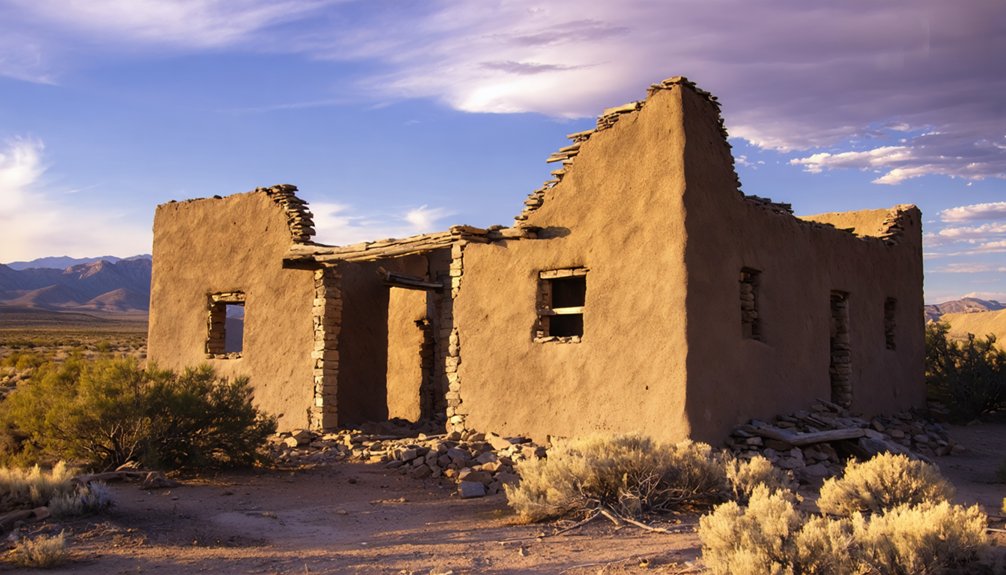
Walking through Manzano today, you’ll find a surprising amount of history still standing. Adobe structures built in the Pueblo Revival style dot the landscape, offering a genuine glimpse into the village’s layered past.
Adobe preservation here isn’t perfect, but enough remains to spark your imagination and reward your curiosity.
The ruins aren’t pristine, but their quiet imperfection is exactly what makes them worth exploring.
Head toward the center of the village, and you’ll discover houses clustered around a small lake. Lake exploration reveals a peaceful setting that once anchored daily life for residents.
Just east of the lake stands the torreon, a defensive tower built to protect settlers from raids. It’s one of the most striking remnants you’ll encounter.
Together, the adobe ruins, the lake, and the torreon create an experience that feels raw, authentic, and completely worth the drive.
Why the Salinas Pueblos Belong on Every Manzano Road Trip
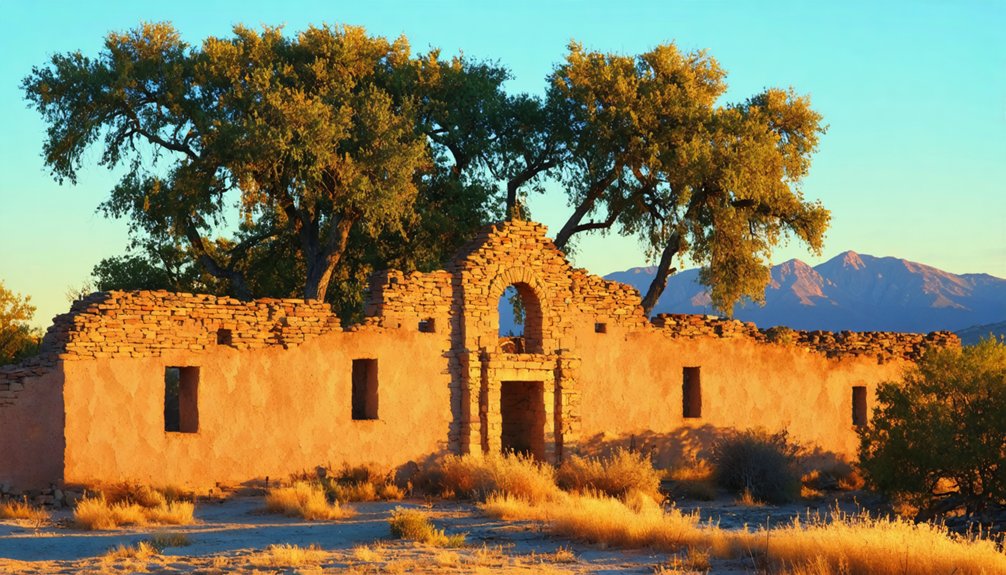
No visit to Manzano feels complete without swinging by the Salinas Pueblos, a collection of ancient ruins that stretch nearly 900 years into New Mexico’s past.
Their historical significance runs deep, offering real archaeological exploration without roped-off barriers or admission fees. You’ll walk through layers of cultural heritage that most travelers never discover.
Here’s what makes them unmissable:
- Sandstone architecture carved by indigenous hands between 1100–1300 A.D. still stands remarkably intact.
- Spanish mission ruins reveal the collision of two worlds during the 1600s.
- Free access means you explore on your own terms, dogs welcome on leash.
- Proximity to Manzano puts these ruins minutes from the village, making them an effortless addition to your road trip.
When to Visit Manzano and What to Expect Each Season
After exploring the Salinas Pueblos, you’ll want to plan your timing carefully, because Manzano’s high elevation shapes every visit in ways that flat-desert ghost towns simply don’t.
Summer delivers the best seasonal highlights — mild temperatures, green mountain slopes, and long daylight hours perfect for wandering adobe ruins and apple orchards.
Spring and fall bring crisp air and fewer crowds, giving you genuine solitude among the remnants.
Winter stays cold but accessible, rewarding adventurous travelers with stark, quiet beauty.
Among the most practical visitor tips: Manzano welcomes you year-round, charges no entry fees, and allows leashed dogs throughout the ruins.
Pack layers regardless of season, stick to the 2WD roads, and bring your own supplies — this mountain ghost town sits beautifully far from everything.
How to Plan Your Drive to Manzano Without Getting Stranded
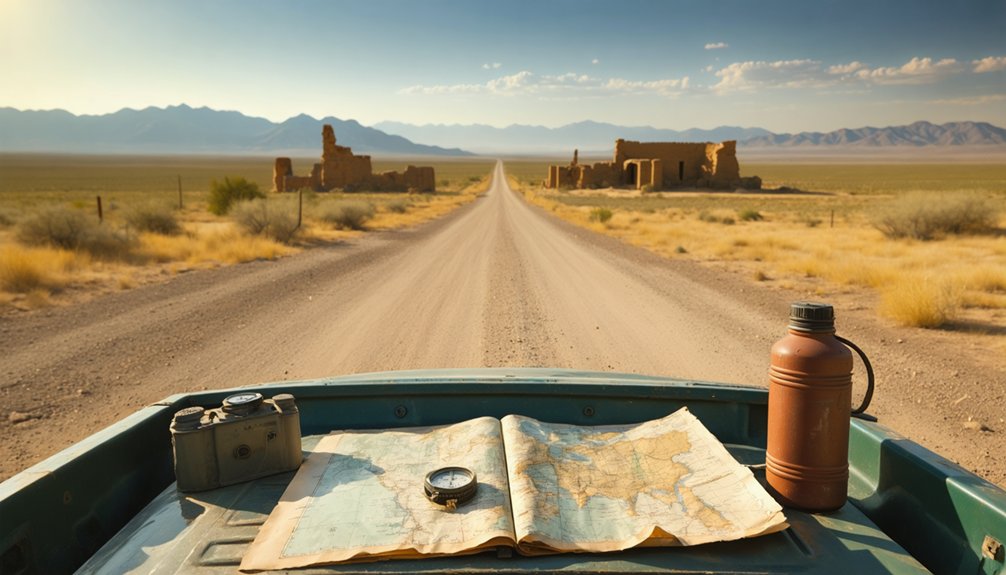
Reaching Manzano requires only a standard 2WD vehicle, but you’ll still want to plan the drive with intention — this ghost town sits in a high mountain grid roughly 15 miles northwest of Mountainair, tucked along NM 10 on the eastern slope of the Manzano Mountains.
Before you roll out for ghost town exploration and historical preservation, cover these essentials:
Before you chase ghosts and crumbling history, a little preparation separates a great adventure from a miserable one.
- Fuel up in Mountainair — services thin out fast heading northwest.
- Download offline maps — cell coverage along NM 10 is unreliable.
- Check seasonal conditions — cool winters can mean icy mountain roads.
- Pack water and snacks — no commercial stops exist near the ruins.
You’re entering open, unguarded terrain where self-sufficiency isn’t optional — it’s the price of freedom.
Ghost Towns and Ruins Within an Hour of Manzano
Manzano doesn’t stand alone — within an hour’s drive, you’ll find a scattered collection of ghost towns and ancient ruins that round out one of New Mexico’s richest historical corridors.
The Salinas Pueblos, free to enter and dog-friendly on leash, preserve 900 years of history carved into sandstone.
Mountainair sits just 15 miles southeast, serving as your base for ghost town exploration across the central region.
Head further out and you’ll encounter Hagan and Pinos Altos, each carrying its own historical significance tied to New Mexico’s boom-and-bust past.
San Juan Bautista Catholic Church, founded in 1824, adds another compelling stop nearby.
Together, these sites transform a single-destination visit into a full corridor of discovery that rewards curious, unhurried travelers.
What Makes Manzano One of New Mexico’s Most Rewarding Ghost Towns?
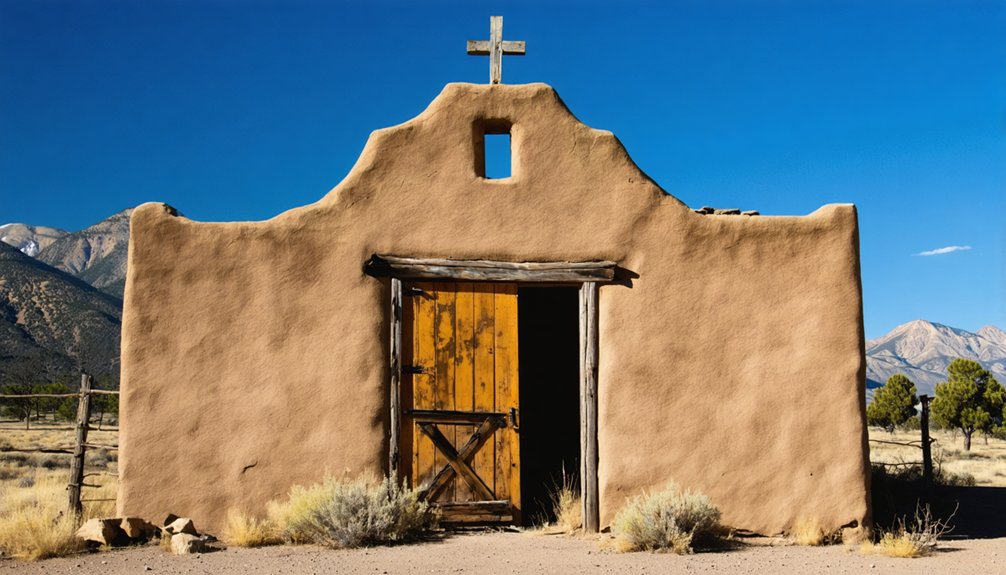
Few ghost towns in New Mexico pack as much layered history into a single visit as this quiet village tucked against the eastern slope of the Manzano Mountains.
Its historical significance spans nearly a thousand years, and its cultural heritage touches indigenous, Spanish, and American chapters.
Here’s what makes Manzano genuinely worth your time:
nearly a thousand years of history waiting quietly in a single village.
- Ancient roots — Salinas Pueblos settlements dating back to 1100 A.D. still stand in stone.
- Living orchards — Apple trees planted before 1800 still grow near NM 10.
- Sacred architecture — San Juan Bautista Catholic Church, founded 1824, anchors the village.
- Defensive history — A torreon tower east of the lake tells stories of survival.
You’re not just passing through — you’re walking through centuries.
Frequently Asked Questions
Is Overnight Camping Allowed Near the Manzano Ghost Town Ruins?
The knowledge doesn’t confirm overnight camping regulations near Manzano’s ruins. You’ll want to check local authorities before pitching a tent. While exploring this ghost town history, you’re free to visit ruins during daylight hours with your leashed dog!
Are There Guided Tours Available Specifically for the Manzano Area?
The knowledge doesn’t confirm guided tours specifically for Manzano, but you’ll love exploring its ghost town history independently! Wander freely through ancient ruins, uncover local legends, and experience this hauntingly beautiful site entirely on your own terms.
Can Visitors Legally Collect Artifacts or Souvenirs From Manzano’s Ruins?
You can’t collect artifacts from Manzano’s ruins. Legal regulations strictly protect these historical treasures, ensuring artifact preservation for future explorers. Respect these boundaries, embrace the freedom of discovery, and let history remain beautifully untouched for everyone’s enjoyment.
Is There Cell Phone Service or Wi-Fi Available Near Manzano?
cell service availability is sparse, and internet connectivity options are nearly nonexistent near Manzano. You’re truly off-grid here — embrace the freedom, disconnect completely, and lose yourself in history’s haunting silence.
Are There Restroom Facilities Available at or Near the Manzano Site?
The knowledge base doesn’t specify restroom accessibility or visitor amenities at Manzano. You’ll want to plan ahead by bringing your own supplies, as remote ghost town sites often lack basic facilities for travelers seeking freedom.
References
- https://www.ghosttowns.com/states/nm/manzano.html
- https://www.youtube.com/watch?v=skE0zhFxFBI
- https://www.newmexico.org/places-to-visit/ghost-towns/
- https://www.newmexicoghosttowns.net/historic-churches
- https://www.wheelingit.us/2011/05/19/900-years-of-history-in-sandstone-the-salinas-pueblos-nm/
- https://alibi.com/feature/day-tripper-ghost-towns/