Planning a ghost town road trip to Marsland, Nebraska starts on Highway 2, heading west from Hemingford. You’ll find this forgotten frontier town sitting 12 miles west and 9 miles north, where nearly 800 residents once carved out a life along the Chicago, Burlington, and Quincy Railroad. Today, crumbling structures and echoes of a flour mill tell the story of boom, drought, and slow disappearance. Stick around, and you’ll uncover everything you need to make this haunting detour unforgettable.
Key Takeaways
- Marsland, Nebraska, is located 12 miles west and 9 miles north of Hemingford, making it an accessible ghost town road trip destination.
- Start your drive on Highway 2 heading west from Hemingford, then take 2WD-accessible roads branching north toward Marsland.
- Visit between spring and fall for the best weather conditions, avoiding winter’s treacherous snow-covered roads.
- Explore remaining structures like the 1912 cement block home, Presbyterian church, and remnants of the original railroad station.
- Spring offers fresh blooms for photography, summer provides long daylight for exploration, and fall delivers dramatic autumn colors.
Why Marsland, Nebraska Is Worth the Detour
Tucked 12 miles west and 9 miles north of Hemingford in Dawes County, Marsland, Nebraska carries more than a century of stories in its weathered bones.
You’ll find one of the Midwest’s most compelling hidden gems along Highway 2, where railroad ambition, frontier grit, and hard luck collide. Founded in 1889 along the Chicago, Burlington, and Quincy Railroad line, Marsland once supported nearly 800 residents before drought, fire, and economic collapse quietly emptied its streets.
Local legends speak of a town that rose fast and fell hard, leaving behind a Presbyterian church, scattered homes, and echoes of a flour mill and ice trade.
If you crave open roads and raw, unfiltered history, Marsland rewards the curious traveler willing to explore beyond the obvious.
How to Find Marsland on Your Way Through Nebraska
Marsland sits in Dawes County, about 12 miles west and 9 miles north of Hemingford, making Highway 2 your most reliable starting point.
When traversing Nebraska’s open roads toward this semi-ghost town, you’ll want to plan ahead. Finding Marsland requires attention to detail:
- Start on Highway 2 heading west from Hemingford.
- Watch for 2WD-accessible roads branching north toward Marsland.
- Note that Belmont sits a few miles further north if you’re extending your route.
- Visit between spring and fall to avoid winter snow complications.
The roads leading here aren’t complicated, but they demand respect. Nebraska’s wide-open landscape rewards travelers who embrace the journey itself, not just the destination.
Go prepared, stay curious, and Marsland will deliver.
Marsland’s Boom, Bust, and Slow Disappearance
Few Nebraska towns rose and fell as swiftly as this small Dawes County settlement. Railroad Influence shaped Marsland from the start — the Chicago, Burlington, and Quincy line brought settlers, businesses, and opportunity almost overnight.
By 1910, you’d have found up to 800 residents, two churches, a hotel, flour mill, and even an ice harvesting operation along the Niobrara River.
Then came the Economic Challenges. Fires tore through the business district in 1911, 1913, 1914, and again in 1928.
Drought and grasshopper plagues drove families away. Some literally moved their houses to other towns. The bank closed, buildings crumbled, and the population quietly evaporated.
Today, only a handful of structures remain — silent proof that boom towns can vanish just as fast as they appear.
What’s Left to See in Marsland Today?
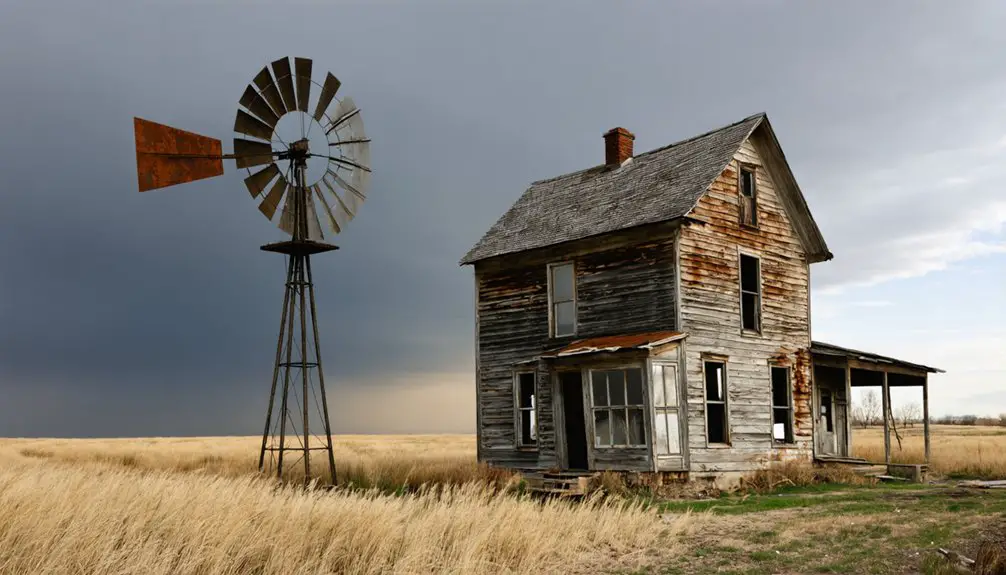
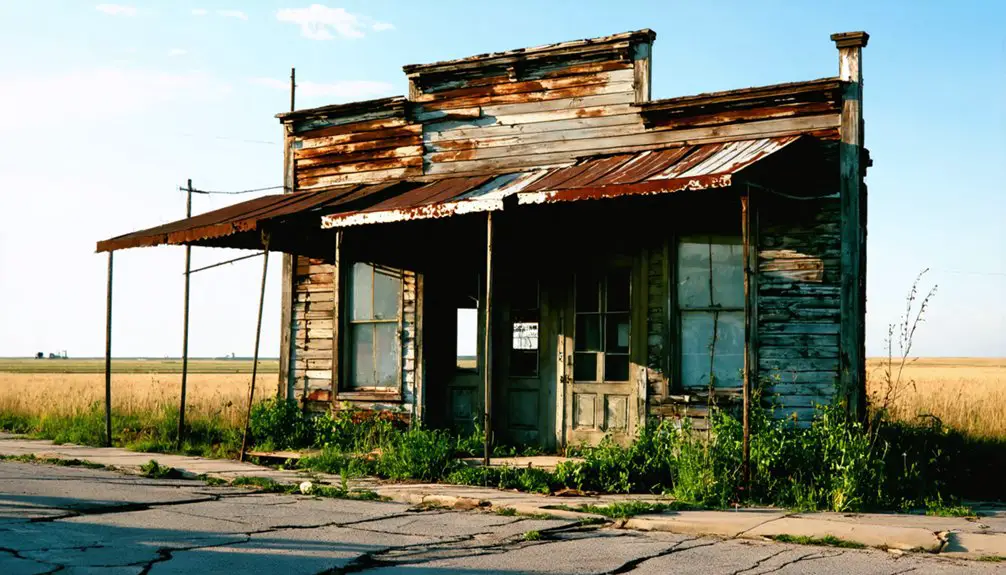
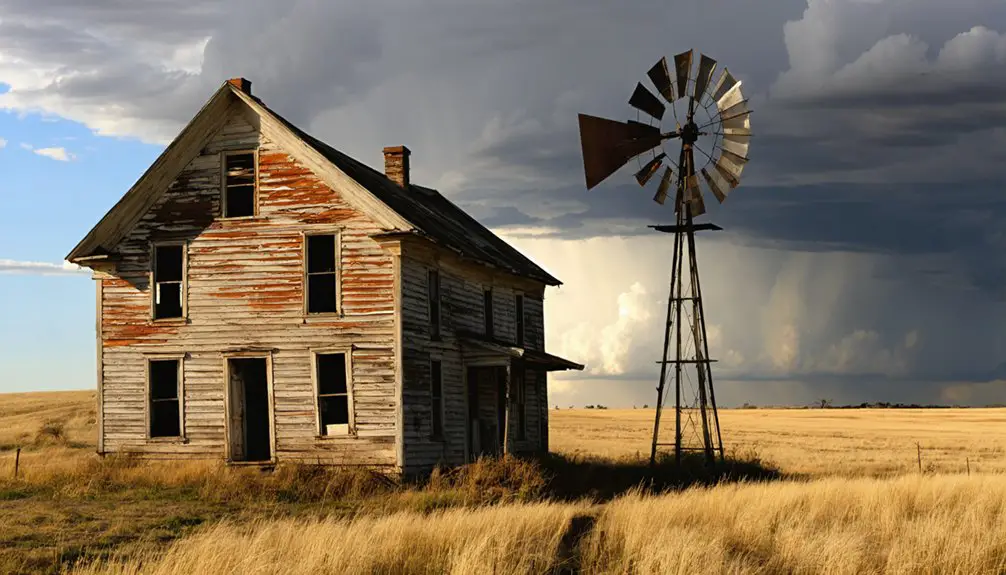
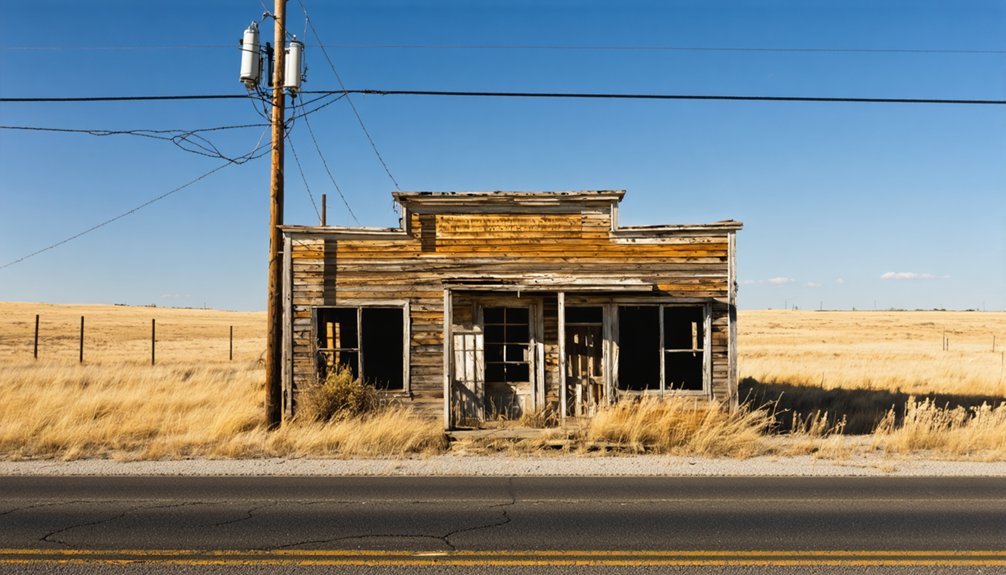
When you roll into Marsland today, you’ll find a quiet scattering of survivors — a few houses, some commercial buildings, and a Presbyterian church that stood among the town’s very first structures.
You can still spot the 1912 cement block home, a rare tangible link to Marsland’s brief moment of prosperity.
Keep your eyes open as you walk the grounds, because each remaining structure tells a piece of the story that fires, drought, and time couldn’t completely erase.
Remaining Structures Still Standing
Despite the fires, drought, and decades of decline, Marsland hasn’t vanished entirely — and if you make the trip, you’ll still find a handful of structures standing as quiet reminders of the town’s busier days.
These community remnants offer a rare glimpse into historic architecture that once supported hundreds of residents.
Look for these surviving landmarks:
- 1912 cement block home — one of the most intact residential structures remaining
- Presbyterian church — among the town’s earliest buildings, still recognizable today
- Former post office site — a foundational piece of Marsland’s original layout
- Railroad station remnants — echoes of the rail economy that built this town
Walk the quiet streets freely, and let the silence tell the story these walls can’t quite finish.
Historic Buildings Worth Exploring
Marsland’s remaining structures may be sparse, but they pack a surprising amount of history into a quiet stretch of Dawes County.
You’ll find the 1912 cement block home standing as a symbol of early homesteader resilience, its architectural significance rooted in materials and craftsmanship rarely seen in modern construction.
The Presbyterian church, one of Marsland’s earliest buildings, anchors the town’s spiritual and communal past.
Walking these grounds, you’re stepping into a living example of historic preservation at its most organic — not curated by museums, but shaped by time and survival.
The old railroad station site connects the town’s commercial origins to the Chicago, Burlington, and Quincy line that birthed it.
Each structure tells you something raw and unfiltered about frontier Nebraska.
Best Time of Year to Visit Marsland
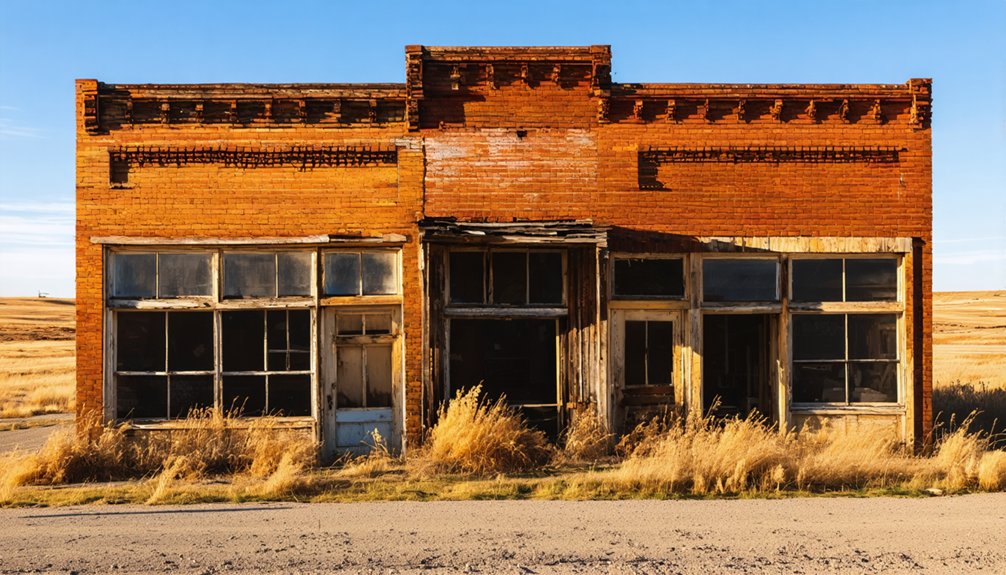
The best time to visit Marsland runs from spring through fall, when mild temperatures and clear skies make exploring the scattered remnants of this semi-ghost town far more enjoyable.
Winter snowstorms can make the 2WD roads treacherous and inaccessible.
Here’s what each season offers:
- Spring – Fresh spring blooms contrast beautifully against weathered structures, creating stunning photography opportunities.
- Summer – Long daylight hours give you maximum exploration time across the entire site.
- Fall – Rich autumn colors frame the abandoned buildings, adding dramatic atmosphere to your visit.
- Winter – Snow obscures roads and limits access, making it the least ideal choice.
Plan your arrival between May and October to roam freely, capture history, and experience Marsland’s haunting beauty without weather restrictions slowing you down.
What to Pack for Marsland’s Remote Roads and Limited Services
Visiting Marsland means venturing 12 miles west and 9 miles north of Hemingford along roads with zero guaranteed services, so packing smart isn’t optional — it’s essential.
Your road trip essentials should include extra fuel, water, food, and a first-aid kit. Two-wheel-drive roads can turn unpredictable after rain, so toss in a tow strap and jumper cables.
Remote area preparation also means carrying offline maps, since cell service isn’t reliable out here. Bring sturdy walking shoes for exploring crumbling foundations and remaining structures. A camera captures the haunting beauty of abandoned buildings still standing against the Nebraska sky.
Pack layers too — temperatures shift dramatically between morning and afternoon. Come prepared, and Marsland rewards you with unfiltered history and absolute freedom.
Nearby Stops Worth Adding to Your Marsland Route
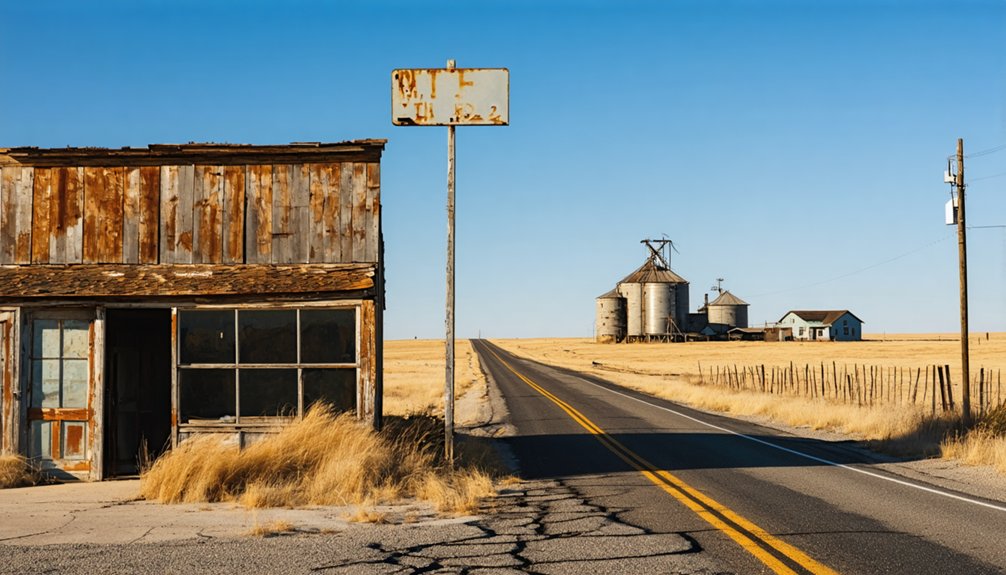
While you’re already making the trek to Marsland, adding Belmont to your route costs almost nothing in extra miles — it sits just a few more miles north and carries its own ghost town energy.
Pair these local attractions with the surrounding Niobrara River valley‘s scenic viewpoints for a fuller experience of this remote corridor.
Round out your route with these stops:
- Belmont — Another semi-ghost town worth exploring just north of Marsland
- Niobrara River banks — Peaceful scenic viewpoints with historical ice-harvesting significance
- Hemingford — A functional town 12 miles southeast offering fuel and food
- Highway 2 corridor — Rolling Nebraska panhandle scenery connecting multiple local attractions worth slowing down for
Each stop deepens the story this landscape quietly tells.
Frequently Asked Questions
Is Overnight Camping Allowed Anywhere Near Marsland, Nebraska?
Like a wandering pioneer, you’ll find freedom’s call answered — camping regulations vary, but nearby attractions like the Niobrara River offer you overnight spots. Explore Nebraska’s public lands for your wildest ghost town adventure!
Are There Any Guided Ghost Town Tours Available in the Area?
You won’t find dedicated tour operators offering guided ghost town history experiences in Marsland. You’re free to explore it independently, wandering its haunting remains at your own pace, which honestly makes the adventure even more thrilling!
Can Visitors Legally Enter or Photograph Remaining Private Structures?
“Look before you leap” — you must respect property rights when visiting Marsland. Don’t enter private structures without permission. Follow photography guidelines by shooting from public areas, keeping your adventurous spirit both free and responsible.
Is Marsland Accessible by Motorcycle or Only Standard Vehicles?
You can reach Marsland by motorcycle! Highway 2 welcomes motorcycle routes, but you’ll want to prioritize vehicle safety on the 2WD roads beyond. Ride confidently through Nebraska’s wide-open landscape and embrace the freedom of ghost town exploration.
Are There Any Local Contacts or Caretakers Managing the Site?
Once vibrant, now eerily silent — the knowledge doesn’t list any official local contacts or caretakers managing Marsland’s preservation efforts. You’ll want to research local history groups in Dawes County before visiting for current information.
References
- https://kids.kiddle.co/Marsland
- https://www.ghosttowns.com/states/ne/marsland.html
- https://anotherstorytotell.com/marsland-yes-there-really-is-such-a-place-in-nebraska/
- https://journalstar.com/article_aba72592-f8c9-55c5-8cfe-c37203f305f8.html