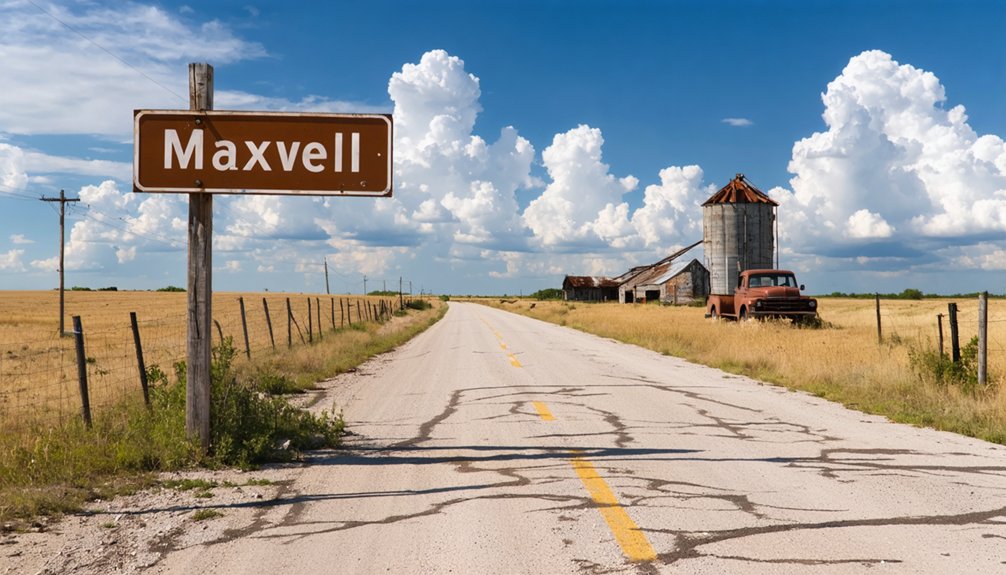
You’ll find Maxwell near Konawa in Pontotoc County at coordinates 34.9034152°N, 96.844185°W, accessible via State Highway 9E from Ada. Plan your visit between April-June or September-October to avoid extreme weather, and bring sturdy boots, layered clothing, and plenty of water. Today, crumbling concrete foundations, weathered gravestones, and scattered artifacts tell stories of this mining town’s hasty abandonment, while massive chat piles loom over the blood-red waters of Tar Creek. Discover what else awaits among these haunting prairie ruins.
Key Takeaways
- Maxwell is located in Pontotoc County at coordinates 34.9034152°N, 96.844185°W, accessible via US-377 through Konawa and State Highway 9E.
- Visit during April-June or September-October to avoid extreme temperatures; bring layered clothing, sturdy boots, water, and sun protection.
- Expect to see crumbling concrete foundations, weathered gravestones, scattered artifacts, and gray chat piles from Oklahoma’s mining past.
- Exercise caution as sinkholes and structural instability threaten 90% of former sites; the Quapaw Marshal’s Office remains standing.
- Plan navigation using Interstate 35, US-75, OK-48, and county roads branching from SH-3W to reach this remote ghost town.
The Rise and Fall of Maxwell: Understanding Oklahoma’s Ghost Town History
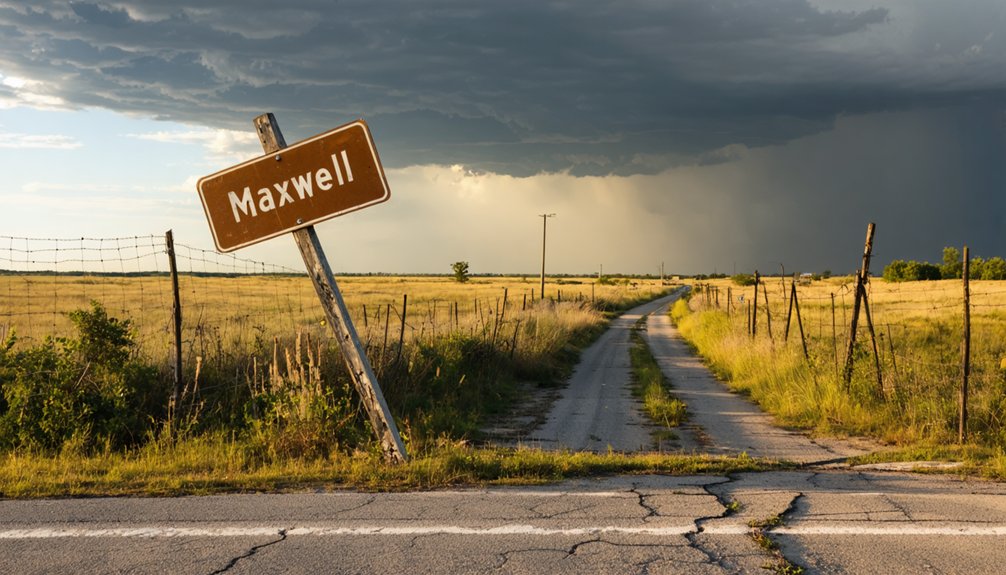
Across Oklahoma’s wind-swept prairies, over 2,000 ghost towns stand as silent witnesses to the state’s turbulent past—each one a chronicle, a record, a memorial to dreams that flourished and faded with the same fierce unpredictability as the weather itself.
Maxwell’s story mirrors countless others: towns born from railroad promises, oil discoveries, and pioneer determination. You’ll find these settlements emerged around essential institutions—churches, schools, blacksmith shops—binding communities together through shared necessity.
The economic impact of booming oil fields transformed sleepy crossroads into bustling hubs of over 1,000 residents practically overnight. But changing town dynamics proved merciless. When resources depleted, railroads rerouted, or natural disasters struck, populations vanished as quickly as they’d arrived, leaving behind weathered structures and untold stories waiting for curious travelers.
What Remains at Maxwell Today: Site Conditions and Visible Features
The landscape at Maxwell tells a story of erasure—where a town once thrived, only shadows and scars remain. You’ll find cracking concrete slabs marking former suburbia, empty lots choked with weeds, and massive gray chat piles rising like monuments to industrial ambition. Tar Creek runs blood-red through boggy wasteland, while twisted trees struggle through contaminated soil.
Sinkholes and structural instability threaten 90% of former building sites, the ground hollowed by abandoned mine shafts below. The Quapaw Marshal’s Office stands as one of few surviving structures, a solitary sentinel among demolished ruins.
Contamination remediation challenges persist—cleanup efforts won’t finish for another 50 years. You’re witnessing environmental devastation frozen in time, a haunting reminder of unchecked industry’s price.
Getting There: Directions and Route Planning to Maxwell
Your journey to Maxwell begins on US-377, the main artery slicing through Konawa in Pontotoc County, roughly twenty miles south of where I-35 cuts its north-south path through central Oklahoma.
From Konawa’s quiet streets, you’ll navigate toward the coordinates 34.9034152°N, 96.844185°W, where gravel roads branch off into sections of rolling prairie at approximately 1,020 feet elevation.
State Highway 9E provides your east-west connection from Ada, while the ghost town itself hides in the unincorporated spaces between modern landmarks like Latta and Leader.
Primary Routes and Highways
Multiple highways converge to bring modern travelers within reach of Maxwell’s scattered remnants in Pontotoc County. Your journey begins with major highways forming the skeleton of route planning—US Highway 177 cuts through Pontotoc’s heart, while State Highway 3W serves as your primary artery into rural territories where Maxwell awaits.
Key access corridors include:
- Interstate 35 from Oklahoma City, offering the fastest northern approach via OK-99
- US-75 and OK-48 from Tulsa, threading through Henryetta toward Ada
- County roads branching from SH-3W, your final links to Maxwell’s coordinates
These paved routes deliver you to the threshold where civilization fades. From there, you’ll navigate backroads that parallel trails marked on century-old maps—the same paths settlers once traveled to this forgotten outpost.
Nearby Towns as Landmarks
Once paved highways deliver you to Pontotoc County’s rural threshold, you’ll need concrete landmarks to anchor your navigation through Oklahoma’s sprawling plains. Nearby town landmarks become your compass points: Arcadia’s iconic Round Barn on Route 66 stands seventeen miles northeast of Oklahoma City, while Stroud’s Rock Cafe—the inspiration behind Pixar’s Cars—marks your progress along the Mother Road.
The historic architecture of surrounding towns tells Oklahoma’s story through Main Street facades and heritage buildings. Sulphur’s Platt Historic District offers waypoint references near Chickasaw National Recreation Area. Tonkawa’s McCarter Museum and Blackwell’s 1912 Electric Park Pavilion housing the Top of Oklahoma Historical Museum provide navigational certainty.
These communities transform abstract distances into tangible markers, guiding your wheels toward Maxwell’s forgotten streets.
Best Time to Visit Maxwell and What to Bring
When planning your Maxwell ghost town adventure, timing can transform your experience from a sweaty scramble through overgrown ruins to a perfectly temperate exploration of Oklahoma’s forgotten past. Target April through June or September through October when temperatures hover between 60°F and 80°F—perfect for wandering crumbling foundations without melting into the prairie dust.
Your ideal packing checklist should include:
- Layered clothing for variable temperatures and unpredictable Oklahoma weather
- Sturdy hiking boots for traversing debris-strewn ghost town terrain
- Sun protection and water since shade disappeared with Maxwell’s residents
Skip July’s brutal heat and January’s bone-chilling winds. These seasonal activity recommendations guarantee you’ll actually enjoy photographing weathered structures rather than retreating to your air-conditioned vehicle.
Spring and fall deliver serene exploration without summer crowds competing for that perfect abandoned-building shot.
Exploring the Ruins: What to Look for at the Site
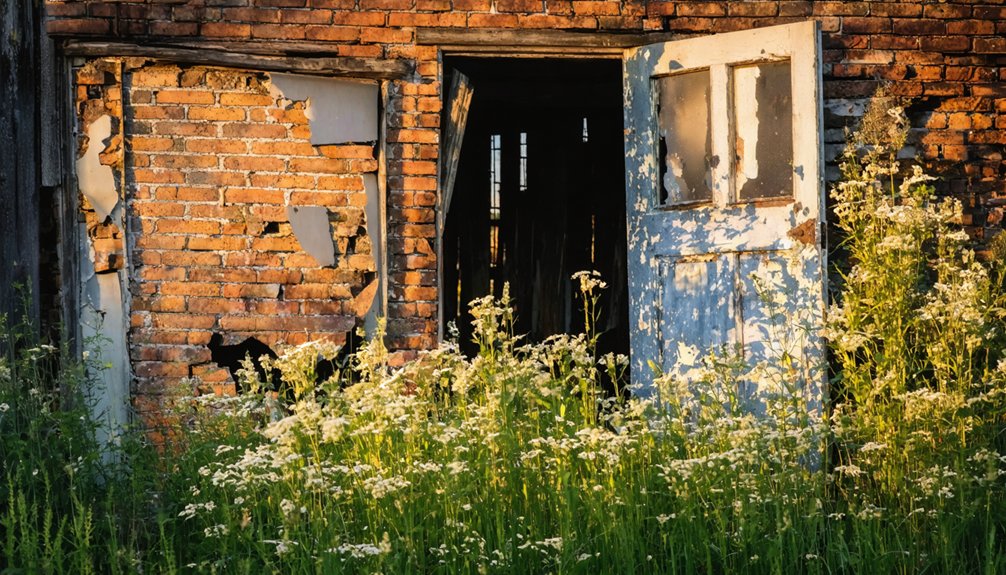
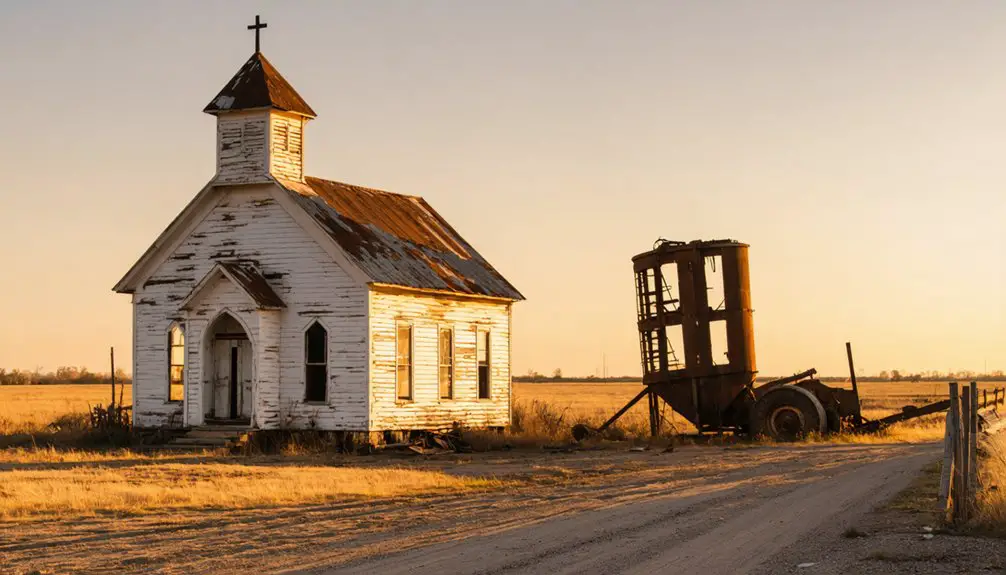
As you step onto Maxwell’s scarred earth, you’ll encounter concrete foundations jutting from overgrown grass where homes once anchored families to this doomed landscape.
The cemetery offers weathered stones that whisper names and dates of those who lived and died here, their final markers now standing guard over an empty town. Scattered personal artifacts—rusted toys, crumbling letters, household remnants—lie half-buried among the ruins, telling silent stories of the hasty exodus that followed environmental catastrophe.
Identifying Structural Remains
The windswept prairie reclaims Maxwell’s remnants slowly, where concrete foundations emerge from tall grass like bones breaking through soil. You’ll discover remaining structural footprints marking where homes, businesses, and community buildings once stood. Study these weathered foundations carefully—they reveal room layouts, doorway positions, and building orientations that tell stories of daily life.
Look for intact architectural details that survived abandonment:
- Crumbling stone cellar walls with hand-laid masonry patterns
- Rusted metal fragments from farming equipment and household implements
- Deteriorating wooden beams still bearing saw marks from frontier mills
These fragments create your mental map of Maxwell’s lost landscape. Walk the perimeter of each foundation, noting how settlers positioned structures to face prevailing winds or main thoroughfares that disappeared decades ago.
Cemetery Stones and Markers
Weathered headstones stand as silent historians throughout Maxwell’s scattered burial grounds, their surfaces telling stories through both what remains legible and what time has stolen away. You’ll find crude stone markers where inscriptions have surrendered to a century of Oklahoma weather, their messages now whispered only through barely visible etchings.
The Maxwell Family Cemetery holds documented records, though you’ll discover numerous unmarked grave locations marked simply by rough-hewn rocks or metal crosses placed by later volunteers. Look closely at handmade markers—some feature backwards letters carved by pioneers unfamiliar with stonework.
These symbolic grave markers represent more than burial sites; they’re freedom’s price paid by settlers who chose untamed territory. Each stone, whether professionally crafted or crudely shaped, marks someone’s bold choice to build life in wilderness.
Historical Artifacts and Foundations
Beyond Maxwell’s burial grounds, remnants of daily life emerge from the earth itself—crumbling foundations that map out where miners once slept, traded, and dreamed of prosperity. You’ll discover building foundations scattered across overgrown street grids, marking where homes and businesses collapsed into shallow mines below. Navigate carefully—sinkholes still threaten unstable ground.
The landscape reveals mining’s brutal legacy through distinctive features:
- Mining tailings piles tower around town perimeters, containing over 100 million tons of toxic chat
- Partial walls and frameworks from the early 1900s stand defiant amid rubble
- Hidden mine shaft entrances lurk in vegetation—14,000 abandoned shafts riddle the area
Heavy metal contamination preserved this isolation, freezing Maxwell in its 1960s abandonment. Each foundation tells stories of families who fled when prosperity turned poisonous.
Nearby Ghost Towns to Add to Your Oklahoma Itinerary
While Maxwell offers a haunting glimpse into Oklahoma’s forgotten past, several other ghost towns dot the state’s landscape, each with its own story of boom and abandonment. You’ll find Texola straddling the Texas border along Route 66, where a 1930 Magnolia Gas Station and one-room jail provide excellent photography angles.
Northeast lies Picher, a toxic Superfund site where contaminated mining ruins create eerie architectural details. Western Oklahoma’s Foss showcases Kobel’s Gas Station ruins and an 1894 Baptist Church. Ingersoll in Alfalfa County peaked at 1,000 residents before a devastating 1957 flood ended its prosperity. Near Stillwater, Ingalls marks the 1889 land run era. Each location offers freedom to explore Oklahoma’s abandoned heritage without crowds or restrictions.
Historical Sites and Attractions in the Surrounding Area
Maxwell’s remote location in central Oklahoma places you within striking distance of several compelling historical landmarks that paint a fuller picture of territorial life. While specific attractions near Maxwell remain undocumented, central Oklahoma’s historical corridor offers you authentic glimpses into frontier America.
Your exploration might include:
- Local historical museums preserving pioneer artifacts and homesteading stories
- Regional Native American sites honoring indigenous heritage predating statehood
- Territorial-era settlements where you’ll discover remnants of Oklahoma’s shifting period
Since Maxwell’s surrounding area lacks exhaustive documentation, you’ll need to research current road conditions and site accessibility before departing. Contact nearby county historical societies for updated information about accessible landmarks. This uncertainty adds adventure to your journey—true ghost town exploration means venturing where guidebooks fear to tread.
Photography Tips for Capturing Maxwell’s Abandoned Landscape
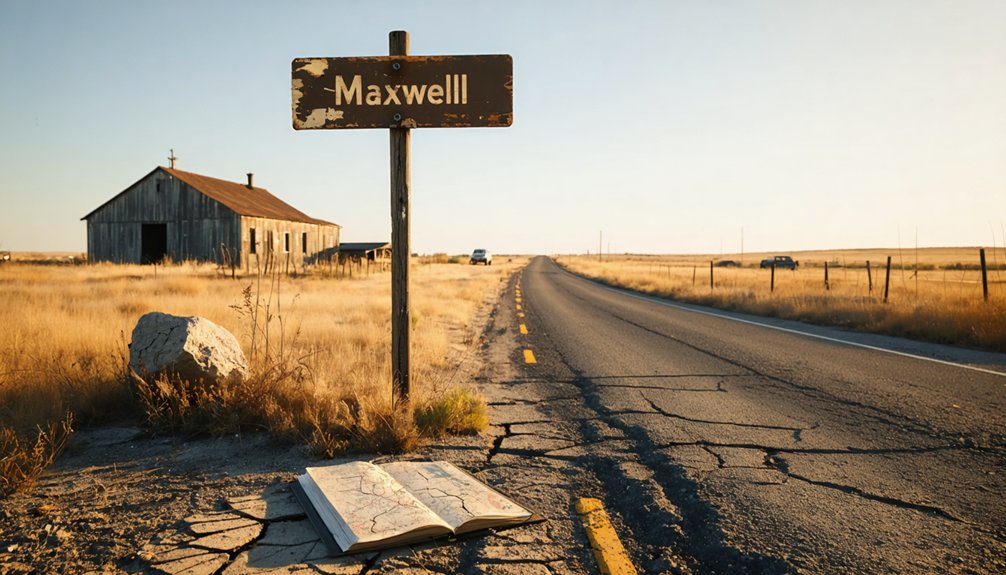
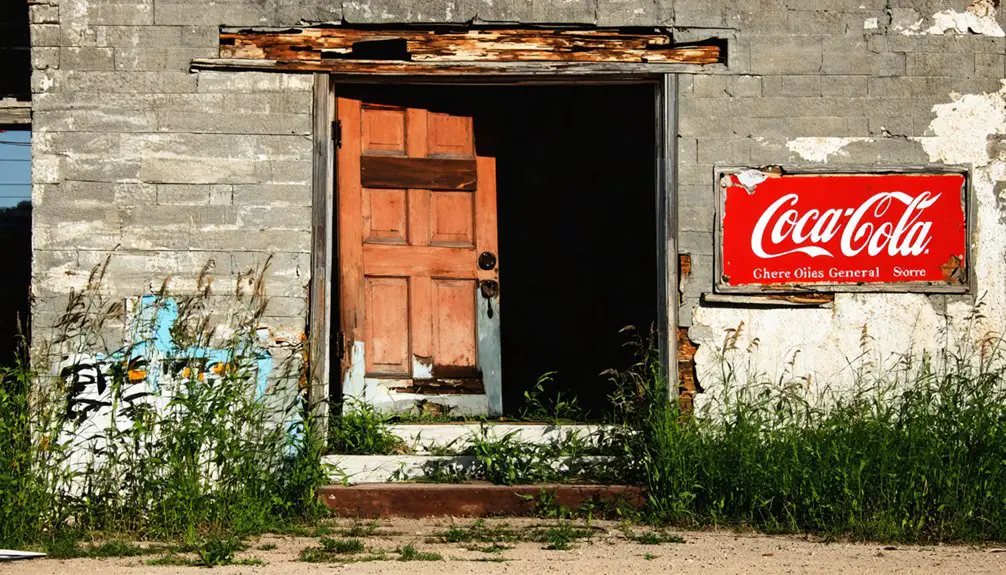
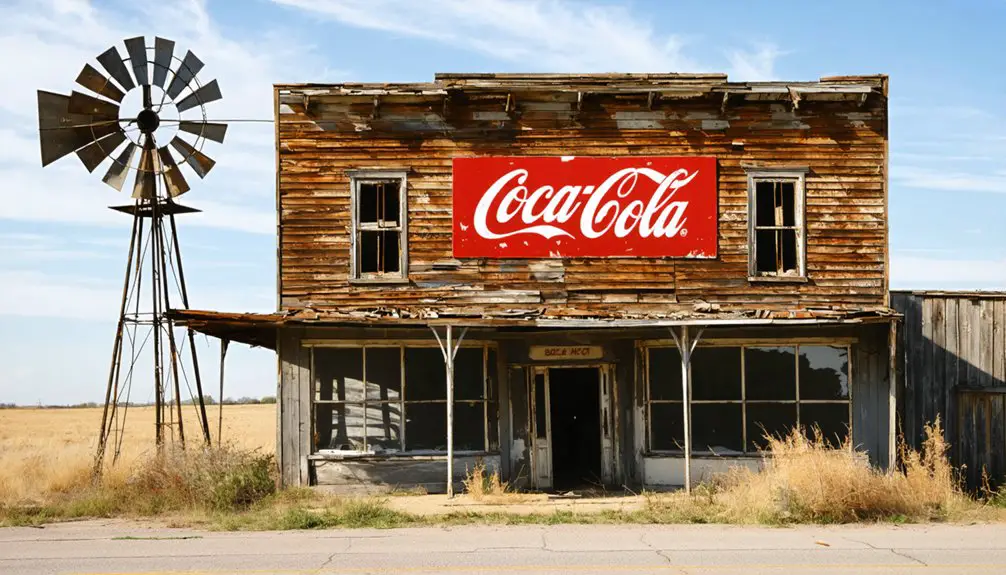
When your camera finds Maxwell’s weathered structures through the viewfinder, you’re not just documenting decay—you’re preserving a disappearing chapter of Oklahoma’s territorial story. Circle each building to discover unique vantage points that reveal hidden character—crumbling doorways become natural frames, while rusted farm equipment adds narrative depth to your compositions.
Golden hour transforms these forgotten spaces into something almost sacred. Expose for the light streaming through broken windows, creating deliberate silhouettes that emphasize the haunting emptiness within. Don’t shy away from vibrant color shots that capture remnants of life—peeling paint and weathered wood tell powerful stories.
Bracket your exposures in high-contrast scenes, blending them later for maximum impact. Position yourself low near foreground elements like fence posts or abandoned vehicles, using wide lenses purposefully to guide viewers through Maxwell’s desolate beauty.
Safety Considerations and Respectful Exploration Guidelines
Your stunning photographs mean nothing if you get hurt capturing them. Maxwell’s crumbling structures pose underground stability risks from Oklahoma’s mining history—test footing carefully and never enter collapsed buildings.
Practice environmental stewardship by leaving artifacts untouched and staying on established paths. Oklahoma’s tornado warnings demand immediate action, so identify shelter locations before exploring.
Essential safety protocols:
- Respect private property boundaries to avoid trespassing violations and potential conflicts with landowners
- Monitor weather conditions constantly and know your nearest basement or designated shelter zone
- Never explore alone and always inform someone of your exact location and return time
Your freedom to roam these haunting landscapes depends on responsible exploration. Lock artifacts in memory through your lens, not your backpack, preserving Maxwell’s legacy for future adventurers.
Frequently Asked Questions
Are There Any Legal Restrictions on Accessing Maxwell Ghost Town Property?
You’ll face trespassing concerns since Maxwell sits on privately owned land. Before exploring those weathered structures and sun-bleached foundations, you must secure permission from current owners—safeguarding property rights guarantees your adventure stays legal and worry-free.
Can I Camp Overnight Near Maxwell or in the Ghost Town Area?
You can’t camp in Maxwell’s ghost town itself, but Maxwell Wildlife Refuge nearby offers primitive camping at Lake 13. No campfire permits required since fires’re prohibited. Check nearby accommodations availability, as it’s first-come, first-served with limited facilities.
Are There Any Guided Tours Available for Maxwell Ghost Town?
Like a tumbleweed rolling through abandoned streets, you’ll explore Maxwell independently—no guided tour availability exists for this remote ghost town. Visitor amenities are nonexistent, so you’ll need self-reliance, supplies, and adventurous spirit to discover its secrets alone.
What Cell Phone Coverage Can I Expect in the Maxwell Area?
You’ll find strong cell phone signal strength with AT&T and T-Mobile leading coverage at 98-100%. Verizon offers reliable backup. For nearby wireless hotspots, head to Boswell’s cafés. Pack downloaded maps—ghost towns embrace disconnection beautifully.
Are There Restrooms or Facilities Available Near the Maxwell Site?
You won’t find public restrooms nearby at this remote ghost town. Private facilities availability is nonexistent at the abandoned Maxwell site. Plan ahead—bring portable options and stock up on supplies in nearby towns before venturing into this isolated territory.