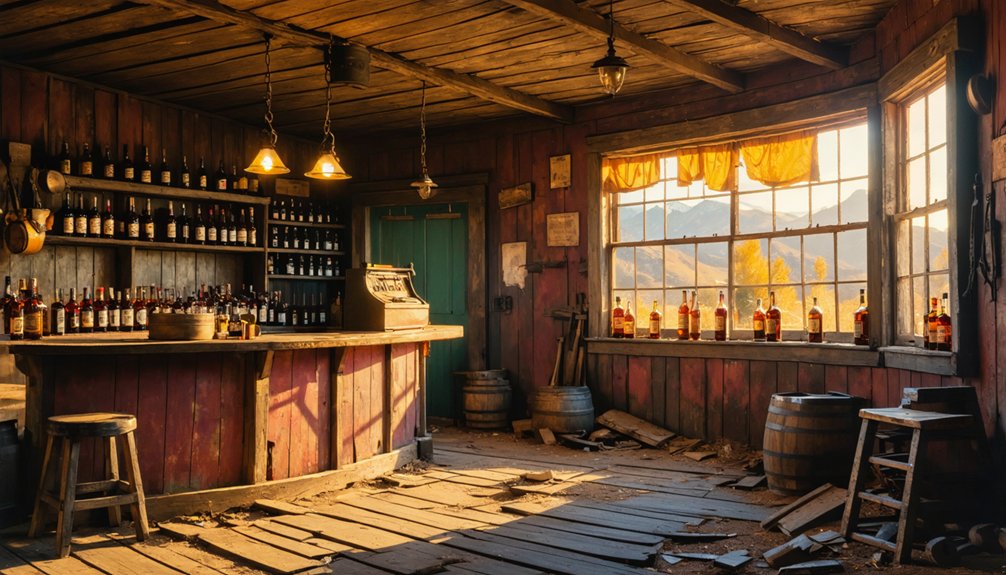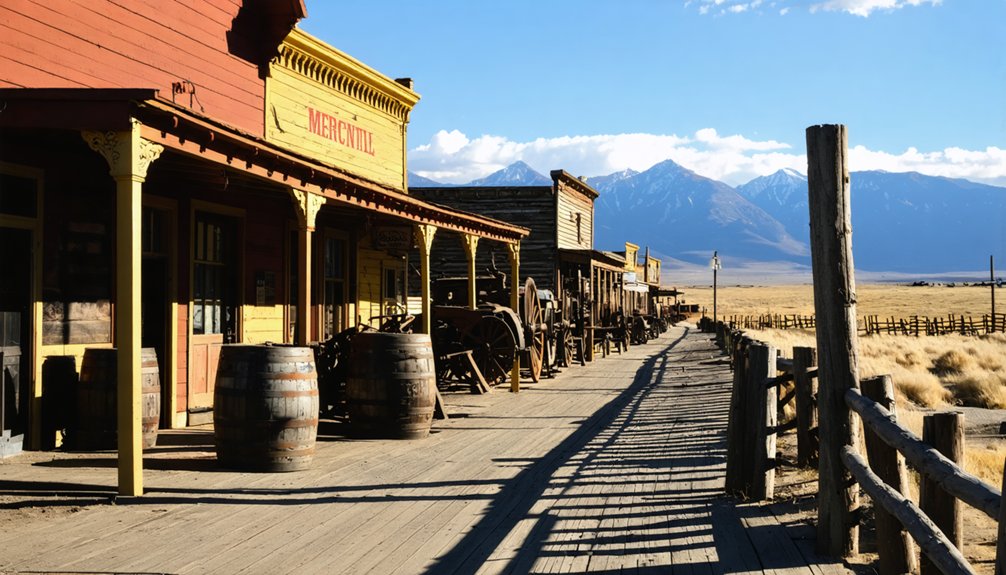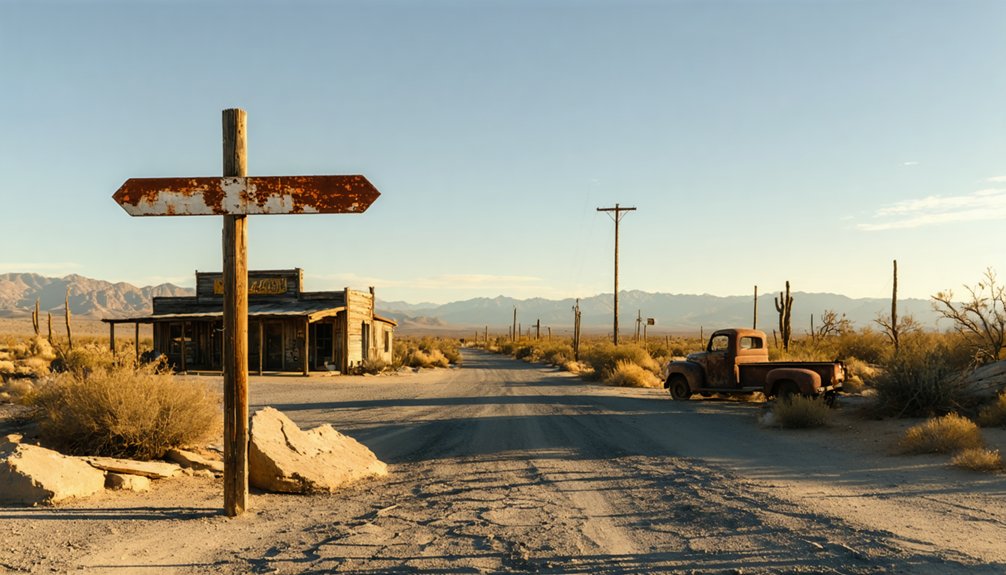
You’ll find McLeans Ferry approximately twenty miles west of Stockton via State Route 4, where Gold Rush foundations and open mine adits await exploration among the Delta’s agricultural backroads. Pack essentials like water, sturdy boots, flashlights, and navigation tools—self-sufficiency isn’t optional here. Spring wildflowers offer breathtaking scenery, while fall’s quieter post-Labor Day window provides solitary wandering through weathered bunkhouses and mining ruins. This forgotten river crossing holds secrets best discovered with proper preparation and a detailed understanding of what lies ahead.
Key Takeaways
- McLeans Ferry is located approximately twenty miles west of Stockton via California State Route 4 near the old McDonald Island Ferry site.
- Visit in spring for wildflowers or fall for golden landscapes; avoid summer’s extreme heat by arriving early morning.
- Bring water, sturdy boots, flashlight, first-aid kit, sun protection, snacks, and navigation tools for this remote ghost town exploration.
- Explore weathered foundations, a bunkhouse, chapel ruins, and multiple open mine adits clustered near the Inyo Mine vicinity.
- Leave a detailed itinerary with someone before visiting, as the isolated site requires complete self-sufficiency and emergency preparedness.
The History and Origins of McLeans Ferry
When gold fever gripped California in 1849, the Tuolumne River became both an obstacle and an opportunity for prospectors streaming into the Sierra foothills. You’ll find that McLeans Ferry emerged at this critical junction, where fortune-seekers needed safe passage across the rushing waters.
While the exact founding date remains obscured by history’s dust, the settlement followed early settlement patterns typical of Gold Rush boom towns—springing up wherever miners congregated and commerce flourished.
The ferry operation itself became the lifeblood of this remote outpost, connecting isolated mining camps to supply routes and civilization. You can imagine the constant stream of pack mules, wagons, and weather-beaten prospectors crossing these waters, each carrying dreams of striking it rich.
Today, only whispers remain of this once-vital crossing point.
What Remains at the Site Today
Little survives of McLeans Ferry’s bustling past—the site today presents itself as a weathered collection of foundations and scattered debris rather than the preserved tableau you’d encounter at places like Bodie State Historic Park.
You’ll find a bunkhouse standing amid the ruins, along with what appears to be a chapel or schoolhouse. Notable mining ruins dot the landscape, including an impressive fly wheel and crusher equipment left where they last operated.
Several accessible archaeological features invite exploration—multiple mine adits remain open for those willing to venture on foot, while heaps of mining artifacts cluster near the Inyo Mine vicinity. The high-elevation setting in the Funeral Mountains offers minimal signage, leaving you free to interpret this desert ghost town’s scattered remnants independently.
Getting There: Routes and Road Conditions
Tucked away in California’s sprawling Delta region, McLeans Ferry sits approximately twenty miles west of Stockton, accessible primarily via California State Route 4. You’ll find the site near the old McDonald Island Ferry location at coordinates 37.9796453°N, 121.4749505°W, just three feet above sea level in San Joaquin County’s Holt area.
McLeans Ferry: a Delta outpost barely above sea level, twenty miles west of Stockton where California’s waterways meet forgotten agricultural land.
Your journey cuts through agricultural backroads where pavement meets Delta soil. SR-4 remains your main artery, with northern connections via SR-219 and Tully Road. Watch for roadway construction updates along the SR-108 corridor—Caltrans District 10 continuously evaluates potential route modifications through this region.
Local arteries like Coffee Road and McHenry Avenue offer alternate paths when you’re craving spontaneity.
The roads here don’t promise luxury, but they deliver authenticity. Expect stable conditions across most routes, though seasonal flooding occasionally reshapes your options.
Best Season and Time to Visit
You’ll find Mcleans Ferry transforms with each season, offering distinct experiences that shape your journey. Spring brings a carpet of wildflowers across the valley floor, while summer’s unforgiving heat demands early morning arrivals before temperatures soar past comfortable exploration.
Fall delivers golden grasses and scattered oaks in burnt orange, and you’ll likely have the abandoned streets mostly to yourself as tourist crowds thin after Labor Day.
Spring Weather and Wildflowers
When spring arrives at McLeans Ferry, the ghost town awakens with a transformation worth timing your visit around. You’ll experience temperature trends climbing from mild 64°F mornings to comfortable 85°F afternoons, perfect for exploring weathered structures without extreme heat.
The season delivers 52% of the region’s annual rainfall, transforming the parched Central Valley landscape into vibrant wildflower displays that soften abandoned homesteads with brilliant color.
Cloud patterns shift dramatically as spring progresses, with overcast skies gradually clearing to reveal extended daylight hours. Late spring offers your best wildflower viewing—warming temperatures trigger blooms while decreasing rainfall allows accessible dirt roads. You’ll find the ghost town framed by California poppies and lupines, creating photographic moments impossible during summer’s scorched months.
Summer Heat Considerations
The vibrant wildflower carpets fade as summer tightens its grip on McLeans Ferry, replacing spring’s gentle warmth with relentless heat that redefines your ghost town experience. From June through September, temperatures soar above 87°F, with late summer peaks pushing higher.
Unlike coastal California’s marine-cooled reprieve, this inland ghost town bakes under cloudless skies and dry winds. Heat advisories become commonplace as July shifts into August’s furnace-like conditions.
You’ll need strategic timing for exploration—start before dawn, retreat during midday’s brutal peak. Essential sun protection isn’t optional: wide-brimmed hats, long sleeves, and high-SPF sunscreen become survival tools. Carry excessive water; dehydration strikes fast in this unforgiving landscape.
The abandoned structures offer minimal shade, their weathered walls radiating stored heat long after sunset.
Fall Colors and Crowds
As autumn’s chill descends on the Eastern Sierra, McLeans Ferry sheds its summer harshness for a brief, transformative season that rewards patient explorers. You’ll find the fall color progression beginning mid-to-late September in nearby higher elevations like Bishop Creek and Rock Creek, with aspens shifting from lime green to brilliant gold. By early October, the region reaches its grand finale.
To escape the conventional crowd patterns, consider these strategies:
- Visit mid-week when leaf peepers concentrate elsewhere on popular trails
- Target late September for early access with minimal congestion in starting elevation zones
- Explore into early November when lower areas provide quieter late-season viewing
The ghost town’s isolation becomes an asset here—while visitors pack Mammoth Lakes and June Lake Loop, you’ll experience McLeans Ferry’s golden cottonwoods in solitude.
What to Bring for Your Exploration
Preparing for a ghost town adventure requires thoughtful consideration, especially when venturing into remote locations where modern conveniences don’t exist. Your gear requirements should cover survival basics: plenty of water, sturdy hiking boots, and navigation tools since cell service is unreliable in California’s backcountry. Pack a first-aid kit, sun protection, and layers for temperature shifts between desert heat and cool evenings.
As you prepare to explore ghost towns in California, consider researching the histories and stories of these abandoned places to enrich your experience. Each location has its own unique charm and often offers a glimpse into the past of the Gold Rush era or the mining boom. Don’t forget to bring a camera to capture the haunting beauty of these forgotten sites and the captivating landscapes surrounding them.
Among your packing essentials, include a flashlight for exploring shadowy structures, gloves for handling weathered wood and rusted metal, and a camera to capture haunting remnants. Bring snacks with staying power and a physical map of the region. Since you’re embracing true wilderness exploration, self-sufficiency isn’t optional—it’s survival. Leave detailed itineraries with someone reliable before departing into these forgotten landscapes.
Nearby Ghost Towns Worth Adding to Your Route
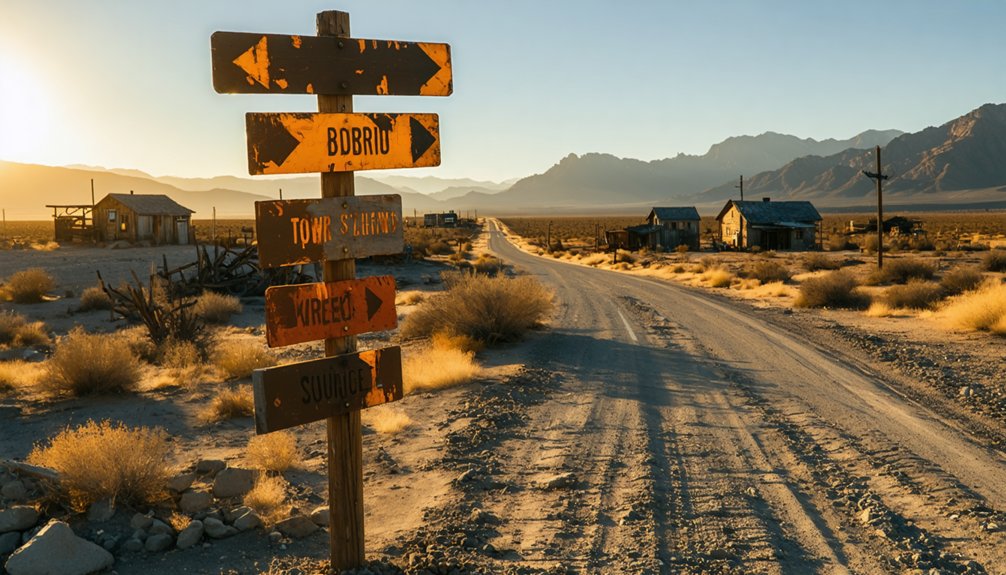
Your journey to Mcleans Ferry opens doors to California’s richest constellation of ghost towns, where crumbling saloons and weathered mine shafts dot the eastern Sierra and Death Valley ranges.
Within a few hours’ drive, you’ll find everything from Bodie’s frozen-in-time streets to Ballarat’s lonely adobe ruins, each settlement telling its own story of silver strikes and shattered dreams.
Planning a multi-town route lets you trace the boom-and-bust cycle across different landscapes, from high desert plateaus to mountain valleys where gold fever once consumed thousands.
Historic Mining Communities Nearby
The desolate beauty of California’s Mojave Desert conceals a constellation of ghost towns within striking distance of McLeans Ferry, each one whispering tales of fortune-seekers who gambled everything on silver veins and gold strikes.
You’ll discover authentic mining operations that carved empires from stone:
- Cerro Gordo stands at 8,500 feet, where prospecting opportunities once yielded 4.5 million ounces of silver from 37 miles of tunnels
- Bodie reveals 170 explorable structures from its 10,000-person heyday, preserving $34 million worth of gold-rush history
- Darwin showcases raw frontier justice, where 45,000 souls crowded twenty saloons and disputes ended with Colt revolvers
These weathered settlements remain accessible to wanderers craving unfiltered history—no velvet ropes or sanitized narratives, just crumbling foundations and wind-scoured memories of California’s untamed past.
Abandoned River Settlement Sites
While silver-veined mountains drew the loudest crowds, California’s forgotten river settlements tell quieter stories of ambition drowned by floodwaters and economic tides. You’ll find these ghost towns scattered along the Tuolumne and Stanislaus rivers, where early ferry infrastructure once promised prosperity.
Adamsville’s remnant barn west of Ceres marks Dr. Adams’s vanished enterprise, while Paradise City’s 1868 dreams dissolved into Paradise Road’s name alone. Tuolumne City’s steel Nine Mile Bridge replaced ferry operations at a site that aspired to rival Stockton—nothing remains of its original structures. The Great Flood of 1861-1862 erased O’Byrnes Ferry completely, its placer bars now submerged beneath Tulloch Reservoir. These river landscape formations witnessed settlements rise and fall with ruthless indifference to human ambition.
Combined Multi-Town Route Planning
Beyond McLeans Ferry’s silted banks, California’s ghost town corridor stretches across the Mojave and eastern Sierras, where you can string together five legendary sites into a single desert pilgrimage. Route optimization starts with Calico’s tourist-friendly infrastructure—a day’s drive from Los Angeles with overflow parking serving as your basecamp.
From there, multi-town sequence planning follows the silver strikes northward:
- Keeler to Darwin loop (300 miles): Railroad remnants meet marble quarries, then climb to where 20 saloons once lined dusty streets
- Cerro Gordo’s 8,500-foot perch: The frontier’s wildest dance halls preserved above Owens Lake
- Bodie’s arrested decay: Century-old artifacts frozen in gold-rush authenticity
Each stop reveals what happens when prospectors abandon their dreams to the desert wind.
Where to Stay During Your Visit
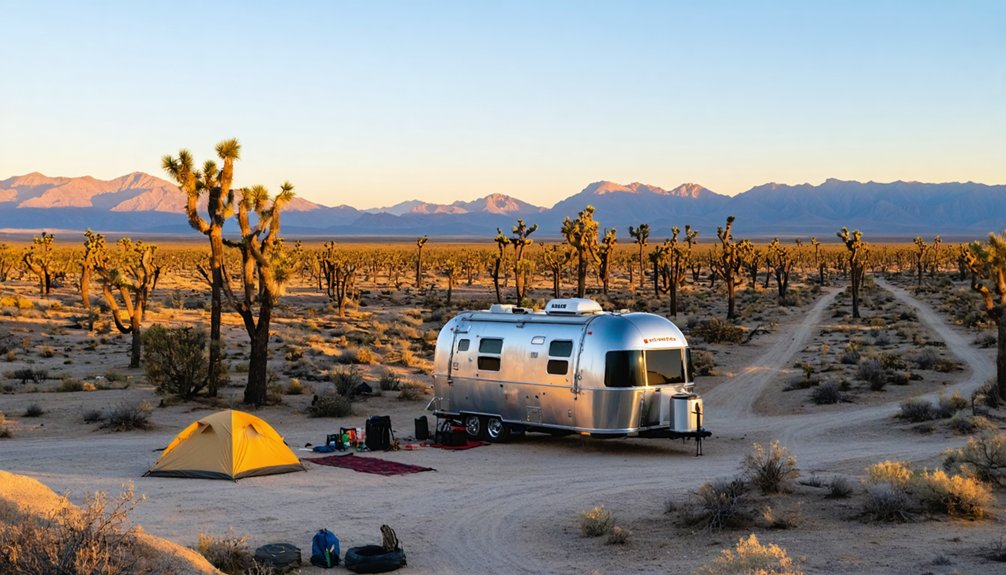
Since McLean’s Ferry exists only as a historical memory along the San Joaquin River, you’ll need to anchor your ghost town expedition at nearby accommodations that capture the region’s rustic character. The Clements area offers intimate vacation rentals where you’ll find riverside decks and secluded hot tubs—Art’s Studio LLC charges just $50 for pet friendly accommodations.
For groups seeking adventure together, Lodge at Marconi provides group booking discounts with 45 rooms spread across 62 acres overlooking Tomales Bay. If you’re craving something more primitive, explore McCloud’s historic inns within walking distance of its preserved district. Sierra Foothills River Retreat eliminates cleaning fees while delivering hammock-strung riverfront access. Each option positions you perfectly for dawn departures toward forgotten ferry crossings and vanished settlements.
Photography Tips and Highlights
When the first amber rays break across California’s river valleys, McLean’s Ferry’s scattered remnants transform into a photographer’s canvas of textures and history. You’ll capture your best shots during golden hour, when natural lighting conditions illuminate weathered wood and crumbling stone with cinematic warmth.
Golden hour transforms McLean’s Ferry’s weathered remnants into a luminous study of texture, where amber light breathes life into forgotten history.
Blue hour delivers moody silhouettes along the riverbank where ferries once crossed.
Essential gear for documenting these ruins:
- Wide-angle lenses for expansive landscape shots framing abandoned structures against desert horizons
- Sturdy tripods to stabilize low-light compositions near historic buildings
- Polarizing filters to enhance dramatic sky contrast
Specialized drone photography reveals remote trail sections and overgrown mining relics invisible from ground level. Frame your compositions using the rule of thirds, positioning isolated buildings against vast open spaces. Early morning fog softens distant peaks, while afternoon shadows accentuate architectural decay.
Safety Considerations and Visiting Guidelines
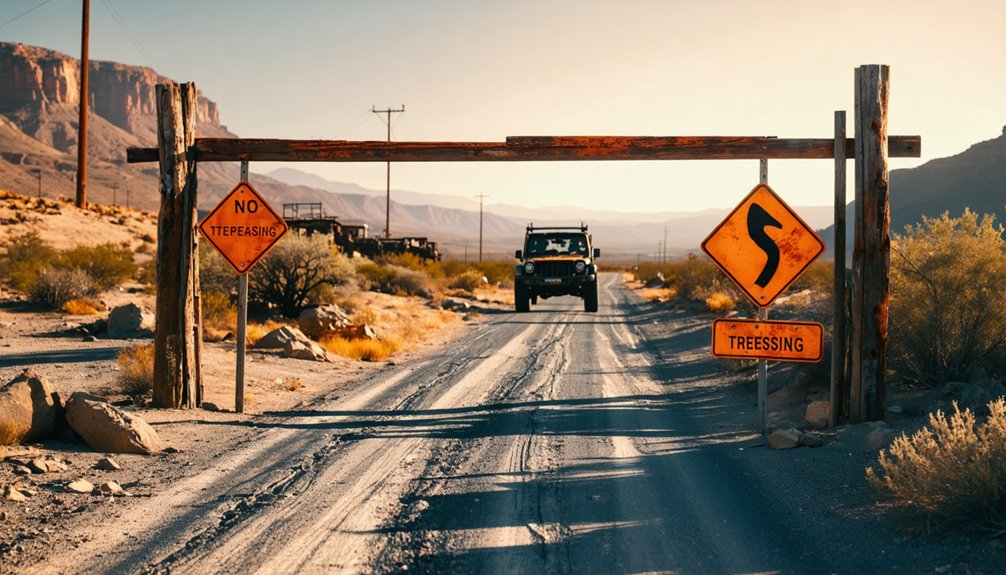
The desert silence at McLean’s Ferry masks genuine dangers that demand your respect and preparation. Pack recovery gear—straps, shackles, earth anchors—and travel with companions who can assist if your vehicle bogs down in sand.
Wear sturdy boots and sun protection while staying alert for rattlesnakes coiled in shade. Respecting private property isn’t just courtesy; it’s law. Stick to public roads and established pullouts, avoiding fenced parcels and unstable structures that could collapse beneath you.
Keep windows closed through dusty sections and wash your hands before eating—old mining areas harbor environmental contaminants. If you’re reporting wildlife encounters or spot dangerous conditions, contact local authorities rather than investigating solo. Your freedom to explore depends on exercising sound judgment and self-reliance.
Frequently Asked Questions
Are Pets Allowed at Mcleans Ferry Ghost Town Site?
Picture dusty trails beneath your boots—Mcleans Ferry’s pet-friendly policies remain unclear since it’s absent from official state listings. You’ll need to verify accessibility considerations directly with land managers before bringing your four-legged companion along for adventure.
Is Cell Phone Service Available in the Mcleans Ferry Area?
Cell phone service faces significant coverage limitations in McLeans Ferry’s remote location. You’ll likely find yourself disconnected from the digital world, embracing true wilderness solitude where signals fade and nature’s voice becomes your only reliable companion.
Do I Need Permits or Permissions to Visit Mcleans Ferry?
No permits are needed to explore McLeans Ferry’s remnants. You’ll find accessibility considerations minimal at this forgotten site, where historical significance quietly persists without bureaucratic barriers. The land welcomes those seeking unregulated communion with California’s vanished past.
Are There Guided Tours Available for Mcleans Ferry?
You won’t find tour guides available or scheduled tour times at McLeans Ferry—this forgotten ghost town offers raw, unstructured exploration. You’re free to wander independently, discovering remnants at your own pace without organized groups or restrictions.
Can I Camp Overnight at or Near Mcleans Ferry?
No developed campgrounds exist directly at Mcleans Ferry, but you’ll find nearby camping options along Stanislaus River Parks and Lake McClure. These sites offer essential amenities at campgrounds, requiring advance permits while delivering that wild freedom you’re craving.