You’ll find Metropolis 15.2 miles northwest of Wells, Nevada, where a brick schoolhouse arch stands as a haunting gateway to agricultural dreams that collapsed within a decade. Navigate unsigned dirt roads that transform from smooth to impassable after storms—bring AWD, spare tires, and check NDOT 511 beforehand. Spring and fall offer ideal 56-70°F temperatures for exploring scattered foundations, the sprawling hotel ruins, and the well-maintained cemetery. Meticulous planning guarantees you’ll experience every detail of this preserved failure.
Key Takeaways
- Metropolis lies 15.2 miles northwest of Wells, Nevada, accessed via unmarked dirt roads requiring careful navigation and AWD vehicles.
- Visit spring or fall for mild temperatures; avoid winter storms and summer’s 88°F heat with minimal rainfall.
- Explore the schoolhouse arch, Hotel Metropolis foundation, cemetery, and scattered ruins from the failed 1910s agricultural settlement.
- Check NDOT 511 before departure, as dirt roads become impassable after storms; bring spare tires and essential supplies.
- Federal laws protect all artifacts; walk to avoid damaging soil, close cattle gates, and camp following BLM dispersed guidelines.
Getting to Metropolis: Routes and Road Conditions
Reaching Metropolis requires careful navigation through Nevada’s high desert, as this ghost town sits 15.2 miles northwest of Wells with no official address to guide modern GPS systems. You’ll need solid map orientation skills and attention to driving distances once you exit I-80 at Wells (exit 351).
Head north on Humboldt Avenue for 0.9 miles, turn right onto 7th Street, then immediately left across the railroad tracks. The tricky part? Finding unsigned 8th Street, which parallels those tracks and becomes your main route north. Reset your odometer here. At 4.9 miles, you’ll hit a major junction—turn left. Multiple side roads appear over the next three miles, but stay committed to the main gravel road. The ghost town emerges at 7.9 miles from that junction.
What Remains: Exploring the Ruins Today
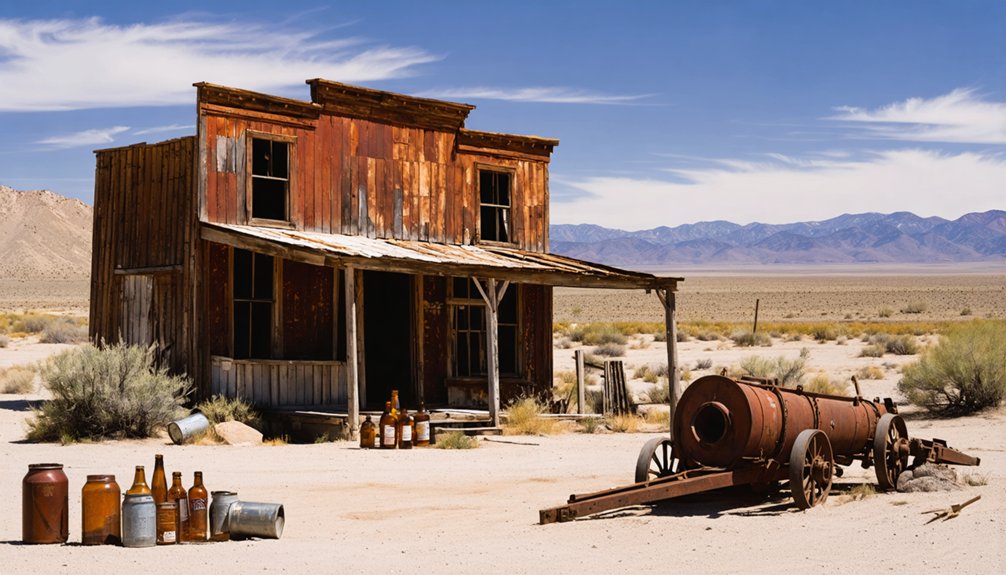
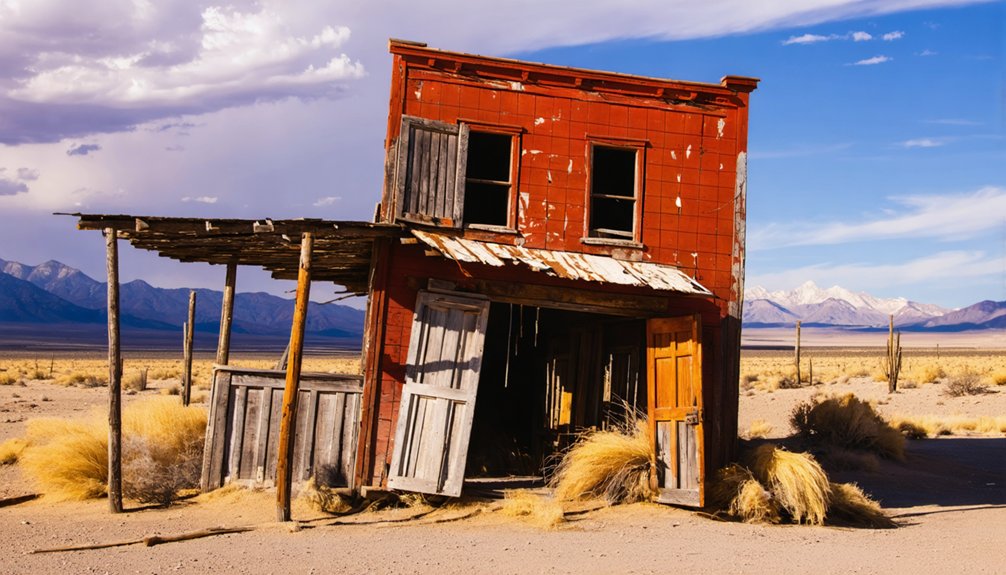
What’s left of Metropolis emerges from the sagebrush like a mirage—the skeletal remnants of Nevada’s boldest agricultural gamble scattered across windswept high desert.
Windswept ruins rise from sagebrush—Nevada’s grandest agricultural dream now reduced to crumbling brick and fading memory.
You’ll encounter these haunting landmarks preserving architectural remnants from the 1910s boom:
- The schoolhouse arch stands defiantly against empty sky, a brick-and-mortar gateway to nowhere from the $25,000 1914 building
- Hotel Metropolis foundation sprawls across dirt and sage, all that survived the 1936 fire that consumed the three-story, 50-room structure
- Scattered foundations mark former homes, the lumberyard, and that multi-purpose hall where Mormons once gathered
- The cemetery at town’s edge holds well-maintained graves, documenting cultural artifacts of lives lived chasing impossible dreams
Sagebrush reclaims the streets now, dust obscuring where optimistic settlers once walked.
The Rise and Fall of Nevada’s Farming Ghost Town
Standing among Metropolis’s crumbling foundations, you’ll witness the stark contrast between ambitious dreams and harsh desert reality. The Pacific Reclamation Company‘s vision of transforming 40,000 acres into a thriving agricultural paradise attracted 700 settlers by 1912, but their elaborate irrigation system couldn’t overcome ruthless water wars with downstream farmers.
What started as a booming Mormon farming community collapsed within a decade—destroyed by courtroom defeats, relentless drought, and plague-like swarms of jackrabbits and crickets that devoured every crop.
Dreams of Agricultural Prosperity
In 1909, the Pacific Reclamation Company painted an irresistible picture of agricultural abundance in the Nevada desert, carving out 40,000 acres near the Humboldt River headwaters and christening it Metropolis. Harry L. Pierce’s Massachusetts investors promised endless sunshine and reliable water, luring over 700 Mormon farmers who believed in this frontier vision.
The promotional blitz offered freedom-seekers compelling opportunities:
- Dry farmland at $10-$15 per acre, irrigated plots at $75
- A massive 100-foot dam constructed with 6.5 million earthquake bricks from San Francisco
- Modern infrastructure including cement sidewalks, fire hydrants, and street lights
- Eight-mile railroad spur connecting harvests to distant markets
Early settlers embraced innovative farming techniques, successfully cultivating wheat during uncharacteristically wet years. Yet agricultural setbacks lurked beneath this prosperity—the dream built on exaggerated promises would soon crumble.
Water Wars and Collapse
Before the first wheat harvest could establish Metropolis as Nevada’s breadbasket, downstream ranchers filed a devastating lawsuit against the Pacific Reclamation Company. The court sided with these ranchers’ prior rights, capping the town’s water supply for just 4,000 residents—despite its 7,500 population. You’ll find this water scarcity impact triggered a catastrophic chain reaction.
When Lovelock ranchers 200 miles downstream blocked creek irrigation entirely, the company collapsed into bankruptcy by 1920.
The agricultural failures came swiftly. A three-year drought immediately followed the ruling, while jackrabbits devoured what crops remained and millions of Mormon crickets swarmed the dying fields. By the mid-1930s, typhoid, famine, and relentless drought had emptied Metropolis completely. Today, you’ll discover only ruins where water wars destroyed Nevada’s agricultural dream.
Best Time to Visit and Weather Considerations
You’ll find Metropolis most accessible during spring and fall when mild temperatures let you explore the crumbling ruins without battling extreme desert heat or punishing snowstorms.
The dirt roads from Wells transform dramatically with the seasons—smooth enough for passenger cars in dry weather, but impassable after a single winter storm blankets the isolated Great Basin terrain.
Summer brings scorching 100°F+ days that limit your cemetery wandering to early mornings, while brutal winter conditions demand high-clearance vehicles to navigate snow-covered routes through the sagebrush.
Seasonal Temperature and Precipitation
Though Metropolis sits in the high desert of northeastern Nevada where temperature swings can be dramatic, understanding the seasonal patterns helps you plan a visit that won’t leave you shivering in unexpected spring snow or wilting under July’s relentless sun.
Seasonal variability shapes every aspect of your ghost town exploration:
- Spring delivers uncertainty: March through May brings mild 56-70°F highs, but lows can plummet to freezing, with occasional snowfall painting the ruins white
- Summer scorches relentlessly: Expect 88-89°F averages with minimal 0.14-inch rainfall, though the region’s precipitation trends show occasional monsoon bursts
- Fall offers ideal conditions: September through November balances 55-81°F temperatures with manageable moisture
- Winter demands preparation: December’s 1.72-inch precipitation and sub-freezing nights create isolation amid Nevada’s 10.2-inch annual average
Road Accessibility Challenges
The road to Metropolis promises both adventure and anxiety—an 7.9-mile journey from Wells that transforms from paved certainty to unmarked dirt speculation. You’ll navigate unsigned roads past railroad tracks, decipher confusing junctions at the 4.9-mile marker, and potentially face treacherous conditions beyond the cattle gate.
Equipment readiness determines success here: aggressive all-terrain tires, checked fluids, and functional spares separate stranded travelers from triumphant explorers. But driver experience matters more than your vehicle’s specifications—skilled operators in modest AWD rigs consistently outperform novices in lifted trucks.
Monitor NDOT 511 before departing; single storms render passable routes impassable overnight. When doubt strikes past that cattle gate, park and walk. These remote, infrequently-traveled roads forgive preparation but punish assumptions.
Ideal Visiting Months
When temperatures hover between 50-75°F from March through May and again September through November, Metropolis reveals itself at its most forgiving—neither the punishing heat of July afternoons nor the bone-chilling winds of January mornings will cut your exploration short.
These shoulder seasons deliver ideal temperatures for wandering hotel foundations and abandoned streets without time constraints. Spring wildflowers transform the high desert into unexpected color, while fall’s crisp air sharpens every detail of crumbling brick.
- March-May: Low precipitation keeps access roads firm; wildflower blooms frame ruins dramatically
- September-November: Cooler mornings perfect for photography; breezy conditions clear desert dust
- Summer visits: Possible but limit exploration to early morning; afternoon thunderstorms occasionally threaten
- Winter access: Rare snow may strand passenger vehicles; midday visits only when roads stay dry
Photography Tips for Capturing Historic Remnants
Standing before Metropolis’s crumbling Lincoln school arch, you’ll find yourself at the intersection of technical challenge and historical reverence. The treeless sagebrush plains offer exceptional natural light—shoot during early morning or late afternoon when long shadows dramatically accentuate isolated structures.
At Metropolis’s Lincoln school arch, technical mastery meets historical preservation amid sagebrush plains offering extraordinary natural light for dramatic shadow play.
Wide-angle lenses excel at framing ruins against horizon lines, emphasizing how desert reclaims civilization. Don’t overlook the basement’s spooky, low-light interior for moody contrasts against bright midday exteriors.
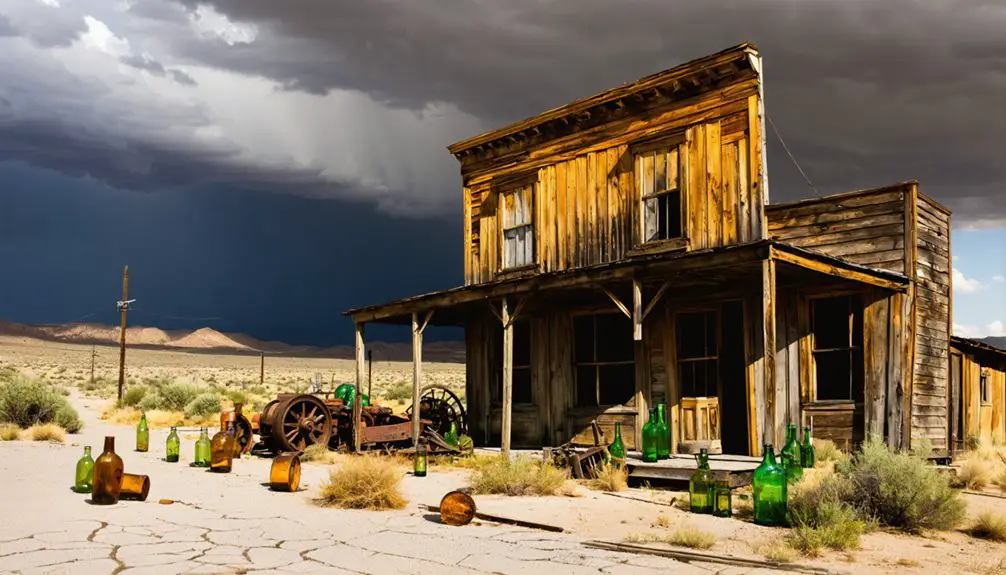
Foreground matters tremendously here. Incorporate broken glass and rusty metal fragments when highlighting small artifacts—these details tell intimate stories against vast emptiness. The Hotel Metropolis foundation’s single remaining block provides powerful minimalist composition.
Position yourself to capture miles of sagebrush stretching endlessly, conveying the profound isolation that ultimately defeated this ambitious town. Document the graffiti-marked school interior without contributing your own mark.
Nearby Attractions and Other Ghost Towns

After documenting Metropolis’s haunting remains, you’ll discover Elko County harbors an entire network of ghost towns within reasonable driving distance.
These settlements reveal different chapters of Elko County history, from silver rushes to copper booms:
- Tuscarora stands as the county’s largest 1880s silver rush town, still alive with ranchers among historic buildings
- Midas showcases boom-and-bust extremes, exploding from nothing to 2,000 residents in 1907 before collapsing to mere handfuls within years
- Mountain City opens access to thousands of abandoned gold, silver, and copper mines scattered throughout surrounding hills
- Wells offers railroad heritage dating to 1869, connecting you to nearby gravesites and mining camps that once shipped ore via Central Pacific
Each location presents unique photographic opportunities and stories of Nevada’s untamed past.
Essential Supplies and Safety Precautions
Venturing into Metropolis demands more preparation than your typical roadside attraction, since this genuine ghost town sits miles from any services in Nevada’s unforgiving high desert. Pack plenty of water—dehydration strikes fast at this elevation. Bring sunscreen, a hat, and sturdy boots for traversing crumbling foundations.
Exploring ghost towns in Nevada offers a glimpse into the state’s rich and often tumultuous history. Each abandoned building tells a story of a bygone era, where the promise of gold and silver drew hopeful prospectors. As you wander through these remnants, keep an eye out for fascinating artifacts that hint at the lives once lived in these desolate places.
Your vehicle needs a full tank, spare tire, and basic tools, as driving hazards multiply on those seven miles of unmarked dirt roads. When conditions turn wet, you’ll need high-clearance capabilities or willingness to hike the final stretch. Cell service? Forget it. Tell someone your plans before disappearing into sagebrush country.
Load a first aid kit, flashlight, and extra food. With limited services stretching across empty Nevada miles, self-reliance isn’t optional—it’s your ticket to exploring this abandoned outpost safely.
Respecting the Site: Leave No Trace Guidelines
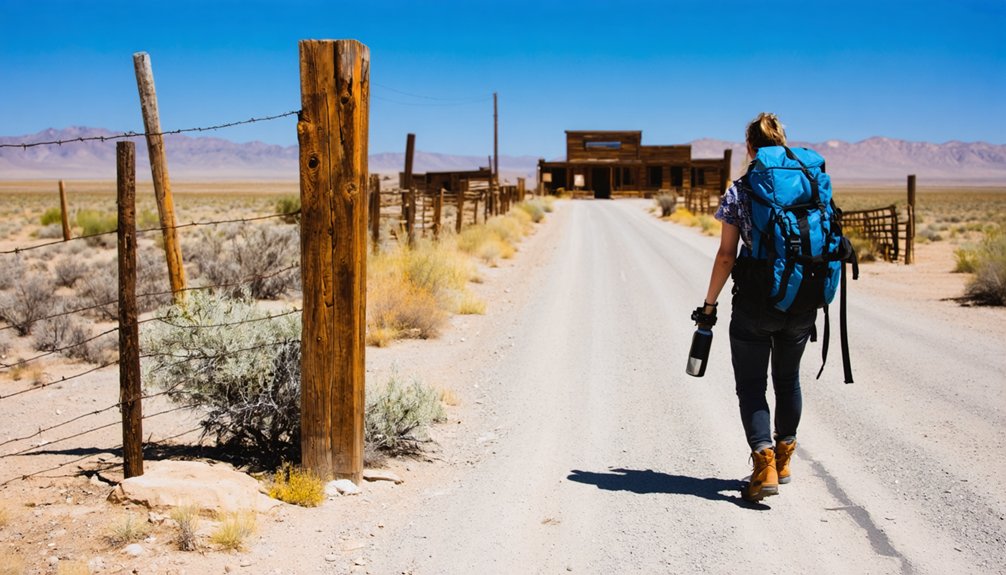
Though Metropolis crumbles quietly beneath Nevada’s endless sky, federal and state laws protect every weathered board, rusted nail, and sun-bleached artifact scattered across this lonesome ground. Trail cameras and volunteer monitors coordinate with authorities, making even those square-headed nails off-limits. Your reverence for hallowed ground guarantees future wanderers experience this same windswept solitude.
Practice vigilant site stewardship by embracing these principles:
- Park your vehicle before reaching the cemetery and walk in—tire ruts scar fragile desert soil for decades
- Close every cattle gate you pass, respecting working ranches that surround these ruins
- Leave hotel foundations, schoolhouse remnants, and pioneer graves undisturbed
- Camp dispersed following BLM guidelines, leaving absolutely no trace of your presence
The high desert forgives nothing. Your careful footsteps preserve what environmental forces and plunderers couldn’t destroy.
Frequently Asked Questions
Are There Any Guided Tours Available for Metropolis Ghost Town?
No dedicated guided walking tours exist for Metropolis Ghost Town—you’ll explore independently. While regional operators occasionally include it in multi-site itineraries, self-guided audio tours aren’t available. You’re free to wander the haunting ruins at your own pace.
Can I Camp Overnight Near the Metropolis Ruins?
Yes, you can camp near Metropolis ruins on surrounding BLM land, though there aren’t public facilities availability or guided camping options. You’ll need self-contained gear and must follow dispersed camping rules in this remote, primitive location.
Is There Cell Phone Service in the Metropolis Area?
No reliable cell tower coverage exists in Metropolis—you’ll be truly off-grid. Most carriers show zero bars there. Mobile data speeds drop to nothing miles before arrival. Pack offline maps and embrace the disconnected freedom this remote ghost town offers.
Are There Any Fees Required to Visit Metropolis?
You’ll explore Metropolis’s abandoned buildings and scattered old mining equipment completely free. Just drive off I-80, park anywhere among the ruins, and roam this desolate frontier landscape at your own pace without restrictions.
What Happened to the Bishop Creek Dam Structure?
The Bishop Creek Dam still stands after 110+ years, though it’s abandoned hydroelectric infrastructure now. You’ll find the earthen structure alongside old mining equipment remnants, creating an eerie monument to Nevada’s failed desert reclamation dreams.