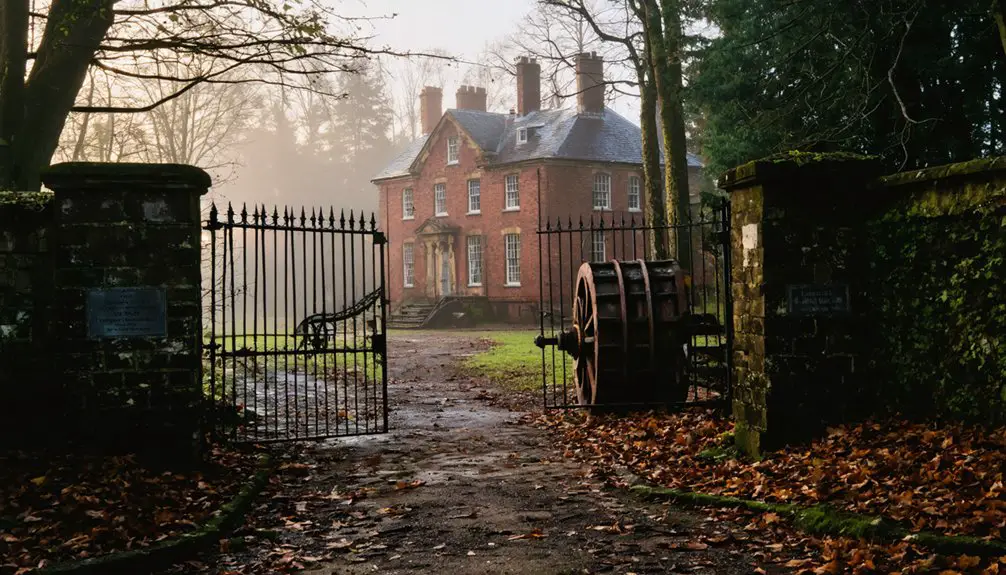
You’ll find Millbrook Village along Old Mine Road in Delaware Water Gap National Recreation Area, where 19 preserved 1800s structures stand as a symbol to pioneer life. This authentic ghost town, founded in 1832 and abandoned after 1900, opens year-round from dawn to dusk with no admission fee. Explore the Methodist Church, one-room schoolhouse, and reconstructed gristmill while costumed volunteers demonstrate blacksmithing and period crafts on summer weekends. The first September weekend brings the grandest spectacle—Millbrook Days—where frontier skills truly come alive through hands-on demonstrations.
Key Takeaways
- Millbrook Village is located in Delaware Water Gap National Recreation Area, accessible via Old Mine Road with free parking and dawn-to-dusk entry year-round.
- The abandoned 1880s village features 19 preserved buildings including a grist mill, Methodist church, schoolhouse, and period-furnished homes to explore.
- Visit during summer weekends or September’s Millbrook Days for costumed volunteers demonstrating blacksmithing, weaving, and other 19th-century crafts.
- Combine your trip with nearby historic sites like Foster-Armstrong House and Nelden-Roberts Stonehouse along the Columbia-Walpack Turnpike roadbed.
- Hike the Orange-blazed Pioneer Trail through Van Campens Glen and check the NPS schedule for maple sugaring demonstrations and special events.
The Story Behind New Jersey’s Forgotten 19th-Century Village
Tucked between the Delaware River and the Kittatinny Mountains, Millbrook Village emerged in 1832 when farmer Abram Garris constructed a grist mill along the freshly carved Columbia-Walpack Turnpike.
You’ll discover architectural evolution frozen in time—from the Methodist Church rising in 1839 to nineteen structures housing seventy-five residents by the 1880s. This self-reliant settlement thrived through blacksmith forges, general stores, and grain processing until societal change swept it aside.
The Civil War disrupted stability, railroad lines bypassed the turnpike, and industrial mills crushed local competition. Young residents fled for city opportunities, leaving behind a community that couldn’t adapt. The grist mill shuttered after 1900, marking the village’s shift from bustling crossroads to silent memento of America’s restless frontier spirit.
Getting to Millbrook Village in Delaware Water Gap National Recreation Area
Your journey to this frozen-in-time settlement begins along Old Mine Road, the same rugged path that 19th-century wagons once traveled through the Kittatinny Mountains. Watch for the village to emerge at the bend where Old Mine Road meets Route 602 on the New Jersey side of the Delaware Water Gap National Recreation Area.
You’ll find ample parking near the historic buildings, with no entrance fee required and year-round access from dawn to dusk.
Driving Routes and Access
Finding Millbrook Village requires traversing the scenic byways of northwestern New Jersey, where Old Mine Road serves as your primary artery into this 70,000-acre wilderness. You’ll navigate Route 602’s intersection near the historic Columbia–Walpack Turnpike, following signs through Sussex County’s Kittatinny Mountains. The drive itself rewards you with 40 miles of Middle Delaware National Scenic River vistas—a journey that feels like stepping backward through time.
the ghost town history of millbrook village is a captivating narrative that speaks to the lives of its former residents and the mysteries surrounding their departure. As you wander through the remnants of this once-thriving community, you’ll uncover tales of resilience and change that reflect the broader transformations in American rural life. Each weathered building and overgrown path serves as a poignant reminder of the passage of time and the stories waiting to be rediscovered.
Before departing, grab map guides from Bushkill Meeting Center (open Fridays 10 am–3 pm) or download interactive maps from the NPS website. These resources reveal nearby recreation areas, boat ramps, and Appalachian Trail access points. Contact Delaware Water Gap NRA at 908-841-9531 for current conditions. Your route winds through Pennsylvania and New Jersey’s shared riverfront, offering unmatched freedom along America’s forgotten backroads.
On-Site Parking Information
Upon arrival at Millbrook Village, you’ll discover dedicated parking facilities that accommodate the steady stream of history enthusiasts exploring this preserved 19th-century community. However, strategic planning proves essential during peak season visitation, when Delaware Water Gap’s 4 million annual visitors create intense competition for limited spaces.
Parking essentials for your visit:
- Arrive before 9 am or after 3 pm (May-October weekends) to secure spots
- No parking payment options required at Millbrook Village itself
- Overnight parking prohibited unless you’re registered for Appalachian Trail thru-hiking or extended river trips
Your parking spot grants access to port-a-johns and picnic tables on-site, though full visitor services remain unavailable. For questions, visit Bushkill Meeting Center Fridays between 10 am-3 pm, where rangers provide guidance for maximizing your ghost town adventure.
What to See at This Preserved 1800s Settlement
Stepping onto the weathered dirt roads of Millbrook Village feels like crossing a threshold into the 1800s, where nearly two dozen carefully preserved and reconstructed buildings cluster along what was once the busy Columbia-Walpack Turnpike. You’ll discover the 1860 Methodist Church still holding services, a functional one-room schoolhouse, and the reconstructed gristmill standing proud on its original foundation. Uncle Lester’s house and several authentic 1800s structures survived the wrecking ball, while relocated buildings from elsewhere in the park complete the townscape exactly as it appeared around 1900.
Village photography opportunities abound among blacksmith shops, general stores, and period-furnished homes. Skilled volunteers lead historical interpretive programs, demonstrating pioneer trades and farming techniques that sustained this self-sufficient community nestled between the Delaware River and surrounding mountains.
Walking Tour Highlights From Church to Gristmill
Your exploration begins at the reconstructed Methodist Church, where white clapboard siding gleams against the forest backdrop just as it did when congregants gathered here in the 1860s. Step inside to examine the authentic woodwork and imagine this building as the community’s social heart.
From there, gravel paths lead you past preserved homes and artisan workshops showcasing historical architecture that powered 19th-century rural commerce.
Walking trail highlights include:
- Orange-blazed Pioneer Trail winding through scenic Van Campens Glen
- Abram Garris’s 1832 gristmill, operational centerpiece that sparked village growth
- Blacksmith shop, cooperage, and general store clustered near the mill
Period dressed interpreters demonstrate traditional crafts weekends from May through Labor Day, bringing pioneer industries alive. Watch where you step along rocky waterside sections—these paths demand careful footing but reward you with authentic immersion.
Best Times to Visit and What to Bring

Timing your Millbrook Village visit transforms a simple walk through history into an immersive journey. You’ll find spring’s maple sugaring demonstrations particularly engaging, while summer mornings offer active staff exhibits before crowds gather.
Fall brings special events like the History Trail, with buildings open 10am-4pm. The village welcomes you year-round from dawn to dusk—no admission fees or advance booking required.
Pack comfortable walking shoes for uneven terrain, layers for Appalachian weather fluctuations, and your camera to capture authentic colonial architecture. Bring water and snacks since you’re exploring at your own pace. Visitor amenities include restrooms and handicapped-accessible parking on the gravel lot. Check the NPS schedule at 908-841-9531 before heading out, especially for Memorial Day through Labor Day weekends when volunteer craftspeople demonstrate traditional skills.
Living History Demonstrations and Special Events
You’ll witness Millbrook’s transformation from quiet ghost town to bustling 19th-century village during weekend demonstrations, where costumed volunteers churn butter over woodstoves, spin yarn at spinning wheels, and forge iron at the blacksmith’s anvil.
Summer weekends from Memorial Day through Labor Day bring the village buildings alive from 10 AM to 4 PM with the sights and sounds of pioneer life—the clang of hammers, the creak of looms, and the aroma of hearth-cooked meals.
The grandest spectacle arrives during Millbrook Days on the first September weekend, when over 150 volunteers recreate the atmosphere of a self-sufficient farming community at its pre-Civil War peak.
Pioneer Craft Demonstrations
When the scent of wood smoke drifts across Millbrook Village on summer weekends, you’ll know the blacksmith has fired up his forge and volunteers in period dress have opened the historic buildings for another day of living history.
From Memorial Day through Labor Day, skilled docents bring 1800s folkways to life, demonstrating historic craft skills that built America’s frontier communities.
Experience authentic pioneer craftsmanship:
- Watch weavers work 19th-century looms, creating patterns passed down through generations
- Observe the blacksmith hammer red-hot iron into tools at his anvil
- Explore rural living exhibits showcasing everything from woodworking to food preservation
Buildings open 10 AM to 4 PM with free admission, letting you wander freely between demonstrations.
The Society’s annual Millbrook Days in early September showcases over 150 volunteers demonstrating the full spectrum of frontier skills.
Seasonal Event Schedule
Beyond the regular weekend demonstrations, Millbrook Village transforms throughout the year with festivals that draw hundreds of period-dressed volunteers and thousands of visitors into immersive historical celebrations. September’s Fall Festival headlines the event offerings, bringing 19th-century rural life into sharp focus through two days of historical trades, children’s games like sack races and stilts, and authentic period activities—all with free admission.
You’ll discover holiday programs spanning every season: Spring Fling awakens the village from winter dormancy, while early spring maple sugaring demonstrations reveal traditional syrup production. July’s Independence Day celebration captures old-fashioned patriotic gatherings, and December’s Victorian Christmas showcases period holiday customs. Each seasonal event deepens your connection to historical community traditions while offering hands-on experiences that bring the past authentically alive.
Combining Millbrook With Other Historic Sites on Your Road Trip

Millbrook Village serves as an ideal anchor point for exploring a constellation of 18th and 19th-century sites scattered throughout the Delaware Water Gap National Recreation Area. You’ll discover the Foster-Armstrong House‘s beehive oven and the Nelden-Roberts Stonehouse‘s original wide-plank flooring—both showcasing colonial architecture details from late 1700s pioneer settlements.
Follow the historic Columbia-Walpack Turnpike roadbed to Van Campens Brook, where Abram Garris built his 1832 gristmill along rushing waters that powered the self sufficient historic economy.
Enhance your ghost town exploration:
- Visit the Pocono Indian Museum to understand pre-colonial indigenous presence before European settlement
- Trace Warren County’s historic trail connecting multiple preserved 1800s communities
- Time your trip for Millbrook Days’ first September weekend when 150+ costumed volunteers demonstrate blacksmithing, candle-making, and apple butter production
Frequently Asked Questions
Are Pets Allowed at Millbrook Village?
Yes, you’ll find dog-friendly policies at Millbrook Village apartments with specific weight and breed restrictions. Review their on-site pet policies carefully—deposits and monthly fees apply. Always confirm current details with management before planning your move.
Can You Have a Picnic at Millbrook Village?
You’ll love leisurely picnicking at Millbrook Village’s designated tables. Pack a lunch, explore the gardens, and savor your meal amid historic charm. Remember—you’ll need to carry out all trash since grilling and food prep aren’t permitted here.
Is Millbrook Village Wheelchair Accessible?
Millbrook Village offers limited accessibility. While some wheelchair friendly trails exist, the historic village’s authentic 19th-century buildings weren’t designed with modern accessibility accommodations. You’ll find uneven surfaces and rustic pathways challenging, so plan accordingly for your adventure.
Are There Restrooms Available at the Site?
Yes, you’ll find restrooms at Millbrook Village—a luxury even ghost towns provide! Port-a-johns and accessible facilities await near the wagon shop. Parking’s available onsite, though local eateries nearby remain scarce in this wilderness retreat.
Can You Take Photographs Inside the Historic Buildings?
You’ll capture stunning photos inside historic buildings during special “Millbrook Days” events when volunteers open the doors. While there aren’t strict photo restrictions, understanding each building’s historical context enriches your shots of authentic period interiors.