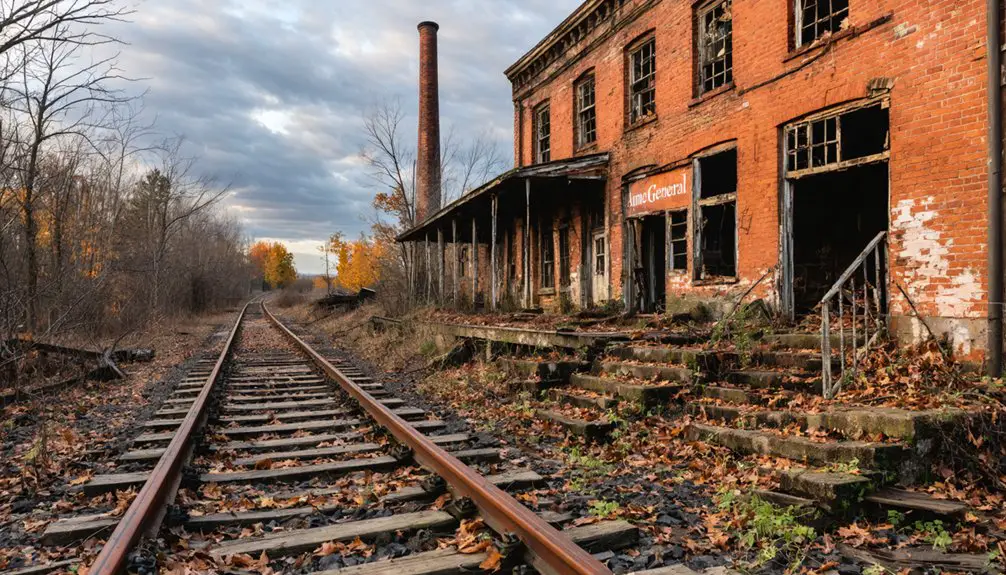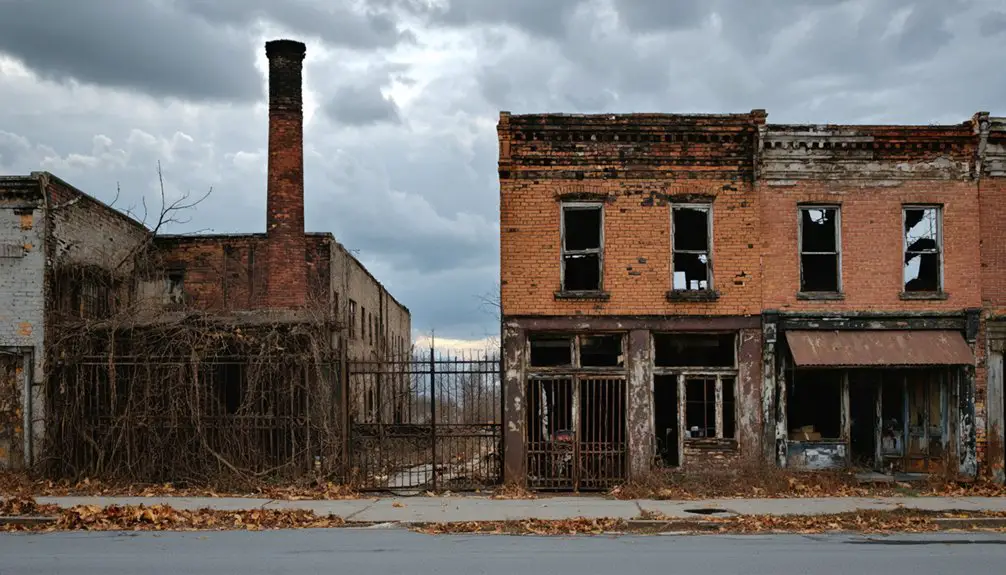
Planning your Millwood Shaft ghost town road trip requires acknowledging a challenging reality: this Westmoreland County coal community’s erasure is nearly complete. You’ll find it approximately 40 miles east of Pittsburgh via I-76 and PA 66, though precise coordinates remain elusive even to ghost town researchers. The site demands verification of property boundaries before visiting, as archival documentation is sparse and physical evidence limited. Consider combining your search with the nearby Ghost Town Trail, where Wehrum and Vintondale offer more substantial ruins. This thorough/detailed/extensive exploration reveals Pennsylvania’s vanished mining heritage.
Key Takeaways
- Millwood Shaft is located in Westmoreland County’s Derry township, approximately 40 miles east of Pittsburgh via I-76, I-70, or US 30.
- No formal parking exists; verify property boundaries before visiting and expect limited street parking or trailhead alternatives near the site.
- Expect hazardous conditions including structural decay, roofless ruins, unstable buildings, and underground subsidence risks from abandoned coal mines.
- The 36-mile Ghost Town Trail connects Millwood Shaft to nearby abandoned mining communities like Wehrum, Vintondale, Bracken, and Armerford.
- Document your visit through photography and observe environmental conditions, as sparse records exist for this forgotten Pennsylvania coal mining community.
Understanding Millwood Shaft’s Coal Mining Heritage
Where did Pennsylvania’s coal empire truly begin? You’ll find its roots across the Monongahela from Pittsburgh at Coal Hill, where pre industrial coal extraction started through drift mines accessing the Pittsburgh seam. Miners transported bituminous coal by canoe to military posts, establishing patterns that’d shape a region. By 1830, Pittsburgh consumed over 400 tons daily.
Early mining technology advancements transformed room-and-pillar methods from manual cutting and horse-hauled wagons into mechanized operations. These techniques, active since the late 1700s, dominated Pennsylvania’s bituminous fields until longwall systems emerged.
Millwood Shaft’s heritage connects to this broader network—a legacy to independent extraction before corporate consolidation. Understanding these foundations reveals how decentralized coal operations once empowered local communities before centralized interests reshaped the industry’s landscape.
What Makes Millwood Shaft a True Pennsylvania Ghost Town
While detailed records of Millwood Shaft remain scarce in digital archives, its designation as a coal mining ghost town in Derry Township, Westmoreland County positions it within Pennsylvania’s broader narrative of extractive industry decline.
Millwood Shaft’s sparse digital footprint reflects the forgotten legacy of Pennsylvania’s coal mining communities and industrial decline.
You’ll find that determining what constitutes a “true” ghost town requires examining abandoned building conditions and documenting physical evidence of former settlement. Without expansive historical data, you’d need to conduct field research to assess structural remnants, mining infrastructure, and residential foundations.
Local community perspectives become essential when archival sources fall short—oral histories from Derry Township residents can verify abandonment timelines and settlement patterns.
Your investigation of Millwood Shaft demands primary source collection: photograph existing conditions, interview longtime residents, and cross-reference county records to establish this location’s legitimate ghost town status.
Getting to Millwood Shaft: Routes and Access Information

You’ll reach Millwood Shaft via PA Route 217 and connecting county roads in Westmoreland County‘s Derry township area, approximately 40 miles east of Pittsburgh along the I-76 corridor.
Before visiting, verify current parking availability and trail conditions, as decades of abandonment have altered site accessibility. Respect all posted private property boundaries—much of the former mining community now sits on land with restricted access requiring advance permission.
Primary Highway Access Routes
Though Millwood Shaft’s coordinates place it at 40.3525698°N, 79.2783682°W in Westmoreland County’s rural interior, you’ll find the site accessible through Pennsylvania’s well-maintained highway network radiating from Pittsburgh, approximately 35 miles to the west. The nearest major interchanges connect via I-76 (Pennsylvania Turnpike) and I-70, with driving time estimates from nearby cities averaging 45 minutes from Pittsburgh and 90 minutes from Harrisburg.
Primary access corridors include:
- Eastern approach: I-76 west through the Alleghenies to PA 66 north
- Western route: I-376 east from Pittsburgh connecting to Pennsylvania Turnpike
- Regional connection: US 30 (Lincoln Highway) west to PA 66, bypassing toll segments
PA 66 serves as your primary north-south conduit, with PA 217 providing final rural access toward the abandoned mining community.
Parking and Trail Conditions
Upon reaching the Millwood Shaft vicinity via PA 217, you’ll confront the immediate reality that formal parking infrastructure doesn’t exist at this abandoned mining site. Limited street parking characterizes this rural ghost town, with nearby trailhead lots offering potential alternatives through regional access points. Visitor parking management remains unaddressed during peak periods, creating overflow challenges.
Trail surface conditions demand careful assessment. Mud, standing water, stones, and debris create hazardous footing after rainstorms, while winter events introduce ice hazards without maintenance support. Seasonal trail closures restrict vehicle access post-deer season until April 1, with intermittent shutdowns possible. Large fallen trees may block paths, requiring physical maneuvering. Exercise extreme caution in adverse weather. Check ExplorePaTrails maps for current status before departure, though construction detours continue through 2026.
Private Property Boundaries
Understanding property boundaries becomes critical before approaching Millwood Shaft, as the abandoned mine site occupies land with disputed ownership status between former coal company holdings and adjacent private parcels. Historical property acquisition records remain incomplete, complicating modern access rights. You’ll need to verify current land ownership disputes through county assessor databases before venturing onto potentially restricted terrain.
Boundary verification essentials:
- Contact Westmoreland County GIS offices for updated parcel maps showing shifts from corporate mining entities to private landowners
- Research deed transfers documenting coal company dissolution and subsequent property subdivision during mid-20th century operations
- Identify posted signage indicating active ownership claims versus genuinely abandoned tracts
Respecting established boundaries protects both your access freedom and preservation efforts. Documentation prevents trespassing charges while supporting legitimate exploration of Pennsylvania’s industrial heritage.
What to Expect When Visiting Millwood Shaft Today
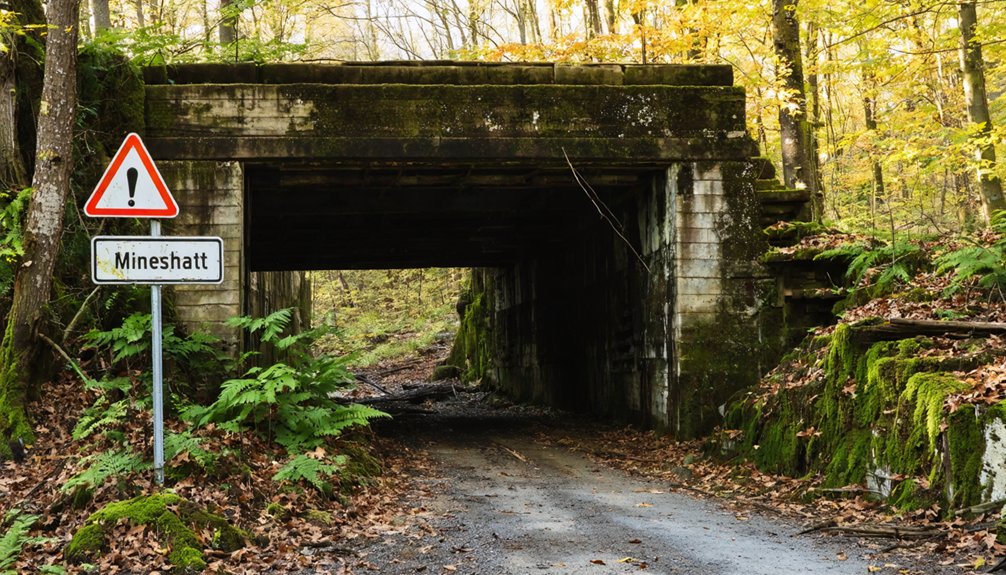
The landscape at Millwood Shaft tells a story of industrial collapse through physical decay. You’ll find roofless building ruins and rubble scattered across neglected terrain, with most structures uninhabited or completely deteriorated.
The few buildings still standing display severe structural hazards from decades of abandonment since the post office closed in 1927. Underground coal seams present subsidence risks beneath your feet, reminding you why Pennsylvania maintains the nation’s largest inventory of abandoned mine sites.
Environmental remediation needs remain evident throughout, as billions in federal funding now target these coal-era hazards statewide. You’re witnessing deindustrialization’s tangible legacy—a landscape frozen between mining prosperity and complete dissolution. Document what remains while respecting that this ghost town exists as both historical record and ongoing environmental challenge requiring careful observation.
Exploring Nearby Ghost Towns Along the Ghost Town Trail
Beyond Millwood Shaft’s isolated ruins, you’ll find Pennsylvania’s most concentrated collection of coal-era ghost towns along the 36-mile Ghost Town Trail, a National Recreation Trail that follows the former Ebensburg and Black Lick Railroad corridor through Cambria and Indiana Counties. This preserved rail line grants unrestricted access to abandoned communities that once housed thousands of mining families.
Notable ghost town sites accessible from the trail:
- Wehrum: Most substantial ruins with 230 former houses, company store foundations, and jail remnants visible through aerial views of ghost town remnants
- Vintondale: Features Eliza Furnace (National Register, 1846-1849) with interpretative historical signage documenting iron production era
- Bracken and Armerford: Scattered mining community foundations amid reclaimed woodlands
You’ll traverse this open-year-round corridor independently, discovering industrial archaeology without barriers or guided restrictions.
Essential Gear and Safety Precautions for Abandoned Site Visits

Proper preparation distinguishes responsible exploration from reckless trespassing when visiting abandoned industrial sites like Millwood Shaft. You’ll need FFP3 respirator masks for proper ventilation precautions against asbestos, coal dust, and mold spores common in mining structures. Wear sturdy boots, heavy-duty gloves, and long sleeves to protect against sharp metal and unstable surfaces.
Risk assessment procedures require testing floors with poles before committing weight, staying near structural supports, and avoiding basements where decay accelerates collapse potential. Bring three people minimum—one equipped with first-aid supplies and charged phones. Document your route with removable markers, maintain clear exit awareness, and inform someone outside your group of exploration timelines.
Carry identification for potential law enforcement encounters. Research ownership status beforehand, respect posted boundaries, and prioritize preservation over intrusion.
Photography Tips for Capturing Ghost Town Landscapes
When photographing abandoned mining settlements like Millwood Shaft, you’ll preserve critical historical documentation while creating compelling visual narratives. Composition framing tips focus on capturing architectural element capture through strategic positioning—arrive during golden hours when natural light reveals textural details in weathered structures. Use windows as compositional tools to frame subjects within decaying buildings, creating layered depth that tells Millwood’s story.
Essential techniques for documenting abandoned mining sites:
- Employ bracketing methods combining 3-7 exposures at 1-stop intervals to balance harsh contrasts in deteriorating interiors
- Convert challenging midday shots to monochrome, transforming bright spots and complex shadows into textural documentation
- Focus one-third between foreground and background using high f-stops to maintain sharpness throughout architectural elements
Black and white processing accentuates authentic textures while preserving the site’s historical atmosphere without artificial enhancement.
Respecting Private Property and Historical Preservation Guidelines
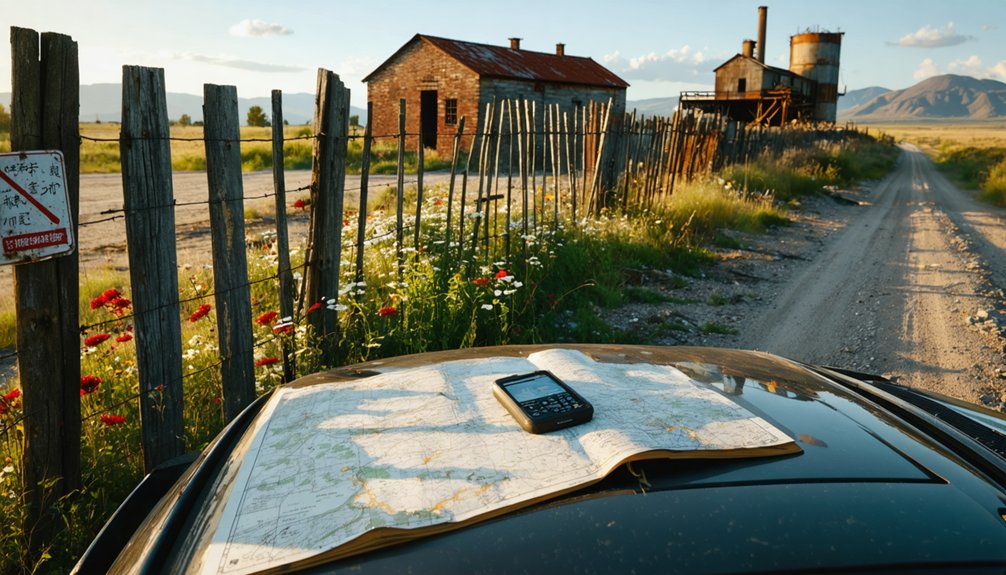
Although Millwood Shaft‘s weathered structures offer compelling photographic subjects, you’re entering lands where private ownership and legal restrictions take precedence over exploration. This coal mining ghost town operates under strict property controls, with owners enforcing boundaries against unauthorized access.
Pennsylvania’s eminent domain actions throughout similar sites demonstrate managing government liability concerns—a framework prioritizing public safety over tourist accessibility.
You’ll find respecting private land ownership isn’t merely legal compliance; it’s acknowledging property holders’ rights to control hazardous industrial remnants. The state’s $42 million relocation investment reflects calculated decisions favoring evacuation over public access infrastructure.
Document what’s visible from authorized vantage points without trespassing. Barriers around mine shafts and posted warnings exist for substantive reasons—underground instability, toxic emissions, and structural collapse risks remain active threats. Your freedom to explore ends where private boundaries begin.
Frequently Asked Questions
Are There Any Overnight Camping Options Near Millwood Shaft for Extended Visits?
You’ll find campgrounds near mining sites like Farm at Millwood Drive offering secluded stays, plus Falling Waters and Mill Creek facilities. For comfort, explore local bed and breakfast options in nearby Elizabethville, preserving your independence while documenting this historic area.
What Other Industries Existed in the Region Beyond Coal Mining Operations?
Beyond coal mining, you’ll find the region supported timber industry operations and agricultural processing facilities. Lumber mills dominated from the 1870s-1912, while iron, steel production, glass manufacturing, and extensive railroad networks created diverse economic opportunities throughout Pennsylvania’s resource-rich landscape.
Can Visitors Access Original Mine Shaft Entrances at Millwood Shaft Today?
You cannot access original mine shaft entrances due to modern safety concerns. While some preserved mine structures remain visible from safe distances, authorities’ve sealed underground access points to protect visitors from structural collapse and hazardous atmospheric conditions within abandoned shafts.
What Happened to Former Residents After Millwood Shaft Mining Operations Ceased?
When the mine closes, the town follows: you’ll find former Millwood Shaft residents experienced severe economic impact and social displacement, scattering across Pennsylvania seeking work as documented in regional archives tracking the boom-bust cycle’s devastating human toll.
Are Guided Historical Tours Available for Millwood Shaft and Surrounding Areas?
No guided tours exist specifically for Millwood Shaft, though you’ll find nearby coal mine tours at No. 9 and Lackawanna. Historic preservation efforts remain limited, relying on local community involvement to document and maintain this abandoned site’s accessible remnants.