Your ghost town road trip to Miltonboro, Vermont uncovers secrets hiding beneath Milton’s streets for over 200 years. You’ll explore Prohibition-era smugglers’ tunnels, descend into Irish Annie’s stone-walled speakeasy cellar, and stand beside the eerie shores of Lake Arrowhead, where a 1930s murder mystery still haunts the locals. Milton never made any official ghost town registry, but its abandoned landmarks and dark folklore tell a compelling story — and there’s far more to this haunted history than meets the eye.
Key Takeaways
- Milton, originally called “Miltonboro,” features Prohibition tunnels, a haunted funeral parlor, and Lake Arrowhead’s murder mystery island for ghost town explorers.
- Key stops include Irish Annie’s speakeasy cellar, the smugglers’ tunnel beneath Main Street, the preserved iron door, and Lake Arrowhead’s haunted island.
- Extend your trip to Glastenbury and West Castleton for additional ghost town experiences, including slate quarry ruins and eerie abandoned streets.
- Visit late September through October for peak fall foliage and atmosphere, or early June for dry trails; avoid March to mid-May mud season.
- Weekday visits minimize crowds, and exploring during golden hour at dusk enhances the haunting ambiance of Milton’s abandoned and historic ruins.
Milton, Vermont: the Ghost Town Missing From Every Official List
While “Miltonboro” doesn’t appear on any official Vermont ghost town registry, Milton itself hides a quietly haunted past that most road-trippers completely overlook. Official lists spotlight Glastenbury and Somerset, leaving Milton’s darker chapters buried beneath everyday small-town life.
You’ll find Milton folklore woven into its streets, cellars, and shorelines — stories that never made the history books but never quite disappeared either.
Historical mysteries surface when you dig past the chartered-in-1763 origin story: Prohibition tunnels, haunted funeral homes, and a murder-stained island in Lake Arrowhead all suggest a town carrying secrets it never officially claimed.
Milton didn’t collapse like a classic ghost town. It simply kept moving forward while its shadows stayed behind — waiting for the curious traveler willing to look closer.
Why Milton’s Streets Have Been Scaring Residents for 200 Years
Milton’s secrets don’t stay buried for long once you start walking its streets.
You’ll feel Milton’s Mysteries the moment you pass the old funeral parlor on Main Street, where unexplained bumps still disturb the night. These Historical Haunts run deeper than most realize.
Beneath your feet, Prohibition-era smugglers carved a tunnel connecting directly to Irish Annie’s speakeasy.
Bootleggers once slipped through hidden tunnels beneath Milton’s streets, surfacing inside Irish Annie’s infamous speakeasy.
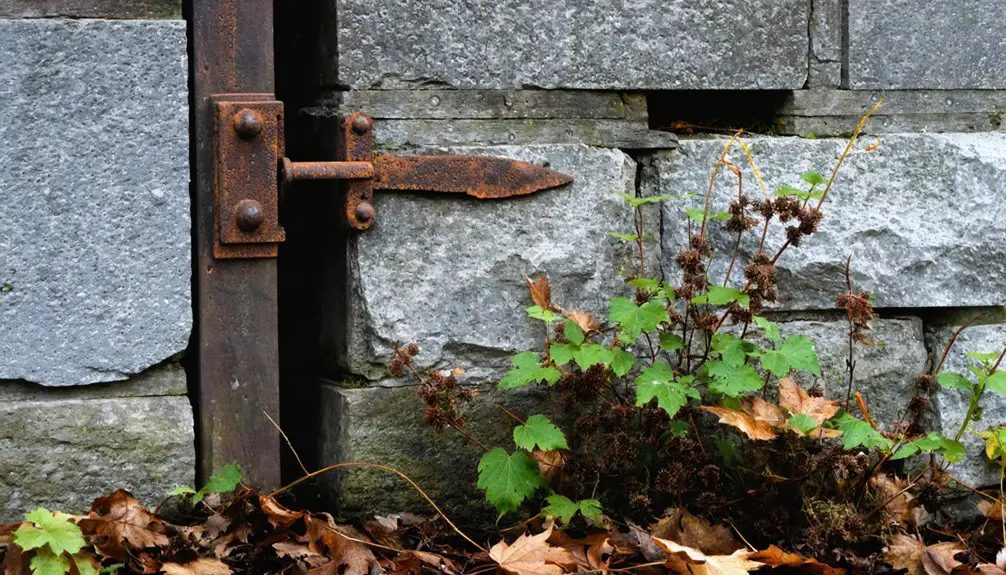
That stone-walled cellar with its original iron door still stands, largely untouched and waiting for curious visitors like you.
Head toward Lake Arrowhead, where a 1930s murder by a jealous husband left one island permanently unsettled.
Locals refuse to linger there after dark. Milton’s 200-year history of strange occurrences isn’t coincidence — it’s a pattern you’ll recognize once you start connecting the dots yourself.
Miltonboro’s Speakeasies, Tunnels, and Lake Arrowhead Murder
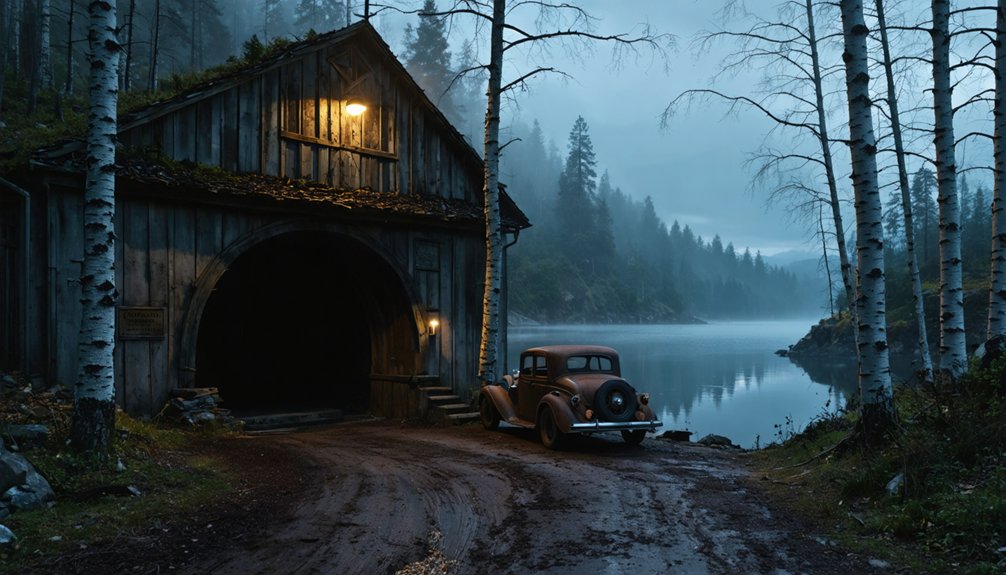
As you wander Milton’s Main Street, you’re walking directly above a hidden smugglers’ tunnel that once carried bootleggers and their contraband straight into the basement of Irish Annie’s speakeasy, where the stone-walled cellar and original iron door still stand largely unchanged.
You can almost hear the echoes of Prohibition-era secrets in that low-ceilinged room, a relic that transforms an ordinary building into a living piece of underground history.
A short drive away, the man-made Lake Arrowhead carries its own dark legacy from the 1930s, when a jealous husband committed murder on its island, leaving behind a haunted reputation that locals haven’t forgotten.
Prohibition Tunnels Beneath Milton
Beneath Milton’s Main Street, a hidden tunnel once carried bootleggers and their contraband to Irish Annie’s speakeasy, where stone walls and low ceilings kept secrets the law couldn’t easily uncover.
This Prohibition history runs deeper than most visitors expect. When you explore the area today, you’ll find the old iron tunnel door still intact, preserving a defiant era when ordinary people refused government overreach into their personal choices.
The stone-walled cellar remains largely unchanged, giving tunnel exploration enthusiasts an authentic glimpse into Vermont’s rebellious past.
You’re not just walking through a basement — you’re stepping into a space where freedom-minded locals outsmarted authorities nightly.
Touch the cold iron door and consider what lengths people will go to protect their liberties.
Irish Annie’s Speakeasy Remnants
Step through the old iron door and you’re inside Irish Annie’s speakeasy — a stone-walled cellar with low ceilings that’s barely changed since bootleggers hauled contraband through the tunnel running beneath Main Street.
This speakeasy history feels visceral here, where tunnel mysteries still cling to every shadowed corner.
Notice these details as you explore:
- The original iron door, cold and heavy under your hand
- Stone walls that absorbed decades of hushed conversations
- Low ceilings forcing you to move carefully, deliberately
- The tunnel entrance where smugglers moved freely against unjust laws
- Remnants of a space built entirely around defying authority
You’re standing where ordinary people chose freedom over compliance — and somehow, that spirit never left.
Lake Arrowhead’s Haunted Murder
From Irish Annie’s cellar, you carry that charged atmosphere with you as you head toward Lake Arrowhead — but the story waiting there’s darker, born not from defiance but from obsession.
This man-made lake, carved from the Vermont landscape in the 1930s, holds a ghostly legend that locals don’t easily forget. A jealous husband committed murder here, and ever since, the haunted history surrounding that island has drawn visitors seeking the unexplained.
Some report an unnatural stillness over the water, a heaviness that doesn’t match the scenery.
This murder mystery didn’t fade with time — it deepened. Standing at the shoreline, you’ll feel why. Lake Arrowhead isn’t just a pretty backdrop; it’s a place where something irreversible happened, and the atmosphere still carries the weight of it.
Plan Your Miltonboro Road Trip Stop by Stop
When you’re ready to hit the road, start by mapping your route through Chittenden County toward Milton, making sure to build in time for both the historical downtown area and the eerily quiet shores of Lake Arrowhead.
Your key stops should include the stone-walled speakeasy cellar beneath Main Street, the former funeral parlor with its reputation for unexplained nighttime noises, and the iron tunnel door that’s remained largely untouched since Prohibition.
If you’re chasing a fuller ghost town experience, extend your trip south toward Glastenbury in Bennington County or swing through West Castleton, where slate-boom ruins still hide beneath the overgrowth.
Mapping Your Route
Planning a ghost town road trip through Vermont’s most atmospheric corners means starting with a solid route, and lucky for you, the stops practically connect themselves.
Layer your haunted history discoveries with abandoned architecture finds by hitting these anchors in order:
- Milton Village – Start at Main Street’s Prohibition tunnel and speakeasy cellar
- Lake Arrowhead – Scout the haunted island tied to a 1930s murder
- Glastenbury – Follow Route 9 west into the Bennington Triangle’s eerie silence
- West Castleton – Detour through Rutland County’s hidden slate-boom ruins
- South Verser (Copperfield) – End at the copper-mining ghost town where 1,800 residents once lived
Keep your map flexible. Vermont’s back roads shift with weather, and discovery lives in the detours.
Key Stops Along The Way
Each stop on this route carries its own mood, so you’ll want to pace yourself rather than rush the miles.
Begin in Glastenbury, where the Bennington Triangle’s five unsolved disappearances between 1945 and 1950 set an unsettling tone.
Push northeast toward West Castleton’s slate ruins, where hidden treasures of abandoned industrial architecture reward explorers willing to leave the pavement.
Continue through South Verser, once a copper-mining powerhouse of 1,800 residents and site of an 1883 miners’ revolt.
By the time you reach Milton, you’re primed for ghostly encounters — the Prohibition tunnel beneath Main Street, the speakeasy’s stone cellar, and the haunted shores of Lake Arrowhead each demand unhurried attention.
Let curiosity drive every detour.
Haunted Sites Worth Visiting
Knowing where to stop makes all the difference between a forgettable drive and a genuinely unsettling experience. Milton’s mysterious landmarks carry real historical folklore — stories built on crime, loss, and strange persistence.
Don’t miss these stops:
- Irish Annie’s speakeasy cellar — stone walls, low ceilings, and that old iron tunnel door still intact
- The Prohibition smugglers’ tunnel running beneath Main Street
- The former funeral parlor on Main Street, where nighttime bumps remain unexplained
- Lake Arrowhead’s haunted island, tied to a 1930s jealous husband murder
- Glastenbury’s abandoned townsite, center of the Bennington Triangle’s five disappearances between 1945 and 1950
Each location rewards curious travelers willing to wander off the comfortable path and sit with genuine unease.
Glastenbury: Vermont’s Most Isolated Ghost Town
Tucked deep in the mountains of Bennington County, Glastenbury stands as Vermont’s most hauntingly isolated ghost town — and it’s worth every mile of the detour.
Once home to nearly 250 residents in 1880, the town thrived with mills, stores, and a post office before an 1898 flood destroyed its rail lines and erased its future.
Today, Glastenbury legends draw adventurers seeking the unexplained, particularly surrounding the Bennington Triangle disappearances between 1945 and 1950.
Glastenbury doesn’t just draw adventurers — it swallows them, just as the Bennington Triangle swallowed five souls whole.
Five people vanished without explanation, and the wilderness still holds no answers.
After exploring Milton mysteries — smugglers’ tunnels, a haunted lake island, and whispered funeral parlor stories — Glastenbury hits differently.
It reminds you that Vermont’s forgotten places don’t just collect dust; they collect secrets.
West Castleton and Copperfield: What Slate and Copper Left Behind
From the eerie silence of Glastenbury, your road trip shifts toward a different kind of ruin — one built not on timber and rail dreams, but on slate and copper.
West Castleton’s slate history exploded in the 1850s, while Copperfield’s copper mining peaked at 1,800 residents before collapsing into legend.
Here’s what you’ll discover:
- Hidden slate quarry ruins scattered across West Castleton’s overgrown hillsides
- Copperfield’s ghost streets, locally called South Verser, swallowed by forest
- Remnants of industrial ambition that once rivaled bigger Vermont towns
- The site of Copperfield’s fierce 1883 miners’ revolt against brutal conditions
- Crumbling foundations that reveal how quickly boomtowns surrender to nature
Both sites reward explorers willing to wander off marked paths — freedom earned through curiosity.
How to Route All These Stops Into One Weekend
Planning a ghost town weekend through Vermont means threading together stops that span the state’s southwestern and northwestern corners, so a logical route saves you hours of backtracking.
Start in Bennington, hitting Glastenbury and the Triangle’s eerie history before driving north through Rutland County’s abandoned sites, including West Castleton’s slate ruins and Copperfield’s copper ghost town.
Then push northwest toward Milton, where Milton History and its speakeasies, haunted parlors, and lake murder lore reward your final leg.
Finishing in Milton keeps Lake Arrowhead and the Main Street abandoned sites fresh for Sunday exploration before you head home.
Pack Friday night, move efficiently Saturday through the south, and save Milton’s northern mysteries for Sunday morning when the fog still clings to the water.
When to Visit Vermont’s Abandoned Sites
Timing your visit to Vermont’s abandoned sites can mean the difference between an atmospheric adventure and a frustrating slog through mud or snow. To fully experience the abandoned history and local legends surrounding these sites, plan strategically:
- Late September through October delivers peak foliage plus eerie atmosphere.
- Early June offers dry trails after mud season clears.
- Weekday visits keep crowds away, letting you explore freely.
- Golden hour at dusk transforms crumbling ruins into something genuinely haunting.
- Winter trips reward hardy explorers with snow-muffled silence and dramatic shadows.
Avoid mud season (March through mid-May) entirely. Vermont’s back roads become nearly impassable, and many sites stay buried under seasonal debris.
Carry a paper map because cell service disappears fast out there.
What to Pack for Your Miltonboro Ghost Town Road Trip
Packing 10 essential items before you leave separates a rewarding ghost town road trip from a genuinely miserable one. Vermont’s abandoned sites demand practical preparation, not wishful thinking.
Your packing essentials should include sturdy waterproof boots, layered clothing, and a reliable flashlight with spare batteries. Milton’s stone-walled speakeasy cellar and tunnel spaces get dark fast.
Bring a detailed paper map alongside your GPS — cell service disappears in rural Chittenden County.
Road trip tips worth following: carry a first-aid kit, portable water filter, high-calorie snacks, and a fully charged power bank.
A small notebook helps document what you discover at haunted locations like Lake Arrowhead’s mysterious island.
Pack your camera — you’ll want proof nobody believes anyway.
Frequently Asked Questions
Is Miltonboro an Officially Recognized Ghost Town in Vermont?
No, Miltonboro isn’t officially recognized in Vermont’s ghost town records. You’ll find no formal Miltonboro history, but ghost town legends tied to nearby Milton offer thrilling, mysterious exploration that’ll satisfy your adventurous spirit completely.
Who First Settled Milton, Vermont, and What Year Did They Arrive?
Like pioneers carving freedom from wilderness, your early settlers—William Irish, Leonard Owen, Amos Mansfield, Absalom Taylor, and Thomas Dewey—arrived in 1782, cementing Milton’s historical significance as they transformed untamed Vermont land into thriving community roots.
Are There Guided Tours Available at Vermont’s Abandoned Ghost Town Sites?
You’ll find limited official guided exploration options at Vermont’s ghost town history sites. Many locations like Glastenbury remain wild and self-directed, letting you roam freely, uncover hidden ruins, and experience abandoned mysteries entirely on your own terms.
Can Visitors Legally Enter the Speakeasy Tunnel Beneath Milton’s Main Street?
You’ll want to research tunnel access carefully before exploring Milton’s historic speakeasy route. Legal implications vary, as private property laws likely restrict entry. Contact local authorities or property owners to confirm whether you’re permitted inside this fascinating underground passage.
Are Vermont Ghost Town Roads Accessible by Standard Vehicles or Only 4WD?
Like traversing life’s unpredictable paths, ghost town accessibility varies wildly. Most Vermont ghost town roads welcome standard vehicles, but vehicle recommendations lean toward AWD for Glastenbury’s rugged terrain — you’ll conquer adventure on your own terms!
References
- https://urbanpostmortem.wordpress.com/2015/11/04/milton-mysteries-the-tunnel-underneath-main-street/
- https://www.miltonvthistory.org/town-history.html
- https://www.youtube.com/watch?v=ScW-H7A8yL8
- https://en.wikipedia.org/wiki/List_of_ghost_towns_in_Vermont
- https://anrweb.vt.gov/PubDocs/DEC/GEO/Bulletins/StoneBu26Milton.pdf
- https://www.youtube.com/watch?v=2fvPo9iQC-w
- https://www.onlyinyourstate.com/experiences/vermont/ghost-town-vt