You’ll find Moores Flat 19 miles northeast of Nevada City along winding mountain roads at 4,144 feet elevation. This authentic Gold Rush ghost town requires preparation: pack layered clothing, sturdy boots, navigation tools, water, and winter chains for seasonal conditions. Little remains of the 1880s boomtown that housed 500 souls—catastrophic fires and the 1884 hydraulic mining ban erased most structures, leaving scattered rockpiles, rusting equipment, and a historic cemetery. The challenging terrain and remoteness reward those seeking genuine Gold Rush history beyond typical tourist sites.
Key Takeaways
- Moores Flat is located 19 miles northeast of Nevada City at 4,144 feet elevation on San Juan Ridge.
- Pack layered clothing, waterproof gear, sturdy boots, snow chains, flashlights, maps, water, and first aid supplies.
- The historic cemetery is the primary landmark; scattered rockpiles and rusting equipment mark the former townsite.
- Access via winding mountain roads from North Bloomfield, traveling 5 miles northeast to reach the site.
- Plan for seasonal weather impacts, minimal tourism infrastructure, and explore the remote site on foot.
Getting to Moores Flat: Routes and Road Conditions
Perched at 4,144 feet on San Juan Ridge in Nevada County, Moores Flat sits 19 miles northeast of Nevada City, where elevation and isolation have shaped its character for over a century. You’ll navigate winding mountain roads that curve around canyon heads, following routes that once carried fortune-seekers between interconnected settlements like Orleans Flat and Woolsey’s Flat.
Modern tourism infrastructure development remains minimal—this unincorporated ghost town offers authentic remoteness rather than convenience. Plan for seasonal weather impacts that can transform dirt roads into muddy challenges during winter or spring snowmelt.
Nearby camping options include Indian Valley Outpost Resort (10.5 miles) and Chapman Creek (9.8 miles), while Malakoff Diggins State Historic Park provides historical context. You’ll want reliable navigation and vehicle preparation for Sierra Nevada backcountry exploration.
For those looking for adventure, there are numerous ghost towns to explore in California that offer a glimpse into the state’s rich history. Each location presents unique stories and remnants of the past, making them perfect for curious explorers. Be prepared for a mix of stunning scenery and intriguing historical sites as you venture through these abandoned locales.
The Rise and Fall of a Hydraulic Mining Boomtown
When the first family arrived in 1851 at this flat site along the Middle Yuba River, they couldn’t have imagined how dramatically water would reshape both landscape and fortune. By 1852, innovative mining techniques using high-pressure nozzles blasted ancient gravel banks, transforming Moores Flat into a roaring boomtown of 500 souls by 1880.
Water infrastructure challenges defined everything. The 1854 Poorman’s Creek Ditch enabled year-round operations, though disputes over pricing—12.5 cents versus 8 cents per inch—could shut down entire operations. You’ll find this frontier spirit embodied in the 1877 Miners Union, formed when independent prospectors fought back against corporate control.
The 1884 Sawyer Decision ended it all, banning debris discharge and silencing the hydraulic monitors forever. By 1895, the town stood abandoned.
What Remains: Exploring the Ghost Town Site Today
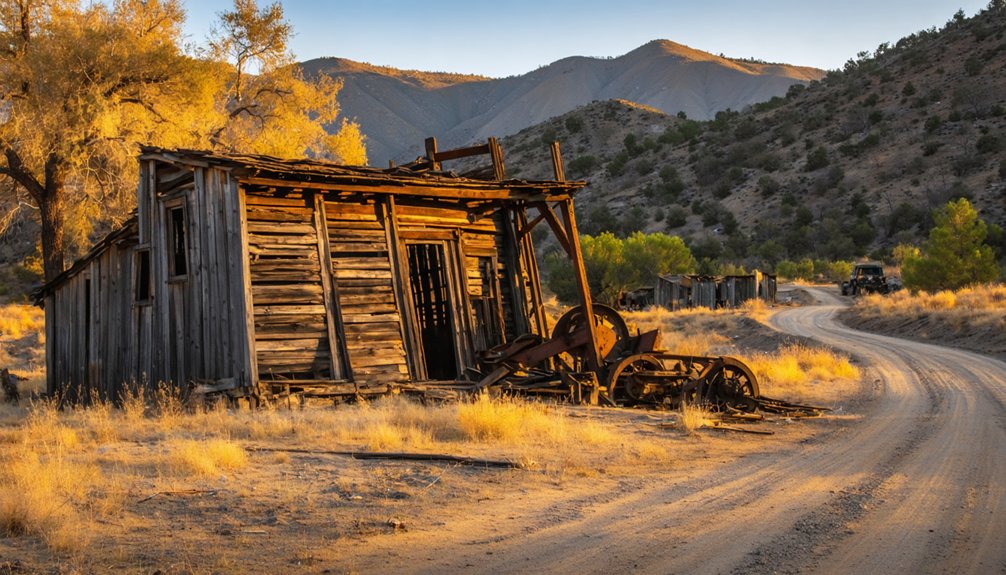
The ghosts of Moores Flat hide beneath your feet rather than standing proudly against the Sierra sky. Nothing remains of the original townsite—hydraulic mining’s geological impacts literally caused it to slide downhill as cave-ins undermined foundations. You’ll find scattered rockpiles and rusting equipment marking where three hotels and a bank once thrived.
The historic cemetery stands as your primary landmark, nineteen miles northeast of Nevada City on San Juan Ridge. From North Bloomfield, head five miles northeast to reach the site. Park and explore on foot among local historical artifacts that tell stories of boom and collapse.
The Devastating Fires That Shaped Moores Flat’s History
Flames wrote Moores Flat’s obituary across two decades of relentless destruction. You’ll discover that six catastrophic fires between 1863 and 1884 systematically erased this mining town’s future.
The January 1863 restaurant fire ignited the pattern, followed by the May 1865 conflagration that consumed the hotel, bank, and post office—possibly arson. The devastating July 1869 blaze forced survivors to relocate half a mile south, abandoning their original settlement.
But fire pursued them: October 1870 and February 1883 blazes destroyed the rebuilt community again. Unlike other mining towns that implemented architectural preservation efforts and community resiliency strategies after disasters, Moores Flat’s residents calculated the futility of rebuilding. Each fire discouraged reinvestment, transforming prosperity into ash and eventual abandonment.
Best Time to Visit and What to Bring

Your packing recommendations include layered clothing for dramatic temperature swings, waterproof gear, and sturdy hiking boots for traversing Moores Flat’s rugged terrain. Don’t forget snow chains during winter months, plus flashlights and maps for remote exploration.
Pack water and snacks—you’re venturing into isolation. Add sun protection for high-elevation exposure and first aid supplies for self-reliance in this abandoned settlement.
Nearby Historic Sites and Gold Rush Towns Worth Exploring
You’ll find the Alleghany District just fifteen miles northeast of Nevada City, where lode and placer operations continued long after hydraulic mining ceased at Moore’s Flat. This rugged mining region shares the same Tertiary channel geology that drew thousands of prospectors to these Sierra foothills during the 1850s.
Nevada City itself preserves one of California’s most authentic Gold Rush downtowns, with Victorian storefronts and mining-era architecture that transport you back to the district’s booming heyday.
Alleghany District Mining Heritage
While Moores Flat itself offers ghostly remnants of California’s gold rush era, the surrounding Alleghany District stands as the state’s most famous high-grade gold mining region, with an estimated total output of $50 million that drew fortune-seekers for over a century. You’ll discover how Kanaka sailors sparked this empire in spring 1851, finding coarse nuggets in Kanaka Creek that launched an industry spanning drift, hydraulic, and lode operations.
The district showcased diverse mining techniques—from hand mortars at Plumbago Mine extracting $100,000 between 1872-1875 to the legendary Sixteen-to-One Mine, California’s last sustained commercial lode-gold operation until 1965. Though mercury contamination from historic processes left environmental scars, these workings produced extraordinary yields: the Tightner Mine alone generated $600,000 between 1919-1923, with some ore worth thousands per ton.
Nevada City Historic Downtown
Just twelve miles southwest of Moores Flat, Nevada City’s historic downtown transports you to California’s most authentic Gold Rush streetscape, where 1860s brick storefronts line gas-lit sidewalks and the Nevada Theatre—the state’s oldest theater building from 1865—still hosts performances beneath original ceiling frescoes.
Wander Broad Street’s preserved facades housing funky boutiques and cafes serving Gold Rush cuisine with modern flair. The 1882 Old Stonehouse Brewery pours craft beers in a hillside cave carved by miners.
Historic streetscape preservation earned the district National Register listing in 1985, making Nevada City California’s best-preserved Gold Rush town. Grab self-led walking tour brochures at the Visitor Center, explore Firehouse No.1’s museum, and experience Victorian Christmas celebrations that’ve utilized these authentic structures for nearly fifty years.
Frequently Asked Questions
Are There Any Camping Facilities Near Moores Flat?
You’ll find several nearest campgrounds close to Moores Flat, including Scotts Flat Lake Campground with year-round access. Available amenities range from fishing and swimming to campfire rings, vault toilets, and potable water for your adventure.
Is Moores Flat Safe for Children to Explore?
No, it’s not safe—like wandering into a sleeping dragon’s lair. Crumbling structures, unstable mining terrain, and potential environmental hazards create serious risks. Accessibility for disabled visitors is nonexistent. You’d be wise choosing family-friendly destinations instead.
Can You Still Pan for Gold at Moores Flat Today?
You’ll need to verify current land access and regulations, but Moores Flat’s gold-rich gravels that once yielded historic gold mining techniques still attract prospectors using modern gold prospecting methods—though most claims are now closed or privately held.
Are Pets Allowed at the Moores Flat Ghost Town Site?
Leashed pets allowed at Moores Flat, though no official policy exists. You’ll want supervised pet exploration while watching for abandoned mine shafts, rusty debris, and rattlesnakes. Keep your companion close—freedom here demands vigilance and respect for crumbling history.
Do I Need Special Permits to Visit Moores Flat?
You don’t need special permits to visit Moores Flat, but you’ll want to respect private property access boundaries. The site’s historical significance as a Gold Rush town remains mostly on public land, offering freedom to explore responsibly.