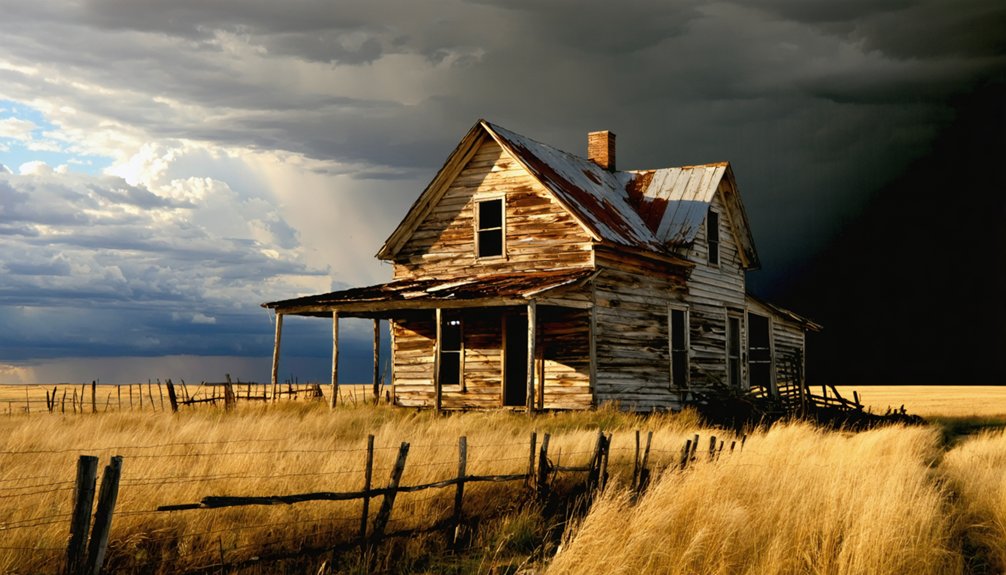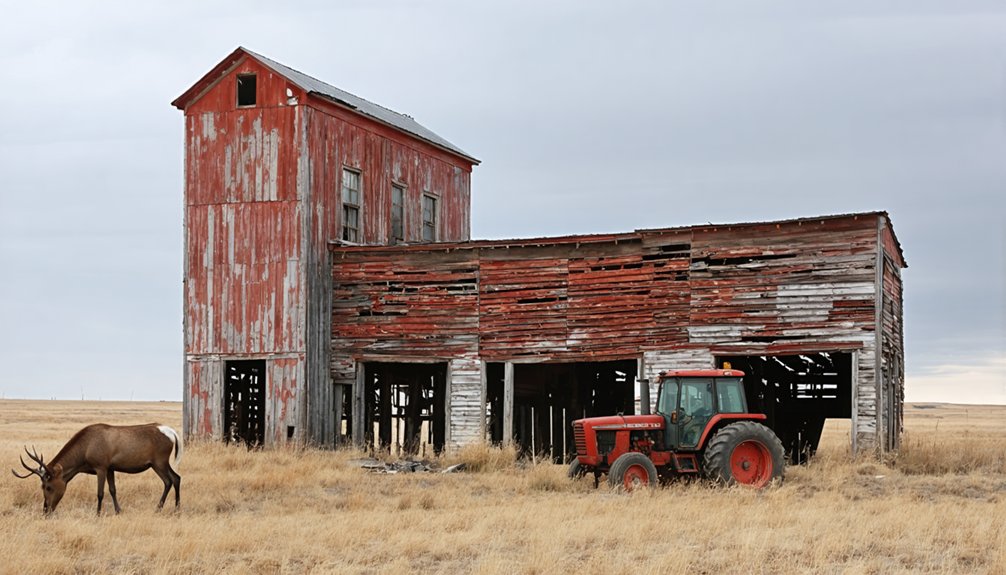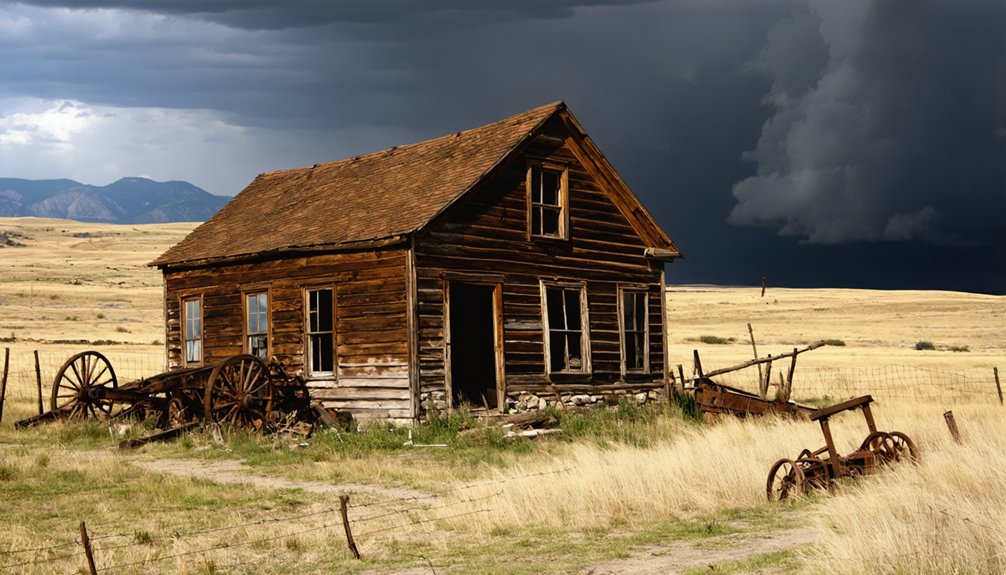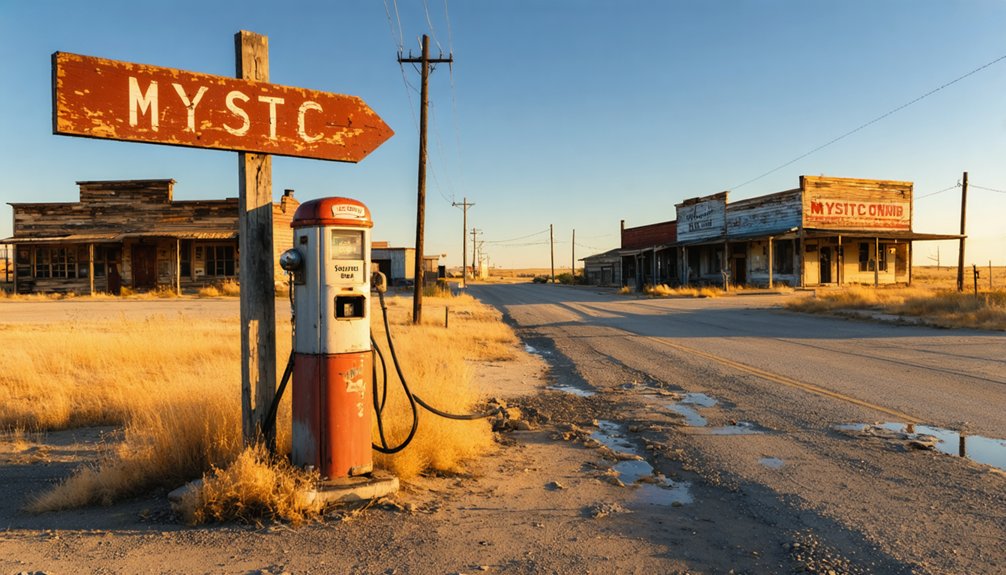
You’ll find Mystic tucked along Rapid Creek in the Black Hills, accessible via gravel roads from Highway 44 near Silver City. This authentic mining camp preserves fourteen historic structures, including weathered false-fronts that witnessed both gold rush fever and the engineering marvel of the Crouch Line—a railroad so serpentine it crossed the creek 105 times in just 34 miles. The town shifted from mining to timber before settling into its current quiet state, and the surrounding area offers additional ghost town discoveries worth exploring.
Key Takeaways
- Mystic is a historic mining and timber town in the Black Hills, transformed from Sitting Bull Camp after the 1874 gold rush.
- Visit remnants of the Crouch Line railroad, known as the “crookedest line in the world” with 105 creek crossings over 34 miles.
- Explore hiking trails that follow the engineering marvel of the former railroad route through Rapid Creek’s challenging landscape.
- Learn about failed gold ventures including hydraulic dredges and cyanide mills that gave way to successful sawmill operations.
- The town evolved from gold mining to timber industry to tourism, including presidential visits and CCC camps during the Depression.
The Discovery That Started It All: From Custer’s Expedition to Gold Rush Fever
The canvas-topped wagons kicked up clouds of dust that hung in the Dakota summer air like a suspended curtain as Lieutenant Colonel George Armstrong Custer led over 1,000 troops into forbidden territory on July 2, 1874. His expedition violated the 1868 Treaty of Fort Laramie, pushing into the sacred Black Hills despite Lakota sovereignty.
When miners discovered gold near present-day Custer, the region’s fate was sealed. Custer’s cautionary reports mentioned “forty or fifty small particles” from a single pan, yet accompanying journalists spun tales of riches “from the grass roots down.” These gold deposit exaggerations sparked Western newspapers into frenzy, transforming careful scientific observations into promises of fortune. The resulting stampede would reshape the frontier forever.
How a Mining Camp Became Mystic: The Railroad Connection of 1889
As you stand where Castle Creek whispers through the pines, imagine the transformation when iron rails first snaked into this remote gulch in 1889. The Chicago, Burlington & Quincy Railroad didn’t just bring locomotives—it brought legitimacy, renaming the rough Sitting Bull Camp as “Mystic” and erecting a proper station where ore-stained prospectors once squatted in canvas tents.
From Sitting Bull Camp
Following Sitting Bull‘s death in December 1890, the landscape that once bore his name underwent a transformation as swift as the railroad cars that would soon define it. You’ll find it remarkable how this spiritual leader’s legacy intersected with Mystic’s origins.
His spiritual leadership role had drawn over 10,000 Native American refugees to camps along these Black Hills corridors, seeking sanctuary from reservation orders. After his killing by Indian Police at Standing Rock, the area’s character shifted dramatically. Where thousands once gathered around his vision—his Sun Dance prophecy that foretold soldiers falling like grasshoppers—miners and railroad workers now staked claims.
The very ground that witnessed his followers’ exodus to Canada became another kind of refuge: a mining camp renamed, repurposed, forever altered.
Railroad Station Name Change
The transformation brought tangible freedom:
- Station construction preceded the first ten-stamp mill by six years
- Ore shipments replaced pack-mule limitations
- Connecticut’s Mystic inspired the rechristened settlement’s name
- CBQ freight service sustained operations until 1983
- Rail access elevated camp status to recognized transport hub
Railroad ties literally bound Mystic’s destiny. That 1889 station didn’t just rename a place—it forged a mining town’s purpose, connecting independent prospectors to continental commerce through steel and steam.
Mining Center Transformation 1896
Steel rails sparked ambition beyond simple transport—they ignited industrial dreams in Mystic’s rugged canyon. When the railroad reached this remote settlement in 1896, investors saw opportunity where others saw obstacles.
The ten-stamp mill that operated from 1895 to 1902 processed ore from nearby claims like Fairview Mine, transforming raw rock into profit. You’d have witnessed Chicago capitalists erecting their four-story Reduction Mill in 1900—over $1 million worth of audacity—experimenting with electro cyanide experiments that ultimately failed when crushed ore stubbornly solidified instead of suspended.
Later, dredging operations attempted their own fortunes upstream in 1911. Each venture chased gold’s promise, turning this canyon into a testing ground for mining innovation, where freedom-seekers gambled everything on Black Hills riches.
The Rise and Fall of Gold Operations: Dredges, Mills, and Failed Dreams
Gold fever gripped Castle Creek’s narrow valley with the kind of optimism that makes men invest fortunes in unproven ground. You’ll discover how high cost dredging experiments and failed cyanide reduction plants transformed Mystic from hopeful boomtown to cautionary tale.
The Castle Creek Hydraulic Gold Mining Company’s 1910 electric dredge promised 55,000 cubic yards monthly—gone within a year, dismantled for Oregon.
The Electro-Chemical Reduction Company’s million-dollar mill stood four stories tall, its electro-cyanide process revolutionary until ore solidified uselessly in tanks.
Failed Ventures That Defined Mystic:
- $100,000 dredge relocated after twelve months
- Million-dollar reduction mill ceased operations 1913
- Experimental electrochlorination plant proved unworkable
- Simple 10-stamp mill outlasted grander schemes
- Sawmill replaced dreams of gold empires
Engineering Marvel in the Mountains: The Crouch Line’s Incredible 34-Mile Journey
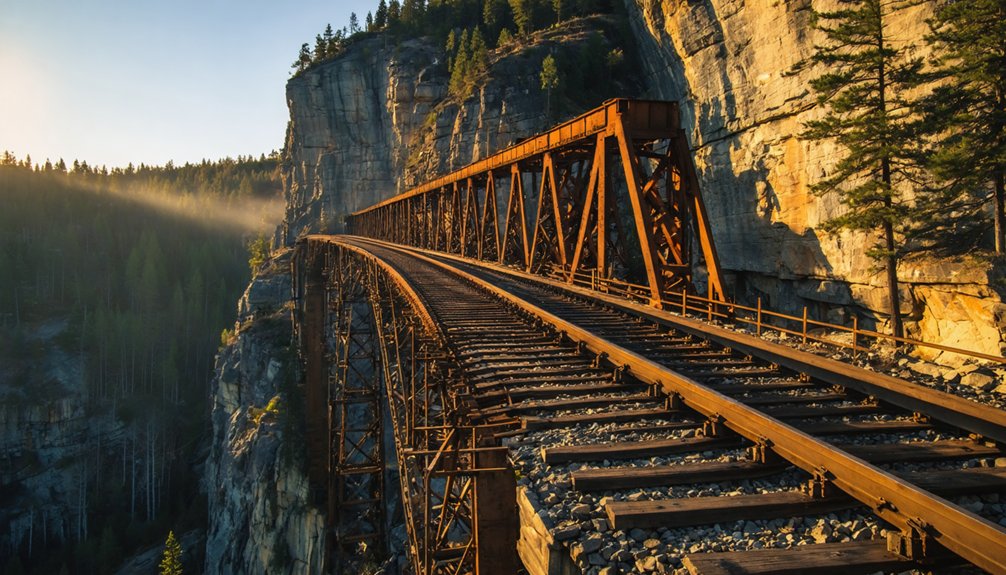
When Charles D. Crouch completed this audacious railroad in 1906, he’d created something extraordinary—a standard gauge line that crossed Rapid Creek 105 times in just 34 miles.
You’ll find remnants of this engineering defiance carved into bedrock, winding through steep canyons where conventional wisdom said rails couldn’t go. The “crookedest line in the world” earned its nickname through tight turns so extreme that engineers could literally shake hands with caboose brakemen.
Crouch avoided expensive tunnels by embracing the landscape’s challenges, laying specially curved rails that serpentined through narrow valleys. Today’s hiking trails follow portions of this incredible route, where you’ll discover cuts in stone testifying to one man’s determination to connect Rapid City with the Black Hills’ mining heart.
When the Mines Went Quiet: Mystic’s Transformation Through Timber and Tourism
As you walk the silent streets where prospectors once rushed with gold fever, you’ll notice the landscape tells a different story—one of adaptation rather than abandonment.
The thunder of stamp mills gave way to the rhythmic whine of sawmill blades in 1918, transforming Mystic from a mining camp into a timber town that shipped finished lumber across two railroad lines.
Mining Decline Sparks Change
By 1911, the dream that brought hundreds to Mystic’s rugged gulches had begun to crumble like the refractory ore itself. You’d have witnessed the Castle Creek Hydraulic Gold Mining Company’s electric dredge departing for Oregon after just one year—costs had devoured profits. The million-dollar Mystic Reduction Mill stood as a monument to failure, its tanks choked with solidified ore instead of gold-bearing solution.
The town’s survival hinged on quick adaptation:
- Railroad dependence shifted from hauling ore to transporting timber and tourists
- Sawmill operations replaced mining as the primary employer by 1918
- Presidential visits in 1927 signaled tourism’s growing importance
- The highest CCC camp in the Black Hills provided Depression-era stability
- Train-based tourism accelerated through the 1920s
Mystic’s position on two rail lines became its liberation from single-industry collapse.
Sawmill Era Dominates Economy
The thunder of stamp mills faded into memory while the rhythmic bite of circular saws announced Mystic’s rebirth. When George Frink purchased the Sanford brothers’ operation in 1919, he transformed abandoned mining infrastructure into timber prosperity that’d sustain your ghost town for three decades.
You’ll discover Frink’s sawmill claimed the old Mystic Reduction Mill site—that failed $1 million cyanide experiment—and turned it into genuine profit. Its lumber production capacity matched what 150 tons of daily ore processing once promised but never delivered.
Economic diversification came through railroad access and Depression-era ingenuity, where Frink bartered lumber for goods to keep workers paid.
Even when flames consumed everything in 1936, he rebuilt. That determination kept Mystic alive until 1952.
Railroad Tourism Brings Visitors
When mining’s boom turned to echo in the canyons, two ribbons of steel wrote Mystic’s second act across impossible terrain. You’ll discover how the railroad’s economic impact transformed this outpost into a Black Hills destination by 1906, when two competing lines converged here.
The Crouch Line engineered freedom through mountains:
- 34 miles of defiant architecture: 14 complete circles carved through granite
- 100 bridges spanning wilderness: rebuilt after 1907’s devastating flood
- President Coolidge’s 1927 arrival: lumber wagon waiting trackside
- Daily picnicker trains: escapists fleeing Rapid City’s constraints
- Coal, timber, gold ore flowing: rail supported local industries until 1947
George Frink built tourist cabins for travelers chasing horizons beyond pavement. The 1920s automobile boom amplified what steel rails started—wanderers seeking authentic encounters with untamed country, not sanitized attractions.
Presidential Visits and Pioneer Worship: The McCahan Memorial Chapel Story
Nestled among the ponderosa pines of the Black Hills, the McCahan Memorial Chapel stands as Mystic’s most enduring landmark—a modest white structure that arrived during an unlikely era of presidential attention and pioneer perseverance.
When President Calvin Coolidge visited in 1927, Mystic basked in tourism’s glow. Yet the chapel’s 1930 construction tells a grittier story of sawmill entrepreneurship and community self-reliance. Philadelphia funds purchased lumber from George Frink’s mill, while local men donated their labor—no government contracts, no bureaucratic delays.
You’ll find this weathered sanctuary in the National Historic District, its simple lines embodying frontier independence. Services ended in 1952, though weddings occasionally echo through its walls. It’s the ghost town’s survivor, proof that communities built their own sanctuaries when they needed them most.
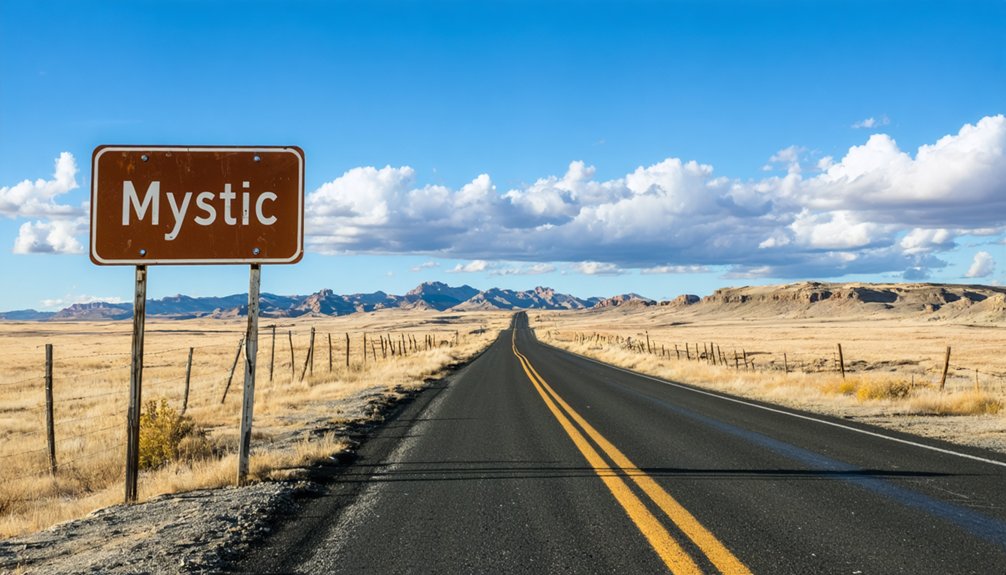
Gravel crunches beneath your tires as County Road 231 winds through ponderosa corridors, each curve bringing you deeper into the terrain that shaped Mystic’s pioneer builders.
From Rapid City, you’ll traverse twenty miles of Black Hills backcountry, maneuvering gravel roads that demand respect and attention. High clearance vehicle requirements aren’t suggestions here—they’re necessities for conquering washboard surfaces and seasonal runoff channels.
Essential Route Intel:
- Highway 44 west to US-385 north, then Rochford Road delivers the straightest shot
- Vanocker Canyon via I-90 Exit 32 offers a scenic alternative through raw wilderness
- County Road 231 intersects George Frink Road directly at the townsite
- Official Mickelson Trail trailhead provides immediate parking access
- Elevation sits at 4,872 feet along Castle Creek’s historic corridor
Your independence rewards you with solitude most tourists never experience.
What You’ll Find Today: 14 Historic Structures Worth Exploring
As you step from your vehicle into the eerie silence, fourteen weathered sentinels stand scattered across Mystic’s shallow valley—each structure a monument to ambition, adaptation, and ultimate abandonment. The mine manager’s house anchors the collection, its frame remarkably intact after decades of vacancy.
You’ll discover the restored schoolhouse offering prime photography opportunities, while interpretive trail markers guide you through the scattered remnants of granary, boardinghouse, and office buildings. The McCahan Memorial Chapel, constructed from sawmill lumber in 1930, still hosts occasional weddings—a testament to enduring community connections.
Tourist cabins from the 1920s dot the landscape alongside rusting mining equipment. These preserved architectural styles span three distinct eras: mining prosperity, sawmill sustainability, and tourism’s brief promise. Each building whispers stories of those who refused confinement by conventional success.
Expanding Your Black Hills Ghost Town Adventure: Nearby Sites and Hidden Gems
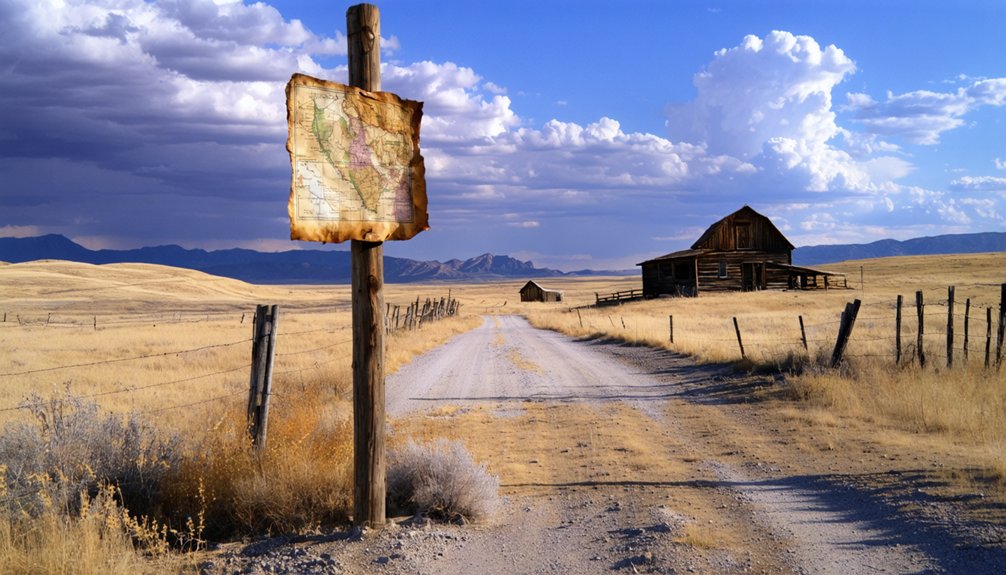
Beyond Mystic’s weathered buildings, the Black Hills unfold like a prospector’s map of forgotten dreams, revealing ghost towns where you’ll find more stories than tourists.
The Black Hills harbor ghost towns rich with untold stories, waiting for those who seek history beyond the tourist trail.
Your adventure extends to remarkable sites where heritage preservation efforts protect fading histories:
- Rochford – The “friendliest ghost town” sits 16 miles northwest of Hill City, where M.D. Rochford’s 1876 discovery sparked a 500-person settlement
- Galena – Sarah Campbell’s pioneering spirit lives on through remnants accessible by ATV trails
- Etta – Five minutes from Keystone, this tin-turned-lithium mine reveals evolving economic development plans
- Spokane – Join this forgotten camp among western South Dakota’s mining circuit
- Deadwood – Wild Bill’s haunt blends ghost tours with living history
Each stop offers solitude modern crowds haven’t discovered yet.
Frequently Asked Questions
Are There Any Fees to Visit Mystic Ghost Town?
Specific fees aren’t publicly listed, though you’ll find parking availability varies seasonally. Comparable Black Hills attractions charge $5-$15 admission. Check local amenities beforehand since ghost towns often operate independently. You’re free to explore this authentic frontier experience affordably.
Can You Camp Overnight Near the Historic Townsite?
You’ll find excellent overnight camping availability at Mystic Hills Hideaway, just minutes from the ghost town. They’re open year-round with no seasonal camping restrictions, offering full hook-up RV sites nestled in pines where you can embrace true Black Hills freedom.
Is the Mccahan Memorial Chapel Open for Public Entry?
Good things come to those who ask—the chapel’s building condition remains solid, but there aren’t published visiting hours. You’ll need to contact the Black Hills National Forest beforehand since it’s typically closed, though special events occasionally happen inside.
What Safety Precautions Should Visitors Take Around Old Mine Shafts?
Stay on designated trails and heed proper signage warnings around old mine shafts. Don’t let curiosity override caution—these abandoned openings conceal deadly hazards like unstable ground, hidden drops, and toxic gases that’ve claimed too many adventurous souls.
Are Guided Tours Available for the Mystic Historic District?
No guided tours are currently available for Mystic’s historic district. You’ll explore this authentic ghost town independently, wandering freely through weathered buildings at your own pace. Nearby Deadwood and Lead offer scheduled tours with varying durations if you prefer structured experiences.