Plan your Nighthawk ghost town adventure for spring or fall when roads are passable and crowds nonexistent. You’ll drive the Loomis-Oroville Highway through logging country where cell service vanishes, reaching a valley frozen in 1952 when the last mill closed. Pack offline maps, sturdy boots for exploring century-old foundations, and high-visibility gear for the desolate road. The border crossing operates 9 am to 5 pm daily, so time your arrival carefully. Below, you’ll discover the historic landmarks worth seeking and essential safety supplies for traversing this remote territory.
Key Takeaways
- Access Nighthawk via Loomis–Oroville Highway with offline maps; expect no cell service and rough roads in isolated logging country.
- Visit during spring (April-June) or fall (September-October) for best conditions; avoid summer heat and winter snow closures.
- Border crossing operates 9 am to 5 pm daily; plan accordingly if crossing into Canada at Nighthawk–Chopaka.
- Explore 1903 Hagerty Hotel, 1939 Kaaba-Texas Mill, 1906 railroad depot, and the historic “House of Ill Repute.”
- Pack hiking boots, high-visibility clothing, GPS with offline maps, first-aid kit, water, and ensure vehicle is fully equipped.
Getting There: Routes and Border Crossing Information
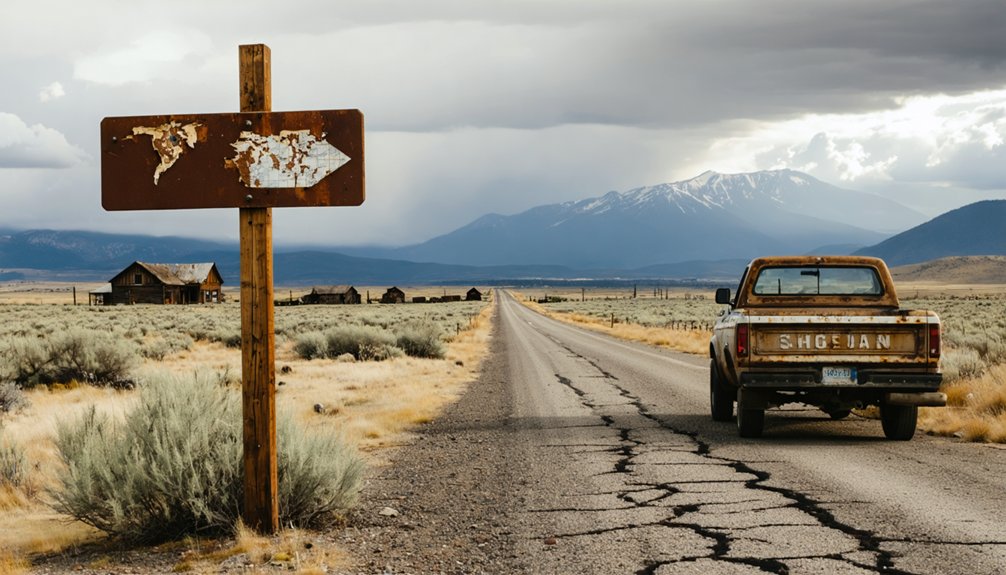
Reaching Nighthawk requires commitment—this isn’t a ghost town you’ll stumble upon while running errands. You’ll navigate the Loomis–Oroville Highway, twenty minutes north of Loomis through logging country where cell service fades and pavement grows questionable.
This remote destination demands proper planning—expect disappearing cell coverage, deteriorating roads, and genuine isolation twenty minutes beyond civilization’s edge.
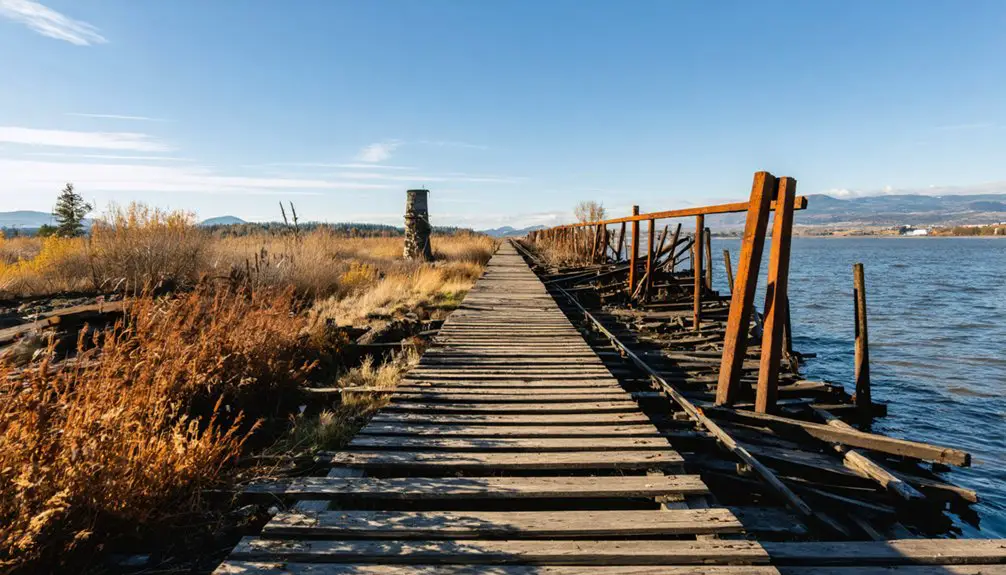
The route follows the old Great Northern Railroad corridor along the Similkameen River—dramatic terrain that rewards the adventurous.
If you’re considering the Nighthawk–Chopaka Border Crossing just north of town, note the limited border crossing hours: 9 am to 5 pm daily. Plan accordingly or risk backtracking.
Download printable maps before departing; Google’s satellite view works offline when you’re truly off-grid.
Consider seasonal weather conditions carefully. Winter snows can render these rural roads impassable, while summer offers unobstructed exploration of this five-resident outpost frozen in mining-era time.
Historic Buildings and Landmarks You Can’t Miss
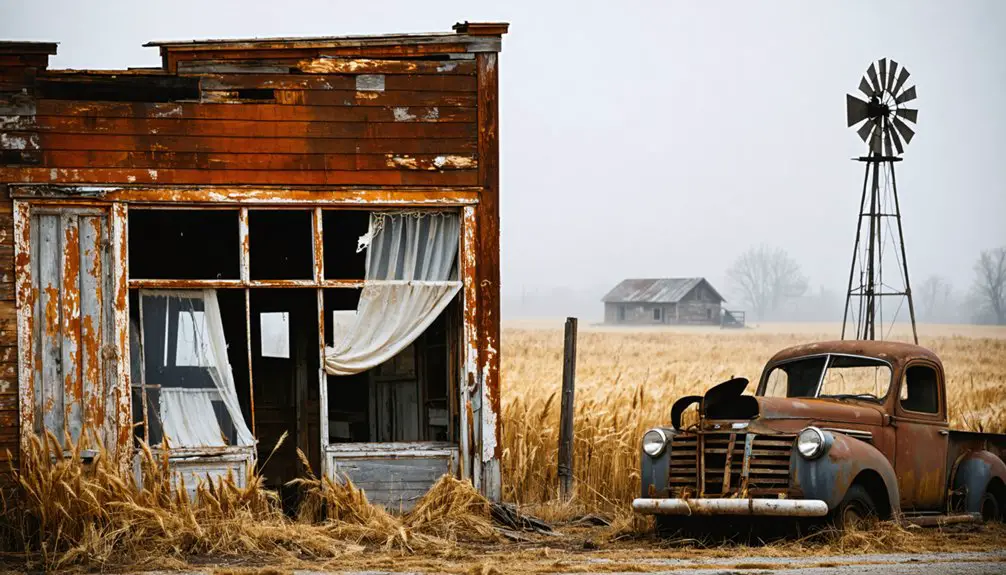
Few ghost towns preserve their architectural heritage as tangibly as Nighthawk, where weathered buildings stand as physical testimony to the mining boom that briefly transformed this valley.
You’ll spot J.M. Hagerty’s 1903 hotel on Prospect Avenue, rebuilt after its 1910 fire—a survivor that housed miners and mill workers for decades. The 1915 schoolhouse still stands on private land south of town, while the notorious “House of Ill Repute” reminds visitors that frontier life wasn’t all family-friendly.
Across the Similkameen River, the massive Kaaba-Texas Mill, built in 1939, dominates the landscape until its 1952 closure. The 1906 railroad depot once connected this remote valley to Spokane’s markets.
Skip guided historical tours—you’re free to explore independently, though local museum exhibits in Oroville provide helpful context.
Best Times to Visit This Remote Mining Town
When planning your Nighthawk expedition, you’ll find that spring and fall shoulder seasons—April through June and September through October—deliver the sweet spot between accessibility and solitude. You’ll dodge the peak visitation months of July–September while nabbing easier campsite access and genuine exploring freedom.
Weather considerations for visiting matter considerably here. April offers ideal driving conditions at lower elevations, though you’ll battle mud and rain. Wait until late May for high-country road access as snow melts off. October brings dampness but rewarding solitude—just prepare for early sunsets cutting your exploration short.
Skip summer’s intense heat and crowded ferries with their surcharges. Winter? Save January’s powder for skiing elsewhere. Your sweet reward for shoulder-season timing? Empty ghost towns, no reservations needed, and unrushed discovery.
What to Bring for Your Ghost Town Adventure
Your ghost town adventure lives or dies by what’s rattling around in your pack and truck bed. Safety precautions start with sturdy hiking boots—those century-old foundations hide ankle-twisting hazards—and high-visibility clothing for the desolate Loomis-Oroville Road.
Crumbling buildings and hidden pitfalls demand proper footwear and visibility gear before you venture into abandoned territory.
Pack essential equipment: GPS with offline maps, headlamp for exploring dim structures, and printed guides since cell signals vanish fast.
I’ve learned the hard way to stuff gloves in every pocket—rusty nails and jagged metal love bare hands. Bring ample water for Okanogan’s arid heat, first-aid supplies, and a whistle for emergencies. Your camera captures standing relics like the schoolhouse, while binoculars reveal distant mining remnants.
Don’t forget vehicle prep: spare tire, full tank, emergency kit. You’re genuinely remote out here.
Nearby Attractions Along the Similkameen River Loop
The Similkameen Trail delivers everything ghost town seekers crave after prowling Nighthawk’s ruins—dramatic scenery, genuine solitude, and that haunting sense of history carved into rock. This 4.9-mile rail-trail follows the 1907 Washington & Great Northern Railroad bed through shrub-steppe country where wildlife diversity rivals any Pacific Northwest corridor.
Your Similkameen experience includes:
- Crossing a 400-foot girder bridge suspended 90 feet above the Similkameen River gorge, where herons fish and hawks ride thermals
- Reaching seasonal waterfalls at Enloe Dam—locally called Coyote Falls—thundering through the canyon at trail’s end
- Spotting salmon runs below the bridge during migration seasons
- Climbing to Similkameen River Valley Overlook for panoramic views stretching into Canada
Watch for rattlesnakes in warm weather. You’ll need no permits for this rail-trail freedom.
Frequently Asked Questions
Is Nighthawk Truly Abandoned or Do People Still Live There?
Nighthawk isn’t completely abandoned—about 5 people still call it home. You’ll find minimal local community involvement in this ghost town’s current state, though it’s practically deserted. The settlement exists more as historical memory than living town.
Can Visitors Enter the Historic Buildings or Just View Them Externally?
You’ll only view Nighthawk’s buildings externally—no self-guided tours allowed inside. Private property access restrictions protect these 1900s structures, so you’ll observe from roadside viewpoints. Park at the highway marker and enjoy the exterior charm freely.
Are There Guided Tours Available at the Nighthawk Ghost Town?
Unfortunately, you won’t find *any* guided tour options at Nighthawk itself—it’s magnificently off-limits on private land. However, you’ll discover fantastic tour schedule details for nearby Okanogan County ghost towns offering daylong adventures with metal detecting and authentic Wild West exploration.
What Was the Population of Nighthawk During Its Mining Boom Peak?
During its peak mining operations in the early 1900s, thousands of miners called Nighthawk home. You’ll find it hard to imagine such bustling activity now, given the economic decline that reduced the population to merely five people today.
Is Camping or Overnight Accommodation Available in or Near Nighthawk?
Yes, you’ll find several accommodation options around Nighthawk, including River Oaks RV Resort and Rainbow Resort. Nearby campgrounds like Alta Lake State Park and Sinlahekin Creek offer scenic spots where you can pitch your tent under starlit skies.